Species · Flowering plants
Chondrodendron tomentosum
Chondrodendron tomentosum has no English name on record in the checklists used here. It is a species of flowering plant in the family Menispermaceae (moonseed family), order Ranunculales.
- Scientific name
- Chondrodendron tomentosum Ruiz & Pav.
- Genus
- Chondrodendron
- Family
- Menispermaceae (Moonseed Family)
- Order
- Ranunculales
- Class
- Magnoliopsida
- Recorded in
- 7 countries
- Name status
- accepted in the Catalogue of Life

Overview
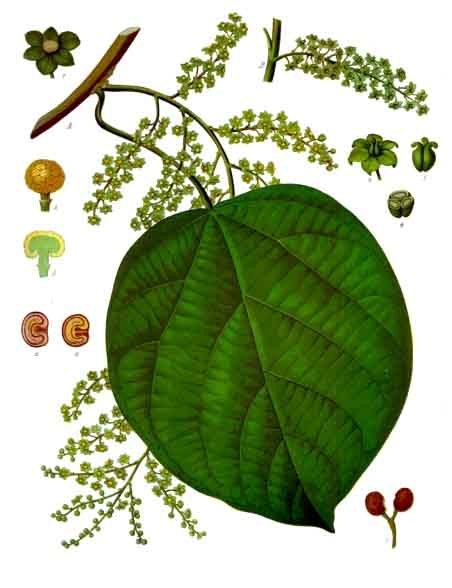
The species is native to Central and South America and climbs into the rainforest canopy. It is distinguished by large, glossy, heart-shaped leaves with undersides densely covered in silky white hairs.
Written 26 November 2026 from the sources listed below. Each statement was checked against the passage it cites; statements that could not be supported were removed.
Appearance
Chondrodendron tomentosum is a woody climbing plant with large, glossy, heart-shaped leaves. The undersides of the leaves are densely covered with silky white hairs.[1][2][3]
Its stems can reach 10 cm in thickness at their base, and the plant can climb up to 30 metres into the rainforest canopy.[4][5]
Habitat
The species is native to Central and South America. It climbs into the rainforest canopy.[6][7]
Uses
Chondrodendron tomentosum is one of the botanical sources of tube curare arrow poison and is a botanical source of curare alkaloids.[8][9]
The plant contains highly toxic alkaloids. Crystalline d-tubocurarine was isolated from curare prepared using material from this species in 1943.[10][11]
The alkaloid d-chondocurine was isolated and characterized from material of this species.[12]
Classification of Chondrodendron tomentosum
| Kingdom | Plantae |
|---|---|
| Subkingdom | Pteridobiotina |
| Phylum | Tracheophyta |
| Class | Magnoliopsida |
| Order | Ranunculales |
| Family | Menispermaceae (Moonseed Family) |
| Subfamily | Menispermoideae |
| Tribe | Tiliacoreae |
| Genus | Chondrodendron |
| Species | Chondrodendron tomentosum Ruiz & Pav. |
Where Chondrodendron tomentosum is found
Checklists and occurrence records place Chondrodendron tomentosum in 7 countries across North America and South America. GBIF holds 457 georeferenced records of it.
Countries
Regions and cities with the most records
- Sucumbíos, Ecuador 25
- Antioquia, Colombia 22
- Madre de Dios, Peru 19
- Amazonas, Peru 15
- Loreto, Peru 15
- Pastaza Province, Ecuador 15
- La Paz Department, Bolivia 13
- San Martín Department, Peru 13
- Ucayali, Peru 10
- Beni Department, Bolivia 9
- Pasco, Peru 9
- Panamá Oeste Province, Panama 7
- Santander Department, Colombia 7
- Tambopata, Peru 7
- Nueva Loja, Ecuador 6
- Tocache, Peru 6
- Meta Department, Colombia 5
- Boyacá, Colombia 4
- Pucallpa, Peru 4
- San Fernando, Peru 4
- Turbo, Colombia 4
- Zamora Chinchipe, Ecuador 4
- Chigorodó, Colombia 3
- East Saint Louis, United States 3
- Granite City, United States 3
- Junin, Peru 3
- Maryland Heights, United States 3
- Missouri, United States 3
- Riberalta, Bolivia 3
- Caquetá, Colombia 2
- Amazonas, Brazil
- Chocó, Colombia
Range as the checklists state it
Panama; Colombia (Amazonas, Antioquia, Boyacá, Caquetá, Chocó, Meta, Santander, Valle); Ecuador; Peru; Bolivia (Beni, La Paz); N-Brazil (Amazonas)
A number beside a place is its count of GBIF occurrence records. A place without a number comes from a checklist alone. Records show where a species has been observed or collected, which can include escapes and vagrants.
Common names
Names in 5 other languages
- Finnish
- pareirajuuri
- German
- Behaarter Knorpelbaum
- Portuguese
- Curare, Parreira-brava, Uva-da-serra, Uva-do-mato, pareira
- Slovak
- chrupkavec plstnatý
- Swedish
- kurare-lian
Synonyms
7 other scientific names have been used for this species and are now treated as synonyms of Chondrodendron tomentosum.
- Botryopsis spruceana Eichler
- Chondrodendron cretosum Miers
- Chondrodendron hypoleucum Standl.
- Chondrodendron scabrum Miers
- Chondrodendron tamoides Miers
- Epibaterium tomentosum (Ruiz & Pav.) Pers. ambiguous synonym
- Menispermum tamoides Spreng. ambiguous synonym
Related species
-
 Chondrodendron platyphyllum
-
 Chondrodendron microphyllum
-
 Canada MoonseedMenispermum canadense
- Carolina SnailseedNephroia carolina
-
 FishberryAnamirta cocculus
-
 Cocculus hirsutus
-
 Tiliacora triandra
-
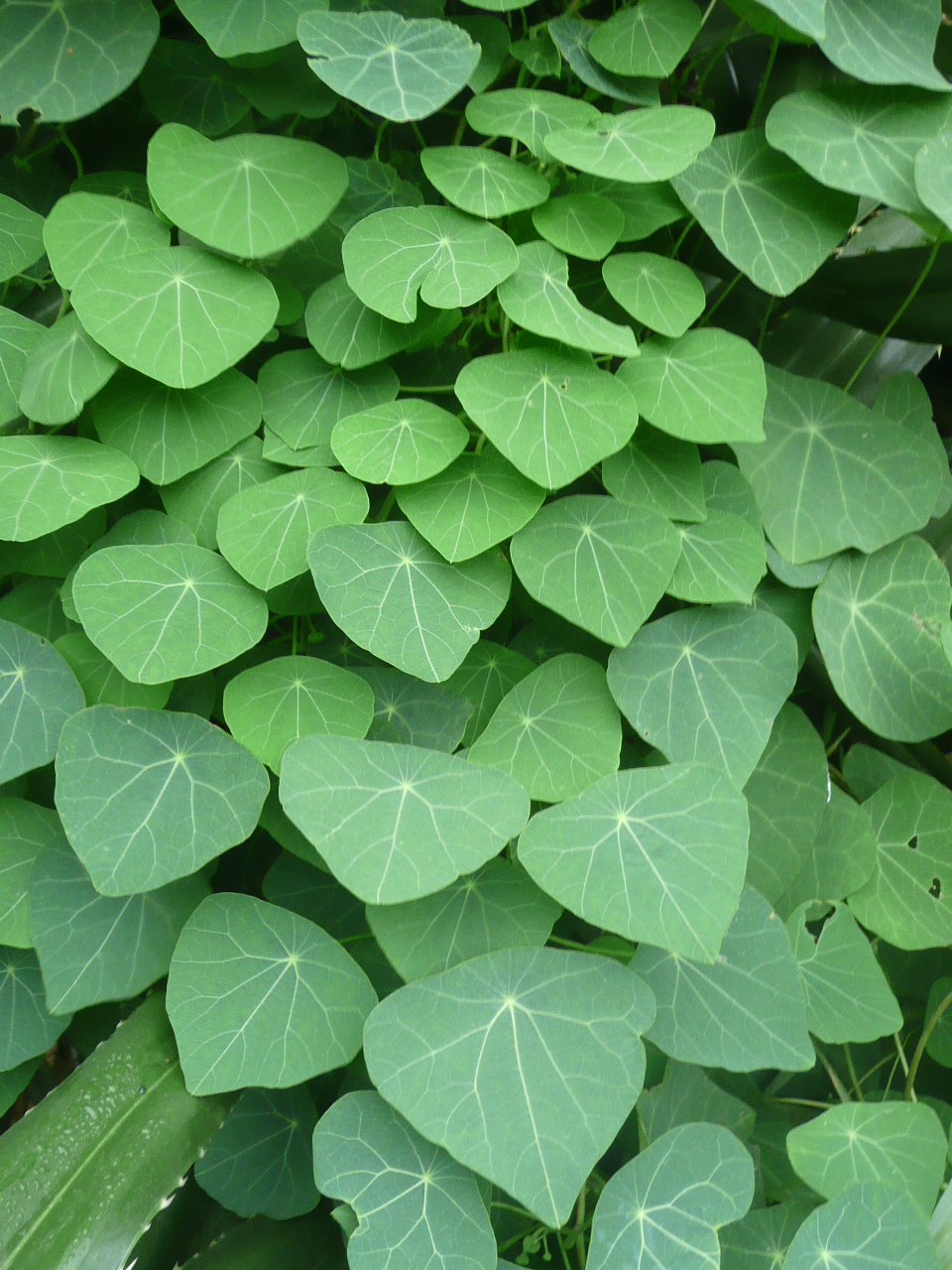 Stephania cephalantha
Compare
Questions and answers
Sources
Passages the profile rests on
- Chondrodendron tomentosum is a woody climbing plant. Source passage: “Chondrodendron tomentosum is a woody climbing plant” — English Wikipedia
- The plant has large, glossy, heart-shaped leaves. Source passage: “The large, glossy, cordate leaves” — English Wikipedia
- The undersides of the leaves are densely covered with silky white hairs. Source passage: “densely clothed beneath with a silky white pubescence” — English Wikipedia
- The plant's stems can reach 10 cm in thickness at their base. Source passage: “stems that can reach 10 cm in thickness at the base” — English Wikipedia
- The plant can climb up to 30 metres into the rainforest canopy. Source passage: “can climb up to 30 metres into the rainforest canopy” — English Wikipedia
- The plant climbs into the rainforest canopy. Source passage: “climb up to 30 metres into the rainforest canopy” — English Wikipedia
- The species is native to Central and South America. Source passage: “native to Central and South America” — English Wikipedia
- The species is one of the botanical sources of tube curare arrow poison. Source passage: “one of the sources of the arrow poison curare – specifically 'tube curare'” — English Wikipedia
- The plant is a botanical source of curare alkaloids. Source passage: “Chondrodendron tomentosum is a botanical source of curare alkaloids.” — English Wikipedia
- The plant contains highly toxic alkaloids. Source passage: “It contains highly toxic alkaloids” — English Wikipedia
- Crystalline d-tubocurarine was isolated from curare prepared using material from this species in 1943. Source passage: “In 1943, Oskar Wintersteiner and J. D. Dutcher isolated crystalline d-tubocurarine from curare prepared from material of this plant species.” — English Wikipedia
- The alkaloid d-chondocurine was isolated and characterized from this species' material. Source passage: “They also isolated and characterized another alkaloid, which they named d-chondocurine.” — English Wikipedia
Data
- Catalogue of Life, 2026-10-16 XR cc by
- Global Biodiversity Information Facility CC BY 4.0
- Wikidata CC0
- GeoNames CC BY 4.0
- Wikimedia Commons per image; credit shown with each image
- Within the Catalogue of Life, this name comes from Synonymic Checklists of the Vascular Plants of the World cc by
References
- Ruiz & Pav. Syst. Veg. Fl. Peruv. Chil. 261 (1798). where the name was published
This species in other databases
- Catalogue of Life 9JZH2
- Wikidata Q147010
- iNaturalist 557027
- World Flora Online wfo-0000603247
- GRIN 400208
Page built on 29 November 2026. See how the catalog is made and all sources and licences.
Cite this page
ScientificNames.org. (2026). Chondrodendron tomentosum. Retrieved November 29, 2026, from https://scientificnames.org/species/chondrodendron-tomentosum
“Chondrodendron tomentosum.” ScientificNames.org, 2026, scientificnames.org/species/chondrodendron-tomentosum. Accessed 29 Nov. 2026.
ScientificNames.org. “Chondrodendron tomentosum.” Accessed November 29, 2026. https://scientificnames.org/species/chondrodendron-tomentosum.
@misc{scientificnames_chondrodendron_tomentosum,
  author = {{ScientificNames.org}},
  title = {Chondrodendron tomentosum},
  year = {2026},
  url = {https://scientificnames.org/species/chondrodendron-tomentosum},
  note = {Accessed 2026-11-29}
}