Species · Flowering plants
Carolina Snailseed Nephroia carolina
The scientific name of the Carolina Snailseed is Nephroia carolina. It is a species of flowering plant in the family Menispermaceae (moonseed family), order Ranunculales.
- Scientific name
- Nephroia carolina (L.) L.Lian & Wei Wang
- Common name
- Carolina Snailseed
- Genus
- Nephroia
- Family
- Menispermaceae (Moonseed Family)
- Order
- Ranunculales
- Class
- Magnoliopsida
- Recorded in
- 2 countries
- Name status
- accepted in the Catalogue of Life
Overview
Nephroia carolina naturally inhabits rocky woodlands and thickets alongside streams, particularly in calcareous areas, and also occurs in disturbed habitats.
Written 26 November 2026 from the sources listed below. Each statement was checked against the passage it cites; statements that could not be supported were removed.
Appearance
The species bears rounded, bright red fruits containing a single seed resembling a small snail shell. Its fruits reach approximately 8 millimetres in size.[1][2][3]
The climbing woody vine can reach 5 metres or more in height.[4]
Habitat
Carolina snailseed naturally inhabits rocky woodlands and thickets alongside streams, particularly in calcareous areas. It also occurs in disturbed habitats, including fencerows and waste areas.[5][6]
Behaviour
Carolina snailseed can grow rapidly and is difficult to eradicate.[7]
Reproduction and life cycle
Carolina snailseed produces flowers and fruits in axillary cymes. Male and female flowers occur on separate plants.[8][9]
The species blooms in late spring, and its fruits mature by late summer. It produces fruits from June through August.[10][11]
Each fruit contains one seed enclosed by a hard endocarp.[12]
Seeds require three months of cold stratification before germination. They germinate within 21 to 30 days at 68 °F.[13][14]
Uses
Landscapers sometimes cultivate Carolina snailseed on trellises and fences or allow it to spread among other vegetation for its scarlet fruits.[15]
Classification of the Carolina Snailseed
| Kingdom | Plantae |
|---|---|
| Subkingdom | Pteridobiotina |
| Phylum | Tracheophyta |
| Class | Magnoliopsida |
| Order | Ranunculales |
| Family | Menispermaceae (Moonseed Family) |
| Subfamily | Menispermoideae |
| Tribe | Pachygoneae |
| Genus | Nephroia |
| Species | Nephroia carolina (L.) L.Lian & Wei Wang |
Where the Carolina Snailseed is found
Checklists and occurrence records place Nephroia carolina in 2 countries across North America. GBIF holds 22,255 georeferenced records of it.
Countries
Regions and cities with the most records
- Texas, United States 14,028
- Plano, United States 1,714
- Addison, United States 1,632
- Allen, United States 1,537
- The Colony, United States 1,528
- Richardson, United States 1,526
- Highland Village, United States 1,513
- Frisco, United States 1,472
- Haltom City, United States 1,399
- Austin, United States 1,384
- Lewisville, United States 1,376
- Farmers Branch, United States 1,351
- North Richland Hills, United States 1,349
- Fort Worth, United States 1,316
- Carrollton, United States 1,266
- Colleyville, United States 1,260
- Watauga, United States 1,256
- Grand Prairie, United States 1,253
- Arlington, United States 1,244
- Little Elm, United States 1,244
- The Trails of Frisco, United States 1,234
- Hurst, United States 1,225
- Bedford, United States 1,203
- Murphy, United States 1,178
- Euless, United States 1,156
- Coppell, United States 1,146
- Corinth, United States 1,131
- Tennessee, United States 1,127
- Grapevine, United States 1,112
- Irving, United States 1,105
- Garland, United States 1,080
- Southlake, United States 1,051
- Sachse, United States 1,005
- Flower Mound, United States 1,000
- Dallas, United States 962
- Oklahoma, United States 909
2 more countries have a few records outside this range
These countries hold a few records of Nephroia carolina but lie outside the range the checklists give for it. Such records are often zoo or garden specimens, museum material or vagrants, so the species is not counted as occurring there.
Range as the checklists state it
USA (Alabama, Arkansas, Florida, Georgia, Illinois, Indiana, Kansas, Kentucky, Louisiana, Missouri, Mississippi, North Carolina, Oklahoma, South Carolina, Tennessee, Texas, Virginia); Mexico (Chihuahua, Coahuila, Nuevo León, Tamaulipas)
A number beside a place is its count of GBIF occurrence records. A place without a number comes from a checklist alone. Records show where a species has been observed or collected, which can include escapes and vagrants.
Common names
English
- Carolina Snailseed
- Red-berried Moonseed
Names in 8 other languages
- Chinese
- 美國青藤
- Czech
- jahodníček karolínský
- French
- Liane de Caroline
- Slovak
- jahodníček karolínsky
- Spanish
- hierba del ojo
- Swedish
- klättersnäckfrö
- Turkish
- Karolin
- Ukrainian
- Нефройя каролінська
Synonyms
18 other scientific names have been used for this species and are now treated as synonyms of Nephroia carolina.
- Androphylax scandens J.C.Wendl.
- Baumgartia scandens Moench
- Cebatha carolina Shafer
- Cebatha carolina (L.) Britton
- Cebatha sagittifolia (Miers) Kuntze
- Cebatha virginica (L.) Kuntze
- Cocculidium populifolium Spach
- Cocculus carolinianus Anon.
- Cocculus carolinus (L.) DC.
- Cocculus enneandra Eichler
- Cocculus enneandrus Eichler
- Cocculus sagittifolius Miers
- Epibaterium carolinum (L.) Britton
- Menispermum carolinianum Hill
- Menispermum carolinum L.
- Menispermum virginicum L.
- Wendlandia caroliniana Nutt.
- Wendlandia populifolia Willd.
Related species
- Queen CoralbeadNephroia orbiculata
- Mexican SnailseedNephroia diversifolia
-
 Canada MoonseedMenispermum canadense
-
 Chondrodendron tomentosum
-
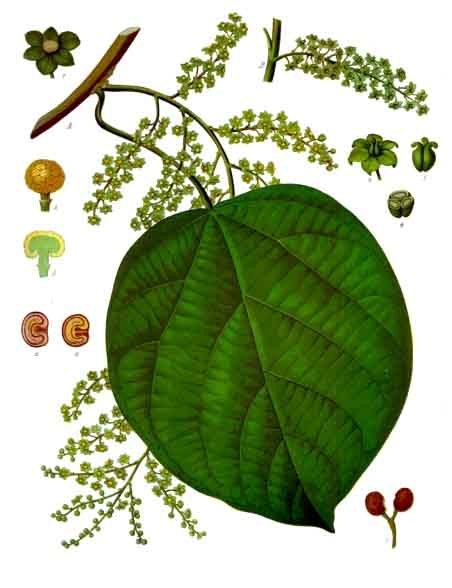 FishberryAnamirta cocculus
-
 Cocculus hirsutus
-
 Tiliacora triandra
-
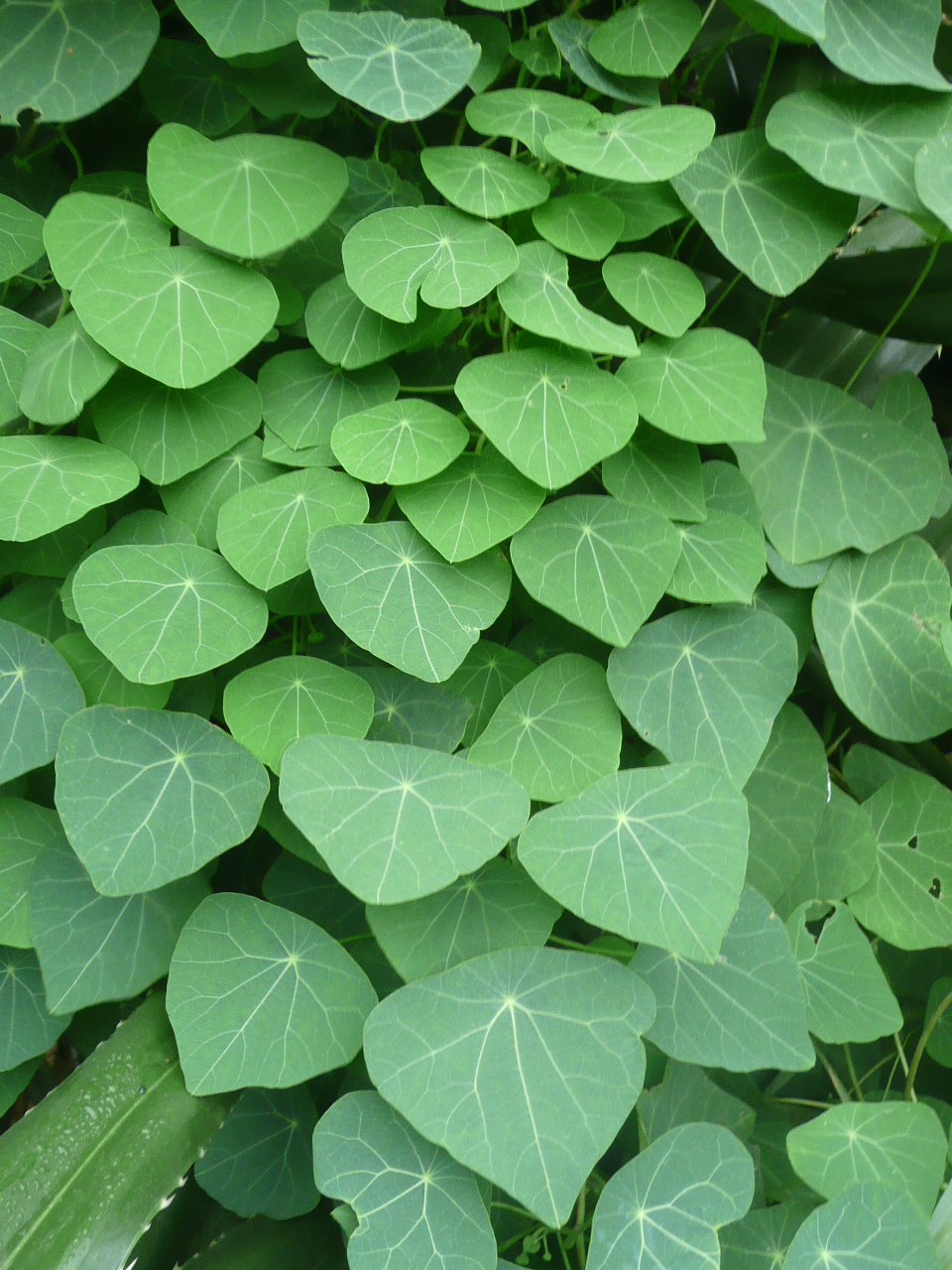 Stephania cephalantha
Compare
Questions and answers
What is the scientific name of the Carolina Snailseed?
The scientific name of the Carolina Snailseed is Nephroia carolina. Written with its author, the full name is Nephroia carolina (L.) L.Lian & Wei Wang.
Which family does the Carolina Snailseed belong to?
Nephroia carolina belongs to the family Menispermaceae, in the order Ranunculales and the class Magnoliopsida.
Where is the Carolina Snailseed found?
Checklists and occurrence records place Nephroia carolina in 2 countries: United States and Mexico.
What other names does the Carolina Snailseed have?
Nephroia carolina is also known in English as Red-berried Moonseed.
Sources
Passages the profile rests on
- Its fruits are bright red drupes containing a single seed resembling a small snail shell. Source passage: “Each fruit has a single seed that resembles a small snail shell, protected by the hard endocarp or the inner section of the ovary wall.” — English Wikipedia
- The species bears rounded red fruits whose appearance contributes to its common name. Source passage: “The species' common name derives from the appearance of its small, rounded red fruits, and the rough half-moon shape of its seeds.” — English Wikipedia
- Its fruits reach approximately 8 millimetres in size. Source passage: “It reaches 8 mm (0.31 in) in size.” — English Wikipedia
- The climbing woody vine can reach 5 metres or more in height. Source passage: “Nephroia carolina is a climbing woody vine reaching 5 meters (16 ft) or more.” — English Wikipedia
- The species naturally inhabits rocky woodlands and thickets alongside streams, particularly in calcareous areas. Source passage: “Its natural habitat is in rocky woodlands and streamside thickets, particularly in calcareous areas.” — English Wikipedia
- The species also occurs in disturbed habitats, including fencerows and waste areas. Source passage: “It is a weedy species, and can also be found in disturbed habitats such as fencerows and waste areas.” — English Wikipedia
- The species can grow rapidly and is difficult to eradicate. Source passage: “This plant can be fast-growing and difficult to eradicate.” — English Wikipedia
- The species produces flowers and fruits in axillary cymes. Source passage: “Fruits and flowers are borne on axillary cymes.” — English Wikipedia
- Male and female flowers occur on separate plants. Source passage: “The male and female flowers are small and green, appearing on different plants.” — English Wikipedia
- The species produces fruits from June through August. Source passage: “The bright red fruit, a drupe, appears from June to August.” — English Wikipedia
- The species blooms in late spring and its fruits mature by late summer. Source passage: “The plant blooms in late spring and the fruits, abundant bright red berries, are mature by late summer.” — English Wikipedia
- Each fruit contains one seed enclosed by a hard endocarp. Source passage: “Each fruit has a single seed that resembles a small snail shell, protected by the hard endocarp or the inner section of the ovary wall.” — English Wikipedia
- Seeds require three months of cold stratification before germination. Source passage: “The seeds need cold stratification of three months.” — English Wikipedia
- Seeds germinate within 21 to 30 days at 68 °F. Source passage: “Seeds germinate in 21 to 30 days at 68 °F.” — English Wikipedia
- Landscapers sometimes cultivate the species on trellises and fences or allow it to spread among other vegetation for its scarlet fruits. Source passage: “Admiring its scarlet fruits, landscapers sometimes allow it to grow on trellises, fences or let it naturally spread among other weeds and shrubs.” — English Wikipedia
Data
- Catalogue of Life, 2026-10-16 XR cc by
- Global Biodiversity Information Facility CC BY 4.0
- Wikidata CC0
- GeoNames CC BY 4.0
- Within the Catalogue of Life, this name comes from Synonymic Checklists of the Vascular Plants of the World cc by
References
- Lian, L., & Wei Wang. (2020). Molec. Phylogen. Evol. 148-106825: 8 (2020). where the name was published
This species in other databases
Page built on 29 November 2026. See how the catalog is made and all sources and licences.
Cite this page
ScientificNames.org. (2026). Nephroia carolina (Carolina Snailseed). Retrieved November 29, 2026, from https://scientificnames.org/species/nephroia-carolina
“Nephroia carolina (Carolina Snailseed).” ScientificNames.org, 2026, scientificnames.org/species/nephroia-carolina. Accessed 29 Nov. 2026.
ScientificNames.org. “Nephroia carolina (Carolina Snailseed).” Accessed November 29, 2026. https://scientificnames.org/species/nephroia-carolina.
@misc{scientificnames_nephroia_carolina_carolina_snailseed,
  author = {{ScientificNames.org}},
  title = {Nephroia carolina (Carolina Snailseed)},
  year = {2026},
  url = {https://scientificnames.org/species/nephroia-carolina},
  note = {Accessed 2026-11-29}
}