Species · Flowering plants
Canada Moonseed Menispermum canadense
The scientific name of the Canada Moonseed is Menispermum canadense. It is a species of flowering plant in the family Menispermaceae (moonseed family), order Ranunculales.
- Scientific name
- Menispermum canadense L.
- Common name
- Canada Moonseed
- Genus
- Menispermum
- Family
- Menispermaceae (Moonseed Family)
- Order
- Ranunculales
- Class
- Magnoliopsida
- Recorded in
- 4 countries
- Name status
- accepted in the Catalogue of Life

Overview
Canada moonseed is a woody climbing vine. It is native to eastern North America, from southern Canada to northern Florida and westward from the Atlantic coast to Manitoba and Texas. Its purple-black berries each contain a single crescent-shaped seed resembling a crescent moon.
Written 26 November 2026 from the sources listed below. Each statement was checked against the passage it cites; statements that could not be supported were removed.
Appearance
Canada moonseed has palmately lobed leaves, usually with three to seven shallow lobes. Its leaves occasionally have a rounded, unlobed shape.[1][2]
Its fruits are purple-black berries, each containing a single crescent-shaped seed. The seeds resemble crescent moons.[3][4][5]
The vine lacks tendrils and grows to approximately 6 metres tall. Its leaves measure 5–20 centimetres in diameter, fruit clusters measure 6–10 centimetres in diameter, and individual berries measure approximately 1–1.5 centimetres in diameter.[6][7][8][9][10]
Its stems can exceed 16 feet in length.[11]
Habitat
Canada moonseed occurs in thickets and along stream banks.[12][13]
Behaviour
Canada moonseed grows as a twining vine.[14]
Reproduction and life cycle
The species produces ripe fruit between September and October.[15]
A single individual can form colonies of genetically identical plants through its rhizome.[16]
Diet
All parts of Canada moonseed are poisonous. Dauricine is the principal toxin identified in the species, and consumption of the fruit can be fatal.[17][18][19]
Similar species
Canada moonseed fruit can be confused with wild grapes because the fruits resemble one another. The fruit has a taste described as rank.[20][21]
Uses
The Cherokee used Canada moonseed as a laxative and for gynecological and venereal ailments. Its root was used to treat skin diseases.[22][23][24]
The Lenape incorporated the plant into a salve for skin sores. Americans of European descent have also used the species medicinally.[25][26]
Acutumine occurs throughout the plant, with additional amounts found in its roots. The McDAH gene is highly expressed in the roots.[27][28]
The McDAH enzyme catalyzes the conversion of dechloroacutumine into acutumine by adding chlorine. It showed specificity for dechloroacutumine rather than codeine or berberine and was also able to catalyze a reaction using azide instead of chlorine.[29][30][31]
Classification of the Canada Moonseed
| Kingdom | Plantae |
|---|---|
| Subkingdom | Pteridobiotina |
| Phylum | Tracheophyta |
| Class | Magnoliopsida |
| Order | Ranunculales |
| Family | Menispermaceae (Moonseed Family) |
| Subfamily | Menispermoideae |
| Tribe | Menispermeae |
| Genus | Menispermum (Moonseed) |
| Species | Menispermum canadense L. |
Where the Canada Moonseed is found
Checklists and occurrence records place Menispermum canadense in 4 countries across Europe and North America. GBIF holds 14,694 georeferenced records of it.
Countries where it is native or its origin is not stated
Countries where it has been introduced
Regions and cities with the most records
- Minnesota, United States 1,091
- Illinois, United States 1,031
- Ontario, Canada 1,005
- Pennsylvania, United States 886
- Virginia, United States 819
- Ohio, United States 723
- Wisconsin, United States 700
- Maryland, United States 662
- Michigan, United States 662
- New York, United States 610
- Indiana, United States 458
- Missouri, United States 447
- Kansas, United States 426
- Kentucky, United States 406
- Vienna, United States 390
- Wolf Trap, United States 390
- Tysons, United States 383
- Potomac, United States 368
- McLean, United States 362
- Saint Louis Park, United States 360
- Idylwood, United States 346
- Edina, United States 344
- Merrifield, United States 339
- Richfield, United States 338
- West Falls Church, United States 336
- Bloomington, United States 335
- Golden Valley, United States 330
- Great Falls, United States 329
- Minneapolis, United States 323
- West Saint Paul, United States 323
- Reston, United States 319
- North Bethesda, United States 317
- Longfellow Community, United States 316
- Bethesda, United States 315
- Oakton, United States 311
- Saint Paul, United States 310
6 more countries have a few records outside this range
These countries hold a few records of Menispermum canadense but lie outside the range the checklists give for it. Such records are often zoo or garden specimens, museum material or vagrants, so the species is not counted as occurring there.
Range as the checklists state it
Germany [I]; Canada (Manitoba, Ontario, Québec); USA (Alabama, Arkansas, Connecticut, District of Columbia, Delaware, Florida, Georgia, Iowa, Illinois, Indiana, Kansas, Kentucky, Massachusetts, Maryland, Michigan, Minnesota, Missouri, Mississippi, North Carolina, North Dakota, Nebraska, New Hampshire, New Jersey, New York, Ohio, Oklahoma, Pennsylvania, South Carolina, South Dakota, Tennessee, Texas, Virginia, Vermont, Wisconsin, West Virginia); Mexico (Coahuila, Nuevo León, Queretaro, San Luis Potosí)
A number beside a place is its count of GBIF occurrence records. A place without a number comes from a checklist alone. Records show where a species has been observed or collected, which can include escapes and vagrants.
Common names
English
- Canada Moonseed
- Canadian Moonseed
- Common Moonseed
- Moonseed
- Moonseed Vine
- Yellow Parilla
Names in 11 other languages
- Chinese
- 加防己, 北美蝙蝠葛, 美國蝙蝠葛
- Czech
- lunoplod kanadský
- Estonian
- kanada kilplehik
- Finnish
- kanadankilpikierto
- French
- ménisperme du Canada
- German
- Mondsame
- Norwegian Bokmål
- kanadamånefrø
- Russian
- Луносемянник канадский
- Slovak
- mesiačik kanadský
- Swedish
- amerikansk månfröranka
- oji
- Bamakwit Wabigons
Synonyms
9 other scientific names have been used for this species and are now treated as synonyms of Menispermum canadense.
- Cissampelos smilacina L.
- Menispermum angulatum Moench
- Menispermum canadense var. lobatum Pursh
- Menispermum canadense var. virginicum (L.) Jess.
- Menispermum dahuricum var. mexicanum (Rose) Kundu & S.Guha
- Menispermum dauricum var. mexicanum (Rose) Kundu & S.Guha
- Menispermum mexicanum Rose
- Menispermum smilacinum DC.
- Otamplis vitifolia Raf.
Related species
-
 Asian MoonseedMenispermum dauricum
- Carolina SnailseedNephroia carolina
-
 Chondrodendron tomentosum
-
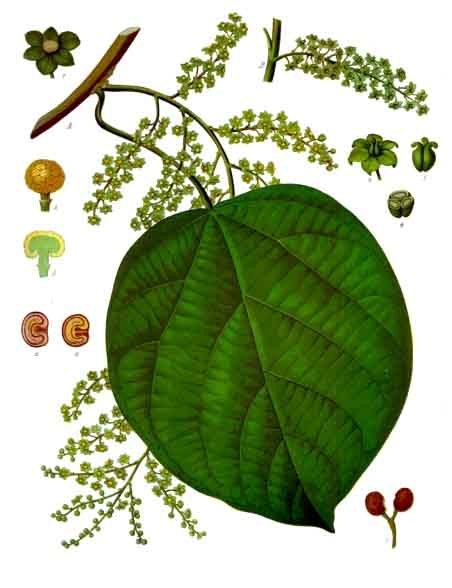 FishberryAnamirta cocculus
-
 Cocculus hirsutus
-
 Tiliacora triandra
-
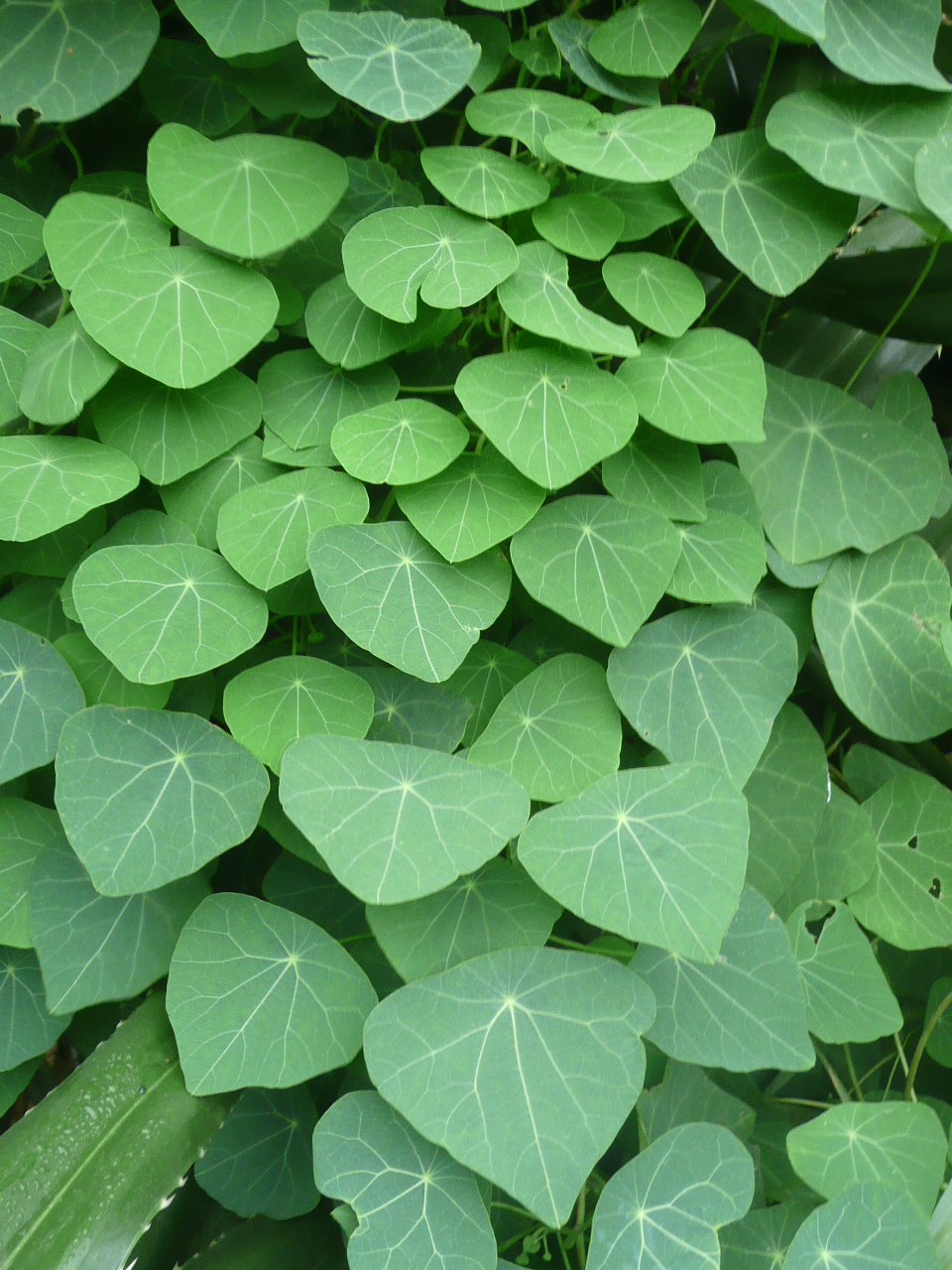 Stephania cephalantha
-
 Yellow VineCoscinium fenestratum
Compare
Questions and answers
What is the scientific name of the Canada Moonseed?
The scientific name of the Canada Moonseed is Menispermum canadense. Written with its author, the full name is Menispermum canadense L..
Which family does the Canada Moonseed belong to?
Menispermum canadense belongs to the family Menispermaceae, in the order Ranunculales and the class Magnoliopsida.
Where is the Canada Moonseed found?
Checklists and occurrence records place Menispermum canadense in 4 countries, including United States, Canada and Mexico.
What other names does the Canada Moonseed have?
Menispermum canadense is also known in English as Canadian Moonseed, Common Moonseed, Moonseed, Moonseed Vine and Yellow Parilla.
Sources
Passages the profile rests on
- Its leaves are palmately lobed, usually with three to seven shallow lobes. Source passage: “The leaves are palmately lobed, 5–20 centimetres (2–8 inches) in diameter with 3–7 shallow lobes” — English Wikipedia
- Its leaves occasionally have a rounded, unlobed shape. Source passage: “occasionally rounded and unlobed.” — English Wikipedia
- Its fruits are purple-black berries. Source passage: “clusters of purple-black berries” — English Wikipedia
- Each berry contains a single crescent-shaped seed. Source passage: “moonseeds have a single crescent-shaped seed” — English Wikipedia
- The seeds resemble crescent moons. Source passage: “The seed inside the berry resembles a crescent moon” — English Wikipedia
- The vine lacks tendrils. Source passage: “the moonseed vine lacks tendrils” — English Wikipedia
- The vine can grow to approximately 6 metres tall. Source passage: “growing to 6 metres (20 feet) tall.” — English Wikipedia
- Its leaves measure 5–20 centimetres in diameter. Source passage: “5–20 centimetres (2–8 inches) in diameter” — English Wikipedia
- Its fruit clusters measure 6–10 centimetres in diameter. Source passage: “The fruit are produced in 6–10 cm (2+1⁄4–4 in) diameter clusters” — English Wikipedia
- Individual berries measure approximately 1–1.5 centimetres in diameter. Source passage: “each berry is 1–1.5 cm (1⁄3–2⁄3 in) in diameter.” — English Wikipedia
- Its stems can exceed 16 feet in length. Source passage: “stems to 16 feet long or more” — mdc.mo.gov
- The species occurs in thickets. Source passage: “It occurs in thickets, moist woods, and the banks of streams.” — English Wikipedia
- The species occurs along stream banks. Source passage: “the banks of streams.” — English Wikipedia
- The species grows as a twining vine. Source passage: “Common moonseed is a rather slender, twining vine” — mdc.mo.gov
- The species produces ripe fruit between September and October. Source passage: “The fruit is ripe between September and October” — English Wikipedia
- A single individual can form colonies of genetically identical plants through its rhizome. Source passage: “The root is a rhizome, so one specimen can form colonies of genetically identical plants.” — English Wikipedia
- All parts of the plant are poisonous. Source passage: “All parts of these plants are known to be poisonous.” — English Wikipedia
- Dauricine is the principal toxin identified in the species. Source passage: “The principal toxin is the alkaloid dauricine.” — English Wikipedia
- Consumption of the fruit can be fatal. Source passage: “The fruit of Canadian moonseed are poisonous and can be fatal.” — English Wikipedia
- The fruit can be confused with wild grapes because their fruits resemble one another. Source passage: “Both the leaves and fruit resemble those of grapes” — English Wikipedia
- The fruit has a taste described as rank. Source passage: “moonseeds have a taste that is described as "rank".” — English Wikipedia
- The Cherokee used the species as a laxative. Source passage: “The Cherokee used moonseed as a laxative” — English Wikipedia
- The Cherokee used the plant for gynecological and venereal ailments. Source passage: “as a gynecological and venereal aid.” — English Wikipedia
- The root was used to treat skin diseases. Source passage: “The root was used for skin diseases.” — English Wikipedia
- The Lenape incorporated the plant into a salve for skin sores. Source passage: “The Lenape used it in a salve for sores on the skin.” — English Wikipedia
- The species has been used medicinally by Americans of European descent. Source passage: “It has been used for a variety of medicinal uses by Americans of European descent.” — English Wikipedia
- Acutumine occurs throughout the plant, with additional amounts found in its roots. Source passage: “They found the chemical all throughout the first two -- and some extra in the roots of common moonseed.” — wi.mit.edu
- The McDAH gene is highly expressed in the roots of the species. Source passage: “one gene in particular (which they named McDAH, short for M. canadense dechloroacutumine halogenase) was highly expressed in the roots of common moonseed.” — wi.mit.edu
- The McDAH enzyme catalyzes the conversion of dechloroacutumine into acutumine by adding chlorine. Source passage: “able to stick on the chlorine molecule to the alkaloid molecule dechloroacutumine to form acutumine.” — wi.mit.edu
- The McDAH enzyme showed specificity for dechloroacutumine rather than codeine or berberine. Source passage: “when they gave it other alkaloids like codeine and berberine to see if it would install a halogen on those as well, the enzyme ignored them” — wi.mit.edu
- The McDAH enzyme was also able to catalyze a reaction using azide instead of chlorine. Source passage: “the enzyme catalyzed a reaction only with azide” — wi.mit.edu
Data
- Catalogue of Life, 2026-10-16 XR cc by
- Global Biodiversity Information Facility CC BY 4.0
- Wikidata CC0
- GeoNames CC BY 4.0
- Wikimedia Commons per image; credit shown with each image
- Within the Catalogue of Life, this name comes from Synonymic Checklists of the Vascular Plants of the World cc by
References
- L. (1753). Sp. Pl. [Linnaeus] 1: 340 (1753). where the name was published
This species in other databases
- Catalogue of Life 3ZQV2
- Wikidata Q4269532
- iNaturalist 130900
- World Flora Online wfo-0001083814
- GRIN 410360
Page built on 27 November 2026. See how the catalog is made and all sources and licences.
Cite this page
ScientificNames.org. (2026). Menispermum canadense (Canada Moonseed). Retrieved November 27, 2026, from https://scientificnames.org/species/menispermum-canadense
“Menispermum canadense (Canada Moonseed).” ScientificNames.org, 2026, scientificnames.org/species/menispermum-canadense. Accessed 27 Nov. 2026.
ScientificNames.org. “Menispermum canadense (Canada Moonseed).” Accessed November 27, 2026. https://scientificnames.org/species/menispermum-canadense.
@misc{scientificnames_menispermum_canadense_canada_moonseed,
  author = {{ScientificNames.org}},
  title = {Menispermum canadense (Canada Moonseed)},
  year = {2026},
  url = {https://scientificnames.org/species/menispermum-canadense},
  note = {Accessed 2026-11-27}
}