Species · Flowering plants
Western Water-hemlock Cicuta douglasii
The scientific name of the Western Water-hemlock is Cicuta douglasii. It is a species of flowering plant in the family Apiaceae (umbellifer), order Apiales.
- Scientific name
- Cicuta douglasii (DC.) J.M.Coult. & Rose
- Common name
- Western Water-hemlock
- Genus
- Cicuta
- Family
- Apiaceae (Umbellifer)
- Order
- Apiales
- Class
- Magnoliopsida
- Red List category
- LC Least Concern
- Recorded in
- 3 countries
- Name status
- accepted in the Catalogue of Life

Overview
Western water-hemlock (Cicuta douglasii) is a very poisonous perennial flowering plant in the family Apiaceae, order Apiales, and class Magnoliopsida. It grows in wet environments, including marshes, stream banks, slough margins, ditches, meadows, and wet pastures. It is distinguished by thick tuberous roots bearing smaller tubers, purplish stem spots, and pinnately compound leaves.
Written 26 November 2026 from the sources listed below. Each statement was checked against the passage it cites; statements that could not be supported were removed.
Appearance
Western water-hemlock has thick, tuberous roots bearing numerous smaller tubers. Its stem has purplish spots and reaches heights of 0.5–2 meters.[1][2][3]
Its leaves are alternately arranged and pinnately compound. The leaflets are 3–10 centimeters long and 1–2 centimeters wide, with jagged margins; their secondary veins terminate at the bases rather than the tips of the teeth.[4][5][6]
Its compound umbels measure approximately 12.5 centimeters across and contain numerous small white flowers. Each flower contains two seeds.[7][8]
Its inner tubers and stem bases may contain horizontal chambers that assist identification. The lower stem and upper roots contain internal partitions or air spaces visible when sliced lengthwise.[9][10]
Habitat
Western water-hemlock grows in wet environments, including marshes, stream banks, slough margins, ditches, meadows, and wet pastures. It is primarily associated with wet soils around ditches, stream banks, pond margins, and marshes.[11][12]
It is a wetland plant native to the intermountain region. Its water requirements prevent it from occupying open rangelands.[13][14]
Diet
Water birds consume the plant's corky, rounded fruits without apparent ill effects.[15]
Behaviour
Western water-hemlock emerges early in spring. Its odor is described as appealing.[16][17]
Reproduction and life cycle
Its seeds germinate in spring. Its flowers mature near the end of June and the beginning of July.[18][19]
The species can produce new plants from its rootstocks through the basal meristem during autumn. Rootstock-derived plantlets may detach the following spring and develop into independent plants.[20][21]
Its seeds are dispersed by wind, water, machinery, clothing, and transported soil.[22]
Conservation
Western water-hemlock is non-native in some areas outside its western North American native range.[23]
Uses
The plant produces cicutoxin, a poisonous substance concentrated particularly in its roots.[24]
Similar species
Western water-hemlock may be confused with poison hemlock. Cicuta douglasii and Cicuta maculata are similar in having umbels of small white flowers on tall stems above pinnately compound leaves.[25][26]
Classification of the Western Water-hemlock
| Kingdom | Plantae |
|---|---|
| Subkingdom | Pteridobiotina |
| Phylum | Tracheophyta |
| Class | Magnoliopsida |
| Order | Apiales |
| Family | Apiaceae (Umbellifer) |
| Subfamily | Apioideae |
| Tribe | Oenantheae |
| Genus | Cicuta (Water-hemlock) |
| Species | Cicuta douglasii (DC.) J.M.Coult. & Rose |
Where the Western Water-hemlock is found
Checklists and occurrence records place Cicuta douglasii in 3 countries across North America. GBIF holds 3,021 georeferenced records of it.
Countries
Regions and cities with the most records
- California, United States 376
- British Columbia, Canada 303
- Oregon, United States 270
- Washington, United States 233
- Idaho, United States 115
- Colorado, United States 91
- Alaska, United States 62
- Arizona, United States 49
- Novato, United States 47
- Florida, United States 42
- San Rafael, United States 41
- Montana, United States 37
- Los Altos, United States 33
- Alberta, Canada 31
- Pocatello, United States 28
- Mountain View, United States 27
- New Mexico, United States 26
- Live Oak, United States 24
- Santa Cruz, United States 24
- Aloha, United States 20
- Bend, United States 20
- Menlo Park, United States 20
- Palo Alto, United States 17
- Tigard, United States 17
- Beaverton, United States 16
- Colwood, Canada 16
- Hillsboro, United States 16
- Langford, Canada 16
- Bethany, United States 15
- Cupertino, United States 15
- Delta, Canada 15
- Forest Grove, United States 15
- Nevada, United States 15
- Richmond, Canada 15
- Riley Park, Canada 15
- Sherwood, United States 15
Range as the checklists state it
Alaska; Canada (British Columbia, Northern Territories); USA (California, Idaho, Montana, Nevada, Oregon, Washington State); Mexico (Chihuahua)
A number beside a place is its count of GBIF occurrence records. A place without a number comes from a checklist alone. Records show where a species has been observed or collected, which can include escapes and vagrants.
Common names
English
- Western Water-hemlock
- Douglas' Water-hemlock
Names in 4 other languages
- Chinese
- 美西水毒芹
- French
- cicutaire pourpre
- Russian
- Вёх Дугласа
- nav
- Shashdáá’
Synonyms
11 other scientific names have been used for this species and are now treated as synonyms of Cicuta douglasii.
- Cicuta fimbriata Greene
- Cicuta frondosa Greene
- Cicuta maculata var. californica (A.Gray) B.Boivin
- Cicuta mexicana J.M.Coult. & Rose
- Cicuta occidentalis f. frondosa (Greene) Greene
- Cicuta purpurata Greene
- Cicuta sonnei Greene
- Cicuta vagans Greene
- Cicuta virosa var. californica (A.Gray) J.M.Coult. & Rose
- Sium douglasii DC.
- Cicuta californica A.Gray ambiguous synonym
Related species
-
 CowbaneCicuta virosa
-
 Spotted Water-hemlockCicuta maculata
-
 Bulb-bearing Water-hemlockCicuta bulbifera
-
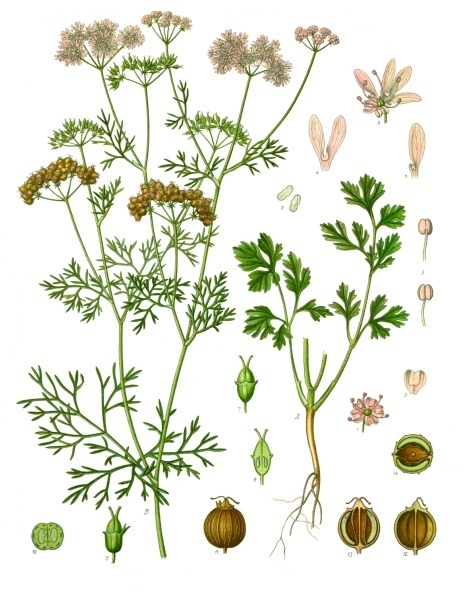 CorianderCoriandrum sativum
-
 Poison HemlockConium maculatum
-
 FennelFoeniculum vulgare
-
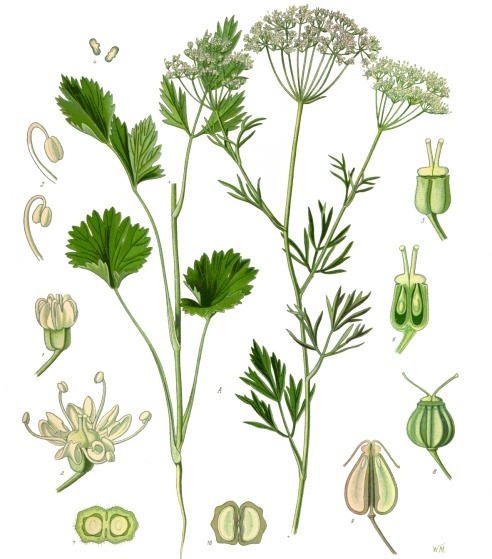 AnisePimpinella anisum
-
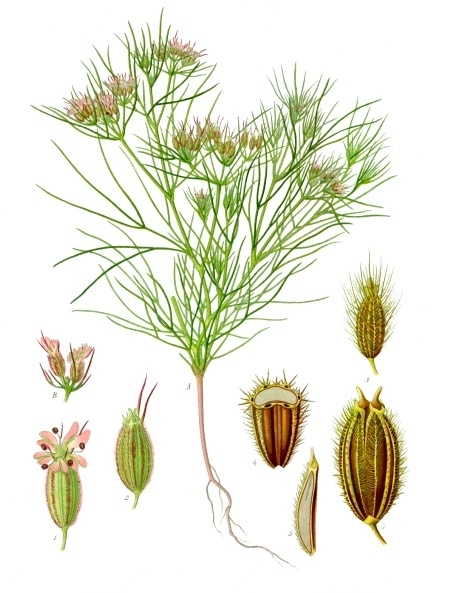 CuminCuminum cyminum
Compare
Questions and answers
What is the scientific name of the Western Water-hemlock?
The scientific name of the Western Water-hemlock is Cicuta douglasii. Written with its author, the full name is Cicuta douglasii (DC.) J.M.Coult. & Rose.
Which family does the Western Water-hemlock belong to?
Cicuta douglasii belongs to the family Apiaceae, in the order Apiales and the class Magnoliopsida.
Where is the Western Water-hemlock found?
Checklists and occurrence records place Cicuta douglasii in 3 countries: United States, Canada and Mexico.
What is the conservation status of the Western Water-hemlock?
The IUCN Red List category recorded for Cicuta douglasii is Least Concern (LC).
What other names does the Western Water-hemlock have?
Cicuta douglasii is also known in English as Douglas' Water-hemlock.
Why is water hemlock so toxic?
Western water-hemlock produces cicutoxin, which affects the central nervous system of animals. All parts of the plant are toxic, with particularly potent poison in the roots.[24][27][28]
Sources
Passages the profile rests on
- The plant has thick, tuberous roots bearing numerous smaller tubers. Source passage: “The plant's roots are thick and tuberous, with many smaller tubers on the main one” — English Wikipedia
- Its stem has purplish spots. Source passage: “The stem is 0.5–2 meters (1+1⁄2–6+1⁄2 ft) tall with purplish spots.” — English Wikipedia
- Its stem reaches heights of 0.5–2 meters. Source passage: “The stem is 0.5–2 meters (1+1⁄2–6+1⁄2 ft) tall” — English Wikipedia
- The leaves are alternately arranged and pinnately compound. Source passage: “The leaves are alternate and compound pinnate” — English Wikipedia
- Its leaflets are 3–10 centimeters long and 1–2 centimeters wide, with jagged margins. Source passage: “The leaflets are 3–10 centimeters (1+1⁄4–4 in) long and 1–2 cm (1⁄2–3⁄4 in) wide, with jagged edges.” — English Wikipedia
- The secondary veins of its leaflets terminate at the bases rather than the tips of the teeth. Source passage: “the secondary veins of the leaflets end at the bases instead of the tips of the teeth.” — English Wikipedia
- Its compound umbels measure approximately 12.5 centimeters across and contain numerous small white flowers. Source passage: “Its inflorescences are compound umbels about 12.5 cm (5 in) across, with many small, white flowers” — English Wikipedia
- Each flower contains two seeds. Source passage: “which have two seeds each.” — English Wikipedia
- Its inner tubers and stem bases may contain horizontal chambers that assist identification. Source passage: “The inner tubers and stem bases can have horizontal chambers useful for identification.” — English Wikipedia
- The lower stem and upper roots contain internal partitions or air spaces visible when sliced lengthwise. Source passage: “The lower stem and upper roots of Cicuta contain numerous internal partitions or air spaces that can be revealed if sliced lengthwise.” — fs.usda.gov
- The species grows in wet environments including marshes, stream banks, slough margins, ditches, meadows, and wet pastures. Source passage: “It grows in wet places such as marshes, stream banks, slough margins, ditches, meadows, and wet pastures.” — English Wikipedia
- The species is primarily associated with wet soils around ditches, stream banks, pond margins, and marshes. Source passage: “water hemlock occurs primarily on wet soils associated with ditches, stream banks, pond margins, and marshes.” — fs.usda.gov
- Its water requirements prevent it from occupying open rangelands. Source passage: “Water requirements limit this plant from inhabiting open rangelands.” — English Wikipedia
- The species is a wetland plant native to the intermountain region. Source passage: “Western water hemlock (Cicuta douglasii) is a wetland plant that is native to the intermountain region.” — extension.unr.edu
- Water birds consume the plant's corky, rounded fruits without apparent ill effects. Source passage: “Water birds often eat the corky, rounded fruits of water hemlock without ill effect” — fs.usda.gov
- The species emerges early in spring. Source passage: “It is one of the first plants to emerge in springtime” — English Wikipedia
- Its odor is described as appealing. Source passage: “and has a very appealing odor.” — English Wikipedia
- Its seeds germinate in spring. Source passage: “The seeds germinate in spring” — English Wikipedia
- Its flowers mature near the end of June and the beginning of July. Source passage: “flowers mature near the end of June and beginning of July.” — English Wikipedia
- The species can produce new plants from its rootstocks through the basal meristem during autumn. Source passage: “rootstocks can also produce new plants in the fall from the basal meristem.” — English Wikipedia
- Rootstock-derived plantlets may detach the following spring and develop into independent plants. Source passage: “When these detach the following spring, they may form a new plant.” — English Wikipedia
- Its seeds are dispersed by wind, water, machinery, clothing, and transported soil. Source passage: “Seed dispersal is by means of wind, water, machinery, clothing, and through transported soil.” — English Wikipedia
- The species is non-native in some areas outside its western North American native range. Source passage: “native to western North America and non-native across” — learn.misin.msu.edu
- The plant produces cicutoxin, a poisonous substance concentrated particularly in its roots. Source passage: “Cicutoxin is a yellowish liquid that is prevalent in the roots.” — English Wikipedia
- The species may be confused with poison hemlock. Source passage: “It may be confused with poison hemlock” — extension.unr.edu
- Cicuta douglasii and Cicuta maculata are similar in having umbels of small white flowers on tall stems above pinnately compound leaves. Source passage: “Both species are similar in having umbels of small white flowers borne on tall stems (up to 6 feet in height) above once to thrice pinnately compound, fern-like leaves.” — fs.usda.gov
- Cicutoxin affects the central nervous system of animals. Source passage: “This unsaturated alcohol has a major impact on the central nervous system of animals.” — English Wikipedia
- All parts of the plant are toxic, with particularly potent poison in the roots. Source passage: “All parts of water hemlock are toxic, but the poison is especially virulent from the roots.” — fs.usda.gov
- The species can cause fatal poisoning in sheep at an intake of 0.2–0.5% of body weight. Source passage: “As little as 0.2–0.5% body weight for sheep” — English Wikipedia
- The species can cause fatal poisoning in cattle at an intake of 0.1% of body weight. Source passage: “0.1% body weight for cattle” — English Wikipedia
- The species can cause fatal poisoning in horses at an intake of 0.5% of body weight. Source passage: “0.5% body weight for horses” — English Wikipedia
- The species can cause fatal poisoning in swine at an intake of 0.3% of body weight. Source passage: “0.3% body weight for swine can be lethal.” — English Wikipedia
- Ingestion of green plant material equivalent to approximately 0.1% of a person's body weight can be fatal. Source passage: “Ingestion of green materials of western water hemlock in amounts equivalent to about 0.1% of a person's body weight can even lead to death.” — English Wikipedia
- Death from ingestion of its toxin can occur within fifteen minutes. Source passage: “Death can occur within fifteen minutes of ingesting the toxin.” — English Wikipedia
Data
- Catalogue of Life, 2026-10-16 XR cc by
- Global Biodiversity Information Facility CC BY 4.0
- Wikidata CC0
- GeoNames CC BY 4.0
- Wikimedia Commons per image; credit shown with each image
- Within the Catalogue of Life, this name comes from Synonymic Checklists of the Vascular Plants of the World cc by
References
- J.M.Coult. & Rose. (1900). Contr. U.S. Natl. Herb. 7: 95 (1900). where the name was published
This species in other databases
- Catalogue of Life VB4S
- Wikidata Q5119479
- iNaturalist 76338
- World Flora Online wfo-0000604479
- GRIN 316620
Page built on 29 November 2026. See how the catalog is made and all sources and licences.
Cite this page
ScientificNames.org. (2026). Cicuta douglasii (Western Water-hemlock). Retrieved November 29, 2026, from https://scientificnames.org/species/cicuta-douglasii
“Cicuta douglasii (Western Water-hemlock).” ScientificNames.org, 2026, scientificnames.org/species/cicuta-douglasii. Accessed 29 Nov. 2026.
ScientificNames.org. “Cicuta douglasii (Western Water-hemlock).” Accessed November 29, 2026. https://scientificnames.org/species/cicuta-douglasii.
@misc{scientificnames_cicuta_douglasii_western_water_hemlock,
  author = {{ScientificNames.org}},
  title = {Cicuta douglasii (Western Water-hemlock)},
  year = {2026},
  url = {https://scientificnames.org/species/cicuta-douglasii},
  note = {Accessed 2026-11-29}
}