Species · Birds
Grey-capped Cuckoo Coccyzus lansbergi
The scientific name of the Grey-capped Cuckoo is Coccyzus lansbergi. It is a species of bird in the family Cuculidae (cuckoo), order Cuculiformes. The name dates from 1850.
- Scientific name
- Coccyzus lansbergi Bonaparte, 1850
- Common name
- Grey-capped Cuckoo
- Genus
- Coccyzus
- Family
- Cuculidae (Cuckoo)
- Order
- Cuculiformes
- Class
- Aves
- Red List category
- LC Least Concern
- Recorded in
- 4 countries
- Name status
- accepted in the Catalogue of Life

Overview
The Grey-capped Cuckoo is a bird in the family Cuculidae and order Cuculiformes. It occurs in Colombia, Ecuador, Peru, and Venezuela, mainly west of the Andes. It is distinguished by its rufous-tawny body and gray coloration.
Written 27 November 2026 from the sources listed below. Each statement was checked against the passage it cites; statements that could not be supported were removed.
Appearance
Adults have a slate-gray cap extending below the eye. Their upperparts and wings are rufous brown, and their underparts are dark rufous buff.[1][2][3]
The upper surface of the tail is black, while the underside has black central feathers and black outer feathers with white tips. The bare skin surrounding the eye forms a narrow ring that can be yellow, white, or yellowish gray.[4][5]
The bill is stout, slightly curved downward, and black, sometimes with a gray or yellow spot at the base of the lower mandible. Males and females have the same plumage.[6][7]
Juveniles have a brown crown and less white on the tail than adults. The combination of a rufous-tawny body and gray coloration distinguishes the species from other cuckoos in its range.[8][9]
The bird measures 25–28 cm in length, with approximately half its length consisting of the tail. Males weigh between 46 and 56 g.[10][11]
Habitat
The Grey-capped Cuckoo inhabits tropical moist to dry semi-deciduous forests.[12]
In Peru, it mostly occurs from sea level to 800 m elevation. In Ecuador, it mostly occurs up to 1,800 m elevation.[13][14]
In Colombia, it mostly occurs up to 600 m elevation. In Venezuela, it mostly occurs up to 1,400 m elevation.[15][16]
Its distribution consists of two separate populations, one in northern Colombia and northwestern Venezuela and another in western Ecuador and extreme northern Peru. The species is found mainly west of the Andes.[17][18]
The species has been recorded as a vagrant on Bonaire and in the Galápagos Islands. It has also been reported from Aruba.[19][20]
Diet
The Grey-capped Cuckoo feeds on insects. Caterpillars and some wasps appear to make up most of its diet.[21][22]
Behaviour
The species is partially or entirely migratory. Its migration may occur within each separate population area rather than between the two areas.[23][24]
The song may be repeated several times during a single singing bout.[25]
Reproduction and life cycle
The breeding season in Ecuador may extend from January through June. The nest is a twig platform lined with lichens, placed on a horizontal branch approximately 0.4–5 metres above the ground and concealed by foliage.[26][27][28][29]
The clutch contains two to five eggs. Both parents incubate the eggs, and incubation lasts nine to twelve days.[30][31][32]
Young birds fledge eight to thirteen days after hatching. Incubation begins when the first egg is laid, resulting in asynchronous hatching and offspring of different sizes.[33][34]
Conservation
The Grey-capped Cuckoo is classified as Least Concern. Its population size is unknown and is believed to be decreasing.[35][36][37]
The species is considered fairly common but locally distributed in western Ecuador and rare elsewhere. No specific threats have been identified.[38][39]
Similar species
The Grey-capped Cuckoo is more closely related to Caribbean members of the genus Coccyzus than to other South American members of the genus.[40]
Classification of the Grey-capped Cuckoo
| Kingdom | Animalia |
|---|---|
| Phylum | Chordata |
| Subphylum | Vertebrata |
| Infraphylum | Gnathostomata |
| Parvphylum | Osteichthyes |
| Megaclass | Tetrapoda |
| Class | Aves (Bird) |
| Order | Cuculiformes (Cuckoo) |
| Family | Cuculidae (Cuckoo) |
| Genus | Coccyzus (Spotted-tailed Cuckoos) |
| Species | Coccyzus lansbergi Bonaparte, 1850 |
Where the Grey-capped Cuckoo is found
Checklists and occurrence records place Coccyzus lansbergi in 4 countries across South America. GBIF holds 1,588 georeferenced records of it.
Countries
Regions and cities with the most records
- La Guajira Department, Colombia 344
- Manabí, Ecuador 272
- Guayas, Ecuador 264
- Bolívar, Colombia 218
- Guayaquil, Ecuador 195
- Santa Rosa, Colombia 178
- Cartagena, Colombia 167
- Turbaco, Colombia 164
- Arjona, Colombia 156
- Eloy Alfaro, Ecuador 84
- Portoviejo, Ecuador 63
- Loja, Ecuador 61
- Magdalena Department, Colombia 50
- Córdoba, Colombia 39
- Santa Elena, Ecuador 34
- Santiago de Tolú, Colombia 30
- Tumbes, Peru 29
- Falcón, Venezuela 28
- San Juan Nepomuceno, Colombia 27
- San Jacinto, Colombia 26
- Antioquia, Colombia 24
- Montecristi, Ecuador 24
- Santa Marta, Colombia 22
- Repelón, Colombia 20
- El Triunfo, Ecuador 19
- San Estanislao, Colombia 19
- Atlántico, Colombia 18
- Maicao, Colombia 17
- Pichincha, Ecuador 17
- Riohacha, Colombia 16
- Barranquilla, Colombia 14
- Cereté, Colombia 14
- Montería, Colombia 14
- Soledad, Colombia 14
- Juan de Acosta, Colombia 13
- Malambo, Colombia 13
1 more country has a few records outside this range
These countries hold a few records of Coccyzus lansbergi but lie outside the range the checklists give for it. Such records are often zoo or garden specimens, museum material or vagrants, so the species is not counted as occurring there.
Range as the checklists state it
South America
A number beside a place is its count of GBIF occurrence records. A place without a number comes from a checklist alone. Records show where a species has been observed or collected, which can include escapes and vagrants.
Common names
English
- Grey-capped Cuckoo
- Gray-capped Cuckoo
Names in 27 other languages
- Arabic
- وقواق ذو القلنسوة الرمادية
- Catalan
- cucut capgrís
- Chinese
- 灰頂美洲鵑, 灰顶美洲鹃
- Croatian
- sivokapa kukavica
- Czech
- kukačka Lansbergova, kukačka šedohlavá
- Danish
- Gråhættet Gøg
- Dutch
- Grijskopkoekoek
- Esperanto
- grizĉapa kukolo
- Estonian
- ruuge-vihmakägu
- Finnish
- harmaapääkäki
- French
- Coulicou à tête grise
- German
- Graukappenkuckuck, Lansberg-Kuckuck, Lansbergkuckuck
- Italian
- Cuculo capogrigio
- Japanese
- ハイズキンカッコウ
- Lithuanian
- Lansbergo amerikinė gegutė
- Norwegian
- gråhettegjøk
- Papiamento
- Cucu Cabes Gris, Kuku Kabes Gris
- Polish
- kukawik rdzawy
- Portuguese
- cuco-de-barrete-cinzento, papa-lagarta-de-cabeça-cinzenta
- Russian
- Американская кукушка Лансберга, Сероголовая пиайя
- Serbian
- Sivokapa američka kukavica
- Slovak
- kukavka sivohlavá
- Spanish
- Cuclillo cabecigrís, Cuclillo de Gorro Gris
- Swedish
- gråhuvad regngök
- Turkish
- Gri Başlı Guguk, Gri kepli guguk
- Ukrainian
- кукліло рудий
- Welsh
- cog benllwyd
Related species
-
 Yellow-billed CuckooCoccyzus americanus
-
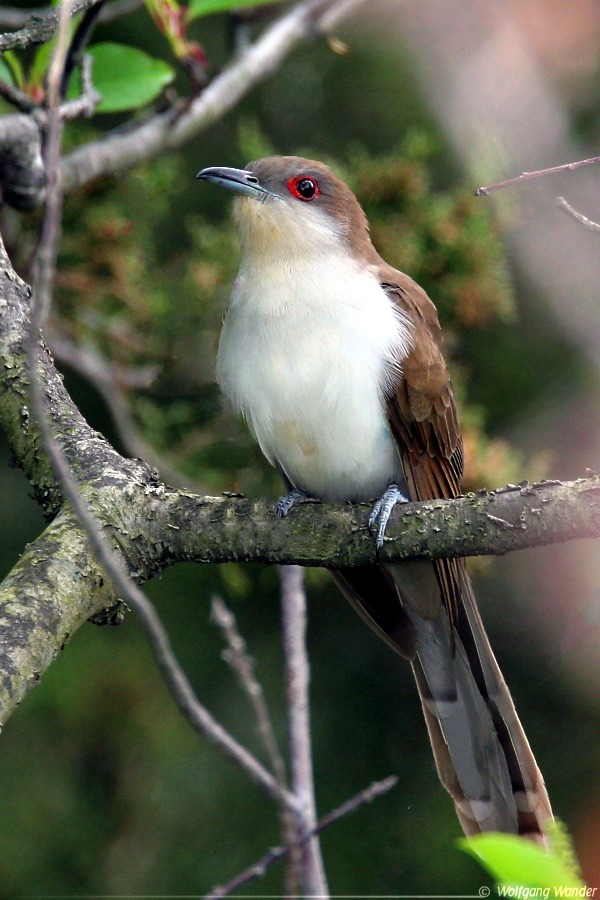 Black-billed CuckooCoccyzus erythropthalmus
-
 Mangrove CuckooCoccyzus minor
-
 Great Lizard CuckooCoccyzus merlini
-
 Dark-billed CuckooCoccyzus melacoryphus
-
 Puerto Rican Lizard CuckooCoccyzus vieilloti
-
 Cocos CuckooCoccyzus ferrugineus
-
 Hispaniolan Lizard CuckooCoccyzus longirostris
Compare
Questions and answers
What is the scientific name of the Grey-capped Cuckoo?
The scientific name of the Grey-capped Cuckoo is Coccyzus lansbergi. Written with its author, the full name is Coccyzus lansbergi Bonaparte, 1850.
Which family does the Grey-capped Cuckoo belong to?
Coccyzus lansbergi belongs to the family Cuculidae, in the order Cuculiformes and the class Aves.
Where is the Grey-capped Cuckoo found?
Checklists and occurrence records place Coccyzus lansbergi in 4 countries: Colombia, Ecuador, Peru and Venezuela.
What is the conservation status of the Grey-capped Cuckoo?
The IUCN Red List category recorded for Coccyzus lansbergi is Least Concern (LC).
What other names does the Grey-capped Cuckoo have?
Coccyzus lansbergi is also known in English as Gray-capped Cuckoo.
Sources
Passages the profile rests on
- Adults have a slate-gray cap extending below the eye. Source passage: “Adults have a slate-gray cap to below the eye.” — English Wikipedia
- The upperparts and wings are rufous brown. Source passage: “Their upperparts and wings are rufous brown.” — English Wikipedia
- Its underparts are dark rufous buff. Source passage: “Their underparts are dark rufous buff.” — English Wikipedia
- The upper surface of the tail is black, while the underside has black central feathers and black outer feathers with white tips. Source passage: “The upper surface of their tail is black; the underside of the central pair of feathers is black and the rest black with white tips.” — English Wikipedia
- The bare skin surrounding the eye forms a narrow ring that can be yellow, white, or yellowish gray. Source passage: “Their eye is surrounded by a narrow ring of bare skin that is yellow, white, or yellowish gray.” — English Wikipedia
- The bill is stout, slightly curved downward, and black, sometimes with a gray or yellow spot at the base of the lower mandible. Source passage: “The species' bill is stout, somewhat decurved, and black with sometimes a gray or yellow spot at the base of the mandible.” — English Wikipedia
- Males and females have the same plumage. Source passage: “Males and females have the same plumage.” — English Wikipedia
- Juveniles have a brown crown and less white on the tail than adults. Source passage: “Juveniles are similar to adults but have a brown crown and less white on the tail.” — English Wikipedia
- Its combination of a rufous-tawny body and gray coloration distinguishes it from other cuckoos in its range. Source passage: “Combination of rufous-tawny body and gray separates it from other cuckoos in range.” — ebird.org
- The bird measures 25–28 cm in length, with approximately half its length consisting of the tail. Source passage: “The grey-capped cuckoo is 25 to 28 cm (9.8 to 11 in) long, about half of which is the tail.” — English Wikipedia
- Males weigh between 46 and 56 g. Source passage: “Males weigh 46 to 56 g (1.6 to 2.0 oz).” — English Wikipedia
- The species inhabits tropical moist to dry semi-deciduous forests. Source passage: “The grey-capped cuckoo inhabits a variety of landscapes including tropical moist to dry semi-deciduous forest” — English Wikipedia
- In Peru, the species mostly occurs from sea level to 800 m elevation. Source passage: “from sea level to 800 m (2,600 ft) in Peru” — English Wikipedia
- In Ecuador, the species mostly occurs up to 1,800 m elevation. Source passage: “to 1,800 m (5,900 ft) in Ecuador” — English Wikipedia
- In Colombia, the species mostly occurs up to 600 m elevation. Source passage: “to 600 m (2,000 ft) in Colombia” — English Wikipedia
- In Venezuela, the species mostly occurs up to 1,400 m elevation. Source passage: “to 1,400 m (4,600 ft) in Venezuela.” — English Wikipedia
- Its distribution consists of two separate populations, one in northern Colombia and northwestern Venezuela and another in western Ecuador and extreme northern Peru. Source passage: “One is in northern Colombia and northwestern Venezuela and the other in western Ecuador and extreme northern Peru.” — English Wikipedia
- The species is found mainly west of the Andes. Source passage: “Brightly-colored cuckoo found mainly west of the Andes.” — ebird.org
- The species has been recorded as a vagrant on Bonaire and in the Galápagos Islands. Source passage: “The species has been documented as a vagrant on Bonaire (an island off the Venezuelan coast) and on the Galapagos Islands.” — English Wikipedia
- The species has also been reported from Aruba. Source passage: “It is found in Aruba, Colombia, Ecuador, Netherlands Antilles, ...” — inaturalist.org
- The species feeds on insects. Source passage: “The grey-capped cuckoo feeds on insects;” — English Wikipedia
- Caterpillars and some wasps appear to make up most of its diet. Source passage: “caterpillars and some wasps appear to form the bulk of its diet.” — English Wikipedia
- The species is partially or entirely migratory. Source passage: “The grey-capped cuckoo is partially or wholly migratory” — English Wikipedia
- Its migration may occur within each separate population area rather than between the two areas. Source passage: “Migration might be within each separate area rather than between them.” — English Wikipedia
- The song may be repeated several times during a single singing bout. Source passage: “It may be repeated several times during each song bout.” — English Wikipedia
- The breeding season in Ecuador may extend from January through June. Source passage: “The grey-capped cuckoo's breeding season in Ecuador may be as long as from January to June” — English Wikipedia
- The nest is a twig platform lined with lichens. Source passage: “Its nest is a platform of twigs lined with lichens” — English Wikipedia
- The nest is placed on a horizontal branch approximately 0.4–5 metres above the ground. Source passage: “placed on a horizontal branch between about 0.4 and 5 metres (1 and 20 ft) above the ground” — English Wikipedia
- The nest is concealed by foliage. Source passage: “and concealed by foliage.” — English Wikipedia
- The clutch contains two to five eggs. Source passage: “The clutch size is two to five eggs.” — English Wikipedia
- Both parents incubate the eggs. Source passage: “Both parents incubate the eggs over nine to 12 days” — English Wikipedia
- Incubation lasts nine to twelve days. Source passage: “Both parents incubate the eggs over nine to 12 days” — English Wikipedia
- Young birds fledge eight to thirteen days after hatching. Source passage: “fledging occurs eight to 13 days after hatch.” — English Wikipedia
- Incubation begins when the first egg is laid, resulting in asynchronous hatching and offspring of different sizes. Source passage: “Incubation begins with the first egg laid so hatching is asynchronous and the young differ in size.” — English Wikipedia
- The species is classified as Least Concern. Source passage: “The IUCN has assessed the grey-capped cuckoo as being of Least Concern” — English Wikipedia
- The population size of the species is unknown. Source passage: “though its population size is not known” — English Wikipedia
- The population is believed to be decreasing. Source passage: “and is believed to be decreasing.” — English Wikipedia
- No specific threats have been identified for the species. Source passage: “No specific threats have been identified.” — English Wikipedia
- The species is considered fairly common but locally distributed in western Ecuador and rare elsewhere. Source passage: “it is thought to be fairly common but still local in western Ecuador and rare elsewhere.” — English Wikipedia
- The species is more closely related to Caribbean members of the genus Coccyzus than to other South American members of the genus. Source passage: “The grey-capped cuckoo is more closely related to the Caribbean species of genus Coccyzus than it is to the others found in South America.” — English Wikipedia
Data
- Catalogue of Life, 2026-10-16 XR cc by
- Global Biodiversity Information Facility CC BY 4.0
- Wikidata CC0
- GeoNames CC BY 4.0
- Wikimedia Commons per image; credit shown with each image
- Within the Catalogue of Life, this name comes from The Integrated Taxonomic Information System cc0
References
- Peters, & James Lee. (1940). Check-List of Birds of the World, Vol. 4.
- Gill, Frank, & and Minturn Wright. (2006). Birds of the World: Recommended English Names.
- Dickinson, E. C., and J. V. Remsen Jr., eds. (2013). The Howard and Moore Complete Checklist of the Birds of the World, 4th Edition, Vol. 1 Non-Passerines.
This species in other databases
Page built on 28 November 2026. See how the catalog is made and all sources and licences.
Cite this page
ScientificNames.org. (2026). Coccyzus lansbergi (Grey-capped Cuckoo). Retrieved November 28, 2026, from https://scientificnames.org/species/coccyzus-lansbergi
“Coccyzus lansbergi (Grey-capped Cuckoo).” ScientificNames.org, 2026, scientificnames.org/species/coccyzus-lansbergi. Accessed 28 Nov. 2026.
ScientificNames.org. “Coccyzus lansbergi (Grey-capped Cuckoo).” Accessed November 28, 2026. https://scientificnames.org/species/coccyzus-lansbergi.
@misc{scientificnames_coccyzus_lansbergi_grey_capped_cuckoo,
  author = {{ScientificNames.org}},
  title = {Coccyzus lansbergi (Grey-capped Cuckoo)},
  year = {2026},
  url = {https://scientificnames.org/species/coccyzus-lansbergi},
  note = {Accessed 2026-11-28}
}