Species · Birds
Dark-billed Cuckoo Coccyzus melacoryphus
The scientific name of the Dark-billed Cuckoo is Coccyzus melacoryphus. It is a species of bird in the family Cuculidae (cuckoo), order Cuculiformes. The name dates from 1817.
- Scientific name
- Coccyzus melacoryphus Vieillot, 1817
- Common name
- Dark-billed Cuckoo
- Genus
- Coccyzus
- Family
- Cuculidae (Cuckoo)
- Order
- Cuculiformes
- Class
- Aves
- Red List category
- LC Least Concern
- Recorded in
- 16 countries
- Name status
- accepted in the Catalogue of Life

Overview
Coccyzus melacoryphus inhabits tropical deciduous forests, gallery forests, and mature secondary forests, generally in lowland areas below 950 m elevation. It has a gray crown and nape, grayish brown upperparts, and a broad black facial mask extending beyond the eye.
Written 26 November 2026 from the sources listed below. Each statement was checked against the passage it cites; statements that could not be supported were removed.
Appearance
Adult males and females have identical plumage. The crown and nape are gray, while the upperparts are grayish brown and the wings are darker grayish brown without rufous coloration.[1][2][3]
The face is gray with a broad black mask extending beyond the eye. The bare skin surrounding the eye can be citron yellow, olive yellow, or gray.[4][5]
The underparts are pale buff, with a darker breast and gray sides of the breast and flanks. Juveniles are duller than adults, with a brown crown and nape, gray tail-feather tips, and sometimes rufous coloration in the wings.[6][7][8]
Adults measure 25–28 cm in total length, with approximately half their length consisting of the tail. Males weigh approximately 42–54 g, while females weigh approximately 50–66 g.[9][10][11]
Habitat
The Dark-billed Cuckoo inhabits the interiors and edges of tropical deciduous forests, as well as gallery forests and mature secondary forests.[12][13]
It generally inhabits lowland areas below 950 m elevation. It has also been documented at elevations reaching 3,600 m.[14][15]
Diet
The diet consists almost entirely of insects. The species consumes both adult and larval insects.[16][17]
Behaviour
Populations in the Galápagos Islands remain resident throughout the year. Populations west of the Andes in Colombia and Ecuador are also year-round residents, as are possibly those in Peru.[18][19]
Populations in southern Brazil, Uruguay, and Argentina breed locally and migrate north during the austral winter. Birds breeding in the Venezuelan Llanos between May and October move south after nesting.[20][21]
The species occurs in most of the Amazon basin only during the austral winter.[22]
Reproduction and life cycle
The nest is a flat platform constructed from sticks and placed in a tree or bush. The usual clutch contains two or three eggs across most of the species' range.[23][24][25]
In Argentina, clutches more commonly contain three or four eggs and occasionally five. The eggs are greenish blue.[26][27]
Incubation starts when the first egg is laid, resulting in asynchronous hatching. The chicks in a brood differ in size.[28][29]
Conservation
The IUCN classifies the Dark-billed Cuckoo as Least Concern. The species has an extremely large geographic range and is considered fairly common throughout its geographic range.[30][31][32]
The population size is unknown, but the population is believed to be stable. No immediate threats to the species have been identified.[33][34]
Classification of the Dark-billed Cuckoo
| Kingdom | Animalia |
|---|---|
| Phylum | Chordata |
| Subphylum | Vertebrata |
| Infraphylum | Gnathostomata |
| Parvphylum | Osteichthyes |
| Megaclass | Tetrapoda |
| Class | Aves (Bird) |
| Order | Cuculiformes (Cuckoo) |
| Family | Cuculidae (Cuckoo) |
| Genus | Coccyzus (Spotted-tailed Cuckoos) |
| Species | Coccyzus melacoryphus Vieillot, 1817 |
Where the Dark-billed Cuckoo is found
Checklists and occurrence records place Coccyzus melacoryphus in 16 countries across North America and South America. GBIF holds 24,205 georeferenced records of it.
Countries
- Argentina 10,253
- Bolivia 515
- Brazil 5,116
- Chile 8
- Colombia 1,951
- Costa Rica 41
- Ecuador 2,898
- French Guiana 35
- Guyana 60
- Paraguay 1,042
- Peru 955
- Suriname 30
- Trinidad and Tobago 29
- United States 150
- Uruguay 850
- Venezuela 272
Regions and cities with the most records
- Galápagos, Ecuador 1,876
- Cordoba, Argentina 1,716
- Buenos Aires, Argentina 1,429
- Entre Rios, Argentina 1,207
- Buenos Aires, Argentina 1,135
- Santos Lugares, Argentina 1,063
- Valentín Alsina, Argentina 894
- Avellaneda, Argentina 893
- Lanús, Argentina 881
- Sarandí, Argentina 874
- Misiones, Argentina 860
- Quilmes, Argentina 836
- Santa Fe, Argentina 822
- Remedios de Escalada de San Martín, Argentina 813
- Monte Chingolo, Argentina 811
- Banfield, Argentina 806
- Lomas de Zamora, Argentina 806
- São Paulo, Brazil 741
- Corrientes, Argentina 623
- Ceará, Brazil 575
- Salta, Argentina 498
- Santiago del Estero, Argentina 486
- Rio Grande do Sul, Brazil 468
- Paraná, Brazil 445
- Meta Department, Colombia 413
- Rio Grande do Norte, Brazil 408
- San Isidro, Argentina 408
- Valle del Cauca Department, Colombia 408
- Don Torcuato, Argentina 406
- Tigre, Argentina 400
- Villa Sarmiento, Argentina 397
- Puerto Iguazú, Argentina 384
- Hurlingham, Argentina 371
- El Palomar, Argentina 367
- Bahia, Brazil 348
- Madre de Dios, Peru 334
Range as the checklists state it
North America
South America
A number beside a place is its count of GBIF occurrence records. A place without a number comes from a checklist alone. Records show where a species has been observed or collected, which can include escapes and vagrants.
Common names
English
- Dark-billed Cuckoo
Names in 26 other languages
- Arabic
- وقواق أدكن المنقار
- Catalan
- cucut daurat
- Chinese
- 暗嘴美洲鹃, 烏嘴美洲鵑
- Croatian
- crnolica kukavica
- Czech
- kukačka tmavozobá
- Danish
- Mørknæbbet Gøg, Sortnæbbet Egerngøg
- Dutch
- Kleine Mangrovekoekoek
- Esperanto
- malhelbeka kukolo
- Estonian
- lõuna-vihmakägu
- Finnish
- nokijuovakäki
- French
- Coulicou de Vieillot
- German
- Dunkelschnabelkuckuck, Galapagos-Kuckuck, Kleiner Mangrovekuckuck
- Italian
- Cuculo beccoscuro
- Japanese
- コミミグロカッコウ
- Lithuanian
- galapaginė amerikinė gegutė
- Norwegian
- tupigjøk
- Polish
- kukawik brunatny
- Portuguese
- Papa-Sebo, cuco-canela, papa-lagarta, papa-lagarta-acanelado
- Russian
- Галапагосская американская кукушка, Галапагосская пиайя
- Serbian
- Tamnokljuna američka kukavica
- Slovak
- kukavka čiernosluchá
- Spanish
- Cuclillo Común, Cuclillo canela, Cuclillo de Pico Oscuro, Cuclillo de pico negro
- Swedish
- mörknäbbad regngök
- Turkish
- Kara Gagalı Guguk, Koyu gagalı guguk
- Ukrainian
- кукліло бурий
- Welsh
- cog fygydog
Related species
-
 Yellow-billed CuckooCoccyzus americanus
-
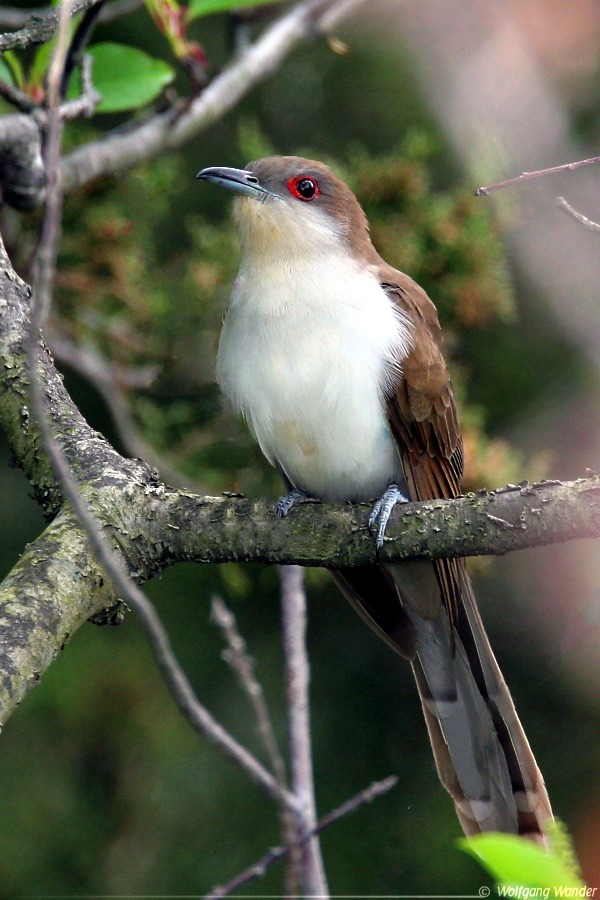 Black-billed CuckooCoccyzus erythropthalmus
-
 Mangrove CuckooCoccyzus minor
-
 Great Lizard CuckooCoccyzus merlini
-
 Puerto Rican Lizard CuckooCoccyzus vieilloti
-
 Cocos CuckooCoccyzus ferrugineus
-
 Hispaniolan Lizard CuckooCoccyzus longirostris
-
 Bay-breasted CuckooCoccyzus rufigularis
Compare
Questions and answers
What is the scientific name of the Dark-billed Cuckoo?
The scientific name of the Dark-billed Cuckoo is Coccyzus melacoryphus. Written with its author, the full name is Coccyzus melacoryphus Vieillot, 1817.
Which family does the Dark-billed Cuckoo belong to?
Coccyzus melacoryphus belongs to the family Cuculidae, in the order Cuculiformes and the class Aves.
Where is the Dark-billed Cuckoo found?
Checklists and occurrence records place Coccyzus melacoryphus in 16 countries, including Argentina, Brazil, Ecuador, Colombia, Paraguay and Peru.
What is the conservation status of the Dark-billed Cuckoo?
The IUCN Red List category recorded for Coccyzus melacoryphus is Least Concern (LC).
Sources
Passages the profile rests on
- Adult males and females have identical plumage. Source passage: “Males and females have the same plumage.” — English Wikipedia
- The crown and nape are gray, while the upperparts are grayish brown. Source passage: “They have a gray crown and nape and grayish brown upperparts.” — English Wikipedia
- The wings are darker grayish brown and lack rufous coloration. Source passage: “Their wings are a darker grayish brown with no rufous.” — English Wikipedia
- The face is gray with a broad black mask extending beyond the eye. Source passage: “Their face is gray with a wide black "mask" past the eye” — English Wikipedia
- The bare skin surrounding the eye can be citron yellow, olive yellow, or gray. Source passage: “which is surrounded by a narrow ring of citron yellow, olive yellow, or gray bare skin.” — English Wikipedia
- The underparts are pale buff, with a darker breast and gray sides of the breast and flanks. Source passage: “Their underparts are pale buff with the breast somewhat darker than the rest; the sides of the breast and flanks are gray.” — English Wikipedia
- Juveniles have a duller appearance than adults, with a brown crown and nape. Source passage: “Juveniles are similar to adults but duller, with a brown crown and nape” — English Wikipedia
- Juveniles have gray tail-feather tips and may show rufous coloration in their wings. Source passage: “gray tips on the tail feathers, and sometimes rufous in the wings.” — English Wikipedia
- Adults measure 25–28 cm in total length, with approximately half their length consisting of the tail. Source passage: “The dark-billed cuckoo is 25 to 28 cm (9.8 to 11.0 in) long, about half of which is the tail.” — English Wikipedia
- Males weigh approximately 42–54 g. Source passage: “Males weigh about 42 to 54 g (1.5 to 1.9 oz)” — English Wikipedia
- Females weigh approximately 50–66 g. Source passage: “and females about 50 to 66 g (1.8 to 2.3 oz).” — English Wikipedia
- The species inhabits the interiors and edges of tropical deciduous forests. Source passage: “the interior and edges of tropical deciduous, gallery, and mature secondary forest” — English Wikipedia
- The species also inhabits gallery forests and mature secondary forests. Source passage: “gallery, and mature secondary forest” — English Wikipedia
- The species generally inhabits lowland areas below 950 m elevation. Source passage: “It is generally a bird of the lowlands below 950 m (3,100 ft)” — English Wikipedia
- The species has been documented at elevations reaching 3,600 m. Source passage: “but has been documented as high as 3,600 m (11,800 ft).” — English Wikipedia
- The diet consists almost entirely of insects. Source passage: “The dark-billed cuckoo's diet is almost entirely insects” — English Wikipedia
- The species consumes both adult and larval insects. Source passage: “both adult and larval.” — English Wikipedia
- Populations in the Galápagos Islands remain resident throughout the year. Source passage: “The dark-billed cuckoo is a year-round resident in the Galápagos Islands” — English Wikipedia
- Populations west of the Andes in Colombia and Ecuador are year-round residents, as are possibly those in Peru. Source passage: “and west of the Andes in Colombia, Ecuador, and maybe Peru.” — English Wikipedia
- Populations in southern Brazil, Uruguay, and Argentina breed locally and migrate north during the austral winter. Source passage: “Those in southern Brazil, Uruguay, and Argentina breed there and migrate north for the austral winter (March to October).” — English Wikipedia
- Birds breeding in the Venezuelan Llanos between May and October move south after nesting. Source passage: “Those breeding on the Venezuelan Llanos between May and October move south after nesting.” — English Wikipedia
- The species occurs in most of the Amazon basin only during the austral winter. Source passage: “The species is present in most of the Amazon basin only during the austral winter.” — English Wikipedia
- The nest is a flat platform constructed from sticks. Source passage: “The dark-billed cuckoo's nest is a flat platform made of sticks” — English Wikipedia
- The nest is placed in a tree or bush. Source passage: “and placed in a tree or bush.” — English Wikipedia
- The usual clutch contains two or three eggs across most of the species' range. Source passage: “In most of its range it lays two or three eggs” — English Wikipedia
- In Argentina, clutches more commonly contain three or four eggs and occasionally five. Source passage: “in Argentina the clutch is more commonly three to four and occasionally five.” — English Wikipedia
- The eggs are greenish blue. Source passage: “The eggs are greenish blue.” — English Wikipedia
- Incubation starts when the first egg is laid, resulting in asynchronous hatching. Source passage: “Incubation begins with the first egg laid so hatching is asynchronous” — English Wikipedia
- The chicks in a brood differ in size. Source passage: “and the young differ in size.” — English Wikipedia
- The IUCN classifies the species as Least Concern. Source passage: “The IUCN has assessed the dark-billed cuckoo as being of Least Concern.” — English Wikipedia
- The species has an extremely large geographic range. Source passage: “It has an extremely large range” — English Wikipedia
- The species is considered fairly common throughout its geographic range. Source passage: “It is considered fairly common throughout its range.” — English Wikipedia
- The population size is unknown, but the population is believed to be stable. Source passage: “though its population size is not known it is believed to be stable.” — English Wikipedia
- No immediate threats to the species have been identified. Source passage: “No immediate threats have been identified.” — English Wikipedia
- The species is regularly found in every mainland South American country except Chile. Source passage: “It is regularly found in every mainland South American country except Chile” — English Wikipedia
- The species has occurred as a vagrant in Chile, Clipperton Island, Panama, Trinidad, the Falkland Islands, Grenada, Florida, and Texas. Source passage: “it has occurred as a vagrant in Clipperton Island, Panama, Trinidad, the Falkland Islands, Grenada, Florida, and Texas.” — English Wikipedia
Data
- Catalogue of Life, 2026-10-16 XR cc by
- Global Biodiversity Information Facility CC BY 4.0
- Wikidata CC0
- GeoNames CC BY 4.0
- Wikimedia Commons per image; credit shown with each image
- Within the Catalogue of Life, this name comes from The Integrated Taxonomic Information System cc0
References
- Peters, & James Lee. (1940). Check-List of Birds of the World, Vol. 4.
- Gill, Frank, & and Minturn Wright. (2006). Birds of the World: Recommended English Names.
- Dickinson, E. C., and J. V. Remsen Jr., eds. (2013). The Howard and Moore Complete Checklist of the Birds of the World, 4th Edition, Vol. 1 Non-Passerines.
- Howell, Steve N. G., Ian Lewington, and Will Russell. (2014). Rare Birds of North America.
This species in other databases
Page built on 28 November 2026. See how the catalog is made and all sources and licences.
Cite this page
ScientificNames.org. (2026). Coccyzus melacoryphus (Dark-billed Cuckoo). Retrieved November 28, 2026, from https://scientificnames.org/species/coccyzus-melacoryphus
“Coccyzus melacoryphus (Dark-billed Cuckoo).” ScientificNames.org, 2026, scientificnames.org/species/coccyzus-melacoryphus. Accessed 28 Nov. 2026.
ScientificNames.org. “Coccyzus melacoryphus (Dark-billed Cuckoo).” Accessed November 28, 2026. https://scientificnames.org/species/coccyzus-melacoryphus.
@misc{scientificnames_coccyzus_melacoryphus_dark_billed_cuckoo,
  author = {{ScientificNames.org}},
  title = {Coccyzus melacoryphus (Dark-billed Cuckoo)},
  year = {2026},
  url = {https://scientificnames.org/species/coccyzus-melacoryphus},
  note = {Accessed 2026-11-28}
}