Species · Mammals
Brush-tailed Rabbit Rat Conilurus penicillatus
The scientific name of the Brush-tailed Rabbit Rat is Conilurus penicillatus. It is a species of mammal in the family Muridae (mice), order Rodentia. The name dates from 1842.

Overview
The species occurs in Australia and Papua New Guinea. It is semi-arboreal and nocturnal, with a long tail ending in a slight brush with a black or white tip.
Written 26 November 2026 from the sources listed below. Each statement was checked against the passage it cites; statements that could not be supported were removed.
Similar species
The white-footed rabbit-rat (Conilurus albipes) and the Capricorn rabbit-rat (Conilurus capricornensis) are extinct members of the same genus. The Brush-tailed Rabbit Rat is the only surviving species of Conilurus.[1][2][3]
Appearance
The upper body is typically grizzled grey or brown. The belly is typically white to cream coloured.[4][5]
The long tail measures between 102 and 235 mm and terminates in a slight brush with either a black or white tip.[6][7]
Adults weigh between 116 and 216 g. The head-body length ranges from 135 to 227 mm.[8][9]
Habitat
Individuals use trees including Eucalyptus miniata and Eucalyptus tetrodonta as dens. They also use hollow logs on the ground for dens.[10][11]
Behaviour
The species is semi-arboreal and nocturnal. Individuals forage partly on the ground.[12][13]
The species uses smaller hollows and hollows closer to the ground than larger-bodied co-occurring mammals.[14]
Conservation
The species is identified as threatened and has undergone a substantial decline in its Australian mainland range. Its extent of occurrence in the Northern Territory has declined by more than 65%.[15][16][17]
The species is contracting towards wetter and lower geographic areas compared with its historical distribution. For more than ten years, no mainland records have been reported from the Northern Territory outside the Cobourg Peninsula.[18][19]
The species was formerly recorded in the Mitchell Plateau region of the Kimberley in Western Australia. It also had sparse historical records from areas including Prince Regent National Park.[20][21]
Trapping success on the Tiwi Islands declined by 64% between 2002 and 2015. A reintroduction attempt in the Darwin region was unsuccessful, and the species is considered locally extinct in Kakadu National Park.[22][23][24]
Its use of low and small hollows may increase its vulnerability to predation and destruction by high-intensity savanna fires.[14][25]
The species exhibits high genetic differentiation among populations. Two distinct genomic lineages occur between the Tiwi Islands and the Australian mainland.[26][27]
Approximately half of the species' total genomic diversity occurs among lineages, while island populations represent a small component of its total genomic diversity. Conserving at least one population from each genomic lineage would retain approximately 80% or more of the species' alleles.[28][29][30]
Conservation planning should consider genomic and ecological differences between source and recipient populations when planning translocations.[31]
Classification of the Brush-tailed Rabbit Rat
| Kingdom | Animalia |
|---|---|
| Phylum | Chordata |
| Subphylum | Vertebrata |
| Infraphylum | Gnathostomata |
| Parvphylum | Osteichthyes |
| Megaclass | Tetrapoda |
| Class | Mammalia (Mammal) |
| Subclass | Theria |
| Infraclass | Eutheria |
| Order | Rodentia (Rodent) |
| Suborder | Myomorpha (Mice) |
| Superfamily | Muroidea |
| Family | Muridae (Mice) |
| Subfamily | Murinae (Old World Mice) |
| Genus | Conilurus (Rabbit Rats) |
| Species | Conilurus penicillatus (Gould, 1842) |
Where the Brush-tailed Rabbit Rat is found
Checklists and occurrence records place Conilurus penicillatus in 1 country across Oceania. GBIF holds 3,582 georeferenced records of it.
Countries
Regions and cities with the most records
Range as the checklists state it
Australia
A number beside a place is its count of GBIF occurrence records. A place without a number comes from a checklist alone. Records show where a species has been observed or collected, which can include escapes and vagrants.
Common names
English
- Brush-tailed Rabbit Rat
- Brush-tailed Conilurus
- Brush-tailed Rabbit-rat
- Brush-tailed Tree-rat
Names in 6 other languages
- Czech
- krysa štětkoocasá
- Finnish
- australiantupsurotta
- German
- Bürstenschwanzkaninchenratte
- Japanese
- フサオネズミ
- Polish
- królikoszczur krzaczastoogonowy
- Russian
- Пушистохвостая кроличья крыса
Synonyms
4 other scientific names have been used for this species and are now treated as synonyms of Conilurus penicillatus.
- Conilurus melibius Thomas, 1921
- Hapalotis hemileucurus Gould, 1858
- Hapalotis melanura Gray, 1844
- Mus penicillatus Gould, 1842
Related species
- Capricorn Rabbit RatConilurus capricornensis
-
 White-footed Rabbit RatConilurus albipes
-
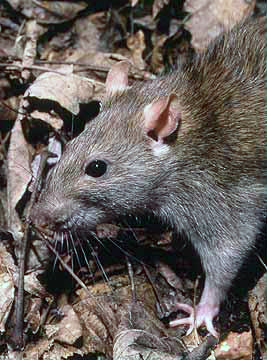 Brown RatRattus norvegicus
-
 Black RatRattus rattus
-
 Polynesian RatRattus exulans
-
 RakaliHydromys chrysogaster
-
 Wood MouseApodemus sylvaticus
-
 Eurasian Harvest MouseMicromys minutus
Compare
Questions and answers
What is the scientific name of the Brush-tailed Rabbit Rat?
The scientific name of the Brush-tailed Rabbit Rat is Conilurus penicillatus. Written with its author, the full name is Conilurus penicillatus (Gould, 1842).
Which family does the Brush-tailed Rabbit Rat belong to?
Conilurus penicillatus belongs to the family Muridae, in the order Rodentia and the class Mammalia.
Where is the Brush-tailed Rabbit Rat found?
Checklists and occurrence records place Conilurus penicillatus in 1 country: Australia.
What is the conservation status of the Brush-tailed Rabbit Rat?
The IUCN Red List category recorded for Conilurus penicillatus is Vulnerable (VU).
What other names does the Brush-tailed Rabbit Rat have?
Conilurus penicillatus is also known in English as Brush-tailed Conilurus, Brush-tailed Rabbit-rat and Brush-tailed Tree-rat.
Sources
Passages the profile rests on
- The white-footed rabbit-rat (Conilurus albipes) is an extinct member of the same genus. Source passage: “the white-footed rabbit-rat (C. albipes) and the Capricorn rabbit-rat (C. capricornensis), are now extinct.” — English Wikipedia
- The Capricorn rabbit-rat (Conilurus capricornensis) is an extinct member of the same genus. Source passage: “the extinct white-footed rabbit-rat (C. albipes) and the Capricorn rabbit-rat (C. capricornensis)” — pmc.ncbi.nlm.nih.gov
- The brush-tailed rabbit-rat is the only surviving species of the genus Conilurus. Source passage: “represents the sole surviving species of the genus.” — English Wikipedia
- The upper body is typically grizzled grey or brown. Source passage: “coloured grizzled grey or brown on the upper side of the body” — English Wikipedia
- The belly is typically white to cream coloured. Source passage: “white to cream coloured on the belly.” — English Wikipedia
- The tail measures between 102 and 235 mm in length. Source passage: “a tail length of 102 to 235 mm.” — English Wikipedia
- The long tail terminates in a slight brush with either a black or white tip. Source passage: “The long tail ends in a slight brush structure with either a black or white tail tip.” — English Wikipedia
- Adults weigh between 116 and 216 g. Source passage: “weighing from 116 to 216 g” — English Wikipedia
- The head-body length ranges from 135 to 227 mm. Source passage: “a head-body length of 135 to 227 mm” — English Wikipedia
- Individuals use trees including Eucalyptus miniata and Eucalyptus tetrodonta as dens. Source passage: “tend to den in trees such as Eucalyptus miniata and Eucalyptus tetrodonta” — English Wikipedia
- Individuals also use hollow logs on the ground for dens. Source passage: “as well as hollow logs on the ground.” — English Wikipedia
- The species is semi-arboreal and nocturnal. Source passage: “is a semi-arboreal, nocturnal species” — English Wikipedia
- Individuals forage partly on the ground. Source passage: “spends some of its time foraging on the ground.” — English Wikipedia
- The species uses smaller hollows and hollows closer to the ground than larger-bodied co-occurring mammals. Source passage: “makes use of smaller hollows and hollows that are closer to the ground” — English Wikipedia
- The species has undergone a substantial decline in its Australian mainland range. Source passage: “On the Australian mainland, the species has substantially declined” — English Wikipedia
- Its extent of occurrence in the Northern Territory has declined by more than 65%. Source passage: “finding that its extent of occurrence has declined by more than 65%.” — English Wikipedia
- The species is identified as threatened. Source passage: “remnant populations of the threatened brush-tailed rabbit-rat” — pmc.ncbi.nlm.nih.gov
- For more than ten years, no mainland records have been reported from the Northern Territory outside the Cobourg Peninsula. Source passage: “there have been no mainland records from outside of the Cobourg Peninsula in more than ten years.” — English Wikipedia
- The species is contracting towards wetter and lower geographic areas compared with its historical distribution. Source passage: “contracting towards geographic areas that are wetter and lower than where it was found historically.” — English Wikipedia
- The species was formerly recorded in the Mitchell Plateau region of the Kimberley in Western Australia. Source passage: “formerly known from the Mitchell Plateau region of the Kimberley” — English Wikipedia
- The species also had sparse historical records from areas including Prince Regent National Park. Source passage: “with sparse records from other areas (e.g Prince Regent National Park).” — English Wikipedia
- Trapping success on the Tiwi Islands declined by 64% between 2002 and 2015. Source passage: “a 64% reduction in trapping success on the Tiwi Islands between the year 2002 and 2015.” — English Wikipedia
- A reintroduction attempt in the Darwin region was unsuccessful. Source passage: “the species was reintroduced to the Darwin region, however this reintroduction attempt failed” — English Wikipedia
- The species is considered locally extinct in Kakadu National Park. Source passage: “the species is also considered extirpated from Kakadu National Park” — English Wikipedia
- Its use of low and small hollows may increase its vulnerability to predation and destruction by high-intensity savanna fires. Source passage: “This may make the brush-tailed rabbit-rat more susceptible to predation and destruction by high-intensity savanna fires” — English Wikipedia
- The species exhibits high genetic differentiation among populations. Source passage: “We found strong population structuring, with high levels of differentiation between populations (FST = 0.21–0.78).” — pmc.ncbi.nlm.nih.gov
- Two distinct genomic lineages occur between the Tiwi Islands and the Australian mainland. Source passage: “Two distinct genomic lineages between the Tiwi Islands and mainland are also present.” — pmc.ncbi.nlm.nih.gov
- Conserving at least one population from each genomic lineage would retain approximately 80% or more of the species' alleles. Source passage: “one population in both lineages would need to be conserved to retain at least ~80% of alleles for the species.” — pmc.ncbi.nlm.nih.gov
- Approximately half of the species' total genomic diversity occurs among lineages. Source passage: “approximately half of the total diversity occurs among lineages” — pmc.ncbi.nlm.nih.gov
- Island populations represent a small component of the species' total genomic diversity. Source passage: “these populations represent a small component of the total diversity” — pmc.ncbi.nlm.nih.gov
- Conservation planning should consider genomic and ecological differences between source and recipient populations when planning translocations. Source passage: “considering both genomic and ecological differentiation between source and receiving populations when considering translocations for conservation purposes.” — pmc.ncbi.nlm.nih.gov
Data
- Catalogue of Life, 2026-10-16 XR cc by
- Global Biodiversity Information Facility CC BY 4.0
- Wikidata CC0
- GeoNames CC BY 4.0
- Wikimedia Commons per image; credit shown with each image
- Within the Catalogue of Life, this name comes from The Integrated Taxonomic Information System cc0
References
- Proc. Zool. Soc. Lond. vol.1842 p.12 where the name was published
- Watts, Christopher H. S., and H. J. Aslin. (1981). The Rodents of Australia.
- Wilson, Don E., and DeeAnn M. Reeder, eds. (1993). Mammal Species of the World: A Taxonomic and Geographic Reference, 2nd Ed., 3rd Printing.
- Musser, Guy G., and Michael D. Carleton / Wilson, Don E., and DeeAnn M. Reeder, eds. (2005). Superfamily Muroidea. Mammal Species of the World: A Taxonomic and Geographic Reference, 3rd Ed., Vol. 2.
This species in other databases
Page built on 27 November 2026. See how the catalog is made and all sources and licences.
Cite this page
ScientificNames.org. (2026). Conilurus penicillatus (Brush-tailed Rabbit Rat). Retrieved November 27, 2026, from https://scientificnames.org/species/conilurus-penicillatus
“Conilurus penicillatus (Brush-tailed Rabbit Rat).” ScientificNames.org, 2026, scientificnames.org/species/conilurus-penicillatus. Accessed 27 Nov. 2026.
ScientificNames.org. “Conilurus penicillatus (Brush-tailed Rabbit Rat).” Accessed November 27, 2026. https://scientificnames.org/species/conilurus-penicillatus.
@misc{scientificnames_conilurus_penicillatus_brush_tailed_rabbit_rat,
  author = {{ScientificNames.org}},
  title = {Conilurus penicillatus (Brush-tailed Rabbit Rat)},
  year = {2026},
  url = {https://scientificnames.org/species/conilurus-penicillatus},
  note = {Accessed 2026-11-27}
}