Species · Mammals
Earless Water Rat Crossomys moncktoni
The scientific name of the Earless Water Rat is Crossomys moncktoni. It is a species of mammal in the family Muridae (mice), order Rodentia. The name dates from 1907.
- Scientific name
- Crossomys moncktoni Thomas, 1907
- Common name
- Earless Water Rat
- Genus
- Crossomys
- Family
- Muridae (Mice)
- Order
- Rodentia
- Class
- Mammalia
- Red List category
- LC Least Concern
- Recorded in
- 2 countries
- Name status
- accepted in the Catalogue of Life
Overview
The Earless Water Rat is a medium-sized rat. It occurs in the Central Cordillera of Papua New Guinea, including the Huon Peninsula. It is highly adapted to aquatic living, with extremely long hindfeet and completely webbed toes.
Written 26 November 2026 from the sources listed below. Each statement was checked against the passage it cites; statements that could not be supported were removed.
Appearance
The Earless Water Rat has a greyish brown back and white belly. Its fur is soft and waterproof.[1][2]
Its hindfeet are very large, with completely webbed toes, while its forefeet, claws and forelegs are strongly reduced. Its eyes are very small, and its external ears are reduced to small oval structures that barely project above the fur.[3][4][5]
Its upper lip bears a row of short, strong brushes that may serve for rasping. The species has a relatively large brain.[6][7]
Its head-body length ranges from 175 to 200 mm, and its tail measures between 212 and 260 mm. Its hindfoot length ranges from 44 to 53 mm, and its recorded ear length ranges from 1 to 45 mm.[8][9][10][11]
Habitat
The Earless Water Rat inhabits cold, fast-flowing mountain streams at elevations between 1,000 and 2,700 metres. It inhabits mountains of eastern New Guinea.[12][13][14]
At night, it sleeps in holes along riverbanks.[15]
Diet
Its recorded prey includes tadpoles, worms and river insects, particularly insect larvae.[16]
Behaviour
The Earless Water Rat is highly adapted to aquatic living and is described as one of the world's most aquatically adapted rodents. It actively hunts during daylight hours.[17][18]
Telefol hunters capture the species only when river levels are low.[19]
Reproduction and life cycle
Females produce one offspring at a time. They have four mammary glands arranged in two inguinal pairs, with no thoracic pairs.[20][21]
Conservation
The Earless Water Rat is classified as Least Concern on the IUCN Red List.[22]
Similar species
The Earless Water Rat also resembles the elegant water shrew in several aquatic adaptations.[23]
Classification of the Earless Water Rat
| Kingdom | Animalia |
|---|---|
| Phylum | Chordata |
| Subphylum | Vertebrata |
| Infraphylum | Gnathostomata |
| Parvphylum | Osteichthyes |
| Megaclass | Tetrapoda |
| Class | Mammalia (Mammal) |
| Subclass | Theria |
| Infraclass | Eutheria |
| Order | Rodentia (Rodent) |
| Suborder | Myomorpha (Mice) |
| Superfamily | Muroidea |
| Family | Muridae (Mice) |
| Subfamily | Murinae (Old World Mice) |
| Genus | Crossomys |
| Species | Crossomys moncktoni Thomas, 1907 |
Where the Earless Water Rat is found
Checklists and occurrence records place Crossomys moncktoni in 2 countries across Oceania. GBIF holds 17 georeferenced records of it.
Countries
Range as the checklists state it
Australia
A number beside a place is its count of GBIF occurrence records. A place without a number comes from a checklist alone. Records show where a species has been observed or collected, which can include escapes and vagrants.
Common names
English
- Earless Water Rat
- Earless New Guinea Water Rat
Names in 8 other languages
- Czech
- krysa bezuchá
- Dutch
- Moncktonbeverrat
- Finnish
- räpylärotta
- German
- Moncktonschwimmratte
- Japanese
- ミミナシミズネズミ
- Norwegian Bokmål
- Moncktonrotte
- Polish
- bobromysz bezucha
- Russian
- Безухая водяная крыса
Related species
-
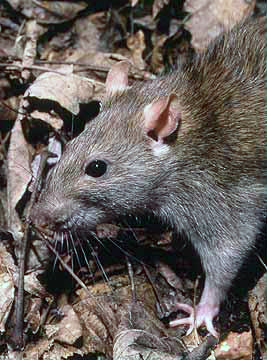 Brown RatRattus norvegicus
-
 Black RatRattus rattus
-
 Polynesian RatRattus exulans
-
 RakaliHydromys chrysogaster
-
 Wood MouseApodemus sylvaticus
-
 Eurasian Harvest MouseMicromys minutus
-
 Bramble Cay MelomysMelomys rubicola
-
 Greater Bandicoot RatBandicota indica
Compare
Questions and answers
What is the scientific name of the Earless Water Rat?
The scientific name of the Earless Water Rat is Crossomys moncktoni. Written with its author, the full name is Crossomys moncktoni Thomas, 1907.
Which family does the Earless Water Rat belong to?
Crossomys moncktoni belongs to the family Muridae, in the order Rodentia and the class Mammalia.
Where is the Earless Water Rat found?
Checklists and occurrence records place Crossomys moncktoni in 2 countries: Papua New Guinea and Australia.
What is the conservation status of the Earless Water Rat?
The IUCN Red List category recorded for Crossomys moncktoni is Least Concern (LC).
What other names does the Earless Water Rat have?
Crossomys moncktoni is also known in English as Earless New Guinea Water Rat.
What do water rats eat?
The Earless Water Rat eats tadpoles, worms and river insects, particularly insect larvae.[16]
Sources
Passages the profile rests on
- Its back is greyish brown and its belly is white. Source passage: “The back is greyish brown, and the belly is white.” — English Wikipedia
- Its fur is soft and waterproof. Source passage: “The fur is soft and waterproof.” — English Wikipedia
- The species has extremely long hindfeet with completely webbed toes, strongly reduced forelegs, very small eyes, and absent or barely visible ears. Source passage: “It has extremely long hindfeet, the toes of which are webbed completely, strongly reduced forelegs, absent or invisible ears, very small eyes” — English Wikipedia
- Its forefeet and claws are very small, whereas its hindfeet are very large. Source passage: “The forefeet and claws are very small, but the hindfeet are very large.” — English Wikipedia
- Its external ears are reduced to small oval structures that barely project above the fur. Source passage: “The external ear (the pinna) is reduced to a small oval that does not or hardly protract above the fur.” — English Wikipedia
- Its upper lip bears a row of short, strong brushes that may serve for rasping. Source passage: “The upper lip contains a row of short, strong brushes, which may be used for rasping.” — English Wikipedia
- The species has a relatively large brain. Source passage: “The brain is rather large, like in many aquatic animals.” — English Wikipedia
- Its head-body length ranges from 175 to 200 mm. Source passage: “The head-body length is 175 to 200 mm” — English Wikipedia
- Its tail measures between 212 and 260 mm in length. Source passage: “tail length is 212 to 260 mm” — English Wikipedia
- Its hindfoot length ranges from 44 to 53 mm. Source passage: “hind foot length is 44 to 53 mm” — English Wikipedia
- Its recorded ear length ranges from 1 to 45 mm. Source passage: “ear length is 1 to 45 mm” — English Wikipedia
- The species inhabits cold, fast-flowing mountain streams. Source passage: “The cold, fast-flowing streams of the mountains are its habitat.” — English Wikipedia
- The species occurs at elevations between 1,000 and 2,700 metres. Source passage: “This animal lives at 1000 to 2700 meters in elevation” — English Wikipedia
- The species inhabits mountains of eastern New Guinea. Source passage: “The earless water rat (Crossomys moncktoni) inhabits mountains of eastern New Guinea” — britannica.com
- It sleeps in holes along riverbanks at night. Source passage: “at night it sleeps in holes along the river bank.” — English Wikipedia
- Its recorded prey includes tadpoles, worms, and river insects, particularly insect larvae. Source passage: “actively hunting for tadpoles, worms, and river insects (mostly larvae)” — English Wikipedia
- The species is highly adapted to aquatic living and is described as one of the world's most aquatically adapted rodents. Source passage: “It is one of the most aquatically adapted rodents of the world.” — English Wikipedia
- It actively hunts during daylight hours. Source passage: “During the day it is actively hunting” — English Wikipedia
- Telefol hunters capture the species only when river levels are low. Source passage: “It is only captured by Telefol hunters when river levels are low.” — English Wikipedia
- Females produce one offspring at a time. Source passage: “The animal gets only one young at the same time.” — English Wikipedia
- Females have four mammary glands arranged in two inguinal pairs, with no thoracic pairs. Source passage: “Females have 0+2=4 mammae (no thoracic and two inguinal pairs)” — English Wikipedia
- The species is classified as Least Concern on the IUCN Red List. Source passage: “it has the status "least concern" in the IUCN Red List.” — English Wikipedia
- The species resembles the elegant water shrew in several aquatic adaptations. Source passage: “In all these characters, it resembles the elegant water shrew (Nectogale elegans)” — English Wikipedia
Data
- Catalogue of Life, 2026-10-16 XR cc by
- Global Biodiversity Information Facility CC BY 4.0
- Wikidata CC0
- GeoNames CC BY 4.0
- Within the Catalogue of Life, this name comes from The Integrated Taxonomic Information System cc0
References
- Ann. Mag. Nat. Hist., ser. 7 vol.20 p.71 where the name was published
- Wilson, Don E., and DeeAnn M. Reeder, eds. (1993). Mammal Species of the World: A Taxonomic and Geographic Reference, 2nd Ed., 3rd Printing.
- Musser, Guy G., and Michael D. Carleton / Wilson, Don E., and DeeAnn M. Reeder, eds. (2005). Superfamily Muroidea. Mammal Species of the World: A Taxonomic and Geographic Reference, 3rd Ed., Vol. 2.
This species in other databases
Page built on 28 November 2026. See how the catalog is made and all sources and licences.
Cite this page
ScientificNames.org. (2026). Crossomys moncktoni (Earless Water Rat). Retrieved November 28, 2026, from https://scientificnames.org/species/crossomys-moncktoni
“Crossomys moncktoni (Earless Water Rat).” ScientificNames.org, 2026, scientificnames.org/species/crossomys-moncktoni. Accessed 28 Nov. 2026.
ScientificNames.org. “Crossomys moncktoni (Earless Water Rat).” Accessed November 28, 2026. https://scientificnames.org/species/crossomys-moncktoni.
@misc{scientificnames_crossomys_moncktoni_earless_water_rat,
  author = {{ScientificNames.org}},
  title = {Crossomys moncktoni (Earless Water Rat)},
  year = {2026},
  url = {https://scientificnames.org/species/crossomys-moncktoni},
  note = {Accessed 2026-11-28}
}