Species · Mammals
Greater Grison Galictis vittata
The scientific name of the Greater Grison is Galictis vittata. It is a species of mammal in the family Mustelidae (mustelids), order Carnivora. The name dates from 1776.
- Scientific name
- Galictis vittata (Schreber, 1776)
- Common name
- Greater Grison
- Genus
- Galictis
- Family
- Mustelidae (Mustelids)
- Order
- Carnivora
- Class
- Mammalia
- Red List category
- LC Least Concern
- Recorded in
- 18 countries
- Name status
- accepted in the Catalogue of Life

Overview
Galictis vittata is native to southern Mexico, Central America, and South America. It has a slender body, grizzled grey upperparts, black fur over most of the remaining body, and a narrow whitish stripe across its head and shoulder.
Written 26 November 2026 from the sources listed below. Each statement was checked against the passage it cites; statements that could not be supported were removed.
Appearance
The Greater Grison has a slender body, short legs, a long neck, and a short bushy tail. Its back, flanks, upper head, and tail are grizzled grey, while most of the remaining body is black. A narrow whitish stripe separates the darker and lighter fur across its head and shoulder.[1][2][3]
Its head is broad and flattened, with short rounded ears and dark brown to black eyes. Its muscular legs have five webbed toes, each ending in a sharp, curved claw.[4][5]
Its fur consists of a coarse outer coat and a softer undercoat. Its dorsal guard hairs have white or grey tips, distinguishing them from the buff-yellow-tipped hairs of lesser grisons.[6][7]
Its head-body length ranges from 45 to 60 cm, and its tail measures 14 to 20 cm. Its total body length including the tail ranges from 60 to 76 cm.[8][9][10]
Adults in the wild weigh between 1.5 and 3.8 kg. Recorded body weights range from 1.4 to 3.8 kg.[11][12]
Female Greater Grisons tend to be smaller and more slender than males. A captive male measured 68.58 cm compared with 60.96 cm for a captive female, and their average masses were 3.3 kg and 1.8 kg, respectively.[13][14][15]
Habitat
Greater Grisons inhabit forest and cerrado habitats and are commonly found near rivers and streams. They occupy deciduous, rain, tropical, and dry forests as well as shrub woodland.[16][17]
They have also been observed in open savanna and cultivated areas, including plantations, cane fields, and partially flooded rice fields.[18]
They are usually found below 500 m elevation but have been recorded as high as 2,000 m in parts of the Bolivian Andes. They have also been recorded at elevations as high as 1,500 m above sea level.[19][20]
Diet
Greater Grisons are carnivores that primarily hunt mammals, including agoutis and opossums. Their diet also includes small vertebrates such as fish, amphibians, birds, and other mammals.[21][22]
Recorded stomach contents include amphibians, invertebrates, reptiles, and birds. They may also consume plant matter such as bananas when offered.[23][24]
Behaviour
Greater Grisons are primarily terrestrial but can climb trees and swim well. They commonly move in zigzag patterns while traveling and may hunt either alone or in pairs.[25][26][27]
They may live alone or in pairs, and their home ranges have been estimated at upwards of 415 hectares. They have been observed burrowing and climbing partway up trees for apparent exploratory purposes.[28][29][30]
They commonly sleep in burrows made by agoutis or armadillos. They also use scent marking by brushing their musk-coated tails over surfaces.[31][32]
They use musk from their anal glands to deter attackers and can direct its spray toward specific targets. Their vocalizations include snorting, purring, panting, squealing, and barking.[33][34]
Reproduction and life cycle
Gestation lasts approximately 39 days, and litters can contain up to four young. Births have been recorded in every month from March through October except April and July.[35][36][37]
Newborn young weigh less than 50 g. They are born with closed eyes and a short coat that already displays the characteristic adult pattern.[38][39]
Females nurse their young until weaning at approximately three and a half weeks. Young begin eating meat successfully at approximately two weeks of age and are fully grown at approximately four months.[40][41][42]
Similar species
The Greater Grison resembles the lesser grison but is distinguishable by its larger size.[43]
Classification of the Greater Grison
| Kingdom | Animalia |
|---|---|
| Phylum | Chordata |
| Subphylum | Vertebrata |
| Infraphylum | Gnathostomata |
| Parvphylum | Osteichthyes |
| Megaclass | Tetrapoda |
| Class | Mammalia (Mammal) |
| Subclass | Theria |
| Infraclass | Eutheria |
| Order | Carnivora (Carnivores) |
| Suborder | Caniformia (Dog-like Carnivores) |
| Family | Mustelidae (Mustelids) |
| Subfamily | Ictonychinae (Grisons) |
| Genus | Galictis (Grisons) |
| Species | Galictis vittata (Schreber, 1776) |
Where the Greater Grison is found
Checklists and occurrence records place Galictis vittata in 18 countries across North America and South America. GBIF holds 1,079 georeferenced records of it.
Countries
- Argentina 20
- Belize 8
- Bolivia 8
- Brazil 159
- Chile 9
- Colombia 351
- Costa Rica 47
- Ecuador 48
- French Guiana 107
- Guatemala 15
- Guyana 23
- Honduras 11
- Mexico 205
- Panama 20
- Paraguay 3
- Peru 28
- Suriname 10
- Venezuela 7
Regions and cities with the most records
- Meta Department, Colombia 73
- Santander Department, Colombia 66
- Villavicencio, Colombia 54
- Acacías, Colombia 51
- Chiapas, Mexico 46
- Yucatán, Mexico 45
- Cesar Department, Colombia 41
- Casanare Department, Colombia 34
- Puerto Wilches, Colombia 32
- Veracruz, Mexico 30
- Cayenne, French Guiana 29
- Antioquia, Colombia 28
- Tabasco, Mexico 26
- Matoury, French Guiana 25
- Bolívar, Colombia 20
- Palenque, Mexico 20
- Rémire-Montjoly, French Guiana 20
- Puntarenas Province, Costa Rica 18
- Fortín de las Flores, Mexico 15
- Guayas, Ecuador 15
- Kourou, French Guiana 15
- Aguazul, Colombia 14
- Córdoba, Mexico 14
- Campeche, Mexico 13
- La Jagua de Ibirico, Colombia 13
- Oaxaca, Mexico 13
- El Carmen de Chucurí, Colombia 12
- Quintana Roo, Mexico 12
- Barrancabermeja, Colombia 11
- Magdalena Department, Colombia 11
- Yondó, Colombia 11
- Ixtaczoquitlán, Mexico 10
- Magangué, Colombia 10
- Orizaba, Mexico 10
- Caldas Department, Colombia 9
- Pará, Brazil 9
Range as the checklists state it
Middle America
South America
A number beside a place is its count of GBIF occurrence records. A place without a number comes from a checklist alone. Records show where a species has been observed or collected, which can include escapes and vagrants.
Common names
English
- Greater Grison
Names in 18 other languages
- Arabic
- شره كبير
- Chinese
- 大巢鼬
- Czech
- grizon velký
- Danish
- Lille grison
- Dutch
- Gewone Grison, Grote Grison
- Finnish
- grisoni
- French
- Grand grison
- German
- Großer Grison, Großgrison
- Hungarian
- Nagy grizon
- Italian
- Grigione maggiore
- Japanese
- グリソン
- Korean
- 큰그리슨
- Norwegian Bokmål
- Stripegrison
- Polish
- Grizon, Grizon większy
- Portuguese
- Furão-grande
- Russian
- Гризон
- Spanish
- Grisón, Hur, Hurón, Hurón grande, Perro de Agua
- Turkish
- Dev grison
Synonyms
One other scientific name has been used for this species and is now treated as a synonym of Galictis vittata.
- Viverra vittata Schreber, 1776 ambiguous synonym
Subspecies and varieties
- Galictis vittata andina subspecies
- Galictis vittata brasiliensis subspecies
- Galictis vittata canaster subspecies
- Galictis vittata vittata subspecies
Related species
-
 Lesser GrisonGalictis cuja
-
 WolverineGulo gulo
-
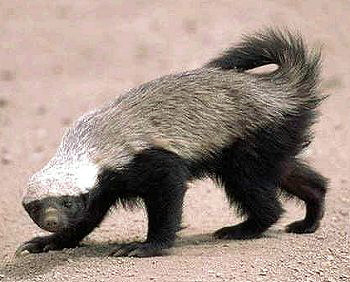 Honey BadgerMellivora capensis
-
 StoatMustela erminea
-
 Sea OtterEnhydra lutris
- SableMartes zibellina
-
 European Pine MartenMartes martes
-
 Least WeaselMustela nivalis
Compare
Questions and answers
What is the scientific name of the Greater Grison?
The scientific name of the Greater Grison is Galictis vittata. Written with its author, the full name is Galictis vittata (Schreber, 1776).
Which family does the Greater Grison belong to?
Galictis vittata belongs to the family Mustelidae, in the order Carnivora and the class Mammalia.
Where is the Greater Grison found?
Checklists and occurrence records place Galictis vittata in 18 countries, including Colombia, Mexico, Brazil, French Guiana, Ecuador and Costa Rica.
What is the conservation status of the Greater Grison?
The IUCN Red List category recorded for Galictis vittata is Least Concern (LC).
What is a greater grison?
The Greater Grison is a mammal in the family Mustelidae and the order Carnivora. It has a slender body, grizzled grey upperparts, mostly black remaining fur, and a narrow whitish stripe across its head and shoulder.[1][2][3]
Sources
Passages the profile rests on
- The greater grison has a slender body, short legs, a long neck, and a short bushy tail. Source passage: “The greater grison is a slender animal with short legs, a long neck, and a short, bushy tail.” — English Wikipedia
- Its back, flanks, upper head, and tail are grizzled grey, while most of the remaining body is black. Source passage: “The back, flanks, top of the head, and tail are grizzled grey in color, while the rest of the body is much darker, and usually solid black.” — English Wikipedia
- A narrow whitish stripe separates the darker and lighter fur across its head and shoulder. Source passage: “A narrow, whitish stripe separates the darker and lighter fur on the head and shoulder” — English Wikipedia
- Its head is broad and flattened, with short rounded ears and dark brown to black eyes. Source passage: “The head is flattened and broad, with short, rounded ears, and dark brown to black eyes.” — English Wikipedia
- Its muscular legs have five webbed toes, each ending in a sharp, curved claw. Source passage: “The legs are muscular, with five webbed toes, each ending in a sharp, curved claw.” — English Wikipedia
- Its fur consists of a coarse outer coat and a softer undercoat. Source passage: “Most striking of all is the coloration of their fur, which itself is fairly coarse, with a softer undercoat.” — animaldiversity.org
- Its dorsal guard hairs have white or grey tips, distinguishing them from the buff-yellow-tipped hairs of lesser grisons. Source passage: “white or grey-tipped dorsal guard hairs, compared to the buff yellow-tipped dorsal guard hairs of lesser grisons” — animaldiversity.org
- Its head-body length ranges from 45 to 60 cm. Source passage: “head-body length ranging from 45 to 60 cm (18 to 24 in).” — English Wikipedia
- Its tail measures 14 to 20 cm in length. Source passage: “The tail is 14 to 20 cm (5.5 to 7.9 in) long” — English Wikipedia
- Its total body length including the tail ranges from 60 to 76 cm. Source passage: “Their body length, including their tail, ranges from 60 to 76 cm” — animaldiversity.org
- Adults in the wild weigh between 1.5 and 3.8 kg. Source passage: “Adults weigh between 1.5 and 3.8 kg (3.3 and 8.4 lb) in the wild” — English Wikipedia
- Recorded body weights range from 1.4 to 3.8 kg. Source passage: “with weight records ranging from 1.4 to 3.8 kg.” — animaldiversity.org
- Female greater grisons tend to be smaller and more slender than males. Source passage: “Female greater grisons tend to be slightly smaller and more slender than males.” — animaldiversity.org
- A captive male measured 68.58 cm compared with 60.96 cm for a captive female. Source passage: “One team of researchers recorded a length of 68.58 cm for their captive male grison, compared to 60.96 cm for their captive female.” — animaldiversity.org
- A captive male had an average mass of 3.3 kg compared with 1.8 kg for a female. Source passage: “the captive male had an average mass of 3.3 kg compared to 1.8 kg for the female” — animaldiversity.org
- Greater grisons inhabit forest and cerrado habitats and are commonly found near rivers and streams. Source passage: “They inhabit a wide range of forest and cerrado habitats, and are usually seen near rivers and streams.” — English Wikipedia
- They occupy deciduous, rain, tropical, and dry forests as well as shrub woodland. Source passage: “Much of their time is spent in closed habitats including deciduous, rain, tropical or dry forest and shrub woodland.” — animaldiversity.org
- They have also been observed in open savanna and cultivated areas, including plantations, cane fields, and partially flooded rice fields. Source passage: “They have also been observed in open savanna, as well as cultivated areas such as plantations, cane fields or partially flooded rice fields.” — animaldiversity.org
- They are usually found below 500 m elevation but have been recorded as high as 2,000 m in parts of the Bolivian Andes. Source passage: “They are typically found at elevations below 500 m (1,600 ft), but they may be found as high as 2,000 m (6,600 ft) in some parts of the Bolivian Andes.” — English Wikipedia
- They have been recorded at elevations as high as 1,500 m above sea level. Source passage: “Galictis vittata occurs at elevations as high as 1,500 m above sea level” — animaldiversity.org
- Greater grisons are carnivores that primarily hunt mammals, including agoutis and opossums. Source passage: “In the wild, their prey of choice depends on their specific locale, but in general, they hunt primarily mammals , such as agoutis and opossums .” — animaldiversity.org
- Their diet includes small vertebrates such as fish, amphibians, birds, and other mammals. Source passage: “it consists largely of small vertebrates, such as fish, amphibians, birds, and other mammals.” — English Wikipedia
- Their recorded stomach contents include amphibians, invertebrates, reptiles, and birds. Source passage: “The stomachs contents of wild grisons have also been found to contain amphibians , invertebrates , reptiles , and birds .” — animaldiversity.org
- They may consume plant matter such as bananas when offered. Source passage: “they are also quite opportunistic and will eat some plant matter, such as bananas , if offered.” — animaldiversity.org
- Greater grisons are primarily terrestrial but can climb trees and swim well. Source passage: “Greater grisons are primarily terrestrial, although they can climb trees and swim well.” — English Wikipedia
- They commonly move in zigzag patterns while traveling. Source passage: “Greater grisons are primarily terrestrial and move quickly in a zig-zag pattern to various locations.” — animaldiversity.org
- They may hunt either alone or in pairs. Source passage: “Grisons have been observed hunting in pairs as well as alone.” — animaldiversity.org
- They have been observed burrowing and climbing partway up trees for apparent exploratory purposes. Source passage: “They have been observed burrowing and are adept swimmers; they have also been observed climbing partway up trees, apparently for exploratory purposes.” — animaldiversity.org
- They may live alone or in pairs. Source passage: “They live alone or in pairs” — English Wikipedia
- Their home ranges have been estimated at upwards of 415 hectares. Source passage: “their individual home range has been estimated at upwards of 415 hectares” — animaldiversity.org
- They commonly sleep in burrows made by agoutis or armadillos. Source passage: “Grisons tend to sleep in burrows, such as those made by agoutis or armadillos .” — animaldiversity.org
- They use scent marking by brushing their musk-coated tails over surfaces. Source passage: “They engage in scent marking, by brushing their musk-coated tails over surfaces.” — animaldiversity.org
- They use musk from their anal glands to deter attackers and can direct its spray toward specific targets. Source passage: “When alarmed, greater grisons jump backwards, snort and emit a foul-smelling musk from their anal glands, the trajectory of which, they are able to aim and use against specific targets” — animaldiversity.org
- They communicate through vocalizations including snorting, purring, panting, squealing, and barking. Source passage: “Grisons also have a wide variety of vocalizations, including: snorting when alarmed or upset, purring when stroked, panting when moving from place to place, squealing during play and barking during aggressive displays.” — animaldiversity.org
- Gestation lasts approximately 39 days. Source passage: “after a gestation period of 39 days.” — English Wikipedia
- Litters can contain up to four young. Source passage: “Litters of up to four young are born from March to September” — English Wikipedia
- Births have been recorded in every month from March through October except April and July. Source passage: “The birth of their offspring has been recorded in every month between March and October, excluding April and July.” — animaldiversity.org
- Newborn young weigh less than 50 g. Source passage: “Young are born quite helpless, with closed eyes and weigh less than 50 g” — animaldiversity.org
- Young are born with closed eyes and a short coat that already displays the characteristic adult pattern. Source passage: “although their hair is short, the characteristic coat pattern is already evident.” — animaldiversity.org
- Young begin eating meat successfully at approximately two weeks of age. Source passage: “by two weeks, they are able to eat meat successfully” — animaldiversity.org
- Young are fully grown at approximately four months of age. Source passage: “Greater grisons are fully grown at four months of age” — animaldiversity.org
- Females nurse their young until weaning at approximately three and a half weeks. Source passage: “Female greater grisons nurse their offspring until they are weaned at approximately 3.5 weeks of age.” — animaldiversity.org
- The greater grison resembles the lesser grison but is distinguishable by its larger size. Source passage: “It is similar in appearance to the closely related lesser grison, from which it can be most readily distinguished by its greater size” — English Wikipedia
- The species is native to southern Mexico, Central America, and South America. Source passage: “The greater grison (Galictis vittata) is a species of mustelid native to southern Mexico, Central America, and South America.” — English Wikipedia
Data
- Catalogue of Life, 2026-10-16 XR cc by
- Global Biodiversity Information Facility CC BY 4.0
- Wikidata CC0
- GeoNames CC BY 4.0
- Wikimedia Commons per image; credit shown with each image
- Within the Catalogue of Life, this name comes from The Integrated Taxonomic Information System cc0
References
- Säugethiere vol.3 18 p.pl. 124[1776], see also text, 3(26):418, 447[1777] where the name was published
- Wilson, Don E., and DeeAnn M. Reeder, eds. (1993). Mammal Species of the World: A Taxonomic and Geographic Reference, 2nd Ed., 3rd Printing.
- Wilson, Don E., and F. Russell Cole. (2000). Common Names of Mammals of the World.
- Wilson, Don E., and DeeAnn M. Reeder, eds. (2005). Mammal Species of the World: A Taxonomic and Geographic Reference, 3rd Ed., Vols. 1 & 2.
- Larivière, S., and A. P. Jennings / Don E. Wilson and Russell A. Mittermeier, eds. (2009). Family Mustelidae (Weasels and relatives). Handbook of the Mammals of the World. Vol. 1: Carnivores.
- Bornholdt, Renata, Kristofer Helgen, Klaus-Peter Koepfli, Larissa Oliveira, Mauro Lucherini, & and Edu. (2013). Taxonomic revision of the genus Galictis (Carnivora: Mustelidae): species delimitation, morphological diagnosis, and refined mapping of geographical distribution. Zoological Journal of the Linnean Society, Vol. 167, No. 3.
- Burgin, Connor J., Don E. Wilson, Russell A. Mittermeier, Anthony B. Rylands, et al. (2020). Illustrated Checklist of the Mammals of the World. Vol. 1. Monotremata to Rodentia.
This species in other databases
Page built on 28 November 2026. See how the catalog is made and all sources and licences.
Cite this page
ScientificNames.org. (2026). Galictis vittata (Greater Grison). Retrieved November 28, 2026, from https://scientificnames.org/species/galictis-vittata
“Galictis vittata (Greater Grison).” ScientificNames.org, 2026, scientificnames.org/species/galictis-vittata. Accessed 28 Nov. 2026.
ScientificNames.org. “Galictis vittata (Greater Grison).” Accessed November 28, 2026. https://scientificnames.org/species/galictis-vittata.
@misc{scientificnames_galictis_vittata_greater_grison,
  author = {{ScientificNames.org}},
  title = {Galictis vittata (Greater Grison)},
  year = {2026},
  url = {https://scientificnames.org/species/galictis-vittata},
  note = {Accessed 2026-11-28}
}