Species · Flowering plants
Charichuela Garcinia madruno
The scientific name of the Charichuela is Garcinia madruno. It is a species of flowering plant in the family Clusiaceae (clusoids), order Malpighiales.
- Scientific name
- Garcinia madruno (Kunth) Hammel
- Common name
- Charichuela
- Genus
- Garcinia
- Family
- Clusiaceae (Clusoids)
- Order
- Malpighiales
- Class
- Magnoliopsida
- Red List category
- LC Least Concern
- Recorded in
- 18 countries
- Name status
- accepted in the Catalogue of Life

Overview
Garcinia madruno occurs in lowland and montane rainforests and ranges from Honduras to Trinidad, Paraguay, and northeastern Brazil. It produces fruit with soft white pulp, a lemon-like rind, and a slightly citrusy taste.
Written 26 November 2026 from the sources listed below. Each statement was checked against the passage it cites; statements that could not be supported were removed.
Appearance
The charichuela has dark green, leathery leaves. Its fruit resembles a shriveled, drooping lemon and has a similar rind.[1][2]
The fruit contains soft white pulp.[3]
Habitat
The charichuela occurs in lowland and montane rainforests. Its range extends from Honduras to Trinidad, Paraguay, and northeastern Brazil.[4][5]
It tolerates a wide variety of soil types, including poor soils and heavy clay. Young plants require protection from frost.[6][7]
Reproduction and life cycle
The charichuela takes approximately five to seven years to produce fruit. It does not produce fruit in cold areas.[8][9]
Similar species
The charichuela was formerly classified in the genus Rheedia. Rheedia species are now classified as new world mangosteens.[10][11]
Classification of the Charichuela
| Kingdom | Plantae |
|---|---|
| Subkingdom | Pteridobiotina |
| Phylum | Tracheophyta |
| Class | Magnoliopsida |
| Order | Malpighiales |
| Family | Clusiaceae (Clusoids) |
| Tribe | Garcinieae |
| Genus | Garcinia (Mangosteen Genus) |
| Species | Garcinia madruno (Kunth) Hammel |
Where the Charichuela is found
Checklists and occurrence records place Garcinia madruno in 18 countries across Asia, North America and South America. GBIF holds 3,103 georeferenced records of it.
Countries where it is native or its origin is not stated
- Bolivia 227
- Brazil 730
- Colombia 1,173
- Costa Rica 141
- Ecuador 133
- French Guiana 49
- Guyana 35
- Honduras 1
- India 25
- Nicaragua 11
- Panama 89
- Paraguay 4
- Peru 311
- Suriname 62
- Trinidad and Tobago 15
- United States 5
- Venezuela 87
Countries where it has been introduced
Regions and cities with the most records
- Casanare Department, Colombia 277
- Meta Department, Colombia 238
- Amazonas, Brazil 150
- La Paz Department, Bolivia 138
- Antioquia, Colombia 95
- Pará, Brazil 80
- Pasco, Peru 80
- Puntarenas Province, Costa Rica 79
- Tolima Department, Colombia 73
- Caldas Department, Colombia 62
- Mato Grosso, Brazil 61
- Madre de Dios, Peru 60
- Yopal, Colombia 57
- Ibagué, Colombia 55
- Acre, Brazil 50
- Santa Cruz Department, Bolivia 39
- Loreto, Peru 38
- Esmeraldas, Ecuador 37
- Amazonas Department, Colombia 36
- Huila Department, Colombia 36
- Arauca Department, Colombia 35
- Ucayali, Peru 35
- Putumayo Department, Colombia 32
- Napo, Ecuador 30
- Chocó, Colombia 29
- Valle del Cauca Department, Colombia 29
- La Dorada, Colombia 28
- Puerto Salgar, Colombia 28
- Honda, Colombia 27
- Santander Department, Colombia 26
- Bengaluru, India 25
- Bommasandra Industrial Area, India 25
- Electronic City Phase I, India 25
- Hebbagodi, India 25
- Jigani, India 25
- Karnataka, India 25
1 more country has a few records outside this range
These countries hold a few records of Garcinia madruno but lie outside the range the checklists give for it. Such records are often zoo or garden specimens, museum material or vagrants, so the species is not counted as occurring there.
Range as the checklists state it
India [c] (Karnataka [c], West Bengal [c]); Honduras; Nicaragua; Costa Rica; Panama; Puerto Rico [I]; Trinidad; Colombia (Amazonas, Antioquia, Arauca, Boyacá, Caquetá, Casanare, Cesar, Chocó, Cundinamarca, Meta, Putumayo, Quindío, Risaralda, Santander, Tolima, Valle); Venezuela (Amazonas, Anzoátegui, Apure, Barinas, Bolívar, Venezuela Distrito Federal, Mérida, Miranda, Monagas, Sucre, Táchira, Trujillo, Zulia); Guyana; Surinam; French Guiana; Ecuador; Peru; Bolivia (Beni, La Paz, Pando, Santa Cruz); N-Brazil (Pará, Amazonas, Tocantins, Acre); NE-Brazil (Bahia); WC-Brazil (Mato Grosso)
A number beside a place is its count of GBIF occurrence records. A place without a number comes from a checklist alone. Records show where a species has been observed or collected, which can include escapes and vagrants.
Common names
English
- Charichuela
- Wild Pomme Rose
Names in 7 other languages
- Chinese
- 檸檬山竹
- French
- madruno
- German
- Marienbalsam
- Portuguese
- Bacupari, Bacupari-da-mata, Bacuri, Bacuri-bexiga, Bacuripari, Bacurizinho
- Russian
- Гарциния мадруно
- Slovak
- garcínia končistá
- Spanish
- Mameyito, charichuelo, cozoiba, madroño, naranjita, ocoró, satro
Synonyms
15 other scientific names have been used for this species and are now treated as synonyms of Garcinia madruno.
- Calophyllum acuminatum (Ruiz & Pav.) Willd.
- Calophyllum madruno Kunth
- Chloromyron verticillatum Pers.
- Garcinia floribunda Miq.
- Rheedia acuminata (Ruiz & Pav.) Planch. & Triana
- Rheedia acuminata var. floribunda (Miq.) Vesque
- Rheedia floribunda (Miq.) Planch. & Triana
- Rheedia kappleri Eyma
- Rheedia madruno (Kunth) Planch. & Triana
- Rheedia madruno subsp. bituberculata Pittier
- Rheedia madruno subsp. ovata Pittier
- Verticillaria acuminata Ruiz & Pav.
- Verticillaria madruno (Planch. & Triana) Tul. ex Vesque
- Verticillaria peruviana G.Don
- Garcinia acuminata (Ruiz & Pav.) Hammel ambiguous synonym
Related species
-
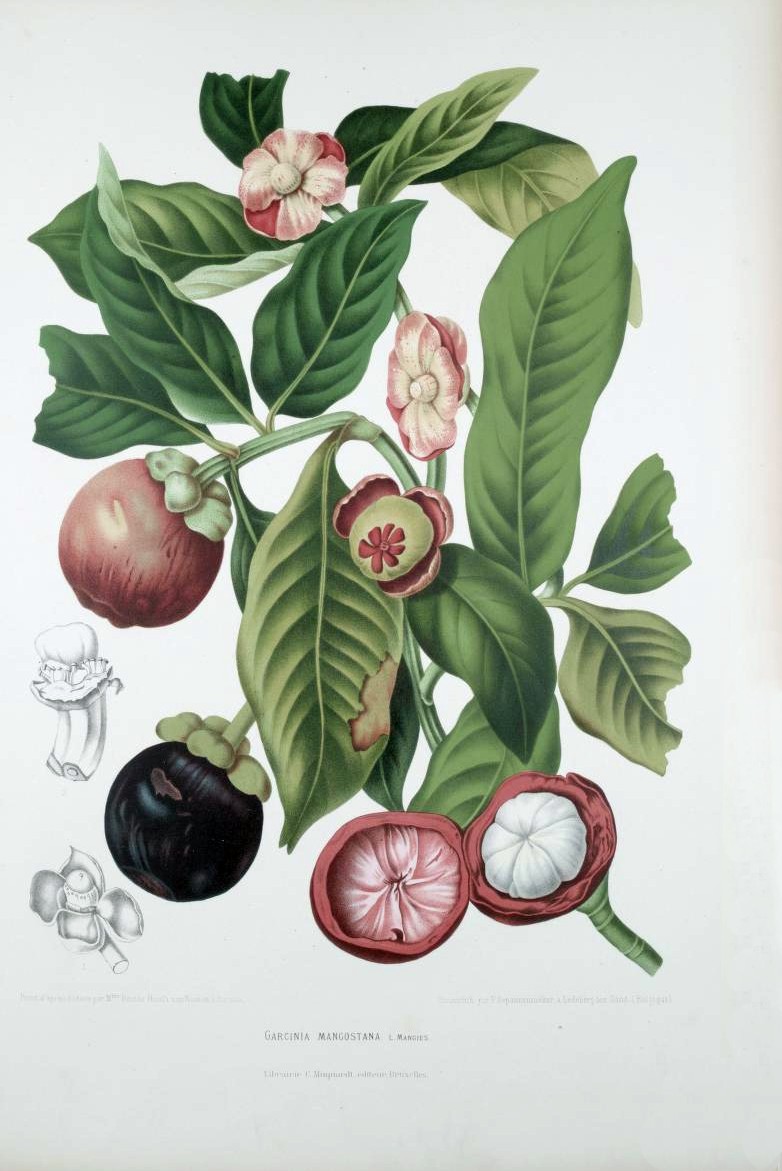 MangosteenGarcinia mangostana
-
 Malabar TamarindGarcinia gummi-gutta
-
 KokumGarcinia indica
-
 Bitter KolaGarcinia kola
-
 AchachaGarcinia gardneriana
-
 False MangosteenGarcinia xanthochymus
- African MangosteenGarcinia livingstonei
-
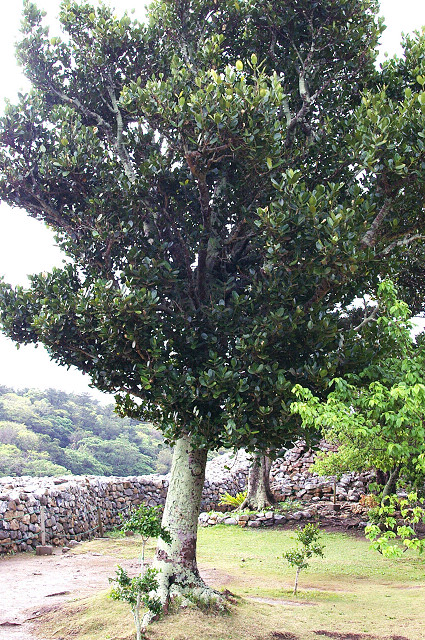 Common GarciniaGarcinia subelliptica
Compare
Questions and answers
What is the scientific name of the Charichuela?
The scientific name of the Charichuela is Garcinia madruno. Written with its author, the full name is Garcinia madruno (Kunth) Hammel.
Which family does the Charichuela belong to?
Garcinia madruno belongs to the family Clusiaceae, in the order Malpighiales and the class Magnoliopsida.
Where is the Charichuela found?
Checklists and occurrence records place Garcinia madruno in 18 countries, including Colombia, Brazil, Peru, Bolivia, Costa Rica and Ecuador.
What is the conservation status of the Charichuela?
The IUCN Red List category recorded for Garcinia madruno is Least Concern (LC).
What other names does the Charichuela have?
Garcinia madruno is also known in English as Wild Pomme Rose.
Sources
Passages the profile rests on
- The species has dark green, leathery leaves. Source passage: “The leaves are dark green and leathery.” — English Wikipedia
- Its fruit resembles a shriveled, drooping lemon and has a similar rind. Source passage: “The fruit looks like a shriveled droopy lemon and has a similar rind” — English Wikipedia
- The fruit contains soft white pulp. Source passage: “The interior is soft white pulp” — English Wikipedia
- The species occurs in lowland and montane rainforests. Source passage: “from the lowland and montane rainforests of Central and South America.” — English Wikipedia
- The species ranges from Honduras to Trinidad, Paraguay, and northeastern Brazil. Source passage: “It ranges from Honduras to Trinidad, Paraguay, and northeastern Brazil.” — English Wikipedia
- The species tolerates a wide variety of soil types, including poor soils and heavy clay. Source passage: “tolerating even poor soils or heavy clay.” — English Wikipedia
- Young plants require protection from frost. Source passage: “When young, it must be protected from frosts” — English Wikipedia
- The species takes approximately five to seven years to produce fruit. Source passage: “takes about 5 to 7 years to fruit.” — English Wikipedia
- The species does not produce fruit in cold areas. Source passage: “it will not fruit in cold areas.” — English Wikipedia
- The species was formerly classified in the genus Rheedia. Source passage: “The species was formerly included in the genus Rheedia” — English Wikipedia
- Rheedia species are now classified as new world mangosteens. Source passage: “Rheedia species are now known as "new world mangosteens".” — English Wikipedia
Data
- Catalogue of Life, 2026-10-16 XR cc by
- Global Biodiversity Information Facility CC BY 4.0
- Wikidata CC0
- GeoNames CC BY 4.0
- Wikimedia Commons per image; credit shown with each image
- Within the Catalogue of Life, this name comes from Synonymic Checklists of the Vascular Plants of the World cc by
References
- Hammel. (1989). Ann. Missouri Bot. Gard. 76(3): 928 (1989). where the name was published
This species in other databases
- Catalogue of Life 3F9YT
- Wikidata Q1951316
- iNaturalist 495665
- World Flora Online wfo-0000694442
- GRIN 411002
Page built on 27 November 2026. See how the catalog is made and all sources and licences.
Cite this page
ScientificNames.org. (2026). Garcinia madruno (Charichuela). Retrieved November 27, 2026, from https://scientificnames.org/species/garcinia-madruno
“Garcinia madruno (Charichuela).” ScientificNames.org, 2026, scientificnames.org/species/garcinia-madruno. Accessed 27 Nov. 2026.
ScientificNames.org. “Garcinia madruno (Charichuela).” Accessed November 27, 2026. https://scientificnames.org/species/garcinia-madruno.
@misc{scientificnames_garcinia_madruno_charichuela,
  author = {{ScientificNames.org}},
  title = {Garcinia madruno (Charichuela)},
  year = {2026},
  url = {https://scientificnames.org/species/garcinia-madruno},
  note = {Accessed 2026-11-27}
}