Species · Flowering plants
Tallow Tree Garcinia oleosperma
The scientific name of the Tallow Tree is Garcinia oleosperma. It is a species of flowering plant in the family Clusiaceae (clusoids), order Malpighiales.
- Scientific name
- Garcinia oleosperma P.W.Sweeney
- Common name
- Tallow Tree
- Genus
- Garcinia
- Family
- Clusiaceae (Clusoids)
- Order
- Malpighiales
- Class
- Magnoliopsida
- Recorded in
- 14 countries
- Name status
- accepted in the Catalogue of Life
Overview
Tallow Tree (Garcinia oleosperma P.W.Sweeney) is an evergreen flowering tree in the family Clusiaceae, order Malpighiales and class Magnoliopsida. It is native to tropical Africa and grows in rainforests of western central Africa. It can reach 30 metres in height, has separate male and female plants, and produces seeds harvested for Allanblackia oil.
Written 27 November 2026 from the sources listed below. Each statement was checked against the passage it cites; statements that could not be supported were removed.
Appearance
Tallow Tree is an evergreen tree that can reach a height of 30 metres. Its inner bark contains a sticky yellow resin.[1][2][3]
Habitat
The species is native to tropical Africa, with a recorded range extending from Benin through Nigeria, Cameroon, Equatorial Guinea, Gabon and the Republic of the Congo to the Central African Republic and the Democratic Republic of the Congo.[4]
It commonly grows as an understory tree in rainforests of western central Africa. Its recorded rainforest habitat extends from Sierra Leone to western Cameroon and eastward into the Democratic Republic of the Congo and Uganda.[5][6]
Reproduction and life cycle
The species is dioecious, with male and female flowers occurring on separate plants.[7]
Diet
The fruit of the species is not edible.[8]
Uses
The species has a long history of use in traditional African medicine for treating hypertension. Its bark is reported to have anodyne properties, and pounded bark is rubbed onto the body to relieve painful conditions.[9][10][11]
In Congo, a decoction prepared from the bark or leaves is taken for cough, asthma, bronchitis and other bronchial conditions. The residue is rubbed onto painful areas after scarification.[12][13]
In Nigeria, the wood is used to construct hut walls, doors and window frames. In Liberia, it is used to make planks, while in Ghana small trees are harvested for poles used as mine pit props and bridge piles.[14][15][16]
In Ghana, twigs are used as candlesticks. Smaller twigs are used as chew-sticks and tooth-picks in Ghana and Gabon.[17][18]
The wood is reported to resist termite damage but is not particularly durable. It is relatively easy to work and produces a good finish.[19][20][21]
The wood has little commercial importance but has been marketed in Liberia under the name lacewood.[22]
The seeds are harvested as a source of Allanblackia oil, which local populations have used for a long time. Nigeria is developing infrastructure to support international-scale commercial use of the seed oil.[23][24][25]
Nigeria's estimated production of Allanblackia oil was approximately 50 tons in 2006.[26]
Conservation
Efforts are underway to domesticate the species. Seed collection currently relies on wild stands and trees retained on agricultural land.[27][28]
Some trees are retained and managed during agricultural land clearance, particularly to provide shade for cocoa.[29]
Classification of the Tallow Tree
| Kingdom | Plantae |
|---|---|
| Subkingdom | Pteridobiotina |
| Phylum | Tracheophyta |
| Class | Magnoliopsida |
| Order | Malpighiales |
| Family | Clusiaceae (Clusoids) |
| Tribe | Garcinieae |
| Genus | Garcinia (Mangosteen Genus) |
| Species | Garcinia oleosperma P.W.Sweeney |
Where the Tallow Tree is found
Checklists and occurrence records place Garcinia oleosperma in 14 countries across Africa. GBIF holds 1,476 georeferenced records of it.
Countries
- Angola 18
- Benin 5
- Cameroon 351
- Central African Republic 22
- Democratic Republic of the Congo 312
- Equatorial Guinea 32
- Gabon 422
- Ghana 160
- Guinea 8
- Ivory Coast 48
- Liberia 12
- Nigeria 43
- Republic of the Congo 34
- Sierra Leone 9
Regions and cities with the most records
- South, Cameroon 160
- Estuaire, Gabon 133
- Eastern, Ghana 105
- Suhum, Ghana 57
- Kribi, Cameroon 56
- Ébolowa, Cameroon 56
- South-West, Cameroon 48
- Tshopo, Democratic Republic of the Congo 39
- Littoral, Cameroon 38
- Ogooué-Lolo, Gabon 37
- Yangambi, Democratic Republic of the Congo 35
- Ogooué-Ivindo, Gabon 33
- Kumba, Cameroon 32
- Woleu-Ntem, Gabon 32
- Haut-Ogooué, Gabon 28
- Nkongsamba, Cameroon 28
- Nyanga, Gabon 28
- East, Cameroon 27
- Mbanga, Cameroon 27
- Équateur, Democratic Republic of the Congo 24
- Bolenge, Democratic Republic of the Congo 23
- Manjo, Cameroon 23
- Mbandaka, Democratic Republic of the Congo 23
- Centro Sur, Equatorial Guinea 19
- Lékoumou, Republic of the Congo 15
- Elubo, Ghana 14
- Anyinam, Ghana 13
- Bingerville, Ivory Coast 13
- Lagunes District, Ivory Coast 12
- Libreville, Gabon 12
- Ituri, Democratic Republic of the Congo 11
- Owendo, Gabon 11
- Western, Ghana 11
- Western North, Ghana 10
- Centre, Cameroon 9
- Dabou, Ivory Coast 9
Range as the checklists state it
Guinea; Benin; Nigeria; Cameroon; Equatorial Guinea; Gabon; Congo [Brazzaville]; Central African Republic; D. R. Congo [Zaire]; Angola
A number beside a place is its count of GBIF occurrence records. A place without a number comes from a checklist alone. Records show where a species has been observed or collected, which can include escapes and vagrants.
Common names
English
- Tallow Tree
Synonyms
4 other scientific names have been used for this species and are now treated as synonyms of Garcinia oleosperma.
- Allanblackia floribunda Oliv.
- Allanblackia floribunda Gaudeul & Sweeney & Munzinger, 2024
- Allanblackia klainei Pierre ex A.Chev.
- Pentadesma leptonema var. klainei Pierre ex A.Chev.
Related species
-
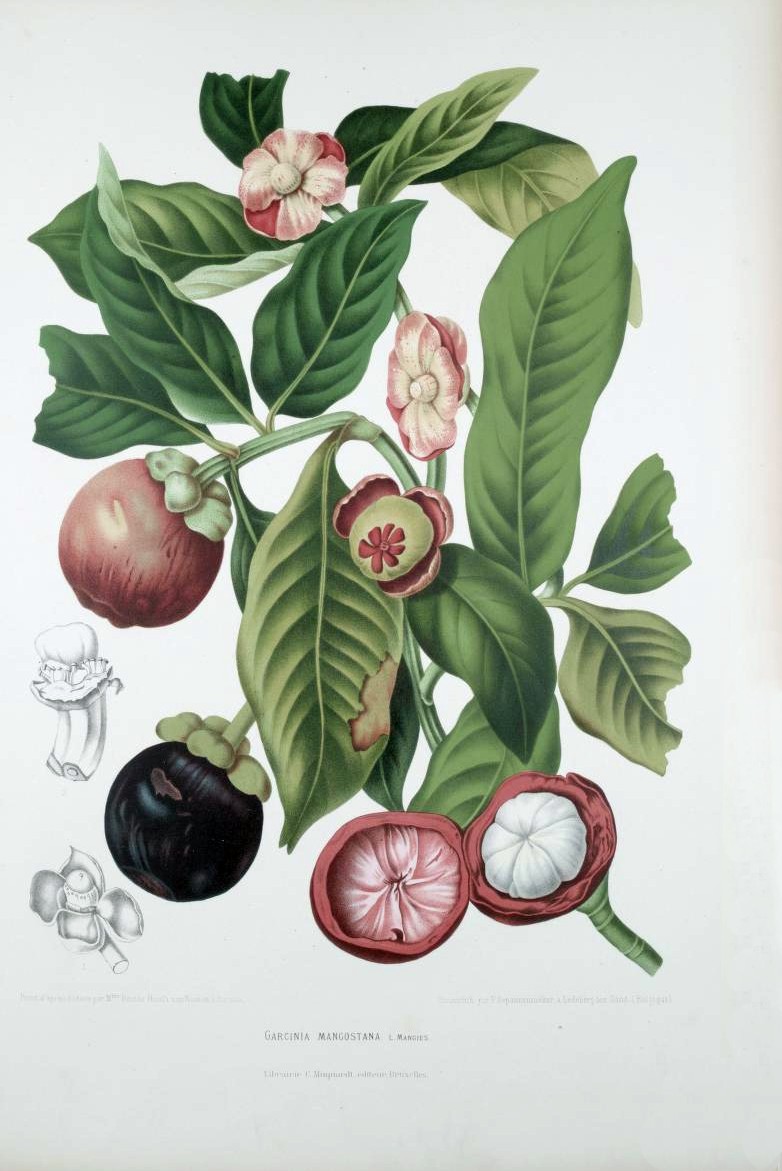 MangosteenGarcinia mangostana
-
 Malabar TamarindGarcinia gummi-gutta
-
 KokumGarcinia indica
-
 Bitter KolaGarcinia kola
-
 AchachaGarcinia gardneriana
-
 False MangosteenGarcinia xanthochymus
- African MangosteenGarcinia livingstonei
-
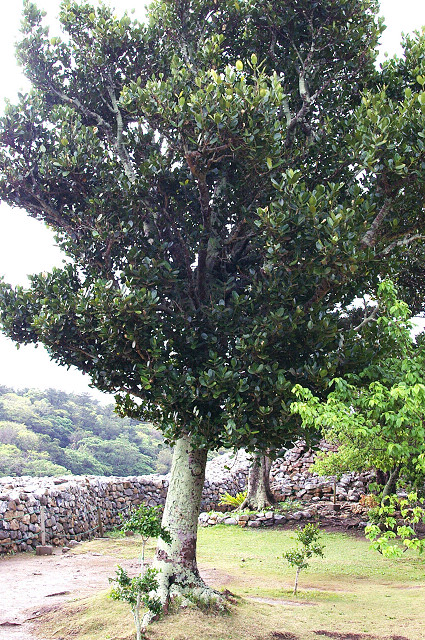 Common GarciniaGarcinia subelliptica
Compare
Questions and answers
What is the scientific name of the Tallow Tree?
The scientific name of the Tallow Tree is Garcinia oleosperma. Written with its author, the full name is Garcinia oleosperma P.W.Sweeney.
Which family does the Tallow Tree belong to?
Garcinia oleosperma belongs to the family Clusiaceae, in the order Malpighiales and the class Magnoliopsida.
Where is the Tallow Tree found?
Checklists and occurrence records place Garcinia oleosperma in 14 countries, including Gabon, Cameroon, Democratic Republic of the Congo, Ghana, Ivory Coast and Nigeria.
Are tallow trees good for anything?
Tallow Tree has several uses. Its wood is used for construction, planks and poles, while its twigs are used as candlesticks, chew-sticks and tooth-picks. Its bark is used in traditional medicine, and its seeds are harvested for Allanblackia oil.[9][14][15][16][17][18][23]
Sources
Passages the profile rests on
- The tree can reach a height of 30 metres. Source passage: “The medium-sized tree (up to 30 meters tall)” — English Wikipedia
- The species is an evergreen tree. Source passage: “The medium-sized tree (up to 30 meters tall) is evergreen” — English Wikipedia
- The inner bark contains a sticky yellow resin. Source passage: “The inner bark contains a sticky yellow resin.” — English Wikipedia
- The species is native to tropical Africa, with a recorded range extending from Benin through Nigeria, Cameroon, Equatorial Guinea, Gabon and the Republic of the Congo to the Central African Republic and the Democratic Republic of the Congo. Source passage: “It is native to tropical Africa, ranging from Benin through Nigeria, Cameroon, Equatorial Guinea, Gabon, and Republic of the Congo to Central African Republic and Democratic Republic of the Congo.” — English Wikipedia
- The species commonly grows as an understory tree in rainforests of western central Africa. Source passage: “It is a common understory tree in rainforests in western central Africa” — English Wikipedia
- Its recorded rainforest habitat extends from Sierra Leone to western Cameroon and eastward into the Democratic Republic of the Congo and Uganda. Source passage: “from Sierra Leone to western Cameroon, and on into the Democratic Republic of Congo and Uganda.” — English Wikipedia
- The species is dioecious, with male and female flowers occurring on separate plants. Source passage: “dioecious (male and female flowers on different plants).” — English Wikipedia
- The fruit of the species is not edible. Source passage: “The tree's fruit is not edible” — English Wikipedia
- The species has a long history of use in traditional African medicine for treating hypertension. Source passage: “It has been long used in traditional African medicine to treat hypertension.” — English Wikipedia
- The bark is reported to have anodyne properties. Source passage: “The bark has anodyne properties.” — English Wikipedia
- In the region, pounded bark is rubbed onto the body to relieve painful conditions. Source passage: “In the Region, it is pounded and rubbed on the body to relieve painful conditions.” — English Wikipedia
- In Congo, a decoction prepared from the bark or leaves is taken for cough, asthma, bronchitis and other bronchial conditions. Source passage: “In Congo, a decoction of the bark or the leaves is taken for cough, asthma, bronchitis, and other bronchial affections” — English Wikipedia
- In Congo, the residue from the bark or leaf decoction is rubbed onto painful areas after scarification. Source passage: “the lees from this preparation are rubbed over areas of pain after scarification.” — English Wikipedia
- In Nigeria, the wood is used to construct hut walls, doors and window frames. Source passage: “The wood is used in Nigeria in hut-building for making walls, doors, and window frames” — English Wikipedia
- In Liberia, the wood is used to make planks. Source passage: “in Liberia for planks.” — English Wikipedia
- In Ghana, small trees are harvested for poles used as mine pit props and bridge piles. Source passage: “In Ghana, small trees are cut for poles and used as mine pit props and bridge piles.” — English Wikipedia
- The twigs are used as candlesticks in Ghana. Source passage: “The twigs are used in Ghana as candlesticks” — English Wikipedia
- Smaller twigs are used as chew-sticks and tooth-picks in Ghana and Gabon. Source passage: “the smaller ones as chew-sticks and tooth-picks in Ghana and Gabon.” — English Wikipedia
- The wood is reported to resist termite damage. Source passage: “The wood is said to be resistant to termites” — English Wikipedia
- The wood is described as not particularly durable. Source passage: “but is not particularly durable.” — English Wikipedia
- The wood is relatively easy to work and produces a good finish. Source passage: “It is fairly easy to work and finishes well” — English Wikipedia
- The wood has little commercial importance but has been marketed in Liberia under the name lacewood. Source passage: “it is of little commercial importance though it has appeared on the market in Liberia as "lacewood".” — English Wikipedia
- The seeds are harvested as a source of Allanblackia oil. Source passage: “its seeds are the source of Allanblackia Oil” — English Wikipedia
- Local populations have used the seed oil for a long time. Source passage: “long used by local populations.” — English Wikipedia
- Nigeria is developing infrastructure to support international-scale commercial use of the seed oil. Source passage: “Nigeria is developing infrastructure for international-scale commercial use.” — English Wikipedia
- Nigeria's estimated production of Allanblackia oil was approximately 50 tons in 2006. Source passage: “It is estimated Nigeria produced about 50 tons of Allan Lacki oil in 2006.” — English Wikipedia
- Efforts are underway to domesticate the species. Source passage: “Domesticating Garcinia oleosperma is being attempted.” — English Wikipedia
- Seed collection currently relies on wild stands and trees retained on agricultural land. Source passage: “Presently the seed is collected only from wild stands or from trees retained on farmland” — English Wikipedia
- Some trees are retained and managed during agricultural land clearance, particularly to provide shade for cocoa. Source passage: “When clearing land for cultivation trees are left and managed, especially for shading cocoa” — English Wikipedia
Data
- Catalogue of Life, 2026-10-16 XR cc by
- Global Biodiversity Information Facility CC BY 4.0
- Wikidata CC0
- GeoNames CC BY 4.0
- Within the Catalogue of Life, this name comes from Synonymic Checklists of the Vascular Plants of the World cc by
References
- Sweeney, P. W. (2024). PhytoKeys 239: 88 (2024), nom. nov. where the name was published
This species in other databases
Page built on 29 November 2026. See how the catalog is made and all sources and licences.
Cite this page
ScientificNames.org. (2026). Garcinia oleosperma (Tallow Tree). Retrieved November 29, 2026, from https://scientificnames.org/species/garcinia-oleosperma
“Garcinia oleosperma (Tallow Tree).” ScientificNames.org, 2026, scientificnames.org/species/garcinia-oleosperma. Accessed 29 Nov. 2026.
ScientificNames.org. “Garcinia oleosperma (Tallow Tree).” Accessed November 29, 2026. https://scientificnames.org/species/garcinia-oleosperma.
@misc{scientificnames_garcinia_oleosperma_tallow_tree,
  author = {{ScientificNames.org}},
  title = {Garcinia oleosperma (Tallow Tree)},
  year = {2026},
  url = {https://scientificnames.org/species/garcinia-oleosperma},
  note = {Accessed 2026-11-29}
}