Species · Flowering plants
Native Mangosteen Garcinia warrenii
The scientific name of the Native Mangosteen is Garcinia warrenii. It is a species of flowering plant in the family Clusiaceae (clusoids), order Malpighiales.
- Scientific name
- Garcinia warrenii F.Muell.
- Common name
- Native Mangosteen
- Genus
- Garcinia
- Family
- Clusiaceae (Clusoids)
- Order
- Malpighiales
- Class
- Magnoliopsida
- Red List category
- LC Least Concern
- Recorded in
- 2 countries
- Name status
- accepted in the Catalogue of Life

Overview
Garcinia warrenii inhabits rainforest, littoral rainforest and riparian forest at elevations from 0 to 780 metres. It produces fragrant white flowers and purple, sweet, edible fruits.
Written 27 November 2026 from the sources listed below. Each statement was checked against the passage it cites; statements that could not be supported were removed.
Appearance
The native mangosteen is a bushy, small tree with an upright growth habit. It can reach a height of 15 metres.[1][2]
Its leaves are thick and leathery and are often marked by mould or lichens. The leaf blades measure approximately 10 to 16 by 48 centimetres.[3][4]
The species produces fragrant white flowers and purple, sweet fruits. Broken petioles and twigs release a sticky yellow exudate.[5][6][7]
Habitat
The native mangosteen occurs in tropical rainforests and inhabits rainforest, littoral rainforest and riparian forest at elevations from 0 to 780 metres.[8][9]
Uses
The fruits of the native mangosteen are edible. Among the five native Garcinia species occurring in North Queensland forests, it is the only one described as edible.[10][11]
Diet
Fruit bats of the genus Pteropus consume the fruits of the native mangosteen.[12]
Similar species
The native mangosteen is closely related to Garcinia mangostana.[13]
Classification of the Native Mangosteen
| Kingdom | Plantae |
|---|---|
| Subkingdom | Pteridobiotina |
| Phylum | Tracheophyta |
| Class | Magnoliopsida |
| Order | Malpighiales |
| Family | Clusiaceae (Clusoids) |
| Tribe | Garcinieae |
| Genus | Garcinia (Mangosteen Genus) |
| Species | Garcinia warrenii F.Muell. |
Where the Native Mangosteen is found
Checklists and occurrence records place Garcinia warrenii in 2 countries across Oceania. GBIF holds 571 georeferenced records of it.
Countries
Regions and cities with the most records
- Queensland, Australia 467
- Cairns, Australia 33
- Western Province, Papua New Guinea 16
- Northern Territory, Australia 6
1 more country has a few records outside this range
These countries hold a few records of Garcinia warrenii but lie outside the range the checklists give for it. Such records are often zoo or garden specimens, museum material or vagrants, so the species is not counted as occurring there.
Range as the checklists state it
New Guinea (Irian Jaya, Papua New Guinea); Australia (Queensland)
A number beside a place is its count of GBIF occurrence records. A place without a number comes from a checklist alone. Records show where a species has been observed or collected, which can include escapes and vagrants.
Common names
English
- Native Mangosteen
- Warren's Mangosteen
Synonyms
One other scientific name has been used for this species and is now treated as a synonym of Garcinia warrenii.
- Garcinia kajewskii C.T.White
Related species
-
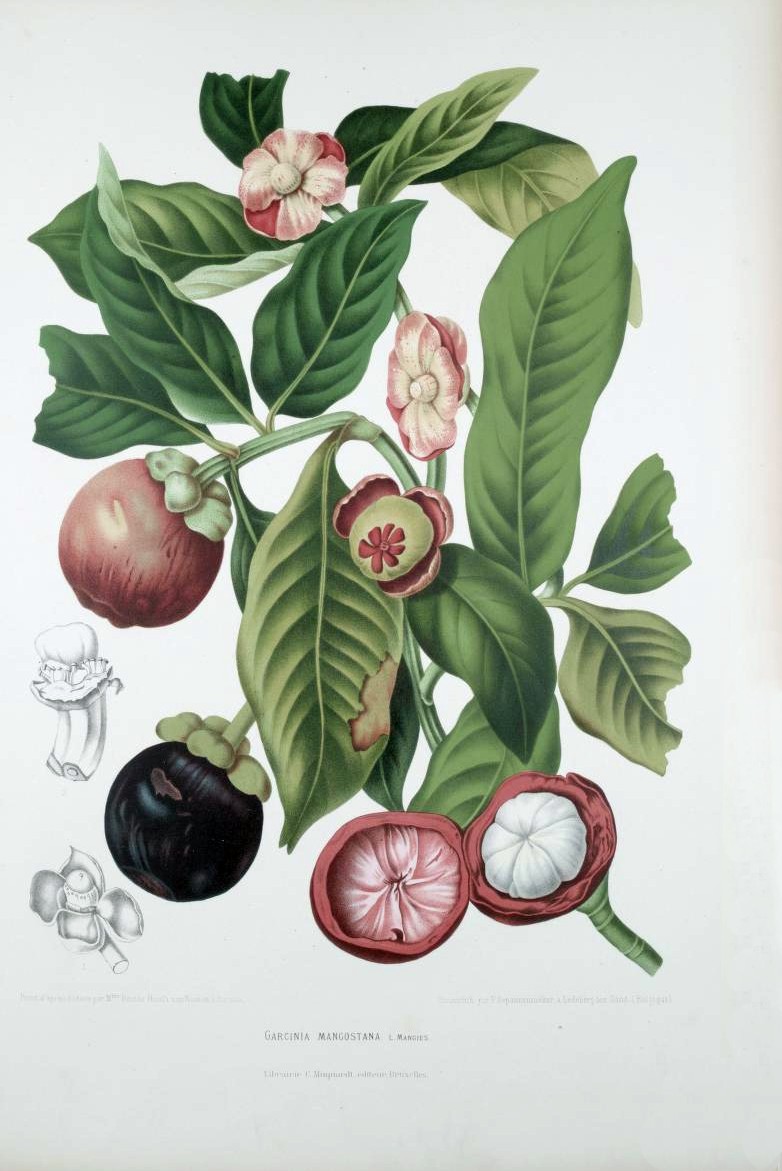 MangosteenGarcinia mangostana
-
 Malabar TamarindGarcinia gummi-gutta
-
 KokumGarcinia indica
-
 Bitter KolaGarcinia kola
-
 AchachaGarcinia gardneriana
-
 False MangosteenGarcinia xanthochymus
- African MangosteenGarcinia livingstonei
-
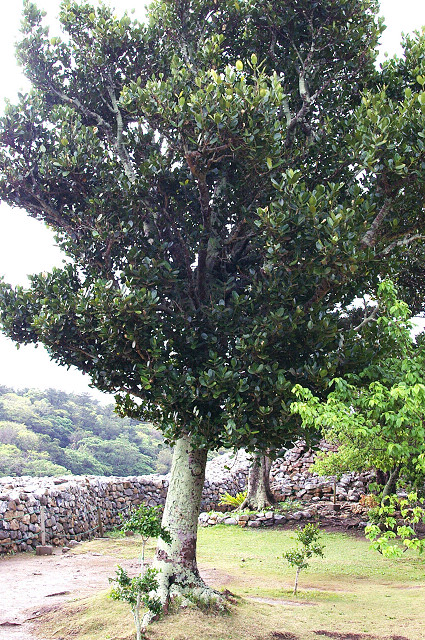 Common GarciniaGarcinia subelliptica
Compare
Questions and answers
What is the scientific name of the Native Mangosteen?
The scientific name of the Native Mangosteen is Garcinia warrenii. Written with its author, the full name is Garcinia warrenii F.Muell..
Which family does the Native Mangosteen belong to?
Garcinia warrenii belongs to the family Clusiaceae, in the order Malpighiales and the class Magnoliopsida.
Where is the Native Mangosteen found?
Checklists and occurrence records place Garcinia warrenii in 2 countries: Australia and Papua New Guinea.
What is the conservation status of the Native Mangosteen?
The IUCN Red List category recorded for Garcinia warrenii is Least Concern (LC).
What other names does the Native Mangosteen have?
Garcinia warrenii is also known in English as Warren's Mangosteen.
Is Garcinia fruit edible?
The fruits of the native mangosteen are edible.[10]
Sources
Passages the profile rests on
- Garcinia warrenii is a bushy, small tree with an upright growth habit. Source passage: “This bushy small tree grows up to 15 metres high, they grow straight up and are often difficult to see in the forest.” — English Wikipedia
- Garcinia warrenii can reach a height of 15 metres. Source passage: “a fruit-bearing tree up to 15 metres in height” — English Wikipedia
- Its leaves are thick and leathery and are often marked by mould or lichens. Source passage: “The thick, leathery leaves are often stained with mould or lichens.” — English Wikipedia
- Its leaf blades measure approximately 10 to 16 by 48 centimetres. Source passage: “Leaf blades are about 10 to 16 x 48 cm.” — English Wikipedia
- The species produces fragrant white flowers. Source passage: “It has fragrant white flowers” — English Wikipedia
- The species produces purple, sweet fruits. Source passage: “purple sweet edible fruit.” — English Wikipedia
- Broken petioles and twigs release a sticky yellow exudate. Source passage: “Broken petioles (leaf stalks) and twigs produce a sticky yellow exudate.” — English Wikipedia
- The species occurs in tropical rainforests. Source passage: “It is found in the tropical rainforests of northern and north-eastern Australia and New Guinea.” — English Wikipedia
- The species inhabits rainforest, littoral rainforest and riparian forest at elevations from 0 to 780 metres. Source passage: “Garcinia warrenii is found in rain forest, littoral rainforest and riparian forest from 0 to 780 m.” — English Wikipedia
- The fruits of Garcinia warrenii are edible. Source passage: “While the fruits are edible, they are not widely sought after.” — English Wikipedia
- Among the five native Garcinia species occurring in North Queensland forests, Garcinia warrenii is the only one described as edible. Source passage: “There are five species of native Garcinia in north Queensland forests but Garcinia warrenii is the only edible one.” — English Wikipedia
- Fruit bats of the genus Pteropus consume the fruits of this species. Source passage: “The fruit are eaten by Pteropus (fruit bats).” — English Wikipedia
- Garcinia warrenii is closely related to Garcinia mangostana. Source passage: “Garcinia warrenii is a close relative of the mangosteen (Garcinia mangostana).” — English Wikipedia
Data
- Catalogue of Life, 2026-10-16 XR cc by
- Global Biodiversity Information Facility CC BY 4.0
- Wikidata CC0
- GeoNames CC BY 4.0
- Wikimedia Commons per image; credit shown with each image
- Within the Catalogue of Life, this name comes from Synonymic Checklists of the Vascular Plants of the World cc by
References
- F.Muell. (1891). Vict. Naturalist 8: 109 (1891), in Bot. Centralbl. 49: 362, et ex Vesque, in Monogr. Phan. [A.DC. & C.DC.] 8: (1893) 641 (1891). where the name was published
This species in other databases
Page built on 28 November 2026. See how the catalog is made and all sources and licences.
Cite this page
ScientificNames.org. (2026). Garcinia warrenii (Native Mangosteen). Retrieved November 28, 2026, from https://scientificnames.org/species/garcinia-warrenii
“Garcinia warrenii (Native Mangosteen).” ScientificNames.org, 2026, scientificnames.org/species/garcinia-warrenii. Accessed 28 Nov. 2026.
ScientificNames.org. “Garcinia warrenii (Native Mangosteen).” Accessed November 28, 2026. https://scientificnames.org/species/garcinia-warrenii.
@misc{scientificnames_garcinia_warrenii_native_mangosteen,
  author = {{ScientificNames.org}},
  title = {Garcinia warrenii (Native Mangosteen)},
  year = {2026},
  url = {https://scientificnames.org/species/garcinia-warrenii},
  note = {Accessed 2026-11-28}
}