Species · Mammals
Indian Bush Rat Golunda ellioti
The scientific name of the Indian Bush Rat is Golunda ellioti. It is a species of mammal in the family Muridae (mice), order Rodentia. The name dates from 1837.
- Scientific name
- Golunda ellioti Gray, 1837
- Common name
- Indian Bush Rat
- Genus
- Golunda
- Family
- Muridae (Mice)
- Order
- Rodentia
- Class
- Mammalia
- Red List category
- LC Least Concern
- Recorded in
- 5 countries
- Name status
- accepted in the Catalogue of Life

Overview
Golunda ellioti occurs across the Indian subcontinent from Kohat in the west to Guwahati in the east, as well as in Sri Lanka and southeastern Iran. It is the only extant species of the genus Golunda and the only extant member of the tribe Arvicanthini occurring outside Africa.
Written 26 November 2026 from the sources listed below. Each statement was checked against the passage it cites; statements that could not be supported were removed.
Appearance
The Indian Bush Rat has yellowish-brown upperparts speckled with black and reddish yellow, and a grayish ventral surface with yellowish speckling. Its head is rounded, with a blunt nose and small eyes, and its incisors are orange-yellow.[1][2][3][4]
Its tail is dark on the upper side and yellowish on the underside. Its head and body measure 12–14 cm in length.[5][6]
Its fur is short, crisp and spiny during summer but becomes long and soft during winter. Its fur is darker in winter than in summer, and individuals at higher altitudes have softer fur than those living in plains.[7][8][9]
Younger individuals have darker fur than older individuals. Individuals undergoing moulting can appear dark or blackish because their slaty underfur is exposed.[10][11]
Habitat
The species occurs in grasslands. Its relative numbers decline after burning.[12][13]
Diet
In Pakistan, the Indian Bush Rat has been recorded eating 27 species of grasses, including Digitaria sanguinalis, Pennisetum orientale and Triticum aestivum. Its recorded diet in Pakistan also includes wheat and gram seeds.[14][15][16]
It eats young mustard leaves.[17]
Reproduction and life cycle
In the dry habitats of western India, the breeding season extends from March to August. Litter sizes range from 2 to 10 offspring.[18][19]
Conservation
The species' relative numbers are lower in burnt grasslands than in unburnt grasslands.[12][13]
Classification of the Indian Bush Rat
| Kingdom | Animalia |
|---|---|
| Phylum | Chordata |
| Subphylum | Vertebrata |
| Infraphylum | Gnathostomata |
| Parvphylum | Osteichthyes |
| Megaclass | Tetrapoda |
| Class | Mammalia (Mammal) |
| Subclass | Theria |
| Infraclass | Eutheria |
| Order | Rodentia (Rodent) |
| Suborder | Myomorpha (Mice) |
| Superfamily | Muroidea |
| Family | Muridae (Mice) |
| Subfamily | Murinae (Old World Mice) |
| Genus | Golunda |
| Species | Golunda ellioti Gray, 1837 |
Where the Indian Bush Rat is found
Checklists and occurrence records place Golunda ellioti in 5 countries across Asia. GBIF holds 323 georeferenced records of it.
Countries
Regions and cities with the most records
- Karnataka, India 8
- Gujarat, India 7
- Tamil Nadu, India 6
- Maharashtra, India 5
- Rajasthan, India 5
- Andhra Pradesh, India 3
- Bharatpur, India 3
- Fatehpur Sīkri, India 3
- Kandy, Sri Lanka 3
- Marayur, India 3
- Nelamangala, India 3
- Nuwara Eliya, Sri Lanka 3
Range as the checklists state it
Europe & Northern Asia (excluding China)
Southern Asia
A number beside a place is its count of GBIF occurrence records. A place without a number comes from a checklist alone. Records show where a species has been observed or collected, which can include escapes and vagrants.
Common names
English
- Indian Bush Rat
- Indian Bush-rat
Names in 6 other languages
- Czech
- krysa křovinná
- Finnish
- intianpensasrotta
- Italian
- Ratto dei boschi indiano
- Japanese
- エリオットヤブネズミ
- Polish
- golunda dekańska
- Russian
- Индийская крыса
Synonyms
11 other scientific names have been used for this species and are now treated as synonyms of Golunda ellioti.
- Golunda coffaeus Kelaart, 1850
- Golunda ellioti bombax Thomas, 1923
- Golunda ellioti coenosa Thomas, 1923
- Golunda ellioti coraginis Thomas, 1923
- Golunda ellioti gujerati Thomas, 1923
- Golunda ellioti limitaris Thomas, 1923
- Golunda ellioti paupera Thomas, 1923
- Mus myothrix Hodgson, 1845
- Mus newara Kelaart, 1850
- Pelomys watsoni Blanford, 1876
- Mus hirsutus Elliot, 1839 ambiguous synonym
Related species
-
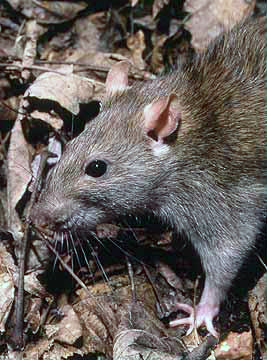 Brown RatRattus norvegicus
-
 Black RatRattus rattus
-
 Polynesian RatRattus exulans
-
 RakaliHydromys chrysogaster
-
 Wood MouseApodemus sylvaticus
-
 Eurasian Harvest MouseMicromys minutus
-
 Bramble Cay MelomysMelomys rubicola
-
 Greater Bandicoot RatBandicota indica
Compare
Questions and answers
What is the scientific name of the Indian Bush Rat?
The scientific name of the Indian Bush Rat is Golunda ellioti. Written with its author, the full name is Golunda ellioti Gray, 1837.
Which family does the Indian Bush Rat belong to?
Golunda ellioti belongs to the family Muridae, in the order Rodentia and the class Mammalia.
Where is the Indian Bush Rat found?
Checklists and occurrence records place Golunda ellioti in 5 countries: India, Pakistan, Sri Lanka, Iran and Nepal.
What is the conservation status of the Indian Bush Rat?
The IUCN Red List category recorded for Golunda ellioti is Least Concern (LC).
What other names does the Indian Bush Rat have?
Golunda ellioti is also known in English as Indian Bush-rat.
How to tell the difference between a bush rat and a normal rat?
The Indian Bush Rat has yellowish-brown upperparts speckled with black and reddish yellow, a grayish underside with yellowish speckling, a rounded head, blunt nose and small eyes. Its incisors are orange-yellow, and its tail is dark above and yellowish below.[1][2][3][4][5]
How big does a bush rat get?
The Indian Bush Rat's head and body measure 12–14 cm in length.[6]
What does a bush rat eat?
The Indian Bush Rat eats grasses, wheat and gram seeds in Pakistan, and young mustard leaves. Its recorded grass foods in Pakistan include Digitaria sanguinalis, Pennisetum orientale and Triticum aestivum.[14][15][16][17]
How big is a bush rat?
The Indian Bush Rat's head and body measure 12–14 cm in length.[6]
Sources
Passages the profile rests on
- The species has yellowish-brown upperparts speckled with black and reddish yellow. Source passage: “Yellowish brown upper parts are speckled with black and reddish yellow.” — English Wikipedia
- Its ventral surface is grayish with yellowish speckling. Source passage: “Ventral surface grayish with a yellowish speckle.” — English Wikipedia
- Its head is rounded and has a blunt nose and small eyes. Source passage: “Rounded head with a blunt nose, with small eyes mark.” — English Wikipedia
- Its incisors are orange-yellow. Source passage: “Orange-yellow incisor teeth.” — English Wikipedia
- Its tail is dark on the upper side and yellowish on the underside. Source passage: “Tail, dark above and yellowish below.” — English Wikipedia
- Its head and body measure 12–14 cm in length. Source passage: “Head and body length is 12–14 cm.” — English Wikipedia
- Its fur is short, crisp and spiny during summer but becomes long and soft during winter. Source passage: “Fur was short, crisp and spiny during summer, and long and soft in winter” — English Wikipedia
- Individuals at higher altitudes have softer fur than those living in plains. Source passage: “individuals of higher altitudes have softer fur relative to those in the plains.” — English Wikipedia
- Its fur is darker in winter than in summer. Source passage: “fur is darker during the winter than in summer” — English Wikipedia
- Younger individuals have darker fur than older individuals. Source passage: “Juvenile and younger individuals are darker than older ones” — English Wikipedia
- Individuals undergoing moulting can appear dark or blackish because their slaty underfur is exposed. Source passage: “individuals in molt appear dark or blackish due to the exposure of the slaty underfur.” — English Wikipedia
- The species occurs in grasslands, where its relative numbers decline after burning. Source passage: “The Indian bush rats do not respond well to burning, with relative numbers declining in burnt grasslands compared to unburnt ones.” — English Wikipedia
- The species' relative numbers are lower in burnt grasslands than in unburnt grasslands. Source passage: “relative numbers declining in burnt grasslands compared to unburnt ones.” — English Wikipedia
- In Pakistan, the species has been recorded eating 27 species of grasses. Source passage: “the Indian bush rat ate 27 species of grasses” — English Wikipedia
- Its recorded grass foods in Pakistan include Digitaria sanguinalis, Pennisetum orientale and Triticum aestivum. Source passage: “especially Digitaria sanguinalis, Pennisetum orientale, and Triticum aestivum” — English Wikipedia
- Its recorded diet in Pakistan includes wheat and gram seeds. Source passage: “along with wheat, gram seeds” — English Wikipedia
- It eats young mustard leaves. Source passage: “young leaves of mustard.” — English Wikipedia
- In the dry habitats of western India, its breeding season extends from March to August. Source passage: “The breeding season for the species in the dry habitats of western India is March to August” — English Wikipedia
- Its litter sizes range from 2 to 10 offspring. Source passage: “with litter sizes varying from 2 to 10.” — English Wikipedia
Data
- Catalogue of Life, 2026-10-16 XR cc by
- Global Biodiversity Information Facility CC BY 4.0
- Wikidata CC0
- GeoNames CC BY 4.0
- Wikimedia Commons per image; credit shown with each image
- Within the Catalogue of Life, this name comes from The Integrated Taxonomic Information System cc0
References
- Mag. Nat. Hist. [Charlesworth's] vol.1 p.586 where the name was published
- Ellerman, J. R., and T. C. S. Morrison-Scott. (1966). Checklist of Palaearctic and Indian Mammals 1758 to 1946, 2nd Edition.
- Wilson, Don E., and DeeAnn M. Reeder, eds. (1993). Mammal Species of the World: A Taxonomic and Geographic Reference, 2nd Ed., 3rd Printing.
- Musser, Guy G., and Michael D. Carleton / Wilson, Don E., and DeeAnn M. Reeder, eds. (2005). Superfamily Muroidea. Mammal Species of the World: A Taxonomic and Geographic Reference, 3rd Ed., Vol. 2.
This species in other databases
Page built on 28 November 2026. See how the catalog is made and all sources and licences.
Cite this page
ScientificNames.org. (2026). Golunda ellioti (Indian Bush Rat). Retrieved November 28, 2026, from https://scientificnames.org/species/golunda-ellioti
“Golunda ellioti (Indian Bush Rat).” ScientificNames.org, 2026, scientificnames.org/species/golunda-ellioti. Accessed 28 Nov. 2026.
ScientificNames.org. “Golunda ellioti (Indian Bush Rat).” Accessed November 28, 2026. https://scientificnames.org/species/golunda-ellioti.
@misc{scientificnames_golunda_ellioti_indian_bush_rat,
  author = {{ScientificNames.org}},
  title = {Golunda ellioti (Indian Bush Rat)},
  year = {2026},
  url = {https://scientificnames.org/species/golunda-ellioti},
  note = {Accessed 2026-11-28}
}