Species · Mammals
Manipur Bush Rat Hadromys humei
The scientific name of the Manipur Bush Rat is Hadromys humei. It is a species of mammal in the family Muridae (mice), order Rodentia. The name dates from 1886.

Overview
The Manipur Bush Rat is a rodent belonging to the family Muridae. The species is considered probably to be a relict species.
Written 26 November 2026 from the sources listed below. Each statement was checked against the passage it cites; statements that could not be supported were removed.
Habitat
The Manipur Bush Rat inhabits tropical evergreen forests, moist deciduous forests and secondary forests in northeastern India. It occurs at elevations between 900 and 1,300 m above sea level.[1][2][3][4]
Appearance
The largest specimen described by Thomas was a female. Its head-and-body length was 125 mm, and its tail measured 106 mm.[5][6][7]
Recorded body weights range from 41 to 77 g.[8]
Conservation
The species has been reported from fewer than five areas and faces continuing declines in habitat extent and quality.[9][10]
Habitat loss, degradation, fragmentation and encroachment are principal threats to the species. Hunting and fire are additional contributing causes of threats.[11][12][13][14]
Classification of the Manipur Bush Rat
| Kingdom | Animalia |
|---|---|
| Phylum | Chordata |
| Subphylum | Vertebrata |
| Infraphylum | Gnathostomata |
| Parvphylum | Osteichthyes |
| Megaclass | Tetrapoda |
| Class | Mammalia (Mammal) |
| Subclass | Theria |
| Infraclass | Eutheria |
| Order | Rodentia (Rodent) |
| Suborder | Myomorpha (Mice) |
| Superfamily | Muroidea |
| Family | Muridae (Mice) |
| Subfamily | Murinae (Old World Mice) |
| Genus | Hadromys (Hadromys Bush Rats) |
| Species | Hadromys humei (Thomas, 1886) |
Where the Manipur Bush Rat is found
Checklists and occurrence records place Hadromys humei in 1 country across Asia. GBIF holds 34 georeferenced records of it.
Countries
Regions and cities with the most records
Range as the checklists state it
Southern Asia
A number beside a place is its count of GBIF occurrence records. A place without a number comes from a checklist alone. Records show where a species has been observed or collected, which can include escapes and vagrants.
Common names
English
- Manipur Bush Rat
- Hume S Hadromys
- Hume's Hadromys
- Hume's Rat
- Hume’s Rat
- Manipur Hadromys
Names in 5 other languages
- Czech
- krysa manipurská
- Finnish
- manipurinpensasrotta
- Japanese
- マニプルヤブネズミ
- Polish
- staroszczur reliktowy
- Russian
- Манипурская кустарниковая крыса
Synonyms
One other scientific name has been used for this species and is now treated as a synonym of Hadromys humei.
- Mus humei Thomas, 1886
Related species
- Yunnan Bush RatHadromys yunnanensis
-
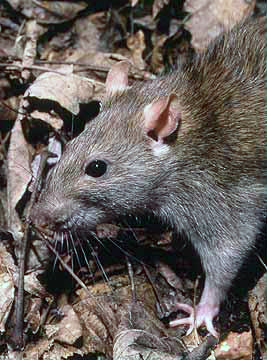 Brown RatRattus norvegicus
-
 Black RatRattus rattus
-
 Polynesian RatRattus exulans
-
 RakaliHydromys chrysogaster
-
 Wood MouseApodemus sylvaticus
-
 Eurasian Harvest MouseMicromys minutus
-
 Bramble Cay MelomysMelomys rubicola
Compare
Questions and answers
What is the scientific name of the Manipur Bush Rat?
The scientific name of the Manipur Bush Rat is Hadromys humei. Written with its author, the full name is Hadromys humei (Thomas, 1886).
Which family does the Manipur Bush Rat belong to?
Hadromys humei belongs to the family Muridae, in the order Rodentia and the class Mammalia.
Where is the Manipur Bush Rat found?
Checklists and occurrence records place Hadromys humei in 1 country: India.
What is the conservation status of the Manipur Bush Rat?
The IUCN Red List category recorded for Hadromys humei is Endangered (EN).
What other names does the Manipur Bush Rat have?
Hadromys humei is also known in English as Hume S Hadromys, Hume's Hadromys, Hume's Rat, Hume’s Rat and Manipur Hadromys.
Sources
Passages the profile rests on
- The species inhabits tropical evergreen forests in northeastern India. Source passage: “It inhabits tropical evergreen, moist deciduous and evergreen forests” — English Wikipedia
- The species occurs in moist deciduous forests. Source passage: “moist deciduous and evergreen forests” — English Wikipedia
- The species also occurs in secondary forests in northeastern India. Source passage: “and also found in secondary forests in northeastern India.” — English Wikipedia
- The species occurs at elevations between 900 and 1,300 m above sea level. Source passage: “The Manipur bush rat occurs at medium altitudes from 900 to 1,300 m (3,000 to 4,300 ft) above sea level.” — English Wikipedia
- The largest specimen described by Thomas was a female. Source passage: “The head and body length of the largest specimen, a female, was 125 millimetres” — English Wikipedia
- The head-and-body length of the largest recorded specimen was 125 mm. Source passage: “The head and body length of the largest specimen, a female, was 125 millimetres (4.9 in) long” — English Wikipedia
- The tail of the largest described specimen measured 106 mm. Source passage: “while the tail is 106 millimetres (4.2 in) long.” — English Wikipedia
- Recorded body weights range from 41 to 77 g. Source passage: “The weight has been recorded as ranging from 41 to 77 grams (1.4 to 2.7 oz).” — English Wikipedia
- The species has been reported from fewer than five areas. Source passage: “Less than five areas from which it is reported.” — English Wikipedia
- The species faces continuing declines in habitat extent and quality. Source passage: “Continuing decline in extent and degradation of habitat.” — English Wikipedia
- Habitat loss and degradation are identified as principal threats to the species. Source passage: “The principal threats to this species are assessed to be loss of and degradation of habitat” — English Wikipedia
- Habitat fragmentation and encroachment are additional principal threats to the species. Source passage: “fragmentation, and encroachment.” — English Wikipedia
- Hunting is considered a contributing cause of threats to the species. Source passage: “Besides these, hunting and fire are also considered to be contributing causes.” — English Wikipedia
- Fire is considered a contributing cause of threats to the species. Source passage: “hunting and fire are also considered to be contributing causes.” — English Wikipedia
Data
- Catalogue of Life, 2026-10-16 XR cc by
- Global Biodiversity Information Facility CC BY 4.0
- Wikidata CC0
- GeoNames CC BY 4.0
- Wikimedia Commons per image; credit shown with each image
- Within the Catalogue of Life, this name comes from The Integrated Taxonomic Information System cc0
References
- Proc. Zool. Soc. Lond. vol.1886 p.63 where the name was published
- Ellerman, J. R., and T. C. S. Morrison-Scott. (1966). Checklist of Palaearctic and Indian Mammals 1758 to 1946, 2nd Edition.
- Wilson, Don E., and DeeAnn M. Reeder, eds. (1993). Mammal Species of the World: A Taxonomic and Geographic Reference, 2nd Ed., 3rd Printing.
- Musser, Guy G., and Michael D. Carleton / Wilson, Don E., and DeeAnn M. Reeder, eds. (2005). Superfamily Muroidea. Mammal Species of the World: A Taxonomic and Geographic Reference, 3rd Ed., Vol. 2.
This species in other databases
Page built on 29 November 2026. See how the catalog is made and all sources and licences.
Cite this page
ScientificNames.org. (2026). Hadromys humei (Manipur Bush Rat). Retrieved November 29, 2026, from https://scientificnames.org/species/hadromys-humei
“Hadromys humei (Manipur Bush Rat).” ScientificNames.org, 2026, scientificnames.org/species/hadromys-humei. Accessed 29 Nov. 2026.
ScientificNames.org. “Hadromys humei (Manipur Bush Rat).” Accessed November 29, 2026. https://scientificnames.org/species/hadromys-humei.
@misc{scientificnames_hadromys_humei_manipur_bush_rat,
  author = {{ScientificNames.org}},
  title = {Hadromys humei (Manipur Bush Rat)},
  year = {2026},
  url = {https://scientificnames.org/species/hadromys-humei},
  note = {Accessed 2026-11-29}
}