Species · Amphibians
Alishan Salamander Hynobius arisanensis
The scientific name of the Alishan Salamander is Hynobius arisanensis. It is a species of amphibian in the family Hynobiidae (asiatic salamander), order Caudata. The name dates from 1922.
- Scientific name
- Hynobius arisanensis Maki, 1922
- Common name
- Alishan Salamander
- Genus
- Hynobius
- Family
- Hynobiidae (Asiatic Salamander)
- Order
- Caudata
- Class
- Amphibia
- Red List category
- EN Endangered
- Recorded in
- 1 country
- Name status
- accepted in the Catalogue of Life

Overview
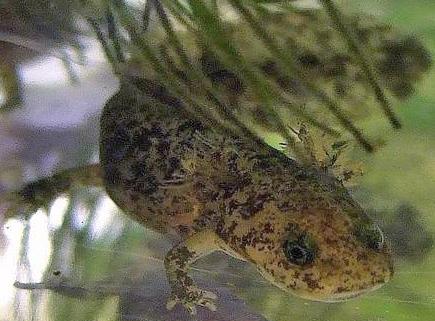
Hynobius arisanensis occurs in the Alishan Range, Yushan Range, and southern Central Mountain Range in Taiwan, at elevations above 1,800 m. Adults have blackish-brown to reddish-brown backs and lighter brown or grey-brown undersides.
Written 26 November 2026 from the sources listed below. Each statement was checked against the passage it cites; statements that could not be supported were removed.
Appearance
Adults have blackish-brown to reddish-brown coloration on their backs and lighter brown or grey-brown coloration on their undersides. They measure 5.0–6.5 cm in snout–vent length.[1][2]
Habitat
The species inhabits temperate forests, rivers, and freshwater springs. It occurs in coniferous and broadleaf woodland near streams at elevations above 1,800 m.[3][4]
It has been recorded at elevations between 1,800 and 3,600 m above sea level.[5]
Behaviour
The species usually remains hidden during daylight hours.[6]
Adult individuals in the Alishan Range have home ranges reaching up to 500 m².[7]
Reproduction and life cycle
The species probably breeds in streams, where its larvae develop in water.[8]
Conservation
The IUCN classifies the species as endangered. Its fragmented distribution is restricted to the Alishan, Yushan, and Pei Ta Wu Shan mountain ranges in Taiwan, and its total area of occupancy is smaller than 2,000 square kilometres.[9][10][11]
Habitat degradation associated particularly with tourism infrastructure development threatens the species. It occurs within Yushan National Park and Tawushan Nature Preserve.[12][13]
A study in the Alishan Range estimated adult survival at 0.996 and juvenile survival at 0.977. A population study estimated a growth ratio of 1.077 and characterized the population as stable or slightly increasing.[14][15]
Classification of the Alishan Salamander
| Kingdom | Animalia |
|---|---|
| Phylum | Chordata |
| Subphylum | Vertebrata |
| Infraphylum | Gnathostomata |
| Parvphylum | Osteichthyes |
| Megaclass | Tetrapoda |
| Class | Amphibia (Amphibians) |
| Order | Caudata (Salamanders) |
| Family | Hynobiidae (Asiatic Salamander) |
| Subfamily | Hynobiinae |
| Genus | Hynobius (Asian Salamanders) |
| Species | Hynobius arisanensis Maki, 1922 |
Where the Alishan Salamander is found
Checklists and occurrence records place Hynobius arisanensis in 1 country. GBIF holds 202 georeferenced records of it.
Countries
Regions and cities with the most records
A number beside a place is its count of GBIF occurrence records. A place without a number comes from a checklist alone. Records show where a species has been observed or collected, which can include escapes and vagrants.
Common names
English
- Alishan Salamander
- Alisan's Salamander
- Arisan Hynobiid
- Arisan Salamander
Names in 5 other languages
- Arabic
- سمندل أليشان
- Chinese
- 阿里山小鲵, 阿里山山椒魚
- French
- Hynobie d'Alishan
- Japanese
- アリサンサンショウウオ
- Korean
- 아리산도롱뇽
Related species
-
 Ezo SalamanderHynobius retardatus
-
 Hida SalamanderHynobius kimurae
-
 Japanese Rift SalamanderHynobius fossigenus
- Korean SalamanderHynobius leechii
-
 Japanese Black SalamanderHynobius nigrescens
-
 Taiwan SalamanderHynobius formosanus
-
 Abe's SalamanderHynobius abei
- Jeju SalamanderHynobius quelpaertensis
Compare
Questions and answers
What is the scientific name of the Alishan Salamander?
The scientific name of the Alishan Salamander is Hynobius arisanensis. Written with its author, the full name is Hynobius arisanensis Maki, 1922.
Which family does the Alishan Salamander belong to?
Hynobius arisanensis belongs to the family Hynobiidae, in the order Caudata and the class Amphibia.
Where is the Alishan Salamander found?
Checklists and occurrence records place Hynobius arisanensis in 1 country: Taiwan.
What is the conservation status of the Alishan Salamander?
The IUCN Red List category recorded for Hynobius arisanensis is Endangered (EN).
What other names does the Alishan Salamander have?
Hynobius arisanensis is also known in English as Alisan's Salamander, Arisan Hynobiid and Arisan Salamander.
Sources
Passages the profile rests on
- Adults have blackish-brown to reddish-brown coloration on their backs and lighter brown or grey-brown coloration on their undersides. Source passage: “It is blackish-brown to reddish-brown dorsally and somewhat lighter brown or grey-brown ventrally.” — English Wikipedia
- Adults measure 5.0–6.5 cm in snout–vent length. Source passage: “Adult H. arisanensis measure 5.0–6.5 cm (2.0–2.6 in) in snout–vent length.” — English Wikipedia
- The species inhabits temperate forests, rivers, and freshwater springs. Source passage: “Its natural habitats are temperate forests, rivers, and freshwater springs.” — English Wikipedia
- The species occurs in coniferous and broadleaf woodland near streams at elevations above 1,800 m. Source passage: “It is found in coniferous and broadleaf woodland near streams where it occurs at altitudes greater than 1,800 m (5,900 ft) and is considered rare.” — English Wikipedia
- The species has been recorded at elevations between 1,800 and 3,600 m above sea level. Source passage: “where it lives at altitudes of 1,800–3,600 m (5,900–11,800 ft) above sea level.” — English Wikipedia
- The species usually remains hidden during daylight hours. Source passage: “It is usually hiding during day time.” — English Wikipedia
- Adult individuals in the Alishan Range have home ranges reaching up to 500 m². Source passage: “A study of H. arisanensis in the Alishan Range found the adults had home ranges of up to 500 m2 (mean 65 m2).” — English Wikipedia
- The species probably breeds in streams, where its larvae develop in water. Source passage: “It probably breeds in the streams with the larvae developing in the water.” — English Wikipedia
- The IUCN classifies the species as endangered. Source passage: “In its Red List of Threatened Species, the IUCN lists Hynobius arisanensis as being "endangered".” — English Wikipedia
- The species has a fragmented distribution restricted to the Alishan, Yushan, and Pei Ta Wu Shan mountain ranges in Taiwan. Source passage: “This is because it is restricted to the Alishan, Yushan and Pei Ta Wu Shan mountain ranges in Taiwan where its range is fragmented.” — English Wikipedia
- The species has a total area of occupancy smaller than 2,000 square kilometres. Source passage: “Its total area of occupancy is less than 2,000 square kilometres (770 sq mi)” — English Wikipedia
- Habitat degradation associated particularly with tourism infrastructure development threatens the species. Source passage: “and its habitat is being degraded, particularly from the infrastructure development being undertaken in an attempt to increase tourism in the region.” — English Wikipedia
- The species occurs within Yushan National Park and Tawushan Nature Preserve. Source passage: “It is present in the Yushan National Park and the Tawushan Nature Preserve which should provide some measure of protection.” — English Wikipedia
- A study in the Alishan Range estimated adult survival at 0.996 and juvenile survival at 0.977. Source passage: “Adult and juvenile survival was high, 0.996 and 0.977, respectively.” — English Wikipedia
- A population study estimated a growth ratio of 1.077 and characterized the population as stable or slightly increasing. Source passage: “With the estimated population growth ratio of 1.077, the population appeared stable or slightly increasing.” — English Wikipedia
Data
- Catalogue of Life, 2026-10-16 XR cc by
- Global Biodiversity Information Facility CC BY 4.0
- Wikidata CC0
- GeoNames CC BY 4.0
- Wikimedia Commons per image; credit shown with each image
- Within the Catalogue of Life, this name comes from The Integrated Taxonomic Information System cc0
References
- Maki, M. (1922) Notes on the salamanders found in the Island of Formosa. Zoological Magazine (Dobutsugaku Zasshi) 34: 635–639. where the name was published
This species in other databases
Page built on 29 November 2026. See how the catalog is made and all sources and licences.
Cite this page
ScientificNames.org. (2026). Hynobius arisanensis (Alishan Salamander). Retrieved November 29, 2026, from https://scientificnames.org/species/hynobius-arisanensis
“Hynobius arisanensis (Alishan Salamander).” ScientificNames.org, 2026, scientificnames.org/species/hynobius-arisanensis. Accessed 29 Nov. 2026.
ScientificNames.org. “Hynobius arisanensis (Alishan Salamander).” Accessed November 29, 2026. https://scientificnames.org/species/hynobius-arisanensis.
@misc{scientificnames_hynobius_arisanensis_alishan_salamander,
  author = {{ScientificNames.org}},
  title = {Hynobius arisanensis (Alishan Salamander)},
  year = {2026},
  url = {https://scientificnames.org/species/hynobius-arisanensis},
  note = {Accessed 2026-11-29}
}