Species · Mammals
Mount Oku Rat Lamottemys okuensis
The scientific name of the Mount Oku Rat is Lamottemys okuensis. It is a species of mammal in the family Muridae (mice), order Rodentia. The name dates from 1986.
- Scientific name
- Lamottemys okuensis F. Petter, 1986
- Common name
- Mount Oku Rat
- Genus
- Lamottemys
- Family
- Muridae (Mice)
- Order
- Rodentia
- Class
- Mammalia
- Red List category
- EN Endangered
- Recorded in
- 1 country
- Name status
- accepted in the Catalogue of Life
Overview
The Mount Oku Rat is the only known member of the genus Lamottemys. It inhabits moist montane forests on the forested slopes of Mount Oku, at elevations between 2,100 and 3,000 metres. It has glossy, soft, dark brownish-black dorsal fur with a russet tinge and a tail approximately as long as its body.
Written 27 November 2026 from the sources listed below. Each statement was checked against the passage it cites; statements that could not be supported were removed.
Appearance
The species has glossy, soft dorsal fur that is dark brownish-black with a russet tinge. Its dorsal hairs are dark grey with ochre bands and black tips, accompanied by longer black guard hairs.[1][2]
Its underparts are yellowish-grey, with hairs that have grey bases and yellowish tips. Its limbs are yellowish-brown.[3][4]
The species has four digits on its front feet and five digits on its hind feet. Its tail is approximately as long as its body and bears scales and small black bristles.[5][6]
Its head-and-body length reaches approximately 126 mm.[7]
Habitat
The species inhabits subtropical or tropical moist montane forests on the forested slopes of Mount Oku. Its known habitat occurs at elevations between 2,100 and 3,000 metres.[8][9][10]
Its habitat includes areas with thorn-bushes, dense undergrowth and rough vegetation. Its ability to adapt to secondary-growth forest is uncertain.[11][12]
The species is endemic to Cameroon in West Africa and is known only from the forested slopes of Mount Oku. Its estimated total area of occupancy is approximately 500 square kilometres.[13][14][15][16][17][18]
Diet
The species is considered probably herbivorous.[19]
Behaviour
The species is considered probably terrestrial.[20]
Reproduction and life cycle
A female captured in January during the dry season contained one developing embryo. The species may have relatively small litter sizes.[21][22]
Conservation
The species has been assessed as endangered by the International Union for Conservation of Nature. Continuing forest degradation contributes to its endangered conservation status.[23][24]
The species is threatened by habitat destruction. Parts of its forest habitat are being cleared for agricultural purposes.[25][26]
Uses
Local villagers hunt the species for food.[27]
Classification of the Mount Oku Rat
| Kingdom | Animalia |
|---|---|
| Phylum | Chordata |
| Subphylum | Vertebrata |
| Infraphylum | Gnathostomata |
| Parvphylum | Osteichthyes |
| Megaclass | Tetrapoda |
| Class | Mammalia (Mammal) |
| Subclass | Theria |
| Infraclass | Eutheria |
| Order | Rodentia (Rodent) |
| Suborder | Myomorpha (Mice) |
| Superfamily | Muroidea |
| Family | Muridae (Mice) |
| Subfamily | Murinae (Old World Mice) |
| Genus | Lamottemys |
| Species | Lamottemys okuensis F. Petter, 1986 |
Where the Mount Oku Rat is found
Checklists and occurrence records place Lamottemys okuensis in 1 country across Africa. GBIF holds 67 georeferenced records of it.
Countries
Regions and cities with the most records
Range as the checklists state it
Africa
A number beside a place is its count of GBIF occurrence records. A place without a number comes from a checklist alone. Records show where a species has been observed or collected, which can include escapes and vagrants.
Common names
English
- Mount Oku Rat
- Mount Oku Lamottemys
- Mt. Oku Rat
Names in 6 other languages
- Czech
- krysa oku
- Finnish
- okuvuorenrotta
- French
- Rat du Mont Oku
- Japanese
- オクヤマネズミ
- Polish
- lamotek kameruński
- Russian
- Окуанская крыса
Related species
-
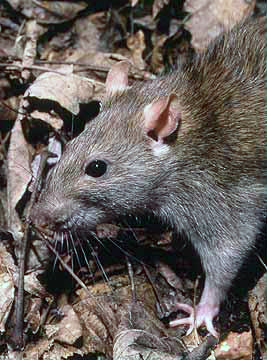 Brown RatRattus norvegicus
-
 Black RatRattus rattus
-
 Polynesian RatRattus exulans
-
 RakaliHydromys chrysogaster
-
 Wood MouseApodemus sylvaticus
-
 Eurasian Harvest MouseMicromys minutus
-
 Bramble Cay MelomysMelomys rubicola
-
 Greater Bandicoot RatBandicota indica
Compare
Questions and answers
What is the scientific name of the Mount Oku Rat?
The scientific name of the Mount Oku Rat is Lamottemys okuensis. Written with its author, the full name is Lamottemys okuensis F. Petter, 1986.
Which family does the Mount Oku Rat belong to?
Lamottemys okuensis belongs to the family Muridae, in the order Rodentia and the class Mammalia.
Where is the Mount Oku Rat found?
Checklists and occurrence records place Lamottemys okuensis in 1 country: Cameroon.
What is the conservation status of the Mount Oku Rat?
The IUCN Red List category recorded for Lamottemys okuensis is Endangered (EN).
What other names does the Mount Oku Rat have?
Lamottemys okuensis is also known in English as Mount Oku Lamottemys and Mt. Oku Rat.
Sources
Passages the profile rests on
- The species has glossy, soft dorsal fur that is dark brownish-black with a russet tinge. Source passage: “The dorsal fur is glossy and soft, dark brownish-black tinged with russet, with no stripe along the spine.” — English Wikipedia
- Its dorsal hairs are dark grey with ochre bands and black tips, accompanied by longer black guard hairs. Source passage: “The individual hairs are dark grey, banded with ochre and with black tips, and there are numerous longer, black guard hairs.” — English Wikipedia
- Its underparts are yellowish-grey, with hairs that have grey bases and yellowish tips. Source passage: “The underparts are yellowish-grey, the hairs having grey bases and yellowish tips.” — English Wikipedia
- Its limbs are yellowish-brown. Source passage: “The limbs are yellowish-brown, with four digits on the front feet and five digits on the hind.” — English Wikipedia
- The species has four digits on its front feet and five digits on its hind feet. Source passage: “The limbs are yellowish-brown, with four digits on the front feet and five digits on the hind.” — English Wikipedia
- Its tail is approximately as long as its body and bears scales and small black bristles. Source passage: “The tail is about the same length as the body, and is covered with scales and small black bristles.” — English Wikipedia
- The species reaches a head-and-body length of approximately 126 mm. Source passage: “The Mount Oku rat is a medium-sized species growing to a head-and-body length of about 126 mm (5 in).” — English Wikipedia
- The species inhabits subtropical or tropical moist montane forests. Source passage: “It is found only in Cameroon where its natural habitat is subtropical or tropical moist montane forests.” — English Wikipedia
- The species is known from forested slopes of Mount Oku. Source passage: “This rat is endemic to Cameroon in West Africa where it is only known from the forested slopes of Mount Oku” — English Wikipedia
- Its known habitat occurs at elevations between 2,100 and 3,000 metres. Source passage: “at altitudes of between 2,100 and 3,000 m (6,890 and 9,840 ft)” — English Wikipedia
- Its habitat includes areas with thorn-bushes, dense undergrowth and rough vegetation. Source passage: “in areas with thorn-bushes, dense undergrowth and rough vegetation.” — English Wikipedia
- Its ability to adapt to secondary-growth forest is uncertain. Source passage: “It is unclear whether it can adapt to secondary growth forest.” — English Wikipedia
- The species is endemic to Cameroon in West Africa. Source passage: “This rat is endemic to Cameroon in West Africa” — English Wikipedia
- Its known distribution is restricted to the forested slopes of Mount Oku. Source passage: “where it is only known from the forested slopes of Mount Oku” — English Wikipedia
- The species has an estimated total area of occupancy of approximately 500 square kilometres. Source passage: “its total area of occupancy being about 500 km2 (193 mi2)” — English Wikipedia
- The entire known population is located on the forested slopes of Mount Oku. Source passage: “with all the population being located on the forested slopes of Mount Oku.” — English Wikipedia
- The species is reported as occurring exclusively in Cameroon. Source passage: “It is found only in Cameroon.” — inaturalist.org
- The species is described as endemic to Cameroon and known only from Mount Oku. Source passage: “is endemic to Cameroon where it is known only from Mount Oku.” — iucnredlist.org
- The species is considered probably herbivorous. Source passage: “This species is probably herbivorous and terrestrial, based on its body proportions.” — English Wikipedia
- The species is considered probably terrestrial. Source passage: “This species is probably herbivorous and terrestrial, based on its body proportions.” — English Wikipedia
- A female captured in January during the dry season contained one developing embryo. Source passage: “One female captured in the dry season (January) contained a single developing embryo” — English Wikipedia
- The species may have relatively small litter sizes. Source passage: “so litter sizes may be low.” — English Wikipedia
- The species has been assessed as endangered by the International Union for Conservation of Nature. Source passage: “The International Union for Conservation of Nature has assessed its conservation status as being "endangered"” — English Wikipedia
- Continuing forest degradation is a reason for the species' endangered conservation status. Source passage: “based on the continuing degradation of the forest” — English Wikipedia
- The species is threatened by habitat destruction. Source passage: “It is threatened by habitat destruction.” — English Wikipedia
- Parts of the species' forest habitat are being cleared for agricultural purposes. Source passage: “parts of which are being cleared for agricultural purposes.” — English Wikipedia
- Local villagers hunt the species for food. Source passage: “it is also hunted for food by local villagers.” — English Wikipedia
Data
- Catalogue of Life, 2026-10-16 XR cc by
- Global Biodiversity Information Facility CC BY 4.0
- Wikidata CC0
- GeoNames CC BY 4.0
- Within the Catalogue of Life, this name comes from The Integrated Taxonomic Information System cc0
References
- Cimbebasia, Ser. A vol.8 p.98 where the name was published
- Wilson, Don E., and DeeAnn M. Reeder, eds. (1993). Mammal Species of the World: A Taxonomic and Geographic Reference, 2nd Ed., 3rd Printing.
- Musser, Guy G., and Michael D. Carleton / Wilson, Don E., and DeeAnn M. Reeder, eds. (2005). Superfamily Muroidea. Mammal Species of the World: A Taxonomic and Geographic Reference, 3rd Ed., Vol. 2.
This species in other databases
Page built on 27 November 2026. See how the catalog is made and all sources and licences.
Cite this page
ScientificNames.org. (2026). Lamottemys okuensis (Mount Oku Rat). Retrieved November 27, 2026, from https://scientificnames.org/species/lamottemys-okuensis
“Lamottemys okuensis (Mount Oku Rat).” ScientificNames.org, 2026, scientificnames.org/species/lamottemys-okuensis. Accessed 27 Nov. 2026.
ScientificNames.org. “Lamottemys okuensis (Mount Oku Rat).” Accessed November 27, 2026. https://scientificnames.org/species/lamottemys-okuensis.
@misc{scientificnames_lamottemys_okuensis_mount_oku_rat,
  author = {{ScientificNames.org}},
  title = {Lamottemys okuensis (Mount Oku Rat)},
  year = {2026},
  url = {https://scientificnames.org/species/lamottemys-okuensis},
  note = {Accessed 2026-11-27}
}