Species · Mammals
Lesser Stick-nest Rat Leporillus apicalis
The scientific name of the Lesser Stick-nest Rat is Leporillus apicalis. It is a species of mammal in the family Muridae (mice), order Rodentia. The name dates from 1853.
- Scientific name
- Leporillus apicalis (Gould, 1853)
- Common name
- Lesser Stick-nest Rat
- Genus
- Leporillus
- Family
- Muridae (Mice)
- Order
- Rodentia
- Class
- Mammalia
- Red List category
- EX Extinct
- Recorded in
- 1 country
- Name status
- accepted in the Catalogue of Life

Overview
The species historically inhabited remote parts of central Australia. It constructed nests from accumulated sticks that could reach three metres in length and one metre in height.
Written 26 November 2026 from the sources listed below. Each statement was checked against the passage it cites; statements that could not be supported were removed.
Appearance
The species had white flesh.[1]
Habitat
The species inhabited central Australia and historically occupied remote parts of the area.[2][3]
Historical records documented the species at Euston and Bourke, on both sides of the Murray River and along the Darling. The last known specimen was found at Mount Crombie.[4][5][6]
Diet
The species consumed sugar and, when kept in captivity, damper.[7][8]
Behaviour
The species accumulated large quantities of sticks to construct nests. Its stick nests could reach three metres in length and one metre in height.[9][10][11]
Individuals could occur in groups of up to 15 in a single tree. They were sufficiently tame to climb onto tables to obtain sugar.[12][13][7]
The species could live in captivity. Escaped captive individuals sometimes returned to their keeper for supper.[14][15]
Conservation
The last confirmed sighting occurred in 1933. The last capture was filmed on 18 July 1933.[16][17]
The International Union for Conservation of Nature classified the species as critically endangered in 2008. It was reclassified as extinct in 2016 following an assessment conducted in 2012.[18][19]
Competition with cattle and sheep was proposed as a possible cause of the species' decline. Reduced food availability may have increased its vulnerability to predators such as owls.[20][21]
The 2008 reassessment considered the possibility that a small surviving population remained in unsurveyed remote areas. Occasional reports of fresh vegetation being added to old nests contributed to the reassessment.[22][23]
A possible sighting was reported from a cave in Western Australia in 1970.[24]
Uses
Classification of the Lesser Stick-nest Rat
| Kingdom | Animalia |
|---|---|
| Phylum | Chordata |
| Subphylum | Vertebrata |
| Infraphylum | Gnathostomata |
| Parvphylum | Osteichthyes |
| Megaclass | Tetrapoda |
| Class | Mammalia (Mammal) |
| Subclass | Theria |
| Infraclass | Eutheria |
| Order | Rodentia (Rodent) |
| Suborder | Myomorpha (Mice) |
| Superfamily | Muroidea |
| Family | Muridae (Mice) |
| Subfamily | Murinae (Old World Mice) |
| Genus | Leporillus (Australian Stick-nest Rats) |
| Species | Leporillus apicalis (Gould, 1853) |
Where the Lesser Stick-nest Rat is found
Checklists and occurrence records place Leporillus apicalis in 1 country across Oceania. GBIF holds 137 georeferenced records of it.
Countries
Regions and cities with the most records
- Northern Territory, Australia 58
- Victoria, Australia 27
- Western Australia, Australia 19
- Mildura, Australia 13
- New South Wales, Australia 8
- Alice Springs, Australia 7
- South Australia, Australia 6
Range as the checklists state it
Australia
A number beside a place is its count of GBIF occurrence records. A place without a number comes from a checklist alone. Records show where a species has been observed or collected, which can include escapes and vagrants.
Common names
English
- Lesser Stick-nest Rat
- White-tipped Stick-nest Rat
Names in 6 other languages
- Czech
- krysa stavitelská
- Dutch
- Kleine Nestrat
- Finnish
- tikkupesärotta
- Japanese
- オジロコヤカケネズミ
- Polish
- zającoszczur mniejszy
- Russian
- Малая прутогнёздная крыса
Synonyms
One other scientific name has been used for this species and is now treated as a synonym of Leporillus apicalis.
- Hapalotis apicalis J. Gould, 1853
Related species
-
 Greater Stick-nest RatLeporillus conditor
-
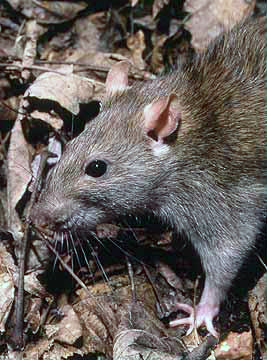 Brown RatRattus norvegicus
-
 Black RatRattus rattus
-
 Polynesian RatRattus exulans
-
 RakaliHydromys chrysogaster
-
 Wood MouseApodemus sylvaticus
-
 Eurasian Harvest MouseMicromys minutus
-
 Bramble Cay MelomysMelomys rubicola
Compare
Questions and answers
What is the scientific name of the Lesser Stick-nest Rat?
The scientific name of the Lesser Stick-nest Rat is Leporillus apicalis. Written with its author, the full name is Leporillus apicalis (Gould, 1853).
Which family does the Lesser Stick-nest Rat belong to?
Leporillus apicalis belongs to the family Muridae, in the order Rodentia and the class Mammalia.
Where is the Lesser Stick-nest Rat found?
Checklists and occurrence records place Leporillus apicalis in 1 country: Australia.
What is the conservation status of the Lesser Stick-nest Rat?
The IUCN Red List category recorded for Leporillus apicalis is Extinct (EX).
What other names does the Lesser Stick-nest Rat have?
Leporillus apicalis is also known in English as White-tipped Stick-nest Rat.
What is a rat's scientific name?
The scientific name of this species is Leporillus apicalis (Gould, 1853).[27]
Sources
Passages the profile rests on
- The species had white flesh. Source passage: “flesh white, tender, and well-tasted” — English Wikipedia
- The species inhabited central Australia. Source passage: “It lived in central Australia” — English Wikipedia
- The species historically occupied remote parts of central Australia. Source passage: “much of this species' range being in remote portions of central Australia” — English Wikipedia
- Historical records documented the species at Euston and Bourke. Source passage: “he encountered the species in Euston, Bourke” — English Wikipedia
- Historical records documented the species on both sides of the Murray River and along the Darling. Source passage: “and on both sides of the Murray and on the Darling.” — English Wikipedia
- The last known specimen was found at Mount Crombie. Source passage: “The last specimen was found at Mount Crombie.” — English Wikipedia
- The species consumed sugar. Source passage: “climbing onto tables to get sugar.” — English Wikipedia
- The species consumed damper when kept in captivity. Source passage: “and help[ed] themselves, to damper especially” — English Wikipedia
- The species constructed nests from accumulated sticks. Source passage: “it built nests of sticks that accumulate over years” — English Wikipedia
- Its stick nests could reach three metres in length and one metre in height. Source passage: “which were up to three metres long and a metre high.” — English Wikipedia
- The species accumulated large quantities of sticks to build its nests. Source passage: “It accumulated large mounds of sticks to construct its nests” — English Wikipedia
- Individuals were sufficiently tame to climb onto tables to obtain sugar. Source passage: “It was easily tamed, sometimes climbing onto tables to get sugar.” — English Wikipedia
- Individuals could occur in groups of up to 15 in a single tree. Source passage: “He could dislodge up to 15 individuals from a single tree” — English Wikipedia
- Escaped captive individuals sometimes returned to their keeper for supper. Source passage: “any that escaped came back to join him for supper” — English Wikipedia
- The species was capable of living in captivity. Source passage: “kept a large number of them in captivity.” — English Wikipedia
- The last confirmed sighting of the species occurred in 1933. Source passage: “The last confirmed sighting of this rat was in 1933” — English Wikipedia
- The last capture of the species was filmed on 18 July 1933. Source passage: “The last capture was filmed on 18 July 1933” — English Wikipedia
- The International Union for Conservation of Nature classified the species as critically endangered in 2008. Source passage: “In 2008, the International Union for Conservation of Nature listed it as "critically endangered"” — English Wikipedia
- The species was reclassified as extinct in 2016 following an assessment conducted in 2012. Source passage: “revised its evaluation to "extinct" again in 2016, based on an assessment in 2012.” — English Wikipedia
- Competition with cattle and sheep was proposed as a possible cause of the species' decline. Source passage: “The rat may have declined from competition with cattle and sheep.” — English Wikipedia
- Reduced food availability may have increased the species' vulnerability to predators such as owls. Source passage: “The reduction in available food sources also caused them to be more vulnerable to predators like owls.” — English Wikipedia
- The 2008 reassessment considered the possibility that a small surviving population remained in unsurveyed remote areas. Source passage: “a very small population may still exist in yet to be surveyed remote lands of the Australian interior.” — English Wikipedia
- Occasional reports of fresh vegetation being added to old nests contributed to the 2008 reassessment. Source passage: “continued occasional reports of fresh vegetation being added to old stick-nests” — English Wikipedia
- A possible sighting was reported from a cave in Western Australia in 1970. Source passage: “There is a possibility that a lesser stick-nest rat was seen in a cave in Western Australia in 1970.” — English Wikipedia
- Humans consumed the species. Source passage: “It was also eaten by people.” — English Wikipedia
- People historically ate the species. Source passage: “It was also eaten by people.” — English Wikipedia
- The species was accepted under the scientific name Leporillus apicalis (Gould, 1853) in the Atlas of Living Australia. Source passage: “Leporillus apicalis (Gould, 1853) accepted” — bie.ala.org.au
Data
- Catalogue of Life, 2026-10-16 XR cc by
- Global Biodiversity Information Facility CC BY 4.0
- Wikidata CC0
- GeoNames CC BY 4.0
- Wikimedia Commons per image; credit shown with each image
- Within the Catalogue of Life, this name comes from The Integrated Taxonomic Information System cc0
References
- Proc. Zool. Soc. Lond. vol.1853 p.126 where the name was published
- Watts, Christopher H. S., and H. J. Aslin. (1981). The Rodents of Australia.
- Wilson, Don E., and DeeAnn M. Reeder, eds. (1993). Mammal Species of the World: A Taxonomic and Geographic Reference, 2nd Ed., 3rd Printing.
- Musser, Guy G., and Michael D. Carleton / Wilson, Don E., and DeeAnn M. Reeder, eds. (2005). Superfamily Muroidea. Mammal Species of the World: A Taxonomic and Geographic Reference, 3rd Ed., Vol. 2.
This species in other databases
Page built on 29 November 2026. See how the catalog is made and all sources and licences.
Cite this page
ScientificNames.org. (2026). Leporillus apicalis (Lesser Stick-nest Rat). Retrieved November 29, 2026, from https://scientificnames.org/species/leporillus-apicalis
“Leporillus apicalis (Lesser Stick-nest Rat).” ScientificNames.org, 2026, scientificnames.org/species/leporillus-apicalis. Accessed 29 Nov. 2026.
ScientificNames.org. “Leporillus apicalis (Lesser Stick-nest Rat).” Accessed November 29, 2026. https://scientificnames.org/species/leporillus-apicalis.
@misc{scientificnames_leporillus_apicalis_lesser_stick_nest_rat,
  author = {{ScientificNames.org}},
  title = {Leporillus apicalis (Lesser Stick-nest Rat)},
  year = {2026},
  url = {https://scientificnames.org/species/leporillus-apicalis},
  note = {Accessed 2026-11-29}
}