Overview
The Mindanao Mountain Rat is a mammal first described in 1905 by American naturalist Edgar Alexander Mearns. It occurs on Mount Apo, Mount Kitanglad and Mount Malindang in the Philippines. It has yellowish-brown upperparts, plain white underparts and a tail longer than its head-and-body length.
Written 27 November 2026 from the sources listed below. Each statement was checked against the passage it cites; statements that could not be supported were removed.
Similar species
Limnomys mearnsii was subsequently synonymised with Limnomys sibuanus. Limnomys bryophilus is another species in the genus, described in 2003.[1][2]
Limnomys sibuanus and Limnomys bryophilus are both endemic to the Kitanglad Mountain Range in central Mindanao. They differ in the elevations at which they occur.[3][4]
Appearance
The Mindanao Mountain Rat has short, somewhat coarse fur with flattened awns and yellowish-brown upperparts. Its underparts are plain white, without brown coloration on the chest.[5][6][7]
It has a stout, broad head resembling that of a generalized rat. Its pinnae and hind feet are smaller than those of Limnomys bryophilus.[8][9]
Its head-and-body length ranges from 119 to 144 mm, and its tail measures 147 to 174 mm. It weighs between 47 and 82 grams.[10][11][12]
Habitat
The Mindanao Mountain Rat inhabits elevations between 2,000 and 2,800 metres. It occurs in forests composed mainly of conifers and laurels that reach heights of up to 10 metres.[13][14]
Its forest habitat contains fallen trees, rhododendrons, shrubs, ferns, orchids, mosses and lichens.[15]
Conservation
The Mindanao Mountain Rat is described as common in tropical high-altitude rainforest and moss forest despite its limited range. Its habitat is reported as not being exploited, and no particular threats to the species are known.[16][17][18]
The mountain range inhabited by the species is included in Mount Kitanglad Range Natural Park, which was designated a protected area in 2000. The species is classified as Least Concern by the International Union for Conservation of Nature.[19][20][21]
Classification of the Mindanao Mountain Rat
| Kingdom | Animalia |
|---|---|
| Phylum | Chordata |
| Subphylum | Vertebrata |
| Infraphylum | Gnathostomata |
| Parvphylum | Osteichthyes |
| Megaclass | Tetrapoda |
| Class | Mammalia (Mammal) |
| Subclass | Theria |
| Infraclass | Eutheria |
| Order | Rodentia (Rodent) |
| Suborder | Myomorpha (Mice) |
| Superfamily | Muroidea |
| Family | Muridae (Mice) |
| Subfamily | Murinae (Old World Mice) |
| Genus | Limnomys |
| Species | Limnomys sibuanus Mearns, 1905 |
Where the Mindanao Mountain Rat is found
Checklists and occurrence records place Limnomys sibuanus in 1 country across Asia. GBIF holds 27 georeferenced records of it.
Countries
Range as the checklists state it
Southern Asia
A number beside a place is its count of GBIF occurrence records. A place without a number comes from a checklist alone. Records show where a species has been observed or collected, which can include escapes and vagrants.
Common names
English
- Mindanao Mountain Rat
- Long-tailed Moss Mouse
- White-bellied Limnomys
Names in 4 other languages
- Finnish
- mindanaonvuorirotta
- Japanese
- シロハラヌマチネズミ
- Polish
- mszarniczek białobrzuchy
- Russian
- Приозёрная крыса
Related species
- Gray-bellied Mountain RatLimnomys bryophilus
-
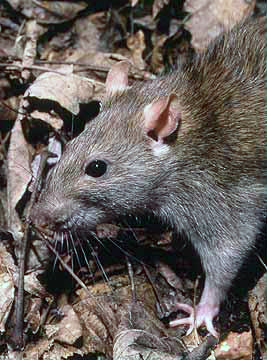 Brown RatRattus norvegicus
-
 Black RatRattus rattus
-
 Polynesian RatRattus exulans
-
 RakaliHydromys chrysogaster
-
 Wood MouseApodemus sylvaticus
-
 Eurasian Harvest MouseMicromys minutus
-
 Bramble Cay MelomysMelomys rubicola
Compare
Questions and answers
What is the scientific name of the Mindanao Mountain Rat?
The scientific name of the Mindanao Mountain Rat is Limnomys sibuanus. Written with its author, the full name is Limnomys sibuanus Mearns, 1905.
Which family does the Mindanao Mountain Rat belong to?
Limnomys sibuanus belongs to the family Muridae, in the order Rodentia and the class Mammalia.
Where is the Mindanao Mountain Rat found?
Checklists and occurrence records place Limnomys sibuanus in 1 country: Philippines.
What is the conservation status of the Mindanao Mountain Rat?
The IUCN Red List category recorded for Limnomys sibuanus is Least Concern (LC).
What other names does the Mindanao Mountain Rat have?
Limnomys sibuanus is also known in English as Long-tailed Moss Mouse and White-bellied Limnomys.
Sources
Passages the profile rests on
- Limnomys mearnsii was subsequently synonymised with Limnomys sibuanus. Source passage: “but this was later synonymised with L. sibuanus.” — English Wikipedia
- Limnomys bryophilus is another species in the genus described in 2003. Source passage: “Another species was described in 2003 by Eric A. Rickart as Limnomys bryophilus.” — English Wikipedia
- Limnomys sibuanus and Limnomys bryophilus are both endemic to the Kitanglad Mountain Range in central Mindanao. Source passage: “Both species are endemic to the Kitanglad Mountain Range in central Mindanao in the Philippines” — English Wikipedia
- Limnomys sibuanus and Limnomys bryophilus differ in the elevations at which they occur. Source passage: “but they differ in the elevations at which they are found.” — English Wikipedia
- The species has short, somewhat coarse fur with flattened awns. Source passage: “The fur is short and somewhat coarse with flattened awns.” — English Wikipedia
- The species has yellowish-brown upperparts. Source passage: “The upper parts of this rat are yellowish-brown” — English Wikipedia
- The species has plain white underparts without brown coloration on the chest. Source passage: “the underparts are plain white, with no brown on the chest.” — English Wikipedia
- The species has smaller pinnae and hind feet than Limnomys bryophilus. Source passage: “The pinnae and the hind feet are smaller than those of L. bryophilus.” — English Wikipedia
- Limnomys sibuanus has a stout, broad head resembling that of a generalized rat. Source passage: “Limnomys sibuanus, R. everetti, all Tarsomys species, and K. sodyi instead have stout, broad heads that more closely resemble a generalized rat.” — pmc.ncbi.nlm.nih.gov
- The species has a head-and-body length ranging from 119 to 144 mm. Source passage: “The Mindanao mountain rat has a head-and-body length of 119 to 144 mm” — English Wikipedia
- The species has a tail measuring 147 to 174 mm in length. Source passage: “a tail length of 147 to 174 mm (5.79 to 6.85 in)” — English Wikipedia
- The species weighs between 47 and 82 grams. Source passage: “weighs 47 to 82 grams (1.66 to 2.89 oz).” — English Wikipedia
- The species inhabits elevations between 2,000 and 2,800 metres. Source passage: “It is found at altitudes of between 2,000 and 2,800 m” — English Wikipedia
- The species inhabits forests composed mainly of conifers and laurels that reach heights of up to 10 metres. Source passage: “Its habitat is forests composed mostly of conifers and laurels up to 10 m (33 ft) high” — English Wikipedia
- Its forest habitat contains fallen trees, rhododendrons, shrubs, ferns, orchids, mosses and lichens. Source passage: “with fallen trees, rhododendrons, other shrubs, ferns, orchids, mosses and lichens.” — English Wikipedia
- The species is described as common in tropical high-altitude rainforest and moss forest despite its limited range. Source passage: “L. sibuanus has a limited range but it is a common species in the tropical high altitude rainforest and moss forest” — English Wikipedia
- The species' habitat is reported as not being exploited. Source passage: “The habitat is not being exploited” — English Wikipedia
- No particular threats to the species are known. Source passage: “no particular threats to this species are known” — English Wikipedia
- The mountain range inhabited by the species is included in Mount Kitanglad Range Natural Park. Source passage: “the whole mountain range is included in the Mount Kitanglad Range Natural Park” — English Wikipedia
- Mount Kitanglad Range Natural Park was designated a protected area in 2000. Source passage: “which was designated a protected area in 2000.” — English Wikipedia
- The species is classified as Least Concern by the International Union for Conservation of Nature. Source passage: “the International Union for Conservation of Nature has assessed its conservation status as being of "least concern".” — English Wikipedia
Data
- Catalogue of Life, 2026-10-16 XR cc by
- Global Biodiversity Information Facility CC BY 4.0
- Wikidata CC0
- GeoNames CC BY 4.0
- Within the Catalogue of Life, this name comes from The Integrated Taxonomic Information System cc0
References
- Proc. U.S. Natl. Mus. vol.28 p.452 where the name was published
- Ellerman, J. R., and T. C. S. Morrison-Scott. (1966). Checklist of Palaearctic and Indian Mammals 1758 to 1946, 2nd Edition.
- Wilson, Don E., and DeeAnn M. Reeder, eds. (1993). Mammal Species of the World: A Taxonomic and Geographic Reference, 2nd Ed., 3rd Printing.
- Musser, Guy G., and Michael D. Carleton / Wilson, Don E., and DeeAnn M. Reeder, eds. (2005). Superfamily Muroidea. Mammal Species of the World: A Taxonomic and Geographic Reference, 3rd Ed., Vol. 2.
This species in other databases
Page built on 27 November 2026. See how the catalog is made and all sources and licences.
Cite this page
ScientificNames.org. (2026). Limnomys sibuanus (Mindanao Mountain Rat). Retrieved November 27, 2026, from https://scientificnames.org/species/limnomys-sibuanus
“Limnomys sibuanus (Mindanao Mountain Rat).” ScientificNames.org, 2026, scientificnames.org/species/limnomys-sibuanus. Accessed 27 Nov. 2026.
ScientificNames.org. “Limnomys sibuanus (Mindanao Mountain Rat).” Accessed November 27, 2026. https://scientificnames.org/species/limnomys-sibuanus.
@misc{scientificnames_limnomys_sibuanus_mindanao_mountain_rat,
  author = {{ScientificNames.org}},
  title = {Limnomys sibuanus (Mindanao Mountain Rat)},
  year = {2026},
  url = {https://scientificnames.org/species/limnomys-sibuanus},
  note = {Accessed 2026-11-27}
}