Species · Mammals
Black-backed Jackal Lupulella mesomelas
The scientific name of the Black-backed Jackal is Lupulella mesomelas. It is a species of mammal in the family Canidae (dogs), order Carnivora. The name dates from 1775.
- Scientific name
- Lupulella mesomelas (Schreber, 1775)
- Common name
- Black-backed Jackal
- Genus
- Lupulella
- Family
- Canidae (Dogs)
- Order
- Carnivora
- Class
- Mammalia
- Red List category
- LC Least Concern
- Recorded in
- 15 countries
- Name status
- accepted in the Catalogue of Life

Overview
Lupulella mesomelas is native to eastern and southern Africa. It has a reddish-brown to tan coat, a black saddle containing silvery hairs, and a bushy tail with a black tip.
Written 26 November 2026 from the sources listed below. Each statement was checked against the passage it cites; statements that could not be supported were removed.
Appearance
The Black-backed Jackal has a slender, fox-like body, long legs, and large ears. Its coat ranges from reddish brown to tan, with particularly pronounced coloration on the flanks and legs.[1][2]
A black saddle containing silvery hairs extends from its shoulders to the base of its tail. A long black stripe along each flank separates the saddle from the surrounding coat, and its bushy tail has a black tip.[3][4][5]
The lips, throat, chest, and inner surfaces of the limbs are white. Its winter coat is a deeper reddish brown than its usual coat, and albino individuals occur occasionally.[6][7][8]
Adults weigh between 6 and 13 kg and measure 38–48 cm at the shoulder. Body length ranges from 67.3 to 81.2 cm.[9][10][11]
Habitat
The Black-backed Jackal generally prefers open habitats with little dense vegetation. Its habitats range from arid coastal deserts to areas receiving more than 2,000 mm of rainfall.[12][13]
Recorded habitats include semi-desert scrublands, alpine regions, farmlands, and savannas. The species also occurs in agricultural fields and peri-urban environments.[14][15][16]
Diet
The Black-backed Jackal is omnivorous. Its invertebrate prey includes beetles, grasshoppers, crickets, termites, millipedes, spiders, and scorpions.[17][18]
Its mammalian prey includes rodents, hares, and young antelopes up to the size of topi calves. It also consumes carrion, birds, bird eggs, lizards, and snakes.[19][20]
Jackals living in coastal areas consume beached marine mammals, seals, fish, and mussels. Along the Namib Desert coastline, their diet primarily consists of marine birds, marine mammals, fish, and insects.[21][22]
In South Africa, impalas and springboks are among its principal antelope prey. The species occasionally eats fruits and berries.[23][24]
In the Namib Desert, the Black-backed Jackal consumes the fruits of the !nara melon and disperses its seeds through defecation.[25]
Behaviour
The Black-backed Jackal is monogamous and territorial. Its basic social unit consists of a monogamous breeding pair that defends its territory.[26][27]
Breeding pairs mark territorial boundaries using faeces and urine. Older offspring may remain with their parents to help raise subsequent litters.[28][29]
The species communicates through vocalisations including yelling, yelping, woofing, whining, growling, and cackling. It also caches surplus food.[30][31]
Reproduction and life cycle
The mating season extends from late May through August. The gestation period lasts approximately 60 days, and pups are born between July and October.[32][33][34]
Litters contain between one and nine pups, which are born blind. Pups open their eyes between 8 and 10 days after birth.[35][36]
Young jackals emerge from their dens at approximately three weeks of age and are weaned at approximately eight to nine weeks. They can hunt independently at approximately six months of age.[37][38][39]
Sexual maturity is reached at approximately 11 months.[40]
Conservation
The Black-backed Jackal is classified as Least Concern on the IUCN Red List. This classification is attributed to its widespread distribution and adaptability.[41][42]
The species experiences persecution because it is considered a livestock predator and rabies vector.[43]
Similar species
The Black-backed Jackal is closely related to the side-striped jackal and more distantly related to the golden jackal.[44][45]
Classification of the Black-backed Jackal
| Kingdom | Animalia |
|---|---|
| Phylum | Chordata |
| Subphylum | Vertebrata |
| Infraphylum | Gnathostomata |
| Parvphylum | Osteichthyes |
| Megaclass | Tetrapoda |
| Class | Mammalia (Mammal) |
| Subclass | Theria |
| Infraclass | Eutheria |
| Order | Carnivora (Carnivores) |
| Suborder | Caniformia (Dog-like Carnivores) |
| Family | Canidae (Dogs) |
| Genus | Lupulella (African Jackals) |
| Species | Lupulella mesomelas (Schreber, 1775) |
Where the Black-backed Jackal is found
Checklists and occurrence records place Lupulella mesomelas in 15 countries across Africa. GBIF holds 9,247 georeferenced records of it.
Countries
- Angola 48
- Botswana 842
- Eritrea 5
- Eswatini 13
- Ethiopia 58
- Kenya 1,604
- Lesotho 3
- Namibia 1,995
- Somalia 11
- South Africa 3,653
- South Sudan 6
- Tanzania 791
- Uganda 7
- Zambia 6
- Zimbabwe 205
Regions and cities with the most records
- Oshikoto Region, Namibia 700
- Limpopo, South Africa 673
- Mpumalanga, South Africa 625
- Northern Cape, South Africa 610
- Narok County, Kenya 606
- Eastern Cape, South Africa 531
- Erongo Region, Namibia 362
- North West, South Africa 335
- Oshana Region, Namibia 278
- Arusha, Tanzania 248
- Chobe, Botswana 231
- KwaZulu-Natal, South Africa 230
- Gauteng, South Africa 213
- Mara, Tanzania 212
- Western Cape, South Africa 194
- Hardap Region, Namibia 183
- North-West, Botswana 183
- Free State, South Africa 179
- Nakuru County, Kenya 165
- Laikipia, Kenya 154
- Central, Botswana 146
- Walvis Bay, Namibia 141
- Kajiado County, Kenya 138
- Nakuru, Kenya 138
- Otjozondjupa Region, Namibia 125
- Manyara, Tanzania 114
- Matabeleland North, Zimbabwe 102
- Imara Daima Estate, Kenya 100
- Mlolongo, Kenya 100
- Nairobi, Kenya 96
- Ongata Rongai, Kenya 96
- Nairobi County, Kenya 91
- Taita Taveta, Kenya 84
- Phuthaditjhaba, South Africa 82
- Githunguri, Kenya 81
- Athi River, Kenya 80
2 more countries have a few records outside this range
These countries hold a few records of Lupulella mesomelas but lie outside the range the checklists give for it. Such records are often zoo or garden specimens, museum material or vagrants, so the species is not counted as occurring there.
Range as the checklists state it
Africa
A number beside a place is its count of GBIF occurrence records. A place without a number comes from a checklist alone. Records show where a species has been observed or collected, which can include escapes and vagrants.
Common names
English
- Black-backed Jackal
- Silver-backed Jackal
Names in 36 other languages
- Afrikaans
- Rooijakkals, Skaapvanger, Swartrugjakkals
- Arabic
- ابن آوى أسود الظهر, ابن آوى فضي الظهر
- Chinese
- 黑背胡狼
- Croatian
- Crnoleđi čagalj
- Czech
- šakal čabrakový
- Danish
- Skaberaksjakal
- Dutch
- Zadeljakhals
- Estonian
- Mustselg-šaakal
- Finnish
- vaippasakaali
- French
- Chacal à chabraque, Chacal á chabraque
- German
- Schabrackenschakal, Schabrakenschakal
- Greek
- Αφρικανικό Τσακάλι
- Hungarian
- panyókás sakál
- Italian
- Sciacallo dalla gualdrappa
- Japanese
- セグロジャッカル
- Korean
- 검은등자칼
- Lithuanian
- Juodnugaris šakalas
- Norwegian Bokmål
- Skaberakksjakal, Svartryggsjakal
- Polish
- szakal czaprakowy
- Portuguese
- Chacal-de-costas-pretas, Chacal-de-dorso-negro
- Russian
- Чепрачный шакал
- Slovenian
- podsedliški šakal
- Spanish
- Chacal de lomo negro
- Swahili
- Bweha Nyekunda, Bweha nyakundu, Bweha shaba
- Thai
- หมาจิ้งจอกหลังดำ
- Tswana
- Phokoje
- Turkish
- kara sırtlı çakal
- Ukrainian
- Шакал чепрачний
- Xhosa
- Impungutye, udyakalashe
- Zulu
- Impungushe
- kck
- Mmungugbwe, Mungugwe, Phungubgwe, mphungugwe, phungugwe
- nso
- Phokojwe
- sbs
- usibwe
- sna
- Mhungubwe, gava, nheveravauya
- tso
- Mhungubye
- ven
- Phunguhwe
Synonyms
One other scientific name has been used for this species and is now treated as a synonym of Lupulella mesomelas.
- Canis mesomelas Schreber, 1775
Subspecies and varieties
- Lupulella mesomelas mesomelas (Cape Black-backed Jackal) subspecies
- Lupulella mesomelas schmidti (Eastern Black-backed Jackal) subspecies
Related species
- Side-striped JackalLupulella adustus
- DogCanis familiaris
-
 WolfCanis lupus
-
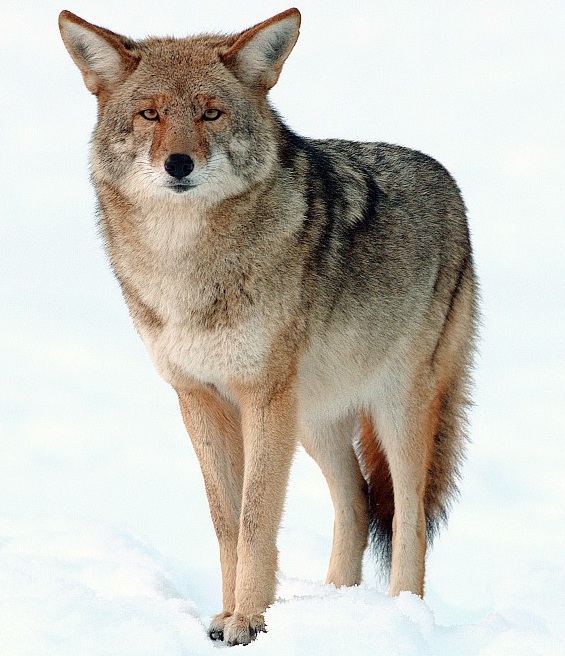 CoyoteCanis latrans
-
 Red FoxVulpes vulpes
-
 Japanese Raccoon DogNyctereutes viverrinus
-
 African Wild DogLycaon pictus
-
 Maned WolfChrysocyon brachyurus
Compare
Questions and answers
What is the scientific name of the Black-backed Jackal?
The scientific name of the Black-backed Jackal is Lupulella mesomelas. Written with its author, the full name is Lupulella mesomelas (Schreber, 1775).
Which family does the Black-backed Jackal belong to?
Lupulella mesomelas belongs to the family Canidae, in the order Carnivora and the class Mammalia.
Where is the Black-backed Jackal found?
Checklists and occurrence records place Lupulella mesomelas in 15 countries, including South Africa, Namibia, Kenya, Botswana, Tanzania and Zimbabwe.
What is the conservation status of the Black-backed Jackal?
The IUCN Red List category recorded for Lupulella mesomelas is Least Concern (LC).
What other names does the Black-backed Jackal have?
Lupulella mesomelas is also known in English as Silver-backed Jackal.
What do black-backed jackals eat?
Black-backed Jackals are omnivorous. They eat invertebrates, rodents, hares, young antelopes, carrion, birds, bird eggs, lizards, snakes, and, in coastal areas, marine mammals, seals, fish, and mussels. They also occasionally eat fruits and berries.[17][18][19][20][21][23]
What is the diet of a jackal?
The Black-backed Jackal has an omnivorous diet that includes invertebrates, mammals, birds, reptiles, carrion, and occasionally fruits and berries.[17][18][19][20][23]
What habitat do jackals live in?
The Black-backed Jackal generally prefers open habitats with little dense vegetation. It occurs in semi-desert scrublands, alpine regions, farmlands, savannas, agricultural fields, and peri-urban environments.[12][14][15][16]
Where do black-backed jackals live?
The Black-backed Jackal is native to eastern and southern Africa. Its southern African distribution includes South Africa, Namibia, Botswana, and Zimbabwe, while its eastern African distribution includes Kenya, Somalia, Djibouti, Eritrea, and Ethiopia.[46][47][48]
Sources
Passages the profile rests on
- The black-backed jackal has a slender, fox-like body, long legs, and large ears. Source passage: “The black-backed jackal is a fox-like canid with a slender body, long legs, and large ears.” — English Wikipedia
- Its coat ranges from reddish brown to tan, with particularly pronounced coloration on the flanks and legs. Source passage: “The base colour is reddish brown to tan, which is particularly pronounced on the flanks and legs.” — English Wikipedia
- A black saddle containing silvery hairs extends from its shoulders to the base of its tail. Source passage: “A black saddle intermixed with silvery hair extends from the shoulders to the base of the tail.” — English Wikipedia
- A long black stripe along each flank separates the saddle from the surrounding coat. Source passage: “A long, black stripe extending along the flanks separates the saddle from the rest of the body” — English Wikipedia
- Its bushy tail has a black tip. Source passage: “The tail is bushy and tipped with black.” — English Wikipedia
- The lips, throat, chest, and inner surfaces of the limbs are white. Source passage: “The lips, throat, chest, and inner surface of the limbs are white.” — English Wikipedia
- Its winter coat is a deeper reddish brown than its usual coat. Source passage: “The winter coat is a much deeper reddish brown.” — English Wikipedia
- Albino individuals occur occasionally in this species. Source passage: “Albino specimens occasionally occur.” — English Wikipedia
- Adults weigh between 6 and 13 kg. Source passage: “It weighs 6–13 kg (13–29 lb)” — English Wikipedia
- The species measures 38–48 cm at the shoulder. Source passage: “stands 38–48 cm (15–19 in) at the shoulder” — English Wikipedia
- Its body length ranges from 67.3 to 81.2 cm. Source passage: “measures 67.3–81.2 cm (26.5–32.0 in) in body length.” — English Wikipedia
- The species generally prefers open habitats with little dense vegetation. Source passage: “The black-backed jackal generally shows a preference for open areas with little dense vegetation” — English Wikipedia
- It occupies habitats ranging from arid coastal deserts to areas receiving more than 2,000 mm of rainfall. Source passage: “though it occupies a wide range of habitats, from arid coastal deserts to areas with more than 2000 mm of rainfall.” — English Wikipedia
- Its recorded habitats include semi-desert scrublands and alpine regions. Source passage: “Studies show their presence in environments ranging from semi-desert scrublands to alpine regions” — English Wikipedia
- The species occurs in agricultural fields and peri-urban environments. Source passage: “including agricultural fields and peri-urban zones.” — English Wikipedia
- Its recorded habitats include farmlands and savannas. Source passage: “It also occurs in farmlands, savannas, open savanna mosaics, and alpine areas.” — English Wikipedia
- The black-backed jackal is omnivorous. Source passage: “Black-backed jackals are omnivores.” — English Wikipedia
- Its invertebrate prey includes beetles, grasshoppers, crickets, termites, millipedes, spiders, and scorpions. Source passage: “Their diet includes invertebrates, such as beetles, grasshoppers, crickets, termites, millipedes, spiders, and scorpions.” — English Wikipedia
- Its mammalian prey includes rodents, hares, and young antelopes up to the size of topi calves. Source passage: “Mammals are eaten such as rodents, hares, and young antelopes up to the size of topi calves.” — English Wikipedia
- The species also consumes carrion, birds, bird eggs, lizards, and snakes. Source passage: “They also feed on carrion, birds, bird eggs, lizards and snakes.” — English Wikipedia
- Jackals living in coastal areas consume beached marine mammals, seals, fish, and mussels. Source passage: “In coastal areas, they feed on beached marine mammals, seals, fish, and mussels.” — English Wikipedia
- Jackals along the Namib Desert coastline primarily consume marine birds, marine mammals, fish, and insects. Source passage: “On the coastline of the Namib Desert, jackals feed primarily on marine birds (mainly Cape and white-breasted cormorants and jackass penguins), marine mammals (including Cape fur seals), fish, and insects.” — English Wikipedia
- The species occasionally eats fruits and berries. Source passage: “They also consume occasionally fruits and berries.” — English Wikipedia
- In South Africa, impalas and springboks are among its principal antelope prey. Source passage: “In South Africa, black-backed jackals frequently prey on antelopes (primarily impala and springbok” — English Wikipedia
- The species consumes the fruits of the !nara melon in the Namib Desert and disperses its seeds through defecation. Source passage: “jackals have been found to facilitate the germination and spread of the !nara melon (Acanthosicyos horridus) in the Namib Desert by consuming the fruit and defecating the seeds” — English Wikipedia
- The black-backed jackal is monogamous and territorial. Source passage: “The black-backed jackal is a monogamous and territorial animal” — English Wikipedia
- Its basic social unit consists of a monogamous breeding pair that defends its territory. Source passage: “The basic social unit is a monogamous mated pair which defends its territory” — English Wikipedia
- Breeding pairs mark territorial boundaries using faeces and urine. Source passage: “through laying faeces and urine on range boundaries.” — English Wikipedia
- Older offspring may remain with their parents to help raise subsequent litters. Source passage: “The grown pups may disperse at one year of age, though some remain in their natal territories to assist their parents in raising the next generation of pups.” — English Wikipedia
- The species communicates through vocalisations including yelling, yelping, woofing, whining, growling, and cackling. Source passage: “Sounds made by the species include yelling, yelping, woofing, whining, growling, and cackling.” — English Wikipedia
- The species caches surplus food. Source passage: “Like most canids, the black-backed jackal caches surplus food.” — English Wikipedia
- The mating season extends from late May through August. Source passage: “The mating season takes place from late May to August” — English Wikipedia
- The gestation period lasts approximately 60 days. Source passage: “with a gestation period of 60 days.” — English Wikipedia
- Pups are born between July and October. Source passage: “Pups are born from July to October.” — English Wikipedia
- Litters contain between one and nine pups, which are born blind. Source passage: “Litters consist of one to nine pups, which are born blind.” — English Wikipedia
- Pups open their eyes between 8 and 10 days after birth. Source passage: “The pups open their eyes after 8–10 days” — English Wikipedia
- Young jackals emerge from their dens at approximately three weeks of age. Source passage: “and emerge from the den at the age of 3 weeks.” — English Wikipedia
- Pups are weaned at approximately eight to nine weeks. Source passage: “They are weaned at 8–9 weeks” — English Wikipedia
- Young jackals can hunt independently at approximately six months of age. Source passage: “and can hunt by themselves at the age of 6 months.” — English Wikipedia
- Sexual maturity is reached at approximately 11 months. Source passage: “Sexual maturity is attained at 11 months” — English Wikipedia
- The black-backed jackal is classified as Least Concern on the IUCN Red List. Source passage: “It is listed on the IUCN Red List as least concern” — English Wikipedia
- Its Least Concern classification is attributed to its widespread distribution and adaptability. Source passage: “as least concern due to its widespread range and adaptability” — English Wikipedia
- The species experiences persecution because it is considered a livestock predator and rabies vector. Source passage: “although it is still persecuted as a livestock predator and rabies vector.” — English Wikipedia
- The black-backed jackal is closely related to the side-striped jackal. Source passage: “Juliet Clutton-Brock and colleagues classified the black-backed jackal to be closely related to the side-striped jackal” — English Wikipedia
- The black-backed jackal is more distantly related to the golden jackal. Source passage: “It is similar to the closely related side-striped jackal and more distantly related to the golden jackal” — English Wikipedia
- The black-backed jackal is native to eastern and southern Africa. Source passage: “The black-backed jackal (Lupulella mesomelas) is a medium-sized canine native to eastern and southern Africa.” — English Wikipedia
- Its southern African distribution includes South Africa, Namibia, Botswana, and Zimbabwe. Source passage: “including South Africa, Namibia, Botswana and Zimbabwe.” — English Wikipedia
- Its eastern African distribution includes Kenya, Somalia, Djibouti, Eritrea, and Ethiopia. Source passage: “including Kenya, Somalia, Djibouti, Eritrea, and Ethiopia.” — English Wikipedia
Data
- Catalogue of Life, 2026-10-16 XR cc by
- Global Biodiversity Information Facility CC BY 4.0
- Wikidata CC0
- GeoNames CC BY 4.0
- Wikimedia Commons per image; credit shown with each image
- Within the Catalogue of Life, this name comes from The Integrated Taxonomic Information System cc0
References
- Burgin, Connor J., Don E. Wilson, Russell A. Mittermeier, Anthony B. Rylands, et al. (2020). Illustrated Checklist of the Mammals of the World. Vol. 1. Monotremata to Rodentia.
This species in other databases
Page built on 27 November 2026. See how the catalog is made and all sources and licences.
Cite this page
ScientificNames.org. (2026). Lupulella mesomelas (Black-backed Jackal). Retrieved November 27, 2026, from https://scientificnames.org/species/lupulella-mesomelas
“Lupulella mesomelas (Black-backed Jackal).” ScientificNames.org, 2026, scientificnames.org/species/lupulella-mesomelas. Accessed 27 Nov. 2026.
ScientificNames.org. “Lupulella mesomelas (Black-backed Jackal).” Accessed November 27, 2026. https://scientificnames.org/species/lupulella-mesomelas.
@misc{scientificnames_lupulella_mesomelas_black_backed_jackal,
  author = {{ScientificNames.org}},
  title = {Lupulella mesomelas (Black-backed Jackal)},
  year = {2026},
  url = {https://scientificnames.org/species/lupulella-mesomelas},
  note = {Accessed 2026-11-27}
}