Species · Mammals
South American Gray Fox Lycalopex griseus
The scientific name of the South American Gray Fox is Lycalopex griseus. It is a species of mammal in the family Canidae (dogs), order Carnivora. The name dates from 1837.
- Scientific name
- Lycalopex griseus (Gray, 1837)
- Common name
- South American Gray Fox
- Genus
- Lycalopex
- Family
- Canidae (Dogs)
- Order
- Carnivora
- Class
- Mammalia
- Red List category
- LC Least Concern
- Recorded in
- 3 countries
- Name status
- accepted in the Catalogue of Life

Overview
Lycalopex griseus is native to the southern parts of Argentina and Chile, inhabiting environments that include arid scrublands, steppes, forests and open grasslands. It is distinguished by a brindled coat, reddish-brown head, large ears and long bushy tail with a dark tip.
Written 26 November 2026 from the sources listed below. Each statement was checked against the passage it cites; statements that could not be supported were removed.
Appearance
The South American Gray Fox has a brindled coat with agouti guard hairs and a short, dense, pale undercoat. Its head is reddish-brown with white flecking, and it has large ears and a distinctive black spot on its chin.[1][2][3]
Its underparts are pale grey, while its limbs are tawny with a dark bar crossing the thighs. Its long, bushy tail has a dark dorsal stripe, a dark tip and a paler mottled underside.[4][5][6]
Adults weigh between 2.5 and 5.45 kilograms. Their total length, including the tail, ranges from 65 to 110 centimetres, and their shoulder height ranges from 40 to 45 centimetres.[7][8][9]
Head-body length ranges from 42 to 68 centimetres. Tail length is reported as between 20 and 43 centimetres and, in another account, between 30 and 36 centimetres.[10][11][12]
Habitat
The South American Gray Fox inhabits warm, arid scrublands in the Argentine uplands and the cold, arid Patagonian steppe. It also occurs in forests in southernmost Chile.[13][14][15]
Its habitats include lowlands and foothills of coastal mountain ranges, plains, pampas, deserts and low open grasslands. It also inhabits forest-edge environments and shrubby sandy soils.[16][17][18]
Diet
The South American Gray Fox eats mammals, birds, arthropods, bird eggs, reptiles, fruit and carrion. Small mammals, particularly rodents, are among its main prey.[19][20]
Fruits consumed include Cryptocarya alba, Lithraea caustica and Prosopanche species. Its seasonal diet also includes European rabbits, birds, seeds, berries, insects, scorpions, lizards and frogs.[21][22]
Carrion becomes an important food source during winter, alongside rodents and armadillos. Sheep predation is minimal, and sheep are generally consumed as carrion.[23][24]
The species may prey on domestic poultry near human settlements.[25]
Behaviour
The South American Gray Fox is predominantly solitary and nocturnal. Individuals tend to be solitary during winter, while breeding pairs maintain territories throughout the year.[26][27][28][29]
The species tends to avoid areas frequented by dogs. Individuals sometimes approach human settlements to search for food.[30][31]
Reproduction and life cycle
The species breeds in early austral autumn, around March, and its gestation period is approximately two months. Females give birth to between two and four kits in a den.[32][33][34]
Patagonian populations have been reported to exhibit monogamous mating. In the populations described in document 2, mating occurs from August through September, gestation lasts between 53 and 60 days, and litter sizes range from two to six pups.[35][36][37][38]
Pups begin leaving the den with their mothers at four to six weeks of age. Young begin hunting small mammals and arthropods independently by January, and sexual maturity is reached at approximately one year of age.[39][40][41]
Both parents participate in caring for their offspring. An additional female sometimes helps raise the primary female's offspring without producing young herself.[42][43]
Conservation
The South American Gray Fox has been classified as endangered by the Argentine Wildlife Board. Hunting of the species is prohibited in some areas throughout the year.[44][45]
The species is legally protected in Chile, although enforcement is described as lax. Deep snowfall can reduce population levels, although populations generally recover quickly.[46][47]
Uses
The South American Gray Fox has historically been hunted for its fur. Between 1980 and 1983, 381,000 fox skins were exported from South America according to CITES records.[48][49]
The species helps control populations of small mammals and birds. It contributes to seed dispersal by consuming fruit and subsequently defecating the seeds, and it acts as a scavenger of carrion.[50][51][52]
Similar species
The South American Gray Fox competes with the larger culpeo fox where their ranges overlap. Darwin's fox was formerly classified as a subspecies of the South American Gray Fox but is now recognized as a separate species.[53][54]
Classification of the South American Gray Fox
| Kingdom | Animalia |
|---|---|
| Phylum | Chordata |
| Subphylum | Vertebrata |
| Infraphylum | Gnathostomata |
| Parvphylum | Osteichthyes |
| Megaclass | Tetrapoda |
| Class | Mammalia (Mammal) |
| Subclass | Theria |
| Infraclass | Eutheria |
| Order | Carnivora (Carnivores) |
| Suborder | Caniformia (Dog-like Carnivores) |
| Family | Canidae (Dogs) |
| Genus | Lycalopex (South American Fox) |
| Species | Lycalopex griseus (Gray, 1837) |
Where the South American Gray Fox is found
Checklists and occurrence records place Lycalopex griseus in 3 countries across South America. GBIF holds 8,815 georeferenced records of it.
Countries
Regions and cities with the most records
- Valparaiso, Chile 1,729
- Los Lagos Region, Chile 1,550
- Atacama, Chile 1,512
- Araucania, Chile 947
- Llaillay, Chile 733
- Limache, Chile 720
- San Antonio, Chile 456
- Cartagena, Chile 455
- Los Ríos Region, Chile 386
- Quillota, Chile 378
- Antofagasta, Chile 347
- Coquimbo Region, Chile 294
- Santa Cruz, Argentina 235
- Tierra del Fuego, Argentina 221
- La Cruz, Chile 187
- Mendoza, Argentina 144
- Chubut, Argentina 113
- Ushuaia, Argentina 108
- Aysén, Chile 107
- Rio Negro, Argentina 85
- El Quisco, Chile 71
- Casablanca, Chile 60
- San Luis, Argentina 54
- Luján de Cuyo, Argentina 45
- Ica, Peru 44
- Mendoza, Argentina 44
- Cordoba, Argentina 40
- El Calafate, Argentina 38
- General Roca, Argentina 38
- Neuquen, Argentina 38
- San Juan, Argentina 37
- Santiago Metropolitan, Chile 35
- Catamarca, Argentina 34
- Maule Region, Chile 32
- Quilpué, Chile 32
- Río Grande, Argentina 32
Range as the checklists state it
South America
A number beside a place is its count of GBIF occurrence records. A place without a number comes from a checklist alone. Records show where a species has been observed or collected, which can include escapes and vagrants.
Common names
English
- South American Gray Fox
- Argentine Gray Fox
- Argentine Grey Fox
- Gray Zorro
- Grey Zorro
- Patagonian Fox
- Patagonian Gray Fox
- South American Grey Fox
- Southern Gray Fox
- Southern Grey Fox
Names in 20 other languages
- Afrikaans
- Suid-Amerikaanse Grysvos
- Arabic
- ثعلب أميركا الجنوبية الرمادي, ثعلب باتاغونيا
- Czech
- pes argentinský
- Danish
- Sydamerikansk ræv
- Dutch
- Patagonische Vos
- Finnish
- andienkettu
- French
- Renard Gris, Renard gris d'Argentine
- German
- Argentinischer Kampfuchs, Grauer Andenfuchs, Patagonischen Fuchs, Patagonischer Fuchs
- Greek
- Γκρίζα Αλεπού της Αργεντινής
- Hungarian
- argentin pamparóka
- Italian
- Volpe grigia argentina, Volpe grigia sudamericana
- Japanese
- チコハイイロギツネ
- Korean
- 남아메리카회색여우, 아르헨티나여우, 파타고니아여우, 회색조로
- Norwegian Bokmål
- Argentinarev, Gråpampasrev
- Polish
- Lis argentyński, nibylis argentyński
- Portuguese
- Raposa-cinzenta-argentina
- Russian
- Южноамериканская лисица
- Spanish
- Chilla, Zorro Chico, Zorro Chilla, Zorro De La Pampa, Zorro Gris, Zorro Gris Chico, Zorro Gris Patagónico, Zorro gris o chilla
- Swedish
- Pampasräv
- Turkish
- Arjantin gri tilkisi
Synonyms
10 other scientific names have been used for this species and are now treated as synonyms of Lycalopex griseus.
- Dusicyon griseus (Gray, 1837)
- Lycalopex gymnocercus domeykoanus (Philippi, 1901)
- Lycalopex gymnocercus gracilis (Burmeister, 1861)
- Lycalopex gymnocercus maullinicus (Philippi, 1903)
- Pseudalopex griseus (Gray, 1837)
- Pseudalopex griseus domeykoanus (Philippi, 1901)
- Pseudalopex griseus gracilis (Burmeister, 1861)
- Pseudalopex griseus griseus (Gray, 1837)
- Pseudalopex griseus maullinicus (Philippi, 1903)
- Vulpes griseus Gray, 1837
Related species
-
 CulpeoLycalopex culpaeus
-
 Pampas FoxLycalopex gymnocercus
-
 Darwin's FoxLycalopex fulvipes
-
 Hoary FoxLycalopex vetulus
-
 Sechuran FoxLycalopex sechurae
- DogCanis familiaris
-
 WolfCanis lupus
-
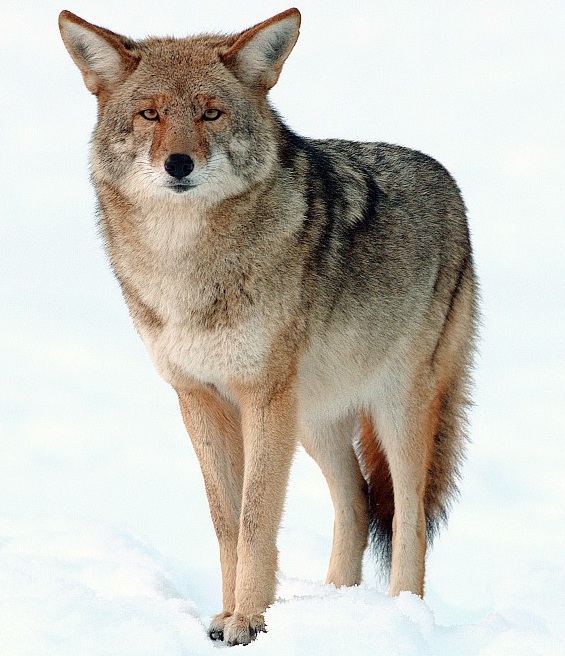 CoyoteCanis latrans
Compare
Questions and answers
What is the scientific name of the South American Gray Fox?
The scientific name of the South American Gray Fox is Lycalopex griseus. Written with its author, the full name is Lycalopex griseus (Gray, 1837).
Which family does the South American Gray Fox belong to?
Lycalopex griseus belongs to the family Canidae, in the order Carnivora and the class Mammalia.
Where is the South American Gray Fox found?
Checklists and occurrence records place Lycalopex griseus in 3 countries: Chile, Argentina and Peru.
What is the conservation status of the South American Gray Fox?
The IUCN Red List category recorded for Lycalopex griseus is Least Concern (LC).
What other names does the South American Gray Fox have?
Lycalopex griseus is also known in English as Argentine Gray Fox, Argentine Grey Fox, Gray Zorro, Grey Zorro, Patagonian Fox and Patagonian Gray Fox.
What is the diet of a gray fox?
The South American Gray Fox eats mammals, particularly rodents, birds, arthropods, bird eggs, reptiles, fruit and carrion. Its diet also includes rabbits, seeds, berries, insects, scorpions, lizards and frogs.[19][20][21][22]
What is a fox's diet and habitat?
The South American Gray Fox eats mammals, birds, arthropods, eggs, reptiles, fruit and carrion. It inhabits arid scrublands, steppes, forests, plains, pampas, deserts and open grasslands.[13][14][15][17][19]
What habitat does a grey fox live in?
The South American Gray Fox inhabits warm, arid scrublands in the Argentine uplands, the cold, arid Patagonian steppe and forests in southernmost Chile. It also occupies plains, pampas, deserts, low open grasslands, forest edges and shrubby sandy soils.[13][14][15][17][18]
Sources
Passages the profile rests on
- The South American gray fox has a brindled coat with agouti guard hairs and a short, dense, pale undercoat. Source passage: “The pelage is brindled, with agouti guard hairs and a short, dense, pale undercoat.” — English Wikipedia
- Its head is reddish-brown with white flecking. Source passage: “The head is reddish-brown flecked with white.” — English Wikipedia
- It has large ears and a distinctive black spot on its chin. Source passage: “The ears are large and there is a distinct black spot on the chin.” — English Wikipedia
- Its underparts are pale grey. Source passage: “The underparts are pale grey.” — English Wikipedia
- Its limbs are tawny, with a dark bar crossing the thighs. Source passage: “The limbs are tawny and the thighs are crossed by a dark bar.” — English Wikipedia
- Its long, bushy tail has a dark dorsal stripe, a dark tip and a paler mottled underside. Source passage: “The long, bushy tail has a dark dorsal stripe and dark tip with a paler, mottled underside.” — English Wikipedia
- Adults weigh between 2.5 and 5.45 kilograms. Source passage: “weighing 2.5 to 5.45 kilograms (5.5 to 12.0 lb)” — English Wikipedia
- Its total length, including the tail, ranges from 65 to 110 centimetres. Source passage: “measuring 65 to 110 centimetres (26 to 43 in) in length including a tail” — English Wikipedia
- Its shoulder height ranges from 40 to 45 centimetres. Source passage: “Its shoulder height is 40 to 45 cm” — animaldiversity.org
- Its tail measures between 20 and 43 centimetres. Source passage: “of 20 to 43 cm (8 to 17 in)” — English Wikipedia
- Its head-body length ranges from 42 to 68 centimetres. Source passage: “The head-body length is 42 to 68 cm” — animaldiversity.org
- Its tail measures between 30 and 36 centimetres. Source passage: “the tail length is from 30 to 36 cm.” — animaldiversity.org
- The species inhabits warm, arid scrublands in the Argentine uplands. Source passage: “the warm, arid scrublands of the Argentine uplands” — English Wikipedia
- It occurs in the cold, arid Patagonian steppe. Source passage: “the cold, arid Patagonian steppe” — English Wikipedia
- It also inhabits forests in southernmost Chile. Source passage: “the forests of southernmost Chile.” — English Wikipedia
- Its habitats include lowlands and foothills of coastal mountain ranges. Source passage: “The Argentine gray fox likes to live in lowlands and foothills of coastal mountain ranges” — animaldiversity.org
- It also occupies plains, pampas, deserts and low open grasslands. Source passage: “plains, pampas, deserts, low open grasslands” — animaldiversity.org
- It inhabits forest-edge environments and shrubby sandy soils. Source passage: “and forest edge habitats. They live on shrubby sandy soils.” — animaldiversity.org
- Its diet includes mammals, birds, arthropods, bird eggs, reptiles, fruit and carrion. Source passage: “It consists mainly of mammals, birds, arthropods, bird eggs, reptiles, fruit and carrion.” — English Wikipedia
- Small mammals, particularly rodents, are among its main prey. Source passage: “The main prey items seem to be small mammals, especially rodents.” — English Wikipedia
- Fruits consumed include Cryptocarya alba, Lithraea caustica and Prosopanche species. Source passage: “Fruits eaten include Cryptocarya alba, Lithraea caustica and Prosopanche spp.” — English Wikipedia
- Its seasonal diet also includes European rabbits, birds, seeds, berries, insects, scorpions, lizards and frogs. Source passage: “European rabbits and birds are preferred, as well as fruits, seeds, berries, small mammals, insects, scorpions, lizards, frogs, and bird eggs.” — animaldiversity.org
- Carrion becomes an important food source during winter, alongside rodents and armadillos. Source passage: “In the winter months, carrion seems to become the most important food source, along with rodents and armadillos.” — animaldiversity.org
- Sheep predation is minimal, and sheep are generally consumed as carrion. Source passage: “Sheep predation is minimal and usually only eaten as carrion.” — animaldiversity.org
- The species may prey on domestic poultry near human settlements. Source passage: “In areas of human habitation, P. griseus may take domestic poultry (Nowak, 1999).” — animaldiversity.org
- The South American gray fox is predominantly solitary. Source passage: “The South American gray fox is a largely solitary animal” — English Wikipedia
- The species is nocturnal. Source passage: “Pseudalopex griseus is nocturnal.” — animaldiversity.org
- Individuals tend to be solitary during winter. Source passage: “These foxes tend to be solitary in the winter.” — animaldiversity.org
- Breeding pairs maintain territories throughout the year. Source passage: “One breeding pair has a year-round territory” — animaldiversity.org
- The species tends to avoid areas frequented by dogs. Source passage: “but tend to avoid areas visited by dogs.” — English Wikipedia
- Individuals sometimes approach human settlements to search for food. Source passage: “The foxes sometimes go near human habitations in search of food” — English Wikipedia
- The species breeds in early austral autumn, around March. Source passage: “The South American gray fox breeds in early austral autumn, around March.” — English Wikipedia
- Its gestation period is approximately two months. Source passage: “After a gestation period of two months” — English Wikipedia
- Females give birth to between two and four kits in a den. Source passage: “two to four kits are born in a den.” — English Wikipedia
- Patagonian populations have been reported to exhibit monogamous mating. Source passage: “Studies of P. griseus in Patagonia indicate that mating is monogamous” — animaldiversity.org
- In the populations described in document 2, mating occurs from August through September. Source passage: “The Argentine gray fox mates from August through September” — animaldiversity.org
- The reported gestation period is between 53 and 60 days. Source passage: “The gestation period is 53 to 60 days” — animaldiversity.org
- Reported litter sizes range from two to six pups. Source passage: “the litter size is 2 to 6 pups.” — animaldiversity.org
- Pups begin leaving the den with their mothers at four to six weeks of age. Source passage: “when the pups are 4 to 6 weeks, they start to leave the den with their mothers.” — animaldiversity.org
- Young begin hunting small mammals and arthropods independently by January. Source passage: “By January, they go out by themselves to hunt for small mammals and arthropods.” — animaldiversity.org
- Sexual maturity is reached at approximately one year of age. Source passage: “Age of sexual maturity is about 1 year.” — animaldiversity.org
- Both parents participate in caring for their offspring. Source passage: “Both males and females are active in caring for the young.” — animaldiversity.org
- An additional female sometimes helps raise the primary female's offspring without producing young herself. Source passage: “Occasionally, a second female was present on the territory, and assisted in rearing the young, although she did not produce young herself.” — animaldiversity.org
- The species has been classified as endangered by the Argentine Wildlife Board. Source passage: “The Argentine Wildlife Board (Direccion Nacional de Fauna Silvestre) has classified the species as endangered.” — animaldiversity.org
- Hunting of the species is prohibited in some areas throughout the year. Source passage: “Hunting is banned year-round in some areas.” — animaldiversity.org
- The species is legally protected in Chile, although enforcement is described as lax. Source passage: “The Argentine gray fox is protected by law in Chile but enforcementof this law is lax.” — animaldiversity.org
- Deep snowfall can reduce population levels, although populations generally recover quickly. Source passage: “Deep snowfall can depress population levels, but recovery is usually speedy.” — animaldiversity.org
- The species has historically been hunted for its fur. Source passage: “has long been hunted for its pelt.” — English Wikipedia
- Between 1980 and 1983, 381,000 fox skins were exported from South America according to CITES records. Source passage: “from 1980 to 1983, 381,000 fox skins were exported” — animaldiversity.org
- The species helps control populations of small mammals and birds. Source passage: “The Argentine gray fox helps to control small mammal and bird populations.” — animaldiversity.org
- The species contributes to seed dispersal by consuming fruit and subsequently defecating the seeds. Source passage: “It also disperses seeds by eating the fruit then defecating the seeds.” — animaldiversity.org
- The species acts as a scavenger of carrion. Source passage: “They are useful in their role as scavengers of carrion” — English Wikipedia
- The South American gray fox competes with the larger culpeo fox where their ranges overlap. Source passage: “Where their ranges overlap, the South American gray fox is in competition with the larger culpeo fox.” — English Wikipedia
- Darwin's fox was formerly classified as a subspecies of the South American gray fox but is now recognized as a separate species. Source passage: “They are now considered a separate species” — animaldiversity.org
Data
- Catalogue of Life, 2026-10-16 XR cc by
- Global Biodiversity Information Facility CC BY 4.0
- Wikidata CC0
- GeoNames CC BY 4.0
- Wikimedia Commons per image; credit shown with each image
- Within the Catalogue of Life, this name comes from The Integrated Taxonomic Information System cc0
References
- Mag. Nat. Hist. [Charlesworth's] vol.1 p.578 where the name was published
- Wilson, Don E., and DeeAnn M. Reeder, eds. (2005). Mammal Species of the World: A Taxonomic and Geographic Reference, 3rd Ed., Vols. 1 & 2.
- Prevosti, Francisco J., Valentina Segura, Guillermo Cassini, and Gabriel M. Martin. (2013). Revision of the Systematic Status of Patagonian and Pampean Gray Foxes (Canidae: Lycalopex griseus and L. gymnocercus) Using 3D Geometric Morphometrics. Mastozoologia Neotropical, Vol. 20, No. 2.
- Burgin, Connor J., Don E. Wilson, Russell A. Mittermeier, Anthony B. Rylands, et al. (2020). Illustrated Checklist of the Mammals of the World. Vol. 1. Monotremata to Rodentia.
This species in other databases
Page built on 26 November 2026. See how the catalog is made and all sources and licences.
Cite this page
ScientificNames.org. (2026). Lycalopex griseus (South American Gray Fox). Retrieved November 26, 2026, from https://scientificnames.org/species/lycalopex-griseus
“Lycalopex griseus (South American Gray Fox).” ScientificNames.org, 2026, scientificnames.org/species/lycalopex-griseus. Accessed 26 Nov. 2026.
ScientificNames.org. “Lycalopex griseus (South American Gray Fox).” Accessed November 26, 2026. https://scientificnames.org/species/lycalopex-griseus.
@misc{scientificnames_lycalopex_griseus_south_american_gray_fox,
  author = {{ScientificNames.org}},
  title = {Lycalopex griseus (South American Gray Fox)},
  year = {2026},
  url = {https://scientificnames.org/species/lycalopex-griseus},
  note = {Accessed 2026-11-26}
}