Species · Mammals
Pampas Fox Lycalopex gymnocercus
The scientific name of the Pampas Fox is Lycalopex gymnocercus. It is a species of mammal in the family Canidae (dogs), order Carnivora. The name dates from 1814.
- Scientific name
- Lycalopex gymnocercus (G. Fischer von Waldheim, 1814)
- Common name
- Pampas Fox
- Genus
- Lycalopex
- Family
- Canidae (Dogs)
- Order
- Carnivora
- Class
- Mammalia
- Red List category
- LC Least Concern
- Recorded in
- 6 countries
- Name status
- accepted in the Catalogue of Life

Overview
Lycalopex gymnocercus occurs primarily in northern and central Argentina, Uruguay, eastern Bolivia, Paraguay and southern Brazil. It is distinguished by predominantly grey fur, reddish fur on the head and neck, and a distinctive black muzzle marking.
Written 26 November 2026 from the sources listed below. Each statement was checked against the passage it cites; statements that could not be supported were removed.
Uses
The Pampas Fox is hunted and trapped for its fur in Uruguay, Paraguay and Argentina. Its predation on agricultural pests has a positive economic effect on agriculture.[1][2]
Similar species
The culpeo or Andean fox is similar to the Pampas Fox in general appearance and size. The black muzzle marking distinguishes the Pampas Fox from the culpeo fox.[3][4]
Appearance
The Pampas Fox has short, dense fur that is predominantly grey, with pale underparts and a black stripe extending along the back and tail. Its head and neck have reddish fur, and its muzzle bears a distinctive black marking.[5][6]
Its ears are relatively large, broad and triangular, with reddish outer surfaces and white inner surfaces. The outer surfaces of its forelimbs are reddish, whereas those of its hind limbs are grey, with a black spot on the lower hind limb.[7][8]
Adults measure between 51 and 80 cm in body length and have a body mass ranging from 2.4 to 8.0 kg. Average body length is approximately 62 cm, and average tail length is approximately 34 cm.[9][10][11]
Males are approximately 10% heavier than females.[12]
Habitat
The Pampas Fox inhabits open Pampas habitats and frequently occurs near agricultural land. Its habitats also include montane forests, Chaco forests, dry scrublands and wetlands.[13][14]
It occupies pampas grasslands, hills, heathlands, ridges and deserts. It prefers plains, tall-grass fields, sierras and narrow wooded areas alongside streams.[15][16]
Its usual elevation range is below 1,000 metres, although it can occur in puna grasslands at elevations reaching 3,500 metres.[17]
Diet
The Pampas Fox is omnivorous and has an opportunistic diet. Its principal food items include birds, rodents, hares, fruit, carrion and insects.[18][19]
Additional recorded food items include lizards, armadillos, snails, other invertebrates, lambs and eggs of ground-nesting birds. Its diet can also include frogs and vegetable matter such as sugar cane stalks.[20][21]
Approximately 75% of its diet consists of rodents, lagomorphs and birds in equal proportions. Individuals living near human settlements sometimes take domestic poultry.[22][23]
Behaviour
The Pampas Fox generally lives solitarily but forms monogamous pairs during the breeding season. Adults generally hunt individually even when jointly raising offspring.[24][25]
Individuals are predominantly nocturnal and usually become active at dusk, although they may also be active during daylight. They use available cavities, including caves, hollow trees and burrows made by viscachas or armadillos, as dens.[26][27]
Individuals mark their territories by defecating at specific latrine sites. A typical home range has been estimated at approximately 260 hectares.[28][29]
Reproduction and life cycle
Breeding occurs during the early spring, and females enter oestrus once annually. The gestation period lasts between 55 and 60 days.[30][31]
Births occur between September and December. Females give birth to litters containing as many as eight offspring and typically produce three to five pups.[32][33][34]
Both parents participate in caring for their offspring. Males provide food to females and their pups while they remain in the den.[35][36]
Young begin hunting alongside their parents at approximately two to three months of age. Females reach sexual maturity during their first year.[37][38]
Conservation
Human hunting for fur and to prevent livestock attacks is identified as a principal threat to the Pampas Fox. Loss of natural habitat is another identified threat.[39][40]
The species is not presently considered threatened because it remains common across most studied areas. Hybridization with domestic dogs may threaten Pampas Fox populations through genetic introgression and disease transmission.[41][42]
Classification of the Pampas Fox
| Kingdom | Animalia |
|---|---|
| Phylum | Chordata |
| Subphylum | Vertebrata |
| Infraphylum | Gnathostomata |
| Parvphylum | Osteichthyes |
| Megaclass | Tetrapoda |
| Class | Mammalia (Mammal) |
| Subclass | Theria |
| Infraclass | Eutheria |
| Order | Carnivora (Carnivores) |
| Suborder | Caniformia (Dog-like Carnivores) |
| Family | Canidae (Dogs) |
| Genus | Lycalopex (South American Fox) |
| Species | Lycalopex gymnocercus (G. Fischer von Waldheim, 1814) |
Where the Pampas Fox is found
Checklists and occurrence records place Lycalopex gymnocercus in 6 countries across South America. GBIF holds 4,249 georeferenced records of it.
Countries
Regions and cities with the most records
- Rio Grande do Sul, Brazil 671
- Buenos Aires, Argentina 664
- La Pampa, Argentina 339
- Cordoba, Argentina 276
- Santa Fe, Argentina 241
- Entre Rios, Argentina 240
- Corrientes, Argentina 183
- Cerro Largo, Uruguay 108
- General Pico, Argentina 80
- San Luis, Argentina 79
- Santa Catarina, Brazil 67
- Neuquen, Argentina 53
- Mar del Tuyú, Argentina 46
- Santa Cruz, Argentina 46
- Santa Teresita, Argentina 46
- Magdalena, Argentina 40
- Rio Negro, Argentina 39
- La Calera, Argentina 38
- Unquillo, Argentina 38
- San José Department, Uruguay 36
- Boquerón Department, Paraguay 35
- Rocha Department, Uruguay 34
- Cosquín, Argentina 32
- Maldonado, Uruguay 31
- Tortuguitas, Argentina 31
- Santo Tomé, Argentina 30
- Balcarce, Argentina 28
- Córdoba, Argentina 28
- José C. Paz, Argentina 28
- Paraná, Brazil 27
- Crespo, Argentina 26
- Pilar, Argentina 26
- Chaco, Argentina 25
- Mendoza, Argentina 25
- General Acha, Argentina 24
- La Unión, Argentina 24
Range as the checklists state it
South America
A number beside a place is its count of GBIF occurrence records. A place without a number comes from a checklist alone. Records show where a species has been observed or collected, which can include escapes and vagrants.
Common names
English
- Pampas Fox
- Azara's Fox
- Azara's Zorro
- Azara’s Fox
- Grey Pampean Fox
- Pampas Zorro
Names in 20 other languages
- Afrikaans
- Azara se Vos
- Arabic
- ثعلب أزارا, ثعلب البامباس, ثعلب بامبا الرمادي
- Czech
- pes pampový
- Dutch
- Azaravos
- Finnish
- pampakettu
- French
- Renard d'Aszara, Renard d'Azara, Renard d’Aszara
- German
- Pampasfuchs
- Greek
- Αλεπού τη πάμπας
- Hungarian
- igazi pamparóka
- Italian
- Aguarachay, Volpe Azara, Volpe Grigia Delle Pampas, Volpe di Azara
- Japanese
- パンパスギツネ
- Korean
- 아자라여우, 아자라조로, 팜파스여우
- Norwegian Bokmål
- Pampasrev
- Polish
- Lisoszakal, nibylis pampasowy
- Portuguese
- Cachorro do Campo, Graxaim do Campo, Graxaim-do-campo, Raposa-dos-pampas, Rasposa do Mato
- Russian
- Парагвайская лисица
- Spanish
- Zorro Gris, Zorro Pampa, Zorro Pampeano, Zorro de Azara, Zorro de Campo, Zorro de Patas Amarillas, Zorro de las Pampas, Zorro del País
- Turkish
- Pampa tilkisi
- arg
- Rabosa d'Azara
- grn
- Aguara cha'i
Synonyms
8 other scientific names have been used for this species and are now treated as synonyms of Lycalopex gymnocercus.
- Dusicyon gymnocercus (G. Fischer, 1814)
- Lycalopex gymnocercus antiquus (Ameghino, 1889)
- Lycalopex gymnocercus gymnocercus (G. Fischer von Waldheim, 1814)
- Procyon gymnocercus G. Fischer von Waldheim, 1814
- Pseudalopex gymnocercus (G. Fischer von Waldheim, 1814)
- Pseudalopex gymnocercus antiquus (Ameghino, 1889)
- Pseudalopex gymnocercus gymnocercus (G. Fischer von Waldheim, 1814)
- Pseudalopex gymnocercus lordi (Massoia, 1982)
Related species
-
 CulpeoLycalopex culpaeus
-
 Darwin's FoxLycalopex fulvipes
-
 South American Gray FoxLycalopex griseus
-
 Hoary FoxLycalopex vetulus
-
 Sechuran FoxLycalopex sechurae
- DogCanis familiaris
-
 WolfCanis lupus
-
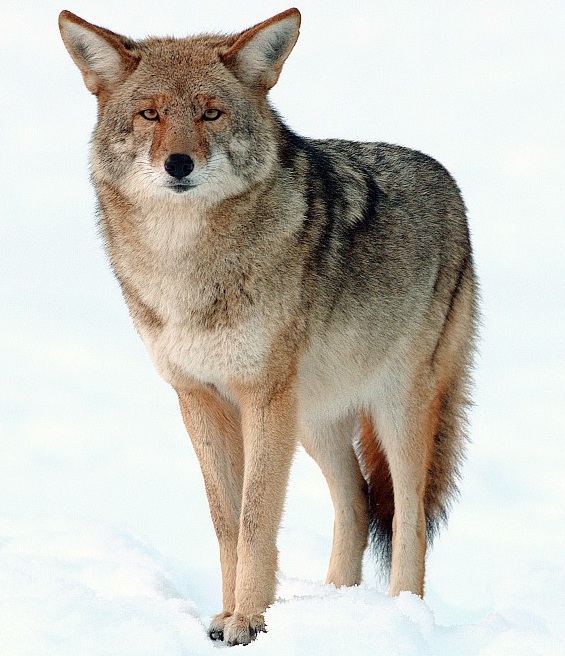 CoyoteCanis latrans
Compare
Questions and answers
What is the scientific name of the Pampas Fox?
The scientific name of the Pampas Fox is Lycalopex gymnocercus. Written with its author, the full name is Lycalopex gymnocercus (G. Fischer von Waldheim, 1814).
Which family does the Pampas Fox belong to?
Lycalopex gymnocercus belongs to the family Canidae, in the order Carnivora and the class Mammalia.
Where is the Pampas Fox found?
Checklists and occurrence records place Lycalopex gymnocercus in 6 countries: Argentina, Brazil, Uruguay, Paraguay, Bolivia and Chile.
What is the conservation status of the Pampas Fox?
The IUCN Red List category recorded for Lycalopex gymnocercus is Least Concern (LC).
What other names does the Pampas Fox have?
Lycalopex gymnocercus is also known in English as Azara's Fox, Azara's Zorro, Azara’s Fox, Grey Pampean Fox and Pampas Zorro.
Sources
Passages the profile rests on
- The species is hunted and trapped for its fur in Uruguay, Paraguay and Argentina. Source passage: “These foxes are hunted and trapped for fur in several countries, including Uruguay, Paraguay, and Argentina.” — animaldiversity.org
- Its predation on agricultural pests gives the species a positive economic effect on agriculture. Source passage: “Because these foxes keep agricultural pest populations in check, they have a positive impact on agriculture.” — animaldiversity.org
- The culpeo or Andean fox is similar to the Pampas fox in general appearance and size. Source passage: “The Pampas fox resembles the culpeo or Andean fox in appearance and size” — English Wikipedia
- The black muzzle marking distinguishes the Pampas fox from the culpeo fox. Source passage: “The muzzle is black as far as the corners of the mouth, a feature that distinguishes them from the similar culpeo fox ( Lycalopex culpaeus ).” — animaldiversity.org
- The species has short, dense fur that is predominantly grey, with pale underparts and a black stripe extending along the back and tail. Source passage: “Its short, dense fur is grey over most of the body, with a black line running down the back and onto the tail, and pale, almost white, underparts.” — English Wikipedia
- Its head and neck have reddish fur, and its muzzle bears a distinctive black marking. Source passage: “The Pampas fox resembles the culpeo or Andean fox in appearance and size, but has a proportionately wider snout, reddish fur on the head and neck, and a black mark on the muzzle.” — English Wikipedia
- Its ears are relatively large, broad and triangular, with reddish outer surfaces and white inner surfaces. Source passage: “The ears are triangular, broad, and relatively large, and are reddish on the outer surface and white on the inner surface.” — English Wikipedia
- The outer surfaces of its forelimbs are reddish, whereas those of its hind limbs are grey, with a black spot on the lower hind limb. Source passage: “the outer surface is reddish on the fore limbs, and grey on the hind limbs; the lower hind limb also bears a distinctive black spot.” — English Wikipedia
- Adults measure between 51 and 80 cm in body length. Source passage: “Adults range from 51 to 80 cm (20 to 31 in) in body length, and weigh 2.4 to 8.0 kg (5.3 to 17.6 lb); males are about 10% heavier than females.” — English Wikipedia
- Adult body mass ranges from 2.4 to 8.0 kg. Source passage: “Adults range from 51 to 80 cm (20 to 31 in) in body length, and weigh 2.4 to 8.0 kg (5.3 to 17.6 lb); males are about 10% heavier than females.” — English Wikipedia
- The average body length is approximately 62 cm, and the average tail length is approximately 34 cm. Source passage: “These animals weigh between 4.2 and 6.5 kg, and average 62 cm in length. The tail length for Pampas Foxes averages about 34 cm.” — animaldiversity.org
- Males are approximately 10% heavier than females. Source passage: “Males are approximately 10% heavier than females.” — animaldiversity.org
- The species inhabits open Pampas habitats, frequently occurring near agricultural land. Source passage: “It prefers open pampas habitats, often close to agricultural land” — English Wikipedia
- Its habitats also include montane forests, Chaco forests, dry scrublands and wetlands. Source passage: “but can also be found in montane or chaco forest, dry scrubland, and wetland habitats.” — English Wikipedia
- The species occupies pampas grasslands, hills, heathlands, ridges and deserts. Source passage: “These foxes are found in the pampas grasslands, hills, heath, ridges and deserts.” — animaldiversity.org
- It prefers plains, tall-grass fields, sierras and narrow wooded areas alongside streams. Source passage: “They prefer plains and fields with tall grass, sierras, and small narrow wood areas along streams and occasionally forest areas.” — animaldiversity.org
- Its usual elevation range is below 1,000 metres, although it can occur in puna grasslands at elevations reaching 3,500 metres. Source passage: “It is most common below 1,000 m (3,300 ft) elevation, but can inhabit puna grasslands up to 3,500 m (11,500 ft).” — English Wikipedia
- The species is omnivorous and has an opportunistic diet. Source passage: “Pampas foxes are more omnivorous than most other canids, and have a varied and opportunistic diet.” — English Wikipedia
- Its principal food items include birds, rodents, hares, fruit, carrion and insects. Source passage: “Their primary prey consists of birds, rodents, hares, fruit, carrion, and insects” — English Wikipedia
- Additional recorded food items include lizards, armadillos, snails, other invertebrates, lambs and eggs of ground-nesting birds. Source passage: “although they also eat lizards, armadillos, snails and other invertebrates, lambs, and the eggs of ground-nesting birds.” — English Wikipedia
- Its diet can also include frogs, lizards, fruit and vegetable matter such as sugar cane stalks. Source passage: “These foxes are known to eat frogs and lizards. Fruits and other vegetable matter, like sugar cane stalks, are sometimes consumed.” — animaldiversity.org
- Approximately 75% of its diet consists of rodents, lagomorphs and birds in equal proportions. Source passage: “Approximately 75% of the diet is comprised of equal percentages of rodents, lagomorphs (rabbits, hares, and pikas), and birds.” — animaldiversity.org
- Individuals living near human settlements sometimes take domestic poultry. Source passage: “Near human dwellings they are said to take domestic poultry.” — animaldiversity.org
- The species generally lives solitarily but forms monogamous pairs during the breeding season. Source passage: “The Pampas foxes mostly live a solitary life, but come together as monogamous pairs in the breeding season to raise their young.” — English Wikipedia
- Adults generally hunt individually even when jointly raising offspring. Source passage: “Even when raising young together, adult foxes generally hunt alone” — English Wikipedia
- Individuals are predominantly nocturnal and usually become active at dusk, although they may also be active during daylight. Source passage: “They are mainly nocturnal, becoming active at dusk, although may also be active during the day.” — English Wikipedia
- Individuals use available cavities, including caves, hollow trees and burrows made by viscachas or armadillos, as dens. Source passage: “They den in any available cavity, including caves, hollow trees, and the burrows of viscachas or armadillos.” — English Wikipedia
- Individuals mark their territories by defecating at specific latrine sites. Source passage: “marking their territory by defecating at specific latrine sites.” — English Wikipedia
- A typical home range has been estimated at approximately 260 hectares. Source passage: “Although considerable variation is seen, the home range of a typical Pampas fox has been estimated to be around 260 hectares (640 acres).” — English Wikipedia
- Breeding occurs during the early spring, and females enter oestrus once annually. Source passage: “Pampas foxes breed in the early spring, with the female coming into heat just once each year.” — English Wikipedia
- The gestation period lasts between 55 and 60 days. Source passage: “After a gestation period of 55 to 60 days, the mother gives birth to a litter of up to eight kits.” — English Wikipedia
- Females give birth to litters containing as many as eight offspring. Source passage: “After a gestation period of 55 to 60 days, the mother gives birth to a litter of up to eight kits.” — English Wikipedia
- Births occur between September and December. Source passage: “The young are born between September and December, and are weaned around two months of age.” — English Wikipedia
- Females typically produce three to five pups according to the Animal Diversity Web account. Source passage: “Females bear three to five pups in a den among rocks, under bases of trees or in burrows made by other animals.” — animaldiversity.org
- Both parents participate in caring for their offspring. Source passage: “Both parents care for the young.” — animaldiversity.org
- Males provide food to females and their pups while they remain in the den. Source passage: “The male pampas fox brings food to the female and her pups, who stay within the den until the pups are about three months old.” — animaldiversity.org
- Young begin hunting alongside their parents at approximately two to three months of age. Source passage: “At two to three months, the young begin to hunt with their parents.” — animaldiversity.org
- Females reach sexual maturity during their first year. Source passage: “Females reach sexual maturity in their first year” — English Wikipedia
- Human hunting for fur and to prevent livestock attacks is identified as a principal threat to the species. Source passage: “The main threats to the Pampas fox comes from humans hunting them for their fur or to prevent them from attacking livestock” — English Wikipedia
- Loss of natural habitat is another identified threat to the species. Source passage: “they may be affected by the loss of their natural habitat.” — English Wikipedia
- The species is not presently considered threatened because it remains common across most studied areas. Source passage: “However, because they remain common in most areas where they have been studied, the Pampas fox is not presently considered a threatened species.” — English Wikipedia
- Hybridization with domestic dogs may threaten Pampas fox populations through genetic introgression and disease transmission. Source passage: “Hybridization with the domestic dog may have harmful effects on pampas fox populations due to the potential for introgression and disease transmission by the domestic dog.” — pmc.ncbi.nlm.nih.gov
Data
- Catalogue of Life, 2026-10-16 XR cc by
- Global Biodiversity Information Facility CC BY 4.0
- Wikidata CC0
- GeoNames CC BY 4.0
- Wikimedia Commons per image; credit shown with each image
- Within the Catalogue of Life, this name comes from The Integrated Taxonomic Information System cc0
References
- Zoognosia vol.3 p.xi, p. 178 where the name was published
- Wilson, Don E., and DeeAnn M. Reeder, eds. (2005). Mammal Species of the World: A Taxonomic and Geographic Reference, 3rd Ed., Vols. 1 & 2.
- Prevosti, Francisco J., Valentina Segura, Guillermo Cassini, and Gabriel M. Martin. (2013). Revision of the Systematic Status of Patagonian and Pampean Gray Foxes (Canidae: Lycalopex griseus and L. gymnocercus) Using 3D Geometric Morphometrics. Mastozoologia Neotropical, Vol. 20, No. 2.
- Burgin, Connor J., Don E. Wilson, Russell A. Mittermeier, Anthony B. Rylands, et al. (2020). Illustrated Checklist of the Mammals of the World. Vol. 1. Monotremata to Rodentia.
This species in other databases
Page built on 27 November 2026. See how the catalog is made and all sources and licences.
Cite this page
ScientificNames.org. (2026). Lycalopex gymnocercus (Pampas Fox). Retrieved November 27, 2026, from https://scientificnames.org/species/lycalopex-gymnocercus
“Lycalopex gymnocercus (Pampas Fox).” ScientificNames.org, 2026, scientificnames.org/species/lycalopex-gymnocercus. Accessed 27 Nov. 2026.
ScientificNames.org. “Lycalopex gymnocercus (Pampas Fox).” Accessed November 27, 2026. https://scientificnames.org/species/lycalopex-gymnocercus.
@misc{scientificnames_lycalopex_gymnocercus_pampas_fox,
  author = {{ScientificNames.org}},
  title = {Lycalopex gymnocercus (Pampas Fox)},
  year = {2026},
  url = {https://scientificnames.org/species/lycalopex-gymnocercus},
  note = {Accessed 2026-11-27}
}