Species · Mammals
Broad-toothed Mouse Mastacomys fuscus
The scientific name of the Broad-toothed Mouse is Mastacomys fuscus. It is a species of mammal in the family Muridae (mice), order Rodentia. The name dates from 1882.
- Scientific name
- Mastacomys fuscus Thomas, 1882
- Common name
- Broad-toothed Mouse
- Genus
- Mastacomys
- Family
- Muridae (Mice)
- Order
- Rodentia
- Class
- Mammalia
- Red List category
- NT Near Threatened
- Recorded in
- 1 country
- Name status
- accepted in the Catalogue of Life

Overview
The species occurs only in south-eastern Australia, including Victoria, New South Wales and western Tasmania.
Written 26 November 2026 from the sources listed below. Each statement was checked against the passage it cites; statements that could not be supported were removed.
Habitat
The Broad-toothed Mouse inhabits herbfields, grasslands and forests with few shrubs and dense ground cover of sedges, grasses, herbs and mosses.[1]
In alpine areas, its preferred habitat receives at least 1400 mm of annual precipitation. At lower altitudes, its preferred habitat receives at least 1000 mm of annual precipitation.[2][3]
In western Tasmania, the species has been recorded in buttongrass sedgeland at elevations up to 1000 metres.[4]
Diet
The Broad-toothed Mouse primarily consumes monocots and is described as grass-eating.[5][6]
Classification of the Broad-toothed Mouse
| Kingdom | Animalia |
|---|---|
| Phylum | Chordata |
| Subphylum | Vertebrata |
| Infraphylum | Gnathostomata |
| Parvphylum | Osteichthyes |
| Megaclass | Tetrapoda |
| Class | Mammalia (Mammal) |
| Subclass | Theria |
| Infraclass | Eutheria |
| Order | Rodentia (Rodent) |
| Suborder | Myomorpha (Mice) |
| Superfamily | Muroidea |
| Family | Muridae (Mice) |
| Subfamily | Murinae (Old World Mice) |
| Genus | Mastacomys |
| Species | Mastacomys fuscus Thomas, 1882 |
Where the Broad-toothed Mouse is found
Checklists and occurrence records place Mastacomys fuscus in 1 country across Oceania. GBIF holds 3,924 georeferenced records of it.
Countries
Regions and cities with the most records
- New South Wales, Australia 2,733
- Victoria, Australia 934
- Tasmania, Australia 114
- Australian Capital Territory, Australia 77
1 more country has a few records outside this range
These countries hold a few records of Mastacomys fuscus but lie outside the range the checklists give for it. Such records are often zoo or garden specimens, museum material or vagrants, so the species is not counted as occurring there.
Range as the checklists state it
Australia
A number beside a place is its count of GBIF occurrence records. A place without a number comes from a checklist alone. Records show where a species has been observed or collected, which can include escapes and vagrants.
Common names
English
- Broad-toothed Mouse
- Broad-toothed Mastacomys
- Broad-toothed Rat
Names in 7 other languages
- Czech
- myška tmavá
- Finnish
- hammashiiruli
- German
- Australische Breitzahnratte
- Italian
- Topo australiano dai denti larghi
- Japanese
- ヒロハネズミ
- Polish
- zajączkoszczurek szerokozębny
- Russian
- Широкозубая крыса
Synonyms
4 other scientific names have been used for this species and are now treated as synonyms of Mastacomys fuscus.
- Mastacomys fuscus brazenori Ride, 1956
- Mastacomys mordicus Thomas, 1922
- Mastacomys wombeyensis Ride, 1956
- Pseudomys fuscus (Thomas, 1882)
Related species
-
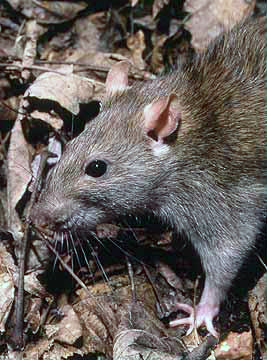 Brown RatRattus norvegicus
-
 Black RatRattus rattus
-
 Polynesian RatRattus exulans
-
 RakaliHydromys chrysogaster
-
 Wood MouseApodemus sylvaticus
-
 Eurasian Harvest MouseMicromys minutus
-
 Bramble Cay MelomysMelomys rubicola
-
 Greater Bandicoot RatBandicota indica
Compare
Questions and answers
What is the scientific name of the Broad-toothed Mouse?
The scientific name of the Broad-toothed Mouse is Mastacomys fuscus. Written with its author, the full name is Mastacomys fuscus Thomas, 1882.
Which family does the Broad-toothed Mouse belong to?
Mastacomys fuscus belongs to the family Muridae, in the order Rodentia and the class Mammalia.
Where is the Broad-toothed Mouse found?
Checklists and occurrence records place Mastacomys fuscus in 1 country: Australia.
What is the conservation status of the Broad-toothed Mouse?
The IUCN Red List category recorded for Mastacomys fuscus is Near Threatened (NT).
What other names does the Broad-toothed Mouse have?
Mastacomys fuscus is also known in English as Broad-toothed Mastacomys and Broad-toothed Rat.
Sources
Passages the profile rests on
- The species inhabits herbfields, grasslands and forests with few shrubs and dense ground cover of sedges, grasses, herbs and mosses. Source passage: “Habitat preferences are areas of herbfields, grasslands and forests with minimal shrubs but a dense covering of sedge, grass, herbs and moss” — English Wikipedia
- In alpine areas, the species' preferred habitat receives at least 1400 mm of annual precipitation. Source passage: “where precipitation does not fall below 1400 mm per year in alpine areas” — English Wikipedia
- At lower altitudes, the species' preferred habitat receives at least 1000 mm of annual precipitation. Source passage: “and others 1000 mm at lower altitudes” — English Wikipedia
- In western Tasmania, the species has been recorded in buttongrass sedgeland at elevations up to 1000 metres. Source passage: “buttongrass sedgeland up to 1000 metres in western Tasmania.” — English Wikipedia
- The species primarily consumes monocots. Source passage: “Mastacomys fuscus primarily consumes monocots” — academia.edu
- The species is described as grass-eating. Source passage: “These rats are grass‑eating alpine mammals threatened by predators and habitat loss.” — alpineresorts.vic.gov.au
Data
- Catalogue of Life, 2026-10-16 XR cc by
- Global Biodiversity Information Facility CC BY 4.0
- Wikidata CC0
- GeoNames CC BY 4.0
- Wikimedia Commons per image; credit shown with each image
- Within the Catalogue of Life, this name comes from The Integrated Taxonomic Information System cc0
References
- Ann. Mag. Nat. Hist., ser. 5 vol.9 p.413 where the name was published
- Watts, Christopher H. S., and H. J. Aslin. (1981). The Rodents of Australia.
- Musser, Guy G., and Michael D. Carleton / Wilson, Don E., and DeeAnn M. Reeder, eds. (2005). Superfamily Muroidea. Mammal Species of the World: A Taxonomic and Geographic Reference, 3rd Ed., Vol. 2.
This species in other databases
Page built on 30 November 2026. See how the catalog is made and all sources and licences.
Cite this page
ScientificNames.org. (2026). Mastacomys fuscus (Broad-toothed Mouse). Retrieved November 30, 2026, from https://scientificnames.org/species/mastacomys-fuscus
“Mastacomys fuscus (Broad-toothed Mouse).” ScientificNames.org, 2026, scientificnames.org/species/mastacomys-fuscus. Accessed 30 Nov. 2026.
ScientificNames.org. “Mastacomys fuscus (Broad-toothed Mouse).” Accessed November 30, 2026. https://scientificnames.org/species/mastacomys-fuscus.
@misc{scientificnames_mastacomys_fuscus_broad_toothed_mouse,
  author = {{ScientificNames.org}},
  title = {Mastacomys fuscus (Broad-toothed Mouse)},
  year = {2026},
  url = {https://scientificnames.org/species/mastacomys-fuscus},
  note = {Accessed 2026-11-30}
}