Species · Mammals
Nutria Myocastor coypus
The scientific name of the Nutria is Myocastor coypus. It is a species of mammal in the family Echimyidae (coypu), order Rodentia. The name dates from 1782.
- Scientific name
- Myocastor coypus (Molina, 1782)
- Common name
- Nutria
- Genus
- Myocastor
- Family
- Echimyidae (Coypu)
- Order
- Rodentia
- Class
- Mammalia
- Red List category
- LC Least Concern
- Environment
- freshwater, terrestrial
- Recorded in
- 43 countries
- Name status
- accepted in the Catalogue of Life

Overview
The native range includes Chile, Argentina, Uruguay, Paraguay, and southern Brazil and Bolivia. It is distinguished by a white muzzle patch, webbed hind feet, and large orange-yellow incisors.
Written 26 November 2026 from the sources listed below. Each statement was checked against the passage it cites; statements that could not be supported were removed.
Appearance
Its four large incisors continue growing throughout its life. Its whiskers measure approximately four inches on each side of the muzzle.[1][2]
Adult individuals typically weigh between 4 and 9 kilograms and have a body length of 40 to 60 centimetres. The tail typically measures between 30 and 45 centimetres, and individuals can reach weights of approximately 16 to 17 kilograms.[3][4][5][6]
Female mammary glands and teats are positioned high on the flanks, allowing offspring to nurse while the female is swimming.[7]
Habitat
The nutria commonly inhabits freshwater marshes and wetlands, but also occurs in brackish marshes and occasionally salt marshes. It inhabits dens that are partially underwater.[8][9]
Individuals construct their own burrows or occupy abandoned burrows made by beavers, muskrats, and other animals.[10]
Diet
Recorded food plants include cattails, rushes, reeds, arrowheads, flatsedges, and cordgrasses.[11]
Nutria feeding can include corn, alfalfa, wheat, oats, peanuts, and various melons. In the United States, sugarcane and rice are the primary agricultural crops damaged by nutria feeding.[12][13]
Behaviour
The nutria is primarily active during twilight and nighttime hours. When food is scarce, individuals forage during daylight hours, while plentiful food is associated with daytime resting and grooming.[14][15][16]
The species can exhibit territorial and aggressive behaviour when captured or cornered.[17]
In the Macdo wetland study, males had larger home ranges than females. The average minimum convex polygon home range was 0.29 ± 0.55 square kilometres.[18][19]
Home range in the Macdo wetland study varied seasonally and was smallest in winter.[20]
Reproduction and life cycle
Males can reach sexual maturity at approximately four months of age, while females can reach sexual maturity at approximately three months. The gestation period lasts approximately 130 days.[21][22][23]
A litter can contain between one and thirteen offspring, with an average litter size of four pups. Females average two litters per year.[24][25][26]
Newborn individuals are precocial, fully furred, and have open eyes at birth. They can swim and consume vegetation within hours of birth.[27][28]
Young individuals nurse for approximately seven to eight weeks before leaving their mothers.[29]
Conservation
The nutria is considered invasive in the United States and is established in 17 states. It is included among the 100 most invasive alien species identified by the International Union for Conservation of Nature.[30][31]
Nutria burrowing can damage stream banks, canals, irrigation structures, and flood-control levees. Intensive feeding can destroy wetland vegetation and convert marsh habitats into open water.[32][33]
The species can transmit wildlife diseases including tuberculosis and septicemia.[34]
Uses
The nutria has been farmed for fur production and is used for meat and fur production.[35][36]
Classification of the Nutria
| Kingdom | Animalia |
|---|---|
| Phylum | Chordata |
| Subphylum | Vertebrata |
| Infraphylum | Gnathostomata |
| Parvphylum | Osteichthyes |
| Megaclass | Tetrapoda |
| Class | Mammalia (Mammal) |
| Subclass | Theria |
| Infraclass | Eutheria |
| Order | Rodentia (Rodent) |
| Suborder | Hystricomorpha |
| Infraorder | Hystricognathi (Hystricognath Rodents) |
| Family | Echimyidae (Coypu) |
| Subfamily | Echimyinae |
| Tribe | Myocastorini |
| Genus | Myocastor (Nutrias) |
| Species | Myocastor coypus (Molina, 1782) |
Where the Nutria is found
Checklists and occurrence records place Myocastor coypus in 43 countries across Africa, North America and South America. GBIF holds 179,956 georeferenced records of it.
Countries
- Argentina 3,478
- Austria 534
- Belarus 5
- Belgium 4,434
- Bolivia 7
- Brazil 662
- Bulgaria 234
- Canada 15
- Chile 873
- Croatia 138
- Czechia 2,752
- Denmark 43
- Finland 3
- France 103,869
- Germany 25,032
- Greece 246
- Hungary 100
- Ireland 11
- Israel 2,669
- Italy 4,976
- Japan 1,619
- Jersey 5
- Kenya 49
- Lithuania 5
- Luxembourg 340
- Mexico 19
- North Macedonia 9
- Norway 13
- Paraguay 18
- Poland 124
- Romania 60
- Russia 221
- Serbia 56
- Slovakia 164
- Slovenia 193
- Spain 1,069
- Sweden 12
- Switzerland 1,975
- The Netherlands 11,153
- Ukraine 134
- United Kingdom 1,761
- United States 10,631
- Uruguay 245
Regions and cities with the most records
- Occitanie, France 17,255
- Bourgogne-Franche-Comté, France 14,027
- Auvergne-Rhône-Alpes, France 10,659
- Provence-Alpes-Côte d'Azur, France 9,785
- North Rhine-Westphalia, Germany 8,468
- Île-de-France, France 5,797
- Centre-Val de Loire, France 4,968
- Lower Saxony, Germany 4,842
- Pays de la Loire, France 4,393
- Grand Est, France 4,263
- Oregon, United States 3,744
- Texas, United States 3,427
- Hesse, Germany 3,329
- Lormont, France 3,249
- Limburg, The Netherlands 3,086
- Cenon, France 3,077
- Bordeaux, France 3,002
- Le Bouscat, France 2,907
- Eysines, France 2,886
- Blanquefort, France 2,784
- Libourne, France 2,773
- Floirac, France 2,755
- Rheinland-Pfalz, Germany 2,731
- Kleve, Germany 2,705
- Bègles, France 2,637
- Gelderland, The Netherlands 2,575
- Mérignac, France 2,547
- Talence, France 2,511
- Saint-Médard-en-Jalles, France 2,471
- Arles, France 2,421
- Pessac, France 2,236
- Lunel, France 2,230
- Villenave-d'Ornon, France 2,211
- Groesbeek, The Netherlands 2,099
- Northern District, Israel 2,081
- Baden-Wurttemberg, Germany 2,043
11 more countries have a few records outside this range
These countries hold a few records of Myocastor coypus but lie outside the range the checklists give for it. Such records are often zoo or garden specimens, museum material or vagrants, so the species is not counted as occurring there.
Range as the checklists state it
Europe & Northern Asia (excluding China)
Middle America
North America
South America
A number beside a place is its count of GBIF occurrence records. A place without a number comes from a checklist alone. Records show where a species has been observed or collected, which can include escapes and vagrants.
Common names
English
- Nutria
- Coypu
Names in 39 other languages
- Afrikaans
- Bewerrot
- Arabic
- كيب
- Azerbaijani
- Nutriyakimilər
- Basque
- Koipu
- Belarusian
- Нутрыя
- Breton
- Avank-Spagn
- Bulgarian
- Нутрия
- Chinese
- 海狸鼠
- Czech
- Nutrie říční
- Danish
- Bæverrotte, Sumpbæver
- Dutch
- Moerasbever, Oeverbever, beverrat
- Esperanto
- Kojpo
- French
- Castor du Chili, Lièvre des marais, Myocastor, Myopotame, Ragondin, nutria
- Georgian
- ნუტრია
- German
- Biberratte, Schweifbiber, Schweifratte, Sumpfbiber, Wasserratte
- Greek
- Μυοκάστορας
- Hebrew
- נוטריה, נוטרייה
- Icelandic
- Bjórrotta
- Italian
- Castorino, Castoro di palude, Miopotamo, Topo d'acqua
- Japanese
- ヌートリア
- Kazakh
- Саз құндызы
- Korean
- 뉴트리아
- Lithuanian
- Nutrija
- Norwegian Bokmål
- beverrotte, sumpbever
- Polish
- nutria amerykańska
- Portuguese
- Ratão-do-banhado
- Romanian
- Nutrie
- Serbian
- Нутрија
- Slovak
- nutria riečna
- Spanish
- Coipo, Coipú, Falsa nutria, coypu
- Swedish
- sumpbäver
- Thai
- นากหญ้า
- Turkish
- Koypu
- Ukrainian
- Нутрія
- Welsh
- Coipw, Coipwod
- bos
- Barska nutrija
- fry
- Beverrôt
- myv
- Ведькриса
- vec
- Ragonden
Synonyms
2 other scientific names have been used for this species and are now treated as synonyms of Myocastor coypus.
- Mus coypus Molina, 1782
- Myocastor coypus sanctaecruzae Hollister, 1914
Subspecies and varieties
- Myocastor coypus bonariensis subspecies
- Myocastor coypus coypus subspecies
- Myocastor coypus melanops subspecies
Related species
-
 Red-crested Tree-ratSantamartamys rufodorsalis
-
 Desmarest's HutiaCapromys pilorides
-
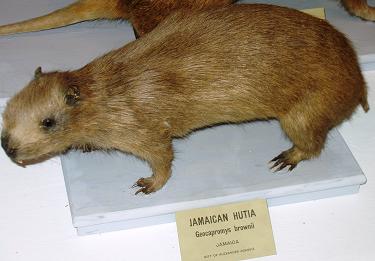 Jamaican ConeyGeocapromys brownii
-
 Hispaniolan HutiaPlagiodontia aedium
-
 Armored RatHoplomys gymnurus
-
 Bahamian HutiaGeocapromys ingrahami
- Garrido's HutiaMysateles garridoi
- Dwarf HutiaMesocapromys nanus
Compare
Questions and answers
What is the scientific name of the Nutria?
The scientific name of the Nutria is Myocastor coypus. Written with its author, the full name is Myocastor coypus (Molina, 1782).
Which family does the Nutria belong to?
Myocastor coypus belongs to the family Echimyidae, in the order Rodentia and the class Mammalia.
Where is the Nutria found?
Checklists and occurrence records place Myocastor coypus in 43 countries, including France, Germany, The Netherlands, United States, Italy and Belgium.
What is the conservation status of the Nutria?
The IUCN Red List category recorded for Myocastor coypus is Least Concern (LC).
What other names does the Nutria have?
Myocastor coypus is also known in English as Coypu.
Is a nutria a rat or beaver?
The nutria is a mammal in the order Rodentia. Its body shape resembles a large rat or a beaver, and its genus name Myocastor combines Ancient Greek words meaning rat or mouse and beaver.[37][38]
Are nutria friendly to humans?
The nutria can exhibit territorial and aggressive behaviour when captured or cornered.[17]
Sources
Passages the profile rests on
- Its four large incisors continue growing throughout its life. Source passage: “They have approximately 20 teeth with four large incisors that grow during the entirety of their lives.” — English Wikipedia
- Its whiskers measure approximately four inches on each side of the muzzle. Source passage: “Nutrias have prominent four inch long whiskers on each side of their muzzle or cheek area.” — English Wikipedia
- Adult individuals typically weigh between 4 and 9 kilograms. Source passage: “Adults are typically 4–9 kg (9–20 lb) in weight” — English Wikipedia
- Adult body length typically ranges from 40 to 60 centimetres. Source passage: “40–60 cm (16–24 in) in body length” — English Wikipedia
- The tail typically measures between 30 and 45 centimetres. Source passage: “with a 30 to 45 cm (12 to 18 in) tail.” — English Wikipedia
- Individuals can reach weights of approximately 16 to 17 kilograms. Source passage: “It is possible for nutrias to weigh up to 16 to 17 kg (35 to 37 lb)” — English Wikipedia
- Female mammary glands and teats are positioned high on the flanks, allowing offspring to nurse while the female is swimming. Source passage: “The mammary glands and teats of female nutrias are high on her flanks, to allow their young to feed while the female is in the water.” — English Wikipedia
- The species commonly inhabits freshwater marshes and wetlands, but also occurs in brackish marshes and occasionally salt marshes. Source passage: “Nutrias are found most commonly in freshwater marshes and wetlands, but also inhabit brackish marshes and rarely salt marshes.” — English Wikipedia
- The species inhabits dens that are partially underwater. Source passage: “Nutrias live in partially underwater dens.” — English Wikipedia
- Individuals construct their own burrows or occupy abandoned burrows made by beavers, muskrats, and other animals. Source passage: “They either construct their own burrows, or occupy burrows abandoned by beaver, muskrats, or other animals.” — English Wikipedia
- Recorded food plants include cattails, rushes, reeds, arrowheads, flatsedges, and cordgrasses. Source passage: “Nutrias eat the following plant varieties: cattail, rushes, reeds, arrowheads, flatsedges, and cordgrasses.” — English Wikipedia
- In the United States, sugarcane and rice are the primary agricultural crops damaged by nutria feeding. Source passage: “In the United States, sugarcane and rice are the primary crops damaged by nutria” — aphis.usda.gov
- Nutria feeding can include corn, alfalfa, wheat, oats, peanuts, and various melons. Source passage: “they will also eat corn, milo, sugar and table beets, alfalfa, wheat, barely, oats, peanuts, and various melons.” — aphis.usda.gov
- The species is primarily active during twilight and nighttime hours. Source passage: “Nutrias are mainly crepuscular or nocturnal” — English Wikipedia
- When food is scarce, individuals forage during daylight hours. Source passage: “When food is scarce, nutrias will forage during the day.” — English Wikipedia
- When food is plentiful, individuals rest and groom during the day. Source passage: “When food is plentiful, nutrias will rest and groom during the day.” — English Wikipedia
- The species can exhibit territorial and aggressive behaviour when captured or cornered. Source passage: “Nutrias have been known to be territorial and aggressive when caught or cornered.” — English Wikipedia
- In the Macdo wetland study, males had larger home ranges than females. Source passage: “The home range of males was larger than that of females” — pmc.ncbi.nlm.nih.gov
- The average minimum convex polygon home range in the Macdo wetland study was 0.29 ± 0.55 square kilometres. Source passage: “The average minimum convex polygon home range of the nutria was 0.29 ± 0.55 km2” — pmc.ncbi.nlm.nih.gov
- The species' home range in the Macdo wetland study varied seasonally and was smallest in winter. Source passage: “The home range also varied seasonally, with the smallest observed in winter.” — pmc.ncbi.nlm.nih.gov
- Males can reach sexual maturity at approximately four months of age. Source passage: “Male nutrias reach sexual maturity as early as four months” — English Wikipedia
- Females can reach sexual maturity at approximately three months of age. Source passage: “and females as early as three months” — English Wikipedia
- The gestation period lasts approximately 130 days. Source passage: “gestation lasts 130 days” — English Wikipedia
- A litter can contain between one and thirteen offspring. Source passage: “she may give birth to as few as one or as many as 13 offspring.” — English Wikipedia
- The average litter size is four pups. Source passage: “The average nutria reproduction is four pups.” — English Wikipedia
- Females average two litters per year. Source passage: “A female on average will have two litters a year.” — English Wikipedia
- Newborn individuals are precocial, fully furred, and have open eyes at birth. Source passage: “Baby nutrias are precocial, born fully furred and with open eyes” — English Wikipedia
- Newborns can swim and consume vegetation within hours of birth. Source passage: “they can eat vegetation and swim with their parents within hours of birth.” — English Wikipedia
- Young individuals nurse for approximately seven to eight weeks before leaving their mothers. Source passage: “Newborn nutrias nurse for seven to eight weeks, after which they leave their mothers.” — English Wikipedia
- The species is considered invasive in the United States and is established in 17 states. Source passage: “The species is invasive in the United States and established in 17 States.” — aphis.usda.gov
- The species is included among the 100 most invasive alien species identified by the International Union for Conservation of Nature. Source passage: “the nutria is listed as one of the 100 most invasive alien species by the International Union for Conservation of Nature” — pmc.ncbi.nlm.nih.gov
- Nutria burrowing can damage stream banks, canals, irrigation structures, and flood-control levees. Source passage: “Nutria burrows, which can extend up to 150 feet long, cause extensive damage to stream banks, canals, irrigation structures, levees, and other property.” — aphis.usda.gov
- Intensive feeding can destroy wetland vegetation and convert marsh habitats into open water. Source passage: “In most cases, nutria damage to marsh vegetation and soils is so severe that the marsh is converted to open water.” — aphis.usda.gov
- The species can transmit wildlife diseases including tuberculosis and septicemia. Source passage: “Nutria are vectors for wildlife diseases including tuberculosis and septicemia” — aphis.usda.gov
- The species has been farmed for fur production. Source passage: “Local extinction in their native range due to overharvesting led to the development of nutria fur farms in the late 19th and early 20th centuries.” — English Wikipedia
- Nutria are used for meat and fur production. Source passage: “They are used for meat and fur production [3,4,5].” — pmc.ncbi.nlm.nih.gov
- The nutria has a body shape resembling a large rat or a beaver with a small, elongated, hairless tail. Source passage: “The nutria somewhat resembles a very large rat, or a beaver with a small, long and skinny hairless tail.” — English Wikipedia
- The genus name Myocastor combines Ancient Greek words meaning rat or mouse and beaver. Source passage: “The genus name Myocastor derives from the two Ancient Greek words μῦς (mûs) 'rat, mouse', and κάστωρ (kástōr) 'beaver'.” — English Wikipedia
- The nutria is an herbivore that feeds mainly on aquatic and riparian vegetation. Source passage: “feeds mainly on aquatic and riparian vegetation.” — English Wikipedia
Data
- Catalogue of Life, 2026-10-16 XR cc by
- Global Biodiversity Information Facility CC BY 4.0
- Wikidata CC0
- GeoNames CC BY 4.0
- Wikimedia Commons per image; credit shown with each image
- Within the Catalogue of Life, this name comes from The Integrated Taxonomic Information System cc0
References
- Sagg. Stor. Nat. Chile p.287 where the name was published
- Banks, R. C., R. W. McDiarmid, and A. L. Gardner. (1987). Checklist of Vertebrates of the United States, the U.S. Territories, and Canada. Resource Publication, No. 166.
- Wilson, Don E., and DeeAnn M. Reeder, eds. (1993). Mammal Species of the World: A Taxonomic and Geographic Reference, 2nd Ed., 3rd Printing.
- Woods, Charles A., and C. William Kilpatrick / Wilson, Don E., and DeeAnn M. Reeder, eds. (2005). Infraorder Hystricognathi Brandt, 1855. Mammal Species of the World: A Taxonomic and Geographic Reference, 3rd Ed., Vol. 2.
- Wilson, Don E., T. E. Lacher Jr., and R. A. Mittermeier, eds. (2016). Handbook of the Mammals of the World. Vol. 6: Lagomorphs and Rodents I.
This species in other databases
- Catalogue of Life 6RRQT
- Wikidata Q187704
- iNaturalist 43997
- WoRMS urn:lsid:marinespecies.org:taxname:594792
Page built on 29 November 2026. See how the catalog is made and all sources and licences.
Cite this page
ScientificNames.org. (2026). Myocastor coypus (Nutria). Retrieved November 29, 2026, from https://scientificnames.org/species/myocastor-coypus
“Myocastor coypus (Nutria).” ScientificNames.org, 2026, scientificnames.org/species/myocastor-coypus. Accessed 29 Nov. 2026.
ScientificNames.org. “Myocastor coypus (Nutria).” Accessed November 29, 2026. https://scientificnames.org/species/myocastor-coypus.
@misc{scientificnames_myocastor_coypus_nutria,
  author = {{ScientificNames.org}},
  title = {Myocastor coypus (Nutria)},
  year = {2026},
  url = {https://scientificnames.org/species/myocastor-coypus},
  note = {Accessed 2026-11-29}
}