Species · Mammals
Ethiopian Amphibious Rat Nilopegamys plumbeus
The scientific name of the Ethiopian Amphibious Rat is Nilopegamys plumbeus. It is a species of mammal in the family Muridae (mice), order Rodentia. The name dates from 1928.
- Scientific name
- Nilopegamys plumbeus Osgood, 1928
- Common name
- Ethiopian Amphibious Rat
- Genus
- Nilopegamys
- Family
- Muridae (Mice)
- Order
- Rodentia
- Class
- Mammalia
- Red List category
- CR Critically Endangered
- Recorded in
- 1 country
- Name status
- accepted in the Catalogue of Life
Overview
The Ethiopian Amphibious Rat (Nilopegamys plumbeus Osgood, 1928) is a large amphibious rodent in the family Muridae, order Rodentia, and class Mammalia. It frequents murky waterways and has been recorded in wetland areas of the Ethiopian highlands. It is distinguished by dense, silky fur, webbed feet, and an unusually large brain relative to its body size.
Written 26 November 2026 from the sources listed below. Each statement was checked against the passage it cites; statements that could not be supported were removed.
Appearance
The Ethiopian Amphibious Rat has conspicuous white spots behind its ears and dense, silky fur. It has large hind feet that may function as paddles and webbing on its feet adapted for aquatic movement.[1][2][3][4]
It has a swollen muzzle and extensive whiskers. Its brain is unusually large relative to its body size, and it has the largest cranial capacity recorded among sampled African muroids.[5][6][7]
Habitat
The species frequents murky waterways and has been recorded in wetland areas of the Ethiopian highlands. The original specimen was collected near the upper Lesser Abay River, at approximately 2,600 metres above sea level.[8][9][10][11]
Diet
The Ethiopian Amphibious Rat is classified as insectivorous and may hunt insects and fish. Peanut butter has been used successfully as bait to capture it.[12][13][14]
Behaviour
The species is semiaquatic and lives in close contact with water. It spends its life submerged in murky waterways.[15][16]
Its extensive whiskers may function as a sonar-like system for detecting aquatic invertebrates.[5][17]
Similar species
The African wading rat (Colomys goslingi) is identified as the only similar species in the region.[18]
Conservation
The Ethiopian Amphibious Rat is classified as critically endangered by the IUCN. Habitat loss is identified as the principal cause of its population decline.[19][20]
Livestock grazing is the leading cause of wetland habitat destruction in the Ethiopian highlands. The original habitat has been almost completely destroyed through clearing for livestock grazing, while ranching has also contributed to habitat loss less substantially.[21][22][23]
The species' original northern habitat has been almost entirely converted to land used for livestock tending. It was presumed extinct after its habitat was extensively lost to agriculture.[24][25]
The species was rediscovered through a biodiversity survey in Ethiopia, during which three specimens were captured. Genetic tests were underway to confirm their identification.[26][27][28]
The rediscovery suggests that the species may be less vulnerable to development than previously believed.[29]
Classification of the Ethiopian Amphibious Rat
| Kingdom | Animalia |
|---|---|
| Phylum | Chordata |
| Subphylum | Vertebrata |
| Infraphylum | Gnathostomata |
| Parvphylum | Osteichthyes |
| Megaclass | Tetrapoda |
| Class | Mammalia (Mammal) |
| Subclass | Theria |
| Infraclass | Eutheria |
| Order | Rodentia (Rodent) |
| Suborder | Myomorpha (Mice) |
| Superfamily | Muroidea |
| Family | Muridae (Mice) |
| Subfamily | Murinae (Old World Mice) |
| Genus | Nilopegamys |
| Species | Nilopegamys plumbeus Osgood, 1928 |
Where the Ethiopian Amphibious Rat is found
Checklists and occurrence records place Nilopegamys plumbeus in 1 country across Africa. GBIF holds 3 georeferenced records of it.
Countries
Range as the checklists state it
Africa
A number beside a place is its count of GBIF occurrence records. A place without a number comes from a checklist alone. Records show where a species has been observed or collected, which can include escapes and vagrants.
Common names
English
- Ethiopian Amphibious Rat
- Ethiopian Water Mouse
- Ethiopian Water Rat
Names in 3 other languages
- Japanese
- エチオピアミズネズミ
- Polish
- nilak ziemnowodny
- Russian
- Африканская водяная мышь
Related species
-
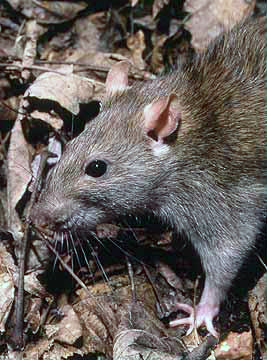 Brown RatRattus norvegicus
-
 Black RatRattus rattus
-
 Polynesian RatRattus exulans
-
 RakaliHydromys chrysogaster
-
 Wood MouseApodemus sylvaticus
-
 Eurasian Harvest MouseMicromys minutus
-
 Bramble Cay MelomysMelomys rubicola
-
 Greater Bandicoot RatBandicota indica
Compare
Questions and answers
What is the scientific name of the Ethiopian Amphibious Rat?
The scientific name of the Ethiopian Amphibious Rat is Nilopegamys plumbeus. Written with its author, the full name is Nilopegamys plumbeus Osgood, 1928.
Which family does the Ethiopian Amphibious Rat belong to?
Nilopegamys plumbeus belongs to the family Muridae, in the order Rodentia and the class Mammalia.
Where is the Ethiopian Amphibious Rat found?
Checklists and occurrence records place Nilopegamys plumbeus in 1 country: Ethiopia.
What is the conservation status of the Ethiopian Amphibious Rat?
The IUCN Red List category recorded for Nilopegamys plumbeus is Critically Endangered (CR).
What other names does the Ethiopian Amphibious Rat have?
Nilopegamys plumbeus is also known in English as Ethiopian Water Mouse and Ethiopian Water Rat.
What are the 7 classifications of rats?
The Ethiopian Amphibious Rat belongs to class Mammalia, order Rodentia, and family Muridae.[30]
Sources
Passages the profile rests on
- The species has conspicuous white spots behind its ears. Source passage: “Nilopegamys has rather conspicuous white spots behind its ears—a dead giveaway to its identity.” — nationalgeographic.com
- The species has dense, silky fur. Source passage: “Dense, silky fur may help the animal stay afloat while in water” — nationalgeographic.com
- The species has large hind feet that may function as paddles. Source passage: “large hind feet may act like paddles.” — nationalgeographic.com
- The species has webbing on its feet adapted for aquatic movement. Source passage: “They have a pair of adapted "waders" on their feet recognizable as webbing.” — English Wikipedia
- The species has a swollen muzzle and extensive whiskers. Source passage: “a large brain, swollen muzzle and extensive vibrissae [or whiskers]” — nationalgeographic.com
- The species has an unusually large brain relative to its body size. Source passage: “They also have very large brains compared to their body size” — English Wikipedia
- The species has the largest cranial capacity recorded among sampled African muroids. Source passage: “has the largest cranial capacity of any African muroid ever sampled.” — English Wikipedia
- The species frequents murky waterways. Source passage: “Little is known about the rodent, aside from the fact that it frequents murky waterways.” — nationalgeographic.com
- The species has been recorded in wetland areas of the Ethiopian highlands. Source passage: “It has been sighted in the Ethiopian highlands in their wetland areas.” — English Wikipedia
- The original specimen was collected near the upper Lesser Abay River. Source passage: “close to the upper Lesser Abay River in the northwest of central Ethiopia.” — English Wikipedia
- The original collection locality was approximately 2,600 metres above sea level. Source passage: “at an altitude of about 2,600 m AMSL” — English Wikipedia
- The species is classified as insectivorous. Source passage: “is an insectivorous and semiaquatic species of rodent” — English Wikipedia
- The species may hunt insects and fish. Source passage: “The scientists believe the water mouse may survive by hunting insects and possibly fish” — nationalgeographic.com
- Peanut butter was used successfully as bait to capture the species. Source passage: “Wale says it was lured into the trap with regular ol’ peanut butter.” — nationalgeographic.com
- The species is semiaquatic and lives in close contact with water. Source passage: “Nilopegamys plumbeus is specifically adapted to live near or in close contact with water.” — English Wikipedia
- The species spends its life submerged in murky waterways. Source passage: “a rodent that spends its life submerged in murky waterways.” — nationalgeographic.com
- The species may use its whiskers as a sonar-like system to detect aquatic invertebrates. Source passage: “extensive vibrissae [or whiskers] which may form a sonar system for detecting aquatic invertebrates” — nationalgeographic.com
- The African wading rat, Colomys goslingi, is identified as the only similar species in the region. Source passage: “the only similar species in the region, the closely related African wading rat Colomys goslingi” — English Wikipedia
- The species is classified as critically endangered by the IUCN. Source passage: “They are considered critically endangered by the IUCN red list” — English Wikipedia
- Habitat loss is identified as the principal cause of population decline. Source passage: “The main reason for the population decline of the Ethiopian amphibious rat is habitat loss.” — English Wikipedia
- Livestock grazing is identified as the leading cause of wetland habitat destruction in the Ethiopian highlands. Source passage: “The leading cause for the destruction of Ethiopian highland, wetlands is loss to livestock grazing.” — English Wikipedia
- The original habitat has been almost completely destroyed through clearing for livestock grazing. Source passage: “Their habitat at the type locality is almost completely destroyed due to this clearing for grazing” — English Wikipedia
- Ranching has also contributed to habitat loss, although less substantially than livestock grazing. Source passage: “Ranching has also contributed to this habitat loss but not to the same scale.” — English Wikipedia
- The species' original northern habitat has been almost entirely converted to land used for livestock tending. Source passage: “the northern habitat where the species was originally found seems to have been nearly entirely converted to areas more conducive to livestock tending.” — nationalgeographic.com
- The species was presumed extinct after its habitat was extensively lost to agriculture. Source passage: “when most of its habitat was lost to agriculture, it was presumed extinct.” — nationalgeographic.com
- The species was rediscovered through a biodiversity survey in Ethiopia. Source passage: “checked one of his traps during a biodiversity survey and saw a large, brown, beady-eyed amphibious rodent staring back at him.” — nationalgeographic.com
- Three specimens were captured during the rediscovery survey. Source passage: “Amazingly, Wale and his colleagues then captured two more specimens” — nationalgeographic.com
- Genetic tests were underway to confirm the identification of the rediscovered specimens. Source passage: “genetic tests are also underway that will solidify the discovery.” — nationalgeographic.com
- The species' rediscovery suggests that it may be less vulnerable to development than previously believed. Source passage: “The fact that the rodent was found near people suggests that it may not be as vulnerable to development as once thought” — nationalgeographic.com
- The species is described as a large amphibious rodent. Source passage: “saw a large, brown, beady-eyed amphibious rodent staring back at him.” — nationalgeographic.com
- The species belongs to the monotypic genus Nilopegamys. Source passage: “in the monotypic genus Nilopegamys of the family Muridae.” — English Wikipedia
- The species was formally described in 1928. Source passage: “when the species was discovered in 1927 and formally described the following year” — nationalgeographic.com
Data
- Catalogue of Life, 2026-10-16 XR cc by
- Global Biodiversity Information Facility CC BY 4.0
- Wikidata CC0
- GeoNames CC BY 4.0
- Within the Catalogue of Life, this name comes from The Integrated Taxonomic Information System cc0
References
- Field Mus. Nat. Hist., Zool. Ser. vol.12 p.185, pl. 15 where the name was published
- Musser, Guy G., and Michael D. Carleton / Wilson, Don E., and DeeAnn M. Reeder, eds. (2005). Superfamily Muroidea. Mammal Species of the World: A Taxonomic and Geographic Reference, 3rd Ed., Vol. 2.
This species in other databases
Page built on 29 November 2026. See how the catalog is made and all sources and licences.
Cite this page
ScientificNames.org. (2026). Nilopegamys plumbeus (Ethiopian Amphibious Rat). Retrieved November 29, 2026, from https://scientificnames.org/species/nilopegamys-plumbeus
“Nilopegamys plumbeus (Ethiopian Amphibious Rat).” ScientificNames.org, 2026, scientificnames.org/species/nilopegamys-plumbeus. Accessed 29 Nov. 2026.
ScientificNames.org. “Nilopegamys plumbeus (Ethiopian Amphibious Rat).” Accessed November 29, 2026. https://scientificnames.org/species/nilopegamys-plumbeus.
@misc{scientificnames_nilopegamys_plumbeus_ethiopian_amphibious_rat,
  author = {{ScientificNames.org}},
  title = {Nilopegamys plumbeus (Ethiopian Amphibious Rat)},
  year = {2026},
  url = {https://scientificnames.org/species/nilopegamys-plumbeus},
  note = {Accessed 2026-11-29}
}