Species · Mammals
Speckled Spiny Tree-rat Pattonomys semivillosus
The scientific name of the Speckled Spiny Tree-rat is Pattonomys semivillosus. It is a species of mammal in the family Echimyidae (coypu), order Rodentia. The name dates from 1838.
- Scientific name
- Pattonomys semivillosus (I. Geoffroy Saint-Hilaire, 1838)
- Common name
- Speckled Spiny Tree-rat
- Genus
- Pattonomys
- Family
- Echimyidae (Coypu)
- Order
- Rodentia
- Class
- Mammalia
- Red List category
- LC Least Concern
- Recorded in
- 2 countries
- Name status
- accepted in the Catalogue of Life

Overview
Pattonomys semivillosus inhabits the drainage area of the lower Magdalena River in northeastern Colombia and parts of northwestern Venezuela. It has pale gray to brown dorsal fur, white-tipped guard hairs, and broad hind feet with robust claws.
Written 27 November 2026 from the sources listed below. Each statement was checked against the passage it cites; statements that could not be supported were removed.
Appearance
The species has pale gray to brown dorsal fur mixed with yellow-buff, ocher, or black coloration along the middle of its back. Its underside can be grayish, white, or pale orange.[1][2]
Its small, pale ears have fine black hairs along their edges, with a tuft of white fur near the base of each ear. Its muzzle and throat are white, contrasting with its predominantly black, grizzled-gray head.[3][4][5]
White-tipped guard hairs cover its body from behind the head toward the tail. The tail is covered in short hairs.[6][7]
Its broad hind feet have robust claws and gray to yellow-gray upper surfaces.[8]
Habitat
The species inhabits swampy ciénegas, gallery forests, and dry forests. It is sometimes found in rainforests and also inhabits mangrove forests, including those on Salamanca Island.[9][10][11][12][13]
It is tree-dwelling and constructs dens in tree holes.[14]
The species occurs in the drainage area of the lower Magdalena River in northeastern Colombia and extends into parts of northwestern Venezuela. It occurs at elevations up to 600 m.[15][16][17]
Diet
Its diet includes fruits and seeds. The species is presumed to be herbivorous.[18][19]
Behaviour
The species is nocturnal.[20]
Conservation
The species is classified as Least Concern by the IUCN. It is described as common within its geographic range, and no major threats are currently known.[21][22][23]
Its Least Concern classification is supported by its large population, wide distribution, and lack of evidence of appreciable population decline.[24]
Similar species
Within its genus, the species is closely related to the giant tree-rat (Toromys grandis) and other members of Toromys.[25]
Classification of the Speckled Spiny Tree-rat
| Kingdom | Animalia |
|---|---|
| Phylum | Chordata |
| Subphylum | Vertebrata |
| Infraphylum | Gnathostomata |
| Parvphylum | Osteichthyes |
| Megaclass | Tetrapoda |
| Class | Mammalia (Mammal) |
| Subclass | Theria |
| Infraclass | Eutheria |
| Order | Rodentia (Rodent) |
| Suborder | Hystricomorpha |
| Infraorder | Hystricognathi (Hystricognath Rodents) |
| Family | Echimyidae (Coypu) |
| Subfamily | Echimyinae |
| Tribe | Echimyini |
| Genus | Pattonomys (Speckled Tree Rats) |
| Species | Pattonomys semivillosus (I. Geoffroy Saint-Hilaire, 1838) |
Where the Speckled Spiny Tree-rat is found
Checklists and occurrence records place Pattonomys semivillosus in 2 countries across South America. GBIF holds 113 georeferenced records of it.
Countries
Regions and cities with the most records
- Cesar Department, Colombia 31
- La Jagua de Ibirico, Colombia 15
- Magdalena Department, Colombia 11
- Soledad, Colombia 9
- Barranquilla, Colombia 8
- Becerril, Colombia 8
- Atlántico, Colombia 6
- Malambo, Colombia 6
- Antioquia, Colombia 5
- Bolívar, Colombia 5
- Galapa, Colombia 4
- Puerto Colombia, Colombia 4
- Magangué, Colombia 3
- Plato, Colombia 3
- Santander Department, Colombia 3
Range as the checklists state it
South America
A number beside a place is its count of GBIF occurrence records. A place without a number comes from a checklist alone. Records show where a species has been observed or collected, which can include escapes and vagrants.
Common names
English
- Speckled Spiny Tree-rat
- Colombian Speckled Tree Rat
- Colombian Speckled Tree-rat
- Speckled Spiny Tree Rat
- Speckled Tree Rat
Names in 4 other languages
- Czech
- koro vlnatý
- Finnish
- kolumbianpiikkirotta
- Japanese
- キタキノボリトゲネズミ
- Polish
- kolczanik plamisty
Synonyms
2 other scientific names have been used for this species and are now treated as synonyms of Pattonomys semivillosus.
- Echimys semivillosus (I. Geoffroy Saint-Hilaire, 1838)
- Nelomys semivillosus I. Geoffroy Saint-Hilaire, 1838
Related species
- Yellow Speckled Tree-ratPattonomys flavidus
- Orinocan Speckled Tree-ratPattonomys punctatus
- Carriker's Speckled Tree-ratPattonomys carrikeri
-
 NutriaMyocastor coypus
-
 Red-crested Tree-ratSantamartamys rufodorsalis
-
 Desmarest's HutiaCapromys pilorides
-
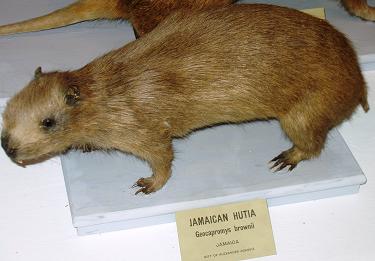 Jamaican ConeyGeocapromys brownii
-
 Hispaniolan HutiaPlagiodontia aedium
Compare
Questions and answers
What is the scientific name of the Speckled Spiny Tree-rat?
The scientific name of the Speckled Spiny Tree-rat is Pattonomys semivillosus. Written with its author, the full name is Pattonomys semivillosus (I. Geoffroy Saint-Hilaire, 1838).
Which family does the Speckled Spiny Tree-rat belong to?
Pattonomys semivillosus belongs to the family Echimyidae, in the order Rodentia and the class Mammalia.
Where is the Speckled Spiny Tree-rat found?
Checklists and occurrence records place Pattonomys semivillosus in 2 countries: Colombia and Venezuela.
What is the conservation status of the Speckled Spiny Tree-rat?
The IUCN Red List category recorded for Pattonomys semivillosus is Least Concern (LC).
What other names does the Speckled Spiny Tree-rat have?
Pattonomys semivillosus is also known in English as Colombian Speckled Tree Rat, Colombian Speckled Tree-rat, Speckled Spiny Tree Rat and Speckled Tree Rat.
What do spiny rats eat?
The Speckled Spiny Tree-rat eats fruits and seeds and is presumed to be herbivorous.[18][19]
Where do spiny rats live?
The Speckled Spiny Tree-rat occurs in northeastern Colombia, in the drainage area of the lower Magdalena River, and in parts of northwestern Venezuela. It inhabits swampy ciénegas, gallery forests, dry forests, sometimes rainforests, and mangrove forests.[9][10][11][12][13][15][16]
Sources
Passages the profile rests on
- The species has pale gray to brown dorsal fur mixed with yellow-buff, ocher, or black coloration along the middle of its back. Source passage: “Its fur is pale gray to brown along the back, mixed to a yellow-buff, ocher, or black color along the middle.” — English Wikipedia
- Its underside can be grayish, white, or pale orange. Source passage: “Its underside may be grayish, white, or pale orange.” — English Wikipedia
- The species has small, pale ears with fine black hairs along their edges. Source passage: “The small ears are pale but covered by fine black hairs along the edge.” — English Wikipedia
- A tuft of white fur occurs near the base of each ear. Source passage: “Near the base of the ear, at the antitragus, a tuft of white fur is visible.” — English Wikipedia
- Its muzzle and throat are white, contrasting with the predominantly black, grizzled-gray head. Source passage: “The muzzle and throat is notably white and contrasts against the rest of the head, which is grizzled gray towards the sides and black overall.” — English Wikipedia
- White-tipped guard hairs cover its body from behind the head toward the tail. Source passage: “Past the head and towards the tail, white-tipped guard hairs cover the tree-rat's body.” — English Wikipedia
- Its tail is covered in short hairs. Source passage: “The tail, which usually measures between 80 and 120% of the tree-rat's body length, is covered in short hairs.” — English Wikipedia
- Its broad hind feet have robust claws and gray to yellow-gray upper surfaces. Source passage: “The broad hind feet have robust claws and are gray to yellow-gray on top.” — English Wikipedia
- The species inhabits swampy ciénegas. Source passage: “Preferred habitats of the speckled spiny tree-rat include moist areas of lowland thorn forests and swampy ciénegas.” — English Wikipedia
- It occurs in gallery forests. Source passage: “and more frequently found in gallery forests and dry forests.” — English Wikipedia
- It occurs in dry forests. Source passage: “and more frequently found in gallery forests and dry forests.” — English Wikipedia
- It is sometimes found in rainforests. Source passage: “The species is sometimes found in rainforests” — English Wikipedia
- It also inhabits mangrove forests, including those on Salamanca Island. Source passage: “Some speckled spiny tree-rats are found in the mangrove forests of Salamanca Island Road Park.” — English Wikipedia
- The species is tree-dwelling and constructs dens in tree holes. Source passage: “The species is tree-dwelling and will make dens in tree holes.” — English Wikipedia
- The species occurs in the drainage area of the lower Magdalena River in northeastern Colombia. Source passage: “Speckled spiny tree-rats are found only in the drainage area of the lower Magdalena River of northeastern Columbia.” — English Wikipedia
- Its distribution extends into parts of northwestern Venezuela. Source passage: “They may also be found in parts of northwestern Venezuela.” — English Wikipedia
- The species occurs at elevations up to 600 m. Source passage: “They occur at elevations of up to 600 meters (2,000 feet).” — English Wikipedia
- Its diet includes fruits and seeds. Source passage: “Its diet includes fruit and seeds.” — English Wikipedia
- The species is presumed to be herbivorous. Source passage: “It is presumed to be herbivorous” — English Wikipedia
- The species is nocturnal. Source passage: “The speckled spiny tree-rat is nocturnal.” — English Wikipedia
- The species is classified as Least Concern by the IUCN. Source passage: “The International Union for Conservation of Nature lists it as a least-concern species” — English Wikipedia
- No major threats to the species are currently known. Source passage: “There are no known major threats to the speckled spiny tree-rat.” — English Wikipedia
- The species is described as common within its geographic range. Source passage: “It is common within its range.” — English Wikipedia
- Its Least Concern classification is supported by its large population, wide distribution, and lack of evidence of appreciable population decline. Source passage: “citing its large population, wide distribution, and lack of evidence that populations are declining at an appreciable rate.” — English Wikipedia
- Within its genus, the species is closely related to the giant tree-rat (Toromys grandis) and other members of Toromys. Source passage: “As part of the genus Pattonomys, it is closely related to the giant tree-rat (Toromys grandis) and other members of the genus Toromys.” — English Wikipedia
Data
- Catalogue of Life, 2026-10-16 XR cc by
- Global Biodiversity Information Facility CC BY 4.0
- Wikidata CC0
- GeoNames CC BY 4.0
- Wikimedia Commons per image; credit shown with each image
- Within the Catalogue of Life, this name comes from The Integrated Taxonomic Information System cc0
References
- Wilson, Don E., T. E. Lacher Jr., and R. A. Mittermeier, eds. (2016). Handbook of the Mammals of the World. Vol. 6: Lagomorphs and Rodents I.
- Emmons, Louise H., and Pierre-Henri Fabre. (2018). A review of the Pattonomys/Toromys clade (Rodentia: Echimyidae), with descriptions of a new Toromys species and a new genus. American Museum Novitates, No. 3894. Link
This species in other databases
Page built on 29 November 2026. See how the catalog is made and all sources and licences.
Cite this page
ScientificNames.org. (2026). Pattonomys semivillosus (Speckled Spiny Tree-rat). Retrieved November 29, 2026, from https://scientificnames.org/species/pattonomys-semivillosus
“Pattonomys semivillosus (Speckled Spiny Tree-rat).” ScientificNames.org, 2026, scientificnames.org/species/pattonomys-semivillosus. Accessed 29 Nov. 2026.
ScientificNames.org. “Pattonomys semivillosus (Speckled Spiny Tree-rat).” Accessed November 29, 2026. https://scientificnames.org/species/pattonomys-semivillosus.
@misc{scientificnames_pattonomys_semivillosus_speckled_spiny_tree_rat,
  author = {{ScientificNames.org}},
  title = {Pattonomys semivillosus (Speckled Spiny Tree-rat)},
  year = {2026},
  url = {https://scientificnames.org/species/pattonomys-semivillosus},
  note = {Accessed 2026-11-29}
}