Species · Mammals
Edented Sulawesi Rat Paucidentomys vermidax
The scientific name of the Edented Sulawesi Rat is Paucidentomys vermidax. It is a species of mammal in the family Muridae (mice), order Rodentia. The name dates from 2012.
- Scientific name
- Paucidentomys vermidax Esselstyn, Achmadi & Rowe, 2012
- Common name
- Edented Sulawesi Rat
- Genus
- Paucidentomys
- Family
- Muridae (Mice)
- Order
- Rodentia
- Class
- Mammalia
- Red List category
- NT Near Threatened
- Name status
- accepted in the Catalogue of Life

Overview
Paucidentomys vermidax is known from Mount Gandangdewata and Mount Latimojong in Sulawesi, Indonesia. It is the only known rodent without molars and has bicuspid upper incisors rather than gnawing incisors.
Written 26 November 2026 from the sources listed below. Each statement was checked against the passage it cites; statements that could not be supported were removed.
Habitat
The species was discovered in a remote rainforest on the Indonesian island of Sulawesi.[1]
It is known from Mount Gandangdewata and Mount Latimojong in Sulawesi, Indonesia.[2]
Diet
The species appears to specialize in eating worms, based on the stomach contents of one individual. It may feed exclusively on earthworms.[3][4]
Appearance
The species has a more elongated face than any other Sulawesi shrew-rat and a very long rostrum relative to other Sulawesi shrew-rats. It has small eyes and large ears.[5][6][7]
Its tail is long, thick and hairy, with two differently coloured surfaces.[8]
The species is the only known rodent without molars. Its upper incisors are bicuspid rather than gnawing incisors, with an anterior cusp and a slightly lower posterior cusp connected by a sharp, concave cutting edge.[9][10][11]
The species lacks a pterygoid plate and has a long, delicate lower jaw without significant muscle attachment points. Its lower incisors are single-cusped, forward-projecting, sharp and delicate.[12][13][14]
Similar species
The species is similar in size to Tateomys rhinogradoides. It is larger than Melasmothrix naso, Sommeromys macrorhinos and Tateomys macrocercus, smaller than Rhynchomys soricoides, and substantially smaller than species of Echiothrix.[15][16][17][18]
Classification of the Edented Sulawesi Rat
| Kingdom | Animalia |
|---|---|
| Phylum | Chordata |
| Subphylum | Vertebrata |
| Infraphylum | Gnathostomata |
| Parvphylum | Osteichthyes |
| Megaclass | Tetrapoda |
| Class | Mammalia (Mammal) |
| Subclass | Theria |
| Infraclass | Eutheria |
| Order | Rodentia (Rodent) |
| Suborder | Myomorpha (Mice) |
| Superfamily | Muroidea |
| Family | Muridae (Mice) |
| Subfamily | Murinae (Old World Mice) |
| Genus | Paucidentomys |
| Species | Paucidentomys vermidax Esselstyn, Achmadi & Rowe, 2012 |
Where the Edented Sulawesi Rat is found
Checklists place Paucidentomys vermidax in Asia.
Range as the checklists state it
Southern Asia
A number beside a place is its count of GBIF occurrence records. A place without a number comes from a checklist alone. Records show where a species has been observed or collected, which can include escapes and vagrants.
Common names
English
- Edented Sulawesi Rat
- Few-toothed Mouse
- Few-toothed Worm-eating Rat
Names in 1 other language
- Polish
- dwuząb dżdżownicożerny
Related species
-
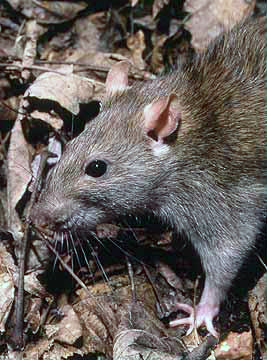 Brown RatRattus norvegicus
-
 Black RatRattus rattus
-
 Polynesian RatRattus exulans
-
 RakaliHydromys chrysogaster
-
 Wood MouseApodemus sylvaticus
-
 Eurasian Harvest MouseMicromys minutus
-
 Bramble Cay MelomysMelomys rubicola
-
 Greater Bandicoot RatBandicota indica
Compare
Questions and answers
What is the scientific name of the Edented Sulawesi Rat?
The scientific name of the Edented Sulawesi Rat is Paucidentomys vermidax. Written with its author, the full name is Paucidentomys vermidax Esselstyn, Achmadi & Rowe, 2012.
Which family does the Edented Sulawesi Rat belong to?
Paucidentomys vermidax belongs to the family Muridae, in the order Rodentia and the class Mammalia.
What is the conservation status of the Edented Sulawesi Rat?
The IUCN Red List category recorded for Paucidentomys vermidax is Near Threatened (NT).
What other names does the Edented Sulawesi Rat have?
Paucidentomys vermidax is also known in English as Few-toothed Mouse and Few-toothed Worm-eating Rat.
Sources
Passages the profile rests on
- The species was discovered in a remote rainforest on the Indonesian island of Sulawesi. Source passage: “which was discovered in 2012 in a remote rainforest on the Indonesian island, Sulawesi.” — English Wikipedia
- The species is known from Mount Gandangdewata and Mount Latimojong in Sulawesi, Indonesia. Source passage: “Paucidentomys vermidax is known from Mount Gandangdewata and Mount Latimojong in Sulawesi, Indonesia.” — English Wikipedia
- The species may feed exclusively on earthworms. Source passage: “may live exclusively on a diet of earthworms.” — English Wikipedia
- The species appears to specialize in eating worms, based on the stomach contents of one individual. Source passage: “it appears to be a specialist vermivore based on the stomach contents of one individual” — English Wikipedia
- The species has a more elongated face than any other Sulawesi shrew-rat. Source passage: “The face is more elongate than that of any other Sulawesi shrew-rat” — English Wikipedia
- The species has a very long rostrum relative to other Sulawesi shrew-rats. Source passage: “It has a very long rostrum (relative to other Sulawesi shrew-rats)” — English Wikipedia
- The species has small eyes and large ears. Source passage: “small eyes, large ears” — English Wikipedia
- The species has a long, thick, hairy tail with two differently coloured surfaces. Source passage: “a long, thick, hairy and dorsoventrally bicoloured tail.” — English Wikipedia
- The species is the only known rodent without molars. Source passage: “Paucidentomys vermidax is the only known rodent with no molars” — English Wikipedia
- The species has bicuspid upper incisors rather than gnawing incisors. Source passage: “rather than gnawing incisors, this animal has bicuspid upper incisors” — English Wikipedia
- The upper incisors have an anterior cusp and a slightly lower posterior cusp connected by a sharp, concave cutting edge. Source passage: “The upper incisors are short with an anterior cusp and slightly inferior posterior cusp; these cusps are connected by a sharp, concave cutting edge” — English Wikipedia
- The species lacks a pterygoid plate. Source passage: “The pterygoid plate is absent.” — English Wikipedia
- The species has a long, delicate lower jaw without significant muscle attachment points. Source passage: “The dentary is long and delicate, lacking significant muscle attachment points.” — English Wikipedia
- The lower incisors are single-cusped, forward-projecting, sharp and delicate. Source passage: “The lower incisors are unicuspid, procumbent, sharp and delicate.” — English Wikipedia
- The species is similar in size to Tateomys rhinogradoides. Source passage: “similar in size to Tateomys rhinogradoides” — English Wikipedia
- The species is larger than Melasmothrix naso, Sommeromys macrorhinos and Tateomys macrocercus. Source passage: “larger than Melasmothrix naso, Sommeromys macrorhinos and Tateomys macrocercus” — English Wikipedia
- The species is smaller than Rhynchomys soricoides. Source passage: “smaller than Rhynchomys soricoides” — English Wikipedia
- The species is substantially smaller than species of Echiothrix. Source passage: “substantially smaller than species of Echiothrix.” — English Wikipedia
Data
- Catalogue of Life, 2026-10-16 XR cc by
- Wikidata CC0
- Wikimedia Commons per image; credit shown with each image
- Within the Catalogue of Life, this name comes from The Integrated Taxonomic Information System cc0
References
- Esselstyn, Jacob A., Anang Setiawan Achmadi, and Kevin C. Rowe. (2012). Evolutionary novelty in a rat with no molars. Biology Letters, Vol. 8, No. 6. Link where the name was published
This species in other databases
Page built on 27 November 2026. See how the catalog is made and all sources and licences.
Cite this page
ScientificNames.org. (2026). Paucidentomys vermidax (Edented Sulawesi Rat). Retrieved November 27, 2026, from https://scientificnames.org/species/paucidentomys-vermidax
“Paucidentomys vermidax (Edented Sulawesi Rat).” ScientificNames.org, 2026, scientificnames.org/species/paucidentomys-vermidax. Accessed 27 Nov. 2026.
ScientificNames.org. “Paucidentomys vermidax (Edented Sulawesi Rat).” Accessed November 27, 2026. https://scientificnames.org/species/paucidentomys-vermidax.
@misc{scientificnames_paucidentomys_vermidax_edented_sulawesi_rat,
  author = {{ScientificNames.org}},
  title = {Paucidentomys vermidax (Edented Sulawesi Rat)},
  year = {2026},
  url = {https://scientificnames.org/species/paucidentomys-vermidax},
  note = {Accessed 2026-11-27}
}