Species · Mammals
Tres Marías Island Mouse Peromyscus madrensis
The scientific name of the Tres Marías Island Mouse is Peromyscus madrensis. It is a species of mammal in the family Cricetidae (new world mice and rats), order Rodentia. The name dates from 1898.
- Scientific name
- Peromyscus madrensis Merriam, 1898
- Common name
- Tres Marías Island Mouse
- Genus
- Peromyscus
- Family
- Cricetidae (New World Mice and Rats)
- Order
- Rodentia
- Class
- Mammalia
- Red List category
- EN Endangered
- Recorded in
- 1 country
- Name status
- accepted in the Catalogue of Life

Overview
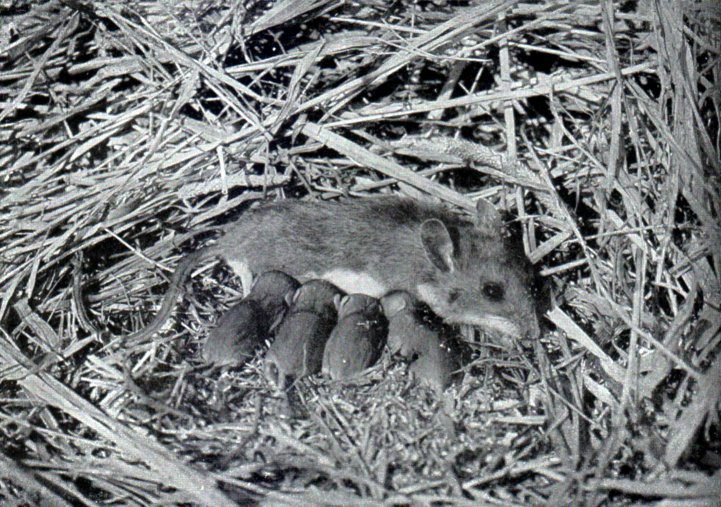
Peromyscus madrensis is endemic to the Islas Marías off the west coast of Mexico in the state of Nayarit. It has pale tan fur, white underparts, lips, and feet, and a sparsely haired tail with a darker upper surface.
Written 27 November 2026 from the sources listed below. Each statement was checked against the passage it cites; statements that could not be supported were removed.
Similar species
The Tres Marías Island Mouse is closely related to the Nayarit mouse, which occurs on the nearby mainland. The two species diverged during the Pleistocene.[1][2]
The species is larger than closely related species, with a longer tail, smaller ears, and a smaller penis.[3]
Appearance
The species has pale tan fur with white underparts, lips, and feet. Its back has a faint stripe of darker fur toward the rear, and dark spots are present on its ankles.[4][5][6]
Its head and body measure 21–25 cm in length, and its tail measures 10–13 cm. The tail has relatively little hair and is darker on the upper surface.[7][8][9]
Habitat
The species occurs across all habitat types on the islands. It is most common in undisturbed tropical deciduous forest, particularly in the interior highlands.[10][11]
The species occupies sheltered locations beneath logs or rocks.[12]
Reproduction and life cycle
Females have six teats.[13]
Conservation
The species was widespread across the islands when first described in 1898. By a 1991 survey, its range had become significantly reduced compared with its earlier distribution.[14][15]
The reduction in its range was apparently associated with introduced non-native animals, including black rats, deer, and goats.[16]
The species was common on María Cleofás Island but rare or absent on the other islands when last assessed. Its most recent IUCN Red List assessment was in 2017.[17][18]
The route by which the species originally reached the islands is uncertain. Rafting from the mainland and former land connections have both been proposed.[19]
Classification of the Tres Marías Island Mouse
| Kingdom | Animalia |
|---|---|
| Phylum | Chordata |
| Subphylum | Vertebrata |
| Infraphylum | Gnathostomata |
| Parvphylum | Osteichthyes |
| Megaclass | Tetrapoda |
| Class | Mammalia (Mammal) |
| Subclass | Theria |
| Infraclass | Eutheria |
| Order | Rodentia (Rodent) |
| Suborder | Myomorpha (Mice) |
| Superfamily | Muroidea |
| Family | Cricetidae (New World Mice and Rats) |
| Subfamily | Neotominae |
| Genus | Peromyscus (Deer Mice) |
| Species | Peromyscus madrensis Merriam, 1898 |
Where the Tres Marías Island Mouse is found
Checklists and occurrence records place Peromyscus madrensis in 1 country across North America. GBIF holds 107 georeferenced records of it.
Countries
Regions and cities with the most records
Range as the checklists state it
Middle America
A number beside a place is its count of GBIF occurrence records. A place without a number comes from a checklist alone. Records show where a species has been observed or collected, which can include escapes and vagrants.
Common names
English
- Tres Marias Island Mouse
- Tres Marias Deer Mouse
- Tres Marías Deermouse
Names in 5 other languages
- Finnish
- tresmariasinpeurahiiru
- Japanese
- トレスマリアスシロアシマウス
- Polish
- myszak pacyficzny
- Russian
- Трес-мариасский хомячок
- Spanish
- Ratón de la isla María Madre
Related species
-
 White-footed MousePeromyscus leucopus
-
 Eastern Deer MousePeromyscus maniculatus
-
 Oldfield MousePeromyscus polionotus
-
 Cactus MousePeromyscus eremicus
-
 California DeermousePeromyscus californicus
-
 Brush MousePeromyscus boylii
- Angel Island MousePeromyscus guardia
-
 Cotton MousePeromyscus gossypinus
Compare
Questions and answers
What is the scientific name of the Tres Marías Island Mouse?
The scientific name of the Tres Marías Island Mouse is Peromyscus madrensis. Written with its author, the full name is Peromyscus madrensis Merriam, 1898.
Which family does the Tres Marías Island Mouse belong to?
Peromyscus madrensis belongs to the family Cricetidae, in the order Rodentia and the class Mammalia.
Where is the Tres Marías Island Mouse found?
Checklists and occurrence records place Peromyscus madrensis in 1 country: Mexico.
What is the conservation status of the Tres Marías Island Mouse?
The IUCN Red List category recorded for Peromyscus madrensis is Endangered (EN).
What other names does the Tres Marías Island Mouse have?
Peromyscus madrensis is also known in English as Tres Marias Island Mouse, Tres Marias Deer Mouse and Tres Marías Deermouse.
Sources
Passages the profile rests on
- The Tres Marías deer mouse is closely related to the Nayarit mouse, which occurs on the nearby mainland. Source passage: “The species is closely related to the Nayarit mouse, which inhabits the nearby mainland” — English Wikipedia
- The Tres Marías deer mouse and the Nayarit mouse diverged during the Pleistocene. Source passage: “with the two species diverging during the Pleistocene.” — English Wikipedia
- The species is larger than closely related species, with a longer tail, smaller ears, and a smaller penis. Source passage: “Compared with other closely related species, it is larger, with a longer tail, smaller ears, and a smaller penis.” — English Wikipedia
- The species has pale tan fur with white underparts, lips, and feet. Source passage: “They have pale tan fur, with white underparts, lips, and feet.” — English Wikipedia
- Its back has a faint stripe of darker fur toward the rear. Source passage: “There is a faint stripe of darker fur towards the rear of the animal's back” — English Wikipedia
- Dark spots are present on its ankles. Source passage: “there are dark spots on the ankles.” — English Wikipedia
- Its head and body measure 21–25 cm in length. Source passage: “head and body measuring 21 to 25 centimetres (8.3 to 9.8 in)” — English Wikipedia
- Its tail measures 10–13 cm in length. Source passage: “a tail 10 to 13 centimetres (3.9 to 5.1 in) in length.” — English Wikipedia
- Its tail has relatively little hair and is darker on the upper surface. Source passage: “The tail has relatively little hair, and is noticeably darker on the upper surface.” — English Wikipedia
- The species occurs across all habitat types on the islands. Source passage: “Although found on all habitats on the islands” — English Wikipedia
- It is most common in undisturbed tropical deciduous forest, particularly in the interior highlands. Source passage: “most common in undisturbed tropical deciduous forest, especially in the interior highlands.” — English Wikipedia
- The species occupies sheltered locations beneath logs or rocks. Source passage: “It lives in sheltered locations, such as under logs or rocks.” — English Wikipedia
- Females have six teats. Source passage: “Females have six teats.” — English Wikipedia
- The species was widespread across the islands when it was first described in 1898. Source passage: “Widespread on the islands when they were first described in 1898” — English Wikipedia
- A 1991 survey recorded a significantly reduced range for the species compared with its earlier distribution. Source passage: “a survey in 1991 showed a significantly reduced range for the mice” — English Wikipedia
- The reduction in the species' range was apparently associated with introduced non-native animals, including black rats, deer, and goats. Source passage: “apparently due to the introduction of non-native species, such as black rats, deer, and goats.” — English Wikipedia
- The species was common on María Cleofás Island but rare or absent on the other islands when last assessed. Source passage: “When last assessed, it was common on María Cleofás Island, but rare or absent on the other, more disturbed, islands.” — English Wikipedia
- The species was most recently assessed for the IUCN Red List in 2017. Source passage: “Tres Marias Deer Mouse Peromyscus madrensis has most recently been assessed for The IUCN Red List of Threatened Species in 2017.” — iucnredlist.org
- The route by which the species originally reached the islands is uncertain, with rafting from the mainland and former land connections both proposed. Source passage: “It is unclear whether the mice first arrived on the islands by rafting from the mainland, or whether the islands were once connected to the mainland.” — English Wikipedia
Data
- Catalogue of Life, 2026-10-16 XR cc by
- Global Biodiversity Information Facility CC BY 4.0
- Wikidata CC0
- GeoNames CC BY 4.0
- Wikimedia Commons per image; credit shown with each image
- Within the Catalogue of Life, this name comes from The Integrated Taxonomic Information System cc0
References
- Proc. Biol. Soc. Wash. vol.12 p.16 where the name was published
- Hall, & Raymond, E. (1981). The Mammals of North America, 2nd Ed., Vol. 2.
- Wilson, Don E., and DeeAnn M. Reeder, eds. (1993). Mammal Species of the World: A Taxonomic and Geographic Reference, 2nd Ed., 3rd Printing.
- Wilson, Don E., and F. Russell Cole. (2000). Common Names of Mammals of the World.
- Musser, Guy G., and Michael D. Carleton / Wilson, Don E., and DeeAnn M. Reeder, eds. (2005). Superfamily Muroidea. Mammal Species of the World: A Taxonomic and Geographic Reference, 3rd Ed., Vol. 2.
This species in other databases
Page built on 27 November 2026. See how the catalog is made and all sources and licences.
Cite this page
ScientificNames.org. (2026). Peromyscus madrensis (Tres Marías Island Mouse). Retrieved November 27, 2026, from https://scientificnames.org/species/peromyscus-madrensis
“Peromyscus madrensis (Tres Marías Island Mouse).” ScientificNames.org, 2026, scientificnames.org/species/peromyscus-madrensis. Accessed 27 Nov. 2026.
ScientificNames.org. “Peromyscus madrensis (Tres Marías Island Mouse).” Accessed November 27, 2026. https://scientificnames.org/species/peromyscus-madrensis.
@misc{scientificnames_peromyscus_madrensis_tres_marias_island_mouse,
  author = {{ScientificNames.org}},
  title = {Peromyscus madrensis (Tres Marías Island Mouse)},
  year = {2026},
  url = {https://scientificnames.org/species/peromyscus-madrensis},
  note = {Accessed 2026-11-27}
}