Species · Mammals
White-ankled Mouse Peromyscus pectoralis
The scientific name of the White-ankled Mouse is Peromyscus pectoralis. It is a species of mammal in the family Cricetidae (new world mice and rats), order Rodentia. The name dates from 1904.
- Scientific name
- Peromyscus pectoralis Osgood, 1904
- Common name
- White-ankled Mouse
- Genus
- Peromyscus
- Family
- Cricetidae (New World Mice and Rats)
- Order
- Rodentia
- Class
- Mammalia
- Red List category
- LC Least Concern
- Recorded in
- 2 countries
- Name status
- accepted in the Catalogue of Life

Overview
The White-ankled Mouse occurs in Mexico and the United States, including New Mexico, Oklahoma, and Texas. It is distinguished by its white ankles and a male baculum with a long, cartilaginous tip.
Written 27 November 2026 from the sources listed below. Each statement was checked against the passage it cites; statements that could not be supported were removed.
Appearance
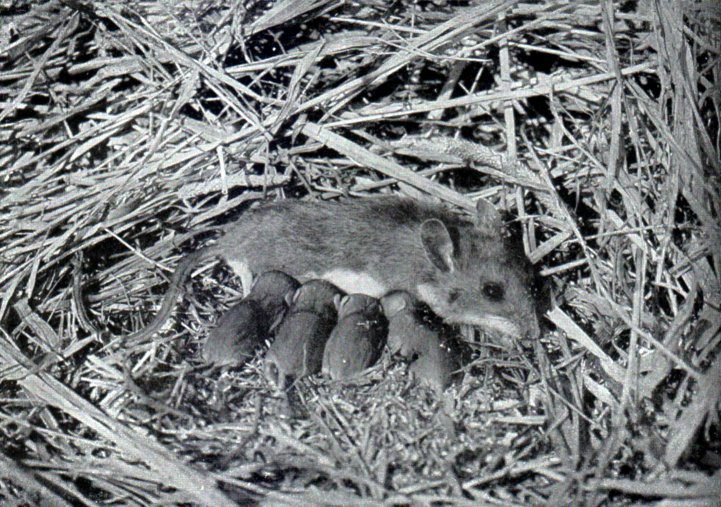
The White-ankled Mouse undergoes three distinct pelage stages during its life cycle: juvenile, subadult, and adult. Two molts occur between these stages.[1][2]
In Texas, the species has shorter hind feet, white ankles, paler coloration, and a more distinctly bicolored tail than the Texas mouse. Compared with the brush mouse, it has smaller molar teeth, white ankles, and shorter hair at the tail tip.[3][4]
Similar species
The White-ankled Mouse commonly coexists with the brush mouse and Texas mouse. The male baculum is an important identification feature because its tip is long and cartilaginous, unlike the short, rounded tips of the brush and Texas mice.[5][6]
Habitat
The species favors rocky and bushy terrain across desert, grassland, and woodland habitats. It shows an affinity for rocky areas.[7][8]
In studied coexisting microhabitats, the species does not use trees, even when Texas mice are removed. In Guadalupe Mountains National Park, it was recorded between 1,550 and 1,920 meters elevation.[9][10]
In New Mexico, the species was previously known only from Carlsbad Caverns National Park and nearby areas in the extreme southeast of the state. Fifteen newly documented localities extended its known distribution 225 kilometers north-northwest, including the Guadalupe Mountains and lowland habitats between the Sacramento Mountains and Pecos River.[11][12][13]
Diet
The White-ankled Mouse feeds on hackberries, acorns, juniper berries, and cactus fruit.[14]
Classification of the White-ankled Mouse
| Kingdom | Animalia |
|---|---|
| Phylum | Chordata |
| Subphylum | Vertebrata |
| Infraphylum | Gnathostomata |
| Parvphylum | Osteichthyes |
| Megaclass | Tetrapoda |
| Class | Mammalia (Mammal) |
| Subclass | Theria |
| Infraclass | Eutheria |
| Order | Rodentia (Rodent) |
| Suborder | Myomorpha (Mice) |
| Superfamily | Muroidea |
| Family | Cricetidae (New World Mice and Rats) |
| Subfamily | Neotominae |
| Genus | Peromyscus (Deer Mice) |
| Species | Peromyscus pectoralis Osgood, 1904 |
Where the White-ankled Mouse is found
Checklists and occurrence records place Peromyscus pectoralis in 2 countries across North America. GBIF holds 9,708 georeferenced records of it.
Countries
Regions and cities with the most records
- Texas, United States 2,617
- Durango, Mexico 1,492
- Nuevo León, Mexico 832
- Coahuila, Mexico 700
- New Mexico, United States 455
- San Luis Potosí, Mexico 451
- Tamaulipas, Mexico 443
- Hidalgo, Mexico 228
- Zacatecas, Mexico 228
- Querétaro, Mexico 201
- Monterrey, Mexico 151
- Ciudad de Allende, Mexico 149
- San Pedro Garza García, Mexico 148
- Santa Catarina, Mexico 146
- Jalisco, Mexico 143
- Guanajuato, Mexico 126
- Lerdo, Mexico 124
- San Nicolás de los Garza, Mexico 122
- Saltillo, Mexico 114
- Santiago, Mexico 114
- Mitras Poniente, Mexico 102
- Parque Industrial Ciudad Mitras, Mexico 94
- Guadalupe, Mexico 92
- Gómez Palacio, Mexico 92
- Nayarit, Mexico 92
- Torreón, Mexico 91
- Kerrville, United States 90
- Jardines de la Silla, Mexico 89
- Killeen, United States 88
- Fort Cavazos, United States 77
- Carlsbad, United States 70
- Ramos Arizpe, Mexico 69
- Ciudad General Escobedo, Mexico 67
- Guadalajara, Mexico 65
- Nuevo México, Mexico 65
- Tlaquepaque, Mexico 65
1 more country has a few records outside this range
These countries hold a few records of Peromyscus pectoralis but lie outside the range the checklists give for it. Such records are often zoo or garden specimens, museum material or vagrants, so the species is not counted as occurring there.
Range as the checklists state it
Middle America
North America
A number beside a place is its count of GBIF occurrence records. A place without a number comes from a checklist alone. Records show where a species has been observed or collected, which can include escapes and vagrants.
Common names
English
- White-ankled Mouse
- Northern White-ankled Deermouse
- Southern White-ankled Deermouse
- White-ankled Deermouse
Names in 5 other languages
- Finnish
- pensaspeurahiiru
- Japanese
- ムネフシロアシマウス
- Polish
- myszak wyżynny
- Russian
- Белоколенный хомячок
- Spanish
- Ratón tobillo blanco
Synonyms
5 other scientific names have been used for this species and are now treated as synonyms of Peromyscus pectoralis.
- Peromyscus attwateri eremicoides Osgood, 1904
- Peromyscus attwateri pectoralis Osgood, 1904
- Peromyscus laceianus (Bailey, 1906)
- Peromyscus pectoralis collinus Hooper, 1952
- Peromyscus pectoralis laceianus Bailey, 1906
Related species
-
 White-footed MousePeromyscus leucopus
-
 Eastern Deer MousePeromyscus maniculatus
-
 Oldfield MousePeromyscus polionotus
-
 Cactus MousePeromyscus eremicus
-
 California DeermousePeromyscus californicus
-
 Brush MousePeromyscus boylii
- Angel Island MousePeromyscus guardia
-
 Cotton MousePeromyscus gossypinus
Compare
Questions and answers
What is the scientific name of the White-ankled Mouse?
The scientific name of the White-ankled Mouse is Peromyscus pectoralis. Written with its author, the full name is Peromyscus pectoralis Osgood, 1904.
Which family does the White-ankled Mouse belong to?
Peromyscus pectoralis belongs to the family Cricetidae, in the order Rodentia and the class Mammalia.
Where is the White-ankled Mouse found?
Checklists and occurrence records place Peromyscus pectoralis in 2 countries: Mexico and United States.
What is the conservation status of the White-ankled Mouse?
The IUCN Red List category recorded for Peromyscus pectoralis is Least Concern (LC).
What other names does the White-ankled Mouse have?
Peromyscus pectoralis is also known in English as Northern White-ankled Deermouse, Southern White-ankled Deermouse and White-ankled Deermouse.
What states have white-footed mice?
The White-ankled Mouse occurs in New Mexico, Oklahoma, and Texas.[15]
What does a white-footed mouse eat?
The White-ankled Mouse feeds on hackberries, acorns, juniper berries, and cactus fruit.[14]
Sources
Passages the profile rests on
- The species undergoes three distinct pelage stages during its life cycle: juvenile, subadult, and adult. Source passage: “White-ankled mice have three distinct pelages in their life cycles: juvenile, subadult, and adult.” — English Wikipedia
- Two molts occur between the juvenile, subadult, and adult pelage stages. Source passage: “Two molt phases (post-juvenile and post-subadult) are necessary for the distinct pelages in each phase of their lives.” — English Wikipedia
- In Texas, the species has shorter hind feet, white ankles, paler coloration, and a more distinctly bicolored tail than the Texas mouse. Source passage: “In Texas, the white-ankled mouse differs from the Texas mouse by having shorter hind feet, white ankles, paler color, and a more defined bicolor tail.” — English Wikipedia
- The species has smaller molar teeth, white ankles, and shorter hair at the tail tip than the brush mouse. Source passage: “The white-ankled mouse differs from the Brush mouse by having smaller molar teeth, white ankles, and shorter hair on the end of the tail.” — English Wikipedia
- The white-ankled mouse commonly coexists with the brush mouse and Texas mouse. Source passage: “The white-ankled mouse is commonly found in coexistence with the brush mouse and Texas mouse (P. boylii and P. attaweri, respectively).” — English Wikipedia
- The male baculum is an important identification feature because its tip is long and cartilaginous, unlike the short, rounded tips of the brush and Texas mice. Source passage: “The tip of the white-ankled mouse's baculum is long and cartilaginous, whereas the tips of brush and Texas mice are short and rounded.” — English Wikipedia
- The species favors rocky and bushy terrain across desert, grassland, and woodland habitats. Source passage: “The white-ankled mouse is partial to rocky and bushy terrains within a variety of habitats: deserts, grasslands and woodlands.” — English Wikipedia
- The species shows an affinity for rocky areas. Source passage: “Peromyscus pectoralis also has an affinity for rocky areas” — digitalcommons.unl.edu
- The species does not use trees in the studied coexisting microhabitats, even when Texas mice are removed. Source passage: “In an experiment that removed the Texas mice from these cohabitated microhabitats, the white-ankled mice still did not use the trees.” — English Wikipedia
- In Guadalupe Mountains National Park, the species was recorded between 1,550 and 1,920 meters elevation. Source passage: “Peromyscus pectoralis also has an affinity for rocky areas, but this species was not found above 1920 or below 1550 meters.” — digitalcommons.unl.edu
- In New Mexico, the species was previously known only from Carlsbad Caverns National Park and nearby areas in the extreme southeast of the state. Source passage: “The white-ankled mouse (Peromyscus pectoralis) was previously known only from Carlsbad Caverns National Park and nearby areas in extreme southeastern New Mexico.” — usgs.gov
- Fifteen newly documented localities extended the known New Mexico distribution 225 kilometers north-northwest. Source passage: “I discovered 15 new localities for P. pectoralis, which extend its distribution 225 km north-northwest.” — usgs.gov
- The New Mexico distribution includes the Guadalupe Mountains and lowland habitats between the Sacramento Mountains and Pecos River. Source passage: “At present, the distribution of P. pectoralis in New Mexico includes the Guadalupe Mountains and lowland habitats between the Sacramento Mountains and Pecos River.” — usgs.gov
- The species feeds on hackberries, acorns, juniper berries, and cactus fruit. Source passage: “White-ankled mice have been known to feed on a variety of seeds, including hackberries, acorns, juniper berries, and cactus fruit.” — English Wikipedia
- The white-ankled mouse occurs in Mexico and the United States, including New Mexico, Oklahoma, and Texas. Source passage: “It is found in Mexico, and in New Mexico, Oklahoma and Texas in the United States.” — English Wikipedia
Data
- Catalogue of Life, 2026-10-16 XR cc by
- Global Biodiversity Information Facility CC BY 4.0
- Wikidata CC0
- GeoNames CC BY 4.0
- Wikimedia Commons per image; credit shown with each image
- Within the Catalogue of Life, this name comes from The Integrated Taxonomic Information System cc0
References
- Proc. Biol. Soc. Wash. vol.17 p.59 where the name was published
- Hall, & Raymond, E. (1981). The Mammals of North America, 2nd Ed., Vol. 2.
- Banks, R. C., R. W. McDiarmid, and A. L. Gardner. (1987). Checklist of Vertebrates of the United States, the U.S. Territories, and Canada. Resource Publication, No. 166.
- Wilson, Don E., and DeeAnn M. Reeder, eds. (1993). Mammal Species of the World: A Taxonomic and Geographic Reference, 2nd Ed., 3rd Printing.
- Wilson, Don E., and F. Russell Cole. (2000). Common Names of Mammals of the World.
- Musser, Guy G., and Michael D. Carleton / Wilson, Don E., and DeeAnn M. Reeder, eds. (2005). Superfamily Muroidea. Mammal Species of the World: A Taxonomic and Geographic Reference, 3rd Ed., Vol. 2.
This species in other databases
Page built on 27 November 2026. See how the catalog is made and all sources and licences.
Cite this page
ScientificNames.org. (2026). Peromyscus pectoralis (White-ankled Mouse). Retrieved November 27, 2026, from https://scientificnames.org/species/peromyscus-pectoralis
“Peromyscus pectoralis (White-ankled Mouse).” ScientificNames.org, 2026, scientificnames.org/species/peromyscus-pectoralis. Accessed 27 Nov. 2026.
ScientificNames.org. “Peromyscus pectoralis (White-ankled Mouse).” Accessed November 27, 2026. https://scientificnames.org/species/peromyscus-pectoralis.
@misc{scientificnames_peromyscus_pectoralis_white_ankled_mouse,
  author = {{ScientificNames.org}},
  title = {Peromyscus pectoralis (White-ankled Mouse)},
  year = {2026},
  url = {https://scientificnames.org/species/peromyscus-pectoralis},
  note = {Accessed 2026-11-27}
}