Species · Mammals
Southern Giant Slender-tailed Cloud Rat Phloeomys cumingi
The scientific name of the Southern Giant Slender-tailed Cloud Rat is Phloeomys cumingi. It is a species of mammal in the family Muridae (mice), order Rodentia. The name dates from 1839.

Overview
Phloeomys cumingi inhabits forested areas, degraded lowland forests, pastures, and farmland, using underground burrows and hollow logs. It has predominantly dark brown fur, a thick-haired tail, and broad feet with long forefoot claws.
Written 26 November 2026 from the sources listed below. Each statement was checked against the passage it cites; statements that could not be supported were removed.
Appearance
It has a short muzzle and long hair covering the outer surfaces of its ears. Its tail is covered in long, thick hair that is darker than its body coat.[1][2]
Its feet are broad and large, with bare walking surfaces and long forefoot claws.[3]
Its total body length is approximately 67–75 cm, and adults weigh approximately 1.45–2.1 kg. The head and body together measure between 440 and 482.6 mm, while the tail measures approximately 320–350 mm.[4][5][6][7]
The forefoot measures 43.4 mm excluding the claws, and the hind foot measures 70 mm. The ears measure approximately 25.4 mm.[8][9]
Habitat
The species inhabits forested areas and uses underground burrows. Individuals are frequently captured in hollow logs.[10][11]
It also occurs in degraded lowland forests, pastures, and farmland. Recorded elevations range from sea level to 900 m.[12][13]
Individuals have been observed occupying both tree branches and the forest floor.[14]
Diet
The species feeds primarily on tender young leaves. Its diet also includes fruit, young vegetation, particularly red leaves, and roots.[15][16][17]
Captive individuals have been observed consuming substantial quantities of wood.[18]
Behaviour
The species is nocturnal and moves relatively slowly. Individuals spend the daytime in hollow trees or logs.[19][20]
It generally lives alone or in pairs, although larger groups have also been observed. Farmers and hunters report solitary individuals and mother-young or male-female pairs.[21][22]
Individuals have been reported to be active during overcast days in captivity. Captive animals have been described as placid, quiet, and indifferent, and may produce short growls when irritated.[23][24][25]
Farmers report that the animals can be strong and aggressive during capture.[26]
Reproduction and life cycle
The species typically produces one offspring per year. Most births in the wild appear to occur during the late rainy season, identified as December.[27][28]
Young are born in hollow standing or fallen trees or in underground holes. Mothers carry their offspring attached to a nipple while moving and provide nursing while the juvenile remains attached to a teat.[29][30][31]
Similar species
The northern Luzon giant cloud rat, P. pallidus, is distinguished by its lighter-colored fur. It is described as larger than P. cumingi and has longer, softer, paler fur.[32][33]
Classification of the Southern Giant Slender-tailed Cloud Rat
| Kingdom | Animalia |
|---|---|
| Phylum | Chordata |
| Subphylum | Vertebrata |
| Infraphylum | Gnathostomata |
| Parvphylum | Osteichthyes |
| Megaclass | Tetrapoda |
| Class | Mammalia (Mammal) |
| Subclass | Theria |
| Infraclass | Eutheria |
| Order | Rodentia (Rodent) |
| Suborder | Myomorpha (Mice) |
| Superfamily | Muroidea |
| Family | Muridae (Mice) |
| Subfamily | Murinae (Old World Mice) |
| Genus | Phloeomys (Giant Cloud Rats) |
| Species | Phloeomys cumingi (Waterhouse, 1839) |
Where the Southern Giant Slender-tailed Cloud Rat is found
Checklists and occurrence records place Phloeomys cumingi in 1 country across Asia. GBIF holds 79 georeferenced records of it.
Countries
Regions and cities with the most records
- Goa, Philippines 7
- Calabanga, Philippines 6
- Legaspi, Philippines 4
- Magarao, Philippines 4
- Naga, Philippines 4
- Tagas, Philippines 3
Range as the checklists state it
Southern Asia
A number beside a place is its count of GBIF occurrence records. A place without a number comes from a checklist alone. Records show where a species has been observed or collected, which can include escapes and vagrants.
Common names
English
- Southern Giant Slender-tailed Cloud Rat
- Southern Luzon Giant Cloud Rat
- Southern Luzon Phloeomys
Names in 7 other languages
- Czech
- Velemyš největší, myš největší
- Dutch
- Bonte Reuzenschorsrat
- Finnish
- luzoninjättirotta
- Japanese
- ホソオクモネズミ
- Norwegian Bokmål
- Cumingbarkrotte
- Polish
- Szczur drzewny, sierściogon kokosowy
- Russian
- Южная тонкохвостая крыса
Synonyms
3 other scientific names have been used for this species and are now treated as synonyms of Phloeomys cumingi.
- Capromys elegans Cabrera, 1901
- Mus cumingi Waterhouse, 1839
- Phloecomys cumingi (Waterhouse, 1839) Nehring, 1890
Related species
-
 Northern Luzon Giant Cloud RatPhloeomys pallidus
-
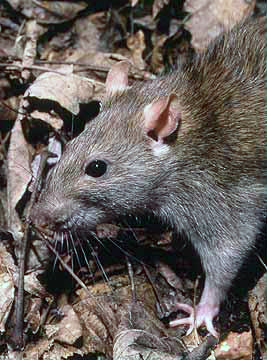 Brown RatRattus norvegicus
-
 Black RatRattus rattus
-
 Polynesian RatRattus exulans
-
 RakaliHydromys chrysogaster
-
 Wood MouseApodemus sylvaticus
-
 Eurasian Harvest MouseMicromys minutus
-
 Bramble Cay MelomysMelomys rubicola
Compare
Questions and answers
What is the scientific name of the Southern Giant Slender-tailed Cloud Rat?
The scientific name of the Southern Giant Slender-tailed Cloud Rat is Phloeomys cumingi. Written with its author, the full name is Phloeomys cumingi (Waterhouse, 1839).
Which family does the Southern Giant Slender-tailed Cloud Rat belong to?
Phloeomys cumingi belongs to the family Muridae, in the order Rodentia and the class Mammalia.
Where is the Southern Giant Slender-tailed Cloud Rat found?
Checklists and occurrence records place Phloeomys cumingi in 1 country: Philippines.
What is the conservation status of the Southern Giant Slender-tailed Cloud Rat?
The IUCN Red List category recorded for Phloeomys cumingi is Least Concern (LC).
What other names does the Southern Giant Slender-tailed Cloud Rat have?
Phloeomys cumingi is also known in English as Southern Luzon Giant Cloud Rat and Southern Luzon Phloeomys.
Where are giant cloud rats found?
The Southern Giant Slender-tailed Cloud Rat is endemic to the Philippine islands. Its documented distribution includes southern Luzon, Marinduque, Mindoro, and Catanduanes.[34][35][36]
What is the largest breed of rat?
The available size information describes the Southern Giant Slender-tailed Cloud Rat as having a total body length of approximately 67–75 cm and an adult weight of approximately 1.45–2.1 kg. It does not establish which rat species or breed is the largest.[4][5]
What is the biggest rat in the Philippines?
The Southern Giant Slender-tailed Cloud Rat has a total body length of approximately 67–75 cm and adults weigh approximately 1.45–2.1 kg. Its status as the biggest rat in the Philippines is not established.[4][5]
Sources
Passages the profile rests on
- The species has a short muzzle and long hair covering the outer surfaces of its ears. Source passage: “The muzzle is short, and long hair covers the outside of the ears.” — animaldiversity.org
- Its tail is covered in long, thick, darker hair than the body coat. Source passage: “The long, thick hair of the tail is blacker than the coat.” — animaldiversity.org
- Its feet are broad and large, with bare walking surfaces and long claws on the forefeet. Source passage: “The feet are wide and large, and are bare on the walking surface. There are long claws on the forefeet.” — animaldiversity.org
- Its total body length is approximately 67–75 cm. Source passage: “total length of about 67–75 cm (26–30 in)” — English Wikipedia
- Adults weigh approximately 1.45–2.1 kg. Source passage: “weighs 1.45–2.1 kg (3.2–4.6 lb).” — English Wikipedia
- The head and body together measure between 440 and 482.6 mm. Source passage: “The length of the head and body ranges from 440 to 482.6 mm.” — animaldiversity.org
- Its tail measures approximately 320–350 mm. Source passage: “Tail lengths have been reported from 320 to 350 mm.” — animaldiversity.org
- Its forefoot measures 43.4 mm excluding the claws, while its hind foot measures 70 mm. Source passage: “The forefoot, not including the claws, measures 43.4 mm, and the hind foot measures 70 mm.” — animaldiversity.org
- Its ears measure approximately 25.4 mm. Source passage: “Ears measure 25.4 mm.” — animaldiversity.org
- The species inhabits forested areas and uses underground burrows. Source passage: “P. cumingi is found in forested areas and is semi-fossorial, living in burrows underground.” — animaldiversity.org
- Individuals are frequently captured in hollow logs. Source passage: “Specimens are often captured in hollow logs.” — animaldiversity.org
- The species also occurs in degraded lowland forests, pastures, and farmland. Source passage: “Slender-tailed cloud rats have been found in degraded lowland forest and have spread to pasture and farmland.” — animaldiversity.org
- The species has been recorded at elevations ranging from sea level to 900 m. Source passage: “Slender-tailed cloud rats have been found from sea level to 900 m (2,952 ft).” — animaldiversity.org
- Individuals have been observed occupying both tree branches and the forest floor. Source passage: “Equally at home high amongst the branches of a tree as on the forest floor” — English Wikipedia
- Its diet consists primarily of tender young leaves. Source passage: “Their diet consists primarily of tender, young leaves” — English Wikipedia
- Fruit is also reported as part of its diet. Source passage: “but fruit is also reportedly eaten.” — English Wikipedia
- Wild individuals have been reported to eat young vegetation, particularly red leaves, and roots. Source passage: “it has been reported to eat young vegetation (particularly favoring red leaves) and roots.” — animaldiversity.org
- Captive individuals have been observed consuming substantial quantities of wood. Source passage: “The animals in captivity also consume large amounts of wood, although the type was not reported.” — animaldiversity.org
- The species is nocturnal and moves relatively slowly. Source passage: “is a slow-moving animal only active at night” — English Wikipedia
- Individuals spend the daytime in hollow trees or logs. Source passage: “spending the day in hollow trees or logs.” — English Wikipedia
- The species generally lives alone or in pairs, although larger groups have also been observed. Source passage: “It usually lives singly, or in pairs consisting of an adult male and female, or a female and her young, but larger groups have also been seen.” — English Wikipedia
- Farmers and hunters report that individuals may be solitary or occur in mother-young or male-female pairs. Source passage: “Farmers and hunters in Luzon report that the animal is solitary or found in pairs of a mother with her young, or a male and female” — animaldiversity.org
- The species has been reported to be active during overcast days when kept in captivity. Source passage: “The species has also been reported as active on overcast days when in captivity” — animaldiversity.org
- Individuals in captivity have been described as placid, quiet, and indifferent. Source passage: “these animals are reported to be indifferent, placid, and quiet while in captivity” — animaldiversity.org
- Individuals may produce short growls when irritated. Source passage: “cloud rats makes short growls when irritated, similar to the growl of a marmot.” — animaldiversity.org
- Farmers report that the animals can be strong and aggressive during capture. Source passage: “Farmers also warn that cloud-rats are strong and aggressive, requiring special care during capture.” — animaldiversity.org
- The species typically produces one offspring per year. Source passage: “The southern giant slender-tailed cloud rat typically gives birth to a single pup each year” — English Wikipedia
- Most births in the wild appear to occur during the late rainy season, identified as December. Source passage: “These data show that births occur in the late rainy season (December).” — animaldiversity.org
- Young are born in hollow standing or fallen trees or in underground holes. Source passage: “The young are born in the hollow of a standing or fallen tree, or in a hole in the ground.” — English Wikipedia
- Mothers carry their offspring attached to a nipple while moving. Source passage: “The mother carries her young firmly attached to a nipple.” — English Wikipedia
- The female provides nursing and carries the juvenile while it remains attached to a teat. Source passage: “The female nurses and carries the juvenile, which attaches to a teat for an unreported amount of time.” — animaldiversity.org
- The northern Luzon giant cloud rat, P. pallidus, is distinguished by its lighter-colored fur. Source passage: “lacking the light-coloured sections usually seen in its close relative, the northern Luzon giant cloud rat (P. pallidus).” — English Wikipedia
- P. pallidus is described as larger than P. cumingi and has longer, softer, paler fur. Source passage: “The other recognized species of slender-tailed cloud rat, P. pallidus , is larger than P. cumingi and is differentiated by its longer, softer, and paler fur.” — animaldiversity.org
- The species is endemic to the Philippine islands. Source passage: “Phloeomys cumingi is endemic to the Philippine islands of the Palearctic Region.” — animaldiversity.org
- Its documented distribution includes southern Luzon in the Philippines. Source passage: “found only in southern Luzon in the Philippines.” — English Wikipedia
- The species has also been recorded on Marinduque, Mindoro, and Catanduanes. Source passage: “the species has been found on the nearby small islands of Marinduque, Mindoro, and Catanduanes.” — animaldiversity.org
Data
- Catalogue of Life, 2026-10-16 XR cc by
- Global Biodiversity Information Facility CC BY 4.0
- Wikidata CC0
- GeoNames CC BY 4.0
- Wikimedia Commons per image; credit shown with each image
- Within the Catalogue of Life, this name comes from The Integrated Taxonomic Information System cc0
References
- Proc. Zool. Soc. Lond. vol.1839 p.108 where the name was published
- Wilson, Don E., and DeeAnn M. Reeder, eds. (1993). Mammal Species of the World: A Taxonomic and Geographic Reference, 2nd Ed., 3rd Printing.
- Musser, Guy G., and Michael D. Carleton / Wilson, Don E., and DeeAnn M. Reeder, eds. (2005). Superfamily Muroidea. Mammal Species of the World: A Taxonomic and Geographic Reference, 3rd Ed., Vol. 2.
This species in other databases
Page built on 27 November 2026. See how the catalog is made and all sources and licences.
Cite this page
ScientificNames.org. (2026). Phloeomys cumingi (Southern Giant Slender-tailed Cloud Rat). Retrieved November 27, 2026, from https://scientificnames.org/species/phloeomys-cumingi
“Phloeomys cumingi (Southern Giant Slender-tailed Cloud Rat).” ScientificNames.org, 2026, scientificnames.org/species/phloeomys-cumingi. Accessed 27 Nov. 2026.
ScientificNames.org. “Phloeomys cumingi (Southern Giant Slender-tailed Cloud Rat).” Accessed November 27, 2026. https://scientificnames.org/species/phloeomys-cumingi.
@misc{scientificnames_phloeomys_cumingi_southern_giant_slender_tailed_cloud_rat,
  author = {{ScientificNames.org}},
  title = {Phloeomys cumingi (Southern Giant Slender-tailed Cloud Rat)},
  year = {2026},
  url = {https://scientificnames.org/species/phloeomys-cumingi},
  note = {Accessed 2026-11-27}
}