Species · Flowering plants
Bacury Platonia insignis
The scientific name of the Bacury is Platonia insignis. It is a species of flowering plant in the family Clusiaceae (clusoids), order Malpighiales.
- Scientific name
- Platonia insignis Mart.
- Common name
- Bacury
- Genus
- Platonia
- Family
- Clusiaceae (Clusoids)
- Order
- Malpighiales
- Class
- Magnoliopsida
- Recorded in
- 6 countries
- Name status
- accepted in the Catalogue of Life

Overview
Platonia insignis is native to the Amazon rainforest and occurs in humid forests in Brazil. It is the only species in the genus Platonia.
Written 26 November 2026 from the sources listed below. Each statement was checked against the passage it cites; statements that could not be supported were removed.
Appearance
Bacury is a tree with a pyramidal crown and bark containing abundant yellow latex. It reaches a height of 25–40 metres.[1][2]
Its leaves are opposite, simple, oblong to elliptic, glossy dark green and leathery, with wavy margins.[3]
Its pink flowers have five petals and numerous stamens. They measure 5–7 centimetres in length.[4][5]
Its fruit is round to oval, with thick yellow skin and sticky white pulp. The fruits measure 7–14 centimetres in length.[6][7]
The fruit pulp is fragrant and has a sweet-and-sour taste.[8]
Habitat
Bacury is native to the Amazon rainforest and occurs in humid forests in Brazil.[9][10]
Its distribution includes northern and northeastern Brazil, southeastern Colombia, southern Venezuela, and the Guianas. The species is native to South America.[11][12]
Reproduction and life cycle
The white-bellied parrot (Pionites leucogaster) pollinates bacury. Its fruits contain three to five seeds.[13][14]
Uses
Bacury is cultivated for its fruit, which is processed into condiments and beverages.[15]
Its oily brown seeds are used as a home remedy for skin conditions. Bacuri oil is used as an emollient and moisturizing agent.[16][17]
Bacuri oil contains 50% to 55% tripalmitin and approximately 5% palmitoleic acid.[18][19]
Its yellowish wood is frequently used as timber.[20]
Similar species
Bacury is related to the New Caledonian genus Montrouziera.[21]
Classification of the Bacury
| Kingdom | Plantae |
|---|---|
| Subkingdom | Pteridobiotina |
| Phylum | Tracheophyta |
| Class | Magnoliopsida |
| Order | Malpighiales |
| Family | Clusiaceae (Clusoids) |
| Tribe | Symphonieae |
| Genus | Platonia |
| Species | Platonia insignis Mart. |
Where the Bacury is found
Checklists and occurrence records place Platonia insignis in 6 countries across South America. GBIF holds 670 georeferenced records of it.
Countries
Regions and cities with the most records
- Maranhão, Brazil 130
- Pará, Brazil 34
- Amazonas, Brazil 32
- São Luís, Brazil 28
- Roraima, Brazil 22
- Paço do Lumiar, Brazil 19
- Sipaliwini District, Suriname 19
- São José de Ribamar, Brazil 18
- Raposa, Brazil 17
- Tocantins, Brazil 15
- Kourou, French Guiana 12
- Guainía Department, Colombia 11
- Amazonas, Venezuela 9
- Carolina, Brazil 8
- Alcântara, Brazil 7
- Augusto Corrêa, Brazil 6
- Bragança, Brazil 6
- Icatu, Brazil 5
- Mata Roma, Brazil 5
- Morros, Brazil 5
- Para District, Suriname 5
- Marapanim, Brazil 4
- Salvaterra, Brazil 4
- Soure, Brazil 4
- Ananindeua, Brazil 3
- Belém, Brazil 3
- Marituba, Brazil 3
- Rondônia, Brazil 3
- Santa Bárbara do Pará, Brazil 3
- Santa Isabel do Rio Negro, Brazil 3
- Vaupés, Colombia 2
Range as the checklists state it
São Tomé [I]; Colombia (Guainía, Vaupés); Venezuela (Amazonas); Guyana; Surinam; French Guiana; N-Brazil (Pará); NE-Brazil (Maranhão)
A number beside a place is its count of GBIF occurrence records. A place without a number comes from a checklist alone. Records show where a species has been observed or collected, which can include escapes and vagrants.
Common names
English
- Bacury
- Pakoori
Names in 6 other languages
- French
- parcori, parcouri, parcouri jaune
- Portuguese
- Bacuri-grande, Bakuri, Landirana, bacuri-açu
- Russian
- Платония замечательная
- Slovak
- platónia jedlá
- Spanish
- Bacurí, bacouré
- Swedish
- bacuriträd
Synonyms
12 other scientific names have been used for this species and are now treated as synonyms of Platonia insignis.
- Aristoclesia esculenta (Arruda) Stuntz
- Moronobea esculenta Arruda
- Moronobea grandiflora Choisy
- Moronobea montana Schltdl.
- Platonia esculenta (Arruda) Rickett & Stafleu
- Platonia esculenta (Arruda) Oken
- Platonia grandiflora (Choisy) Planch. & Triana
- Platonia insignis var. formosa R.E.Schult.
- Symphonia esculenta Arruda ex Choisy
- Symphonia esculenta (Arruda) Steud.
- Symphonia grandiflora (Choisy) Spreng.
- Symphonia moronobea Raeusch.
Subspecies and varieties
- Platonia insignis var. insignis variety
Related species
-
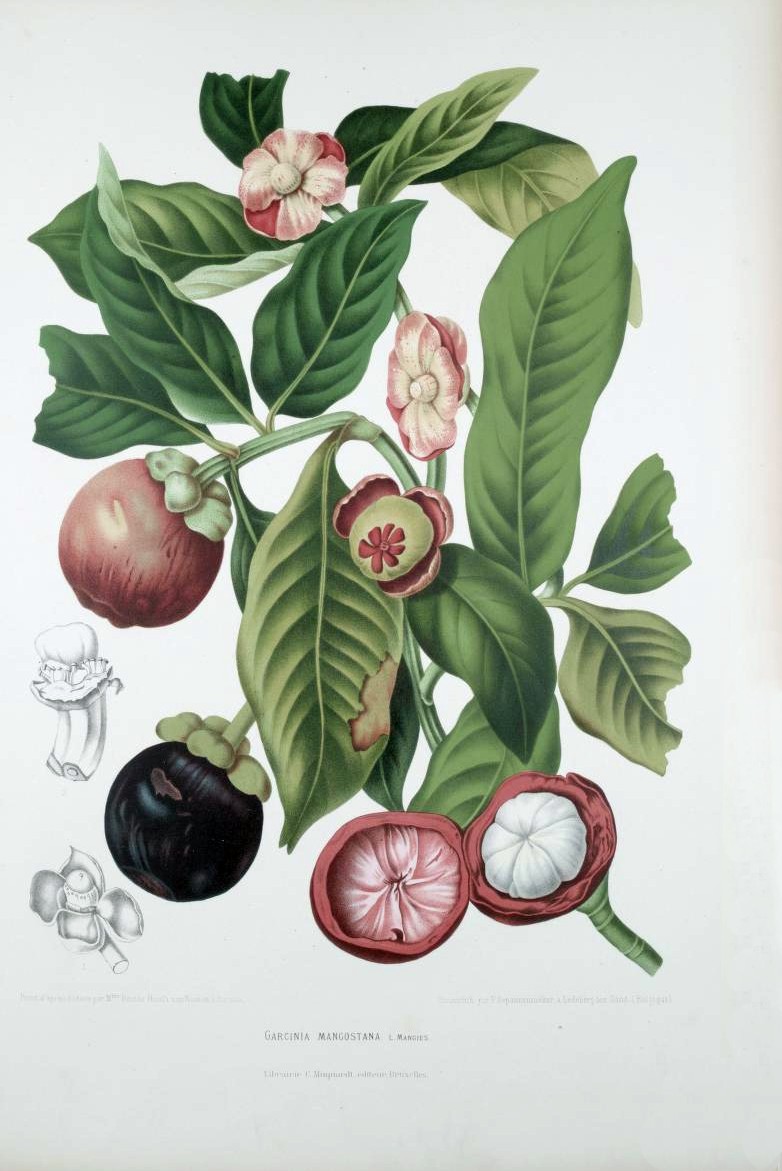 MangosteenGarcinia mangostana
-
 Malabar TamarindGarcinia gummi-gutta
-
 KokumGarcinia indica
-
 Bitter KolaGarcinia kola
-
 AchachaGarcinia gardneriana
-
 False MangosteenGarcinia xanthochymus
- African MangosteenGarcinia livingstonei
-
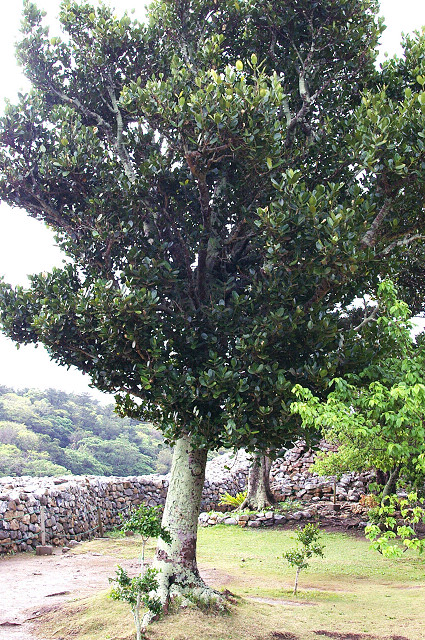 Common GarciniaGarcinia subelliptica
Compare
Questions and answers
What is the scientific name of the Bacury?
The scientific name of the Bacury is Platonia insignis. Written with its author, the full name is Platonia insignis Mart..
Which family does the Bacury belong to?
Platonia insignis belongs to the family Clusiaceae, in the order Malpighiales and the class Magnoliopsida.
Where is the Bacury found?
Checklists and occurrence records place Platonia insignis in 6 countries: Brazil, Suriname, French Guiana, Colombia, Guyana and Venezuela.
What other names does the Bacury have?
Platonia insignis is also known in English as Pakoori.
Sources
Passages the profile rests on
- Platonia insignis is a tree with a pyramidal crown and bark containing abundant yellow latex. Source passage: “It has a pyramidal crown and copious yellow latex in the bark.” — English Wikipedia
- Platonia insignis reaches a height of 25–40 metres. Source passage: “Platonia insignis is a dry-season deciduous tree, reaching 25–40 m high.” — English Wikipedia
- Its leaves are opposite, simple, oblong to elliptic, glossy dark green, leathery, and have wavy margins. Source passage: “The leaves are opposite, simple oblong to elliptic, 8–15 cm long, and glossy dark green, with wavy margins and a leathery texture.” — English Wikipedia
- Its flowers are pink and have five petals and numerous stamens. Source passage: “The flowers are 5–7 cm long and pink in color, with five petals and numerous stamens.” — English Wikipedia
- Its flowers measure 5–7 centimetres in length. Source passage: “The flowers are 5–7 cm long” — English Wikipedia
- Its fruit is round to oval, with thick yellow skin and sticky white pulp. Source passage: “The fruit is round to oval and 7–14 cm long, with a thick, yellow skin.” — English Wikipedia
- Its fruits measure 7–14 centimetres in length. Source passage: “The fruit is round to oval and 7–14 cm long” — English Wikipedia
- The fruit pulp is fragrant and has a sweet-and-sour taste. Source passage: “The sticky white pulp is fragrant, with a taste that is both sweet and sour.” — English Wikipedia
- Platonia insignis is native to the Amazon rainforest. Source passage: “It is native the Amazon rainforest in tropical South America” — English Wikipedia
- The species occurs in humid forests in Brazil. Source passage: “native to South America in the humid forests of Brazil” — inaturalist.org
- Platonia insignis occurs in northern and northeastern Brazil, southeastern Colombia, southern Venezuela, and the Guianas. Source passage: “ranging through northern and northeastern Brazil, southeastern Colombia, southern Venezuela, and the Guianas.” — English Wikipedia
- Platonia insignis is native to South America. Source passage: “native to South America” — inaturalist.org
- The white-bellied parrot (Pionites leucogaster) pollinates Platonia insignis. Source passage: “The white-bellied parrot (Pionites leucogaster) is a pollinator of the plant” — English Wikipedia
- Its fruits contain three to five seeds. Source passage: “There are 3 to 5 seeds.” — English Wikipedia
- The species is cultivated for its fruit, which is processed into condiments and beverages. Source passage: “The bacuri is grown for its fruit, which is made into various condiments and beverages.” — English Wikipedia
- Its oily brown seeds are used as a home remedy for skin conditions. Source passage: “The oily brown seeds are used as a home remedy to treat skin conditions.” — English Wikipedia
- Bacuri oil is used as an emollient and moisturizing agent. Source passage: “makes the bacuri oil useful as an emollient and moisturizing agent.” — English Wikipedia
- Bacuri oil contains 50% to 55% tripalmitin. Source passage: “high level of tripalmitin (50% to 55%)” — English Wikipedia
- Bacuri oil contains approximately 5% palmitoleic acid. Source passage: “The high amount of fatty palmitoleic acid (5%)” — English Wikipedia
- Its yellowish wood is frequently used as timber. Source passage: “Its yellowish wood is frequently used as timber.” — English Wikipedia
- Platonia insignis is related to the New Caledonian genus Montrouziera. Source passage: “Platonia is related to Montrouziera from New Caledonia.” — English Wikipedia
Data
- Catalogue of Life, 2026-10-16 XR cc by
- Global Biodiversity Information Facility CC BY 4.0
- Wikidata CC0
- GeoNames CC BY 4.0
- Wikimedia Commons per image; credit shown with each image
- Within the Catalogue of Life, this name comes from Synonymic Checklists of the Vascular Plants of the World cc by
References
- Mart. (1829). Nov. Gen. Sp. Pl. [Martius] 3: 169 (1829). where the name was published
This species in other databases
- Catalogue of Life 4JNGG
- Wikidata Q15371504
- iNaturalist 563909
- World Flora Online wfo-0000395082
- GRIN 310496
Page built on 28 November 2026. See how the catalog is made and all sources and licences.
Cite this page
ScientificNames.org. (2026). Platonia insignis (Bacury). Retrieved November 28, 2026, from https://scientificnames.org/species/platonia-insignis
“Platonia insignis (Bacury).” ScientificNames.org, 2026, scientificnames.org/species/platonia-insignis. Accessed 28 Nov. 2026.
ScientificNames.org. “Platonia insignis (Bacury).” Accessed November 28, 2026. https://scientificnames.org/species/platonia-insignis.
@misc{scientificnames_platonia_insignis_bacury,
  author = {{ScientificNames.org}},
  title = {Platonia insignis (Bacury)},
  year = {2026},
  url = {https://scientificnames.org/species/platonia-insignis},
  note = {Accessed 2026-11-28}
}