Species · Mammals
Fat Sand Rat Psammomys obesus
The scientific name of the Fat Sand Rat is Psammomys obesus. It is a species of mammal in the family Muridae (mice), order Rodentia. The name dates from 1828.
- Scientific name
- Psammomys obesus Cretzschmar, 1828
- Common name
- Fat Sand Rat
- Genus
- Psammomys
- Family
- Muridae (Mice)
- Order
- Rodentia
- Class
- Mammalia
- Red List category
- LC Least Concern
- Recorded in
- 9 countries
- Name status
- accepted in the Catalogue of Life

Overview
Psammomys obesus inhabits sandy deserts, rocky terrain, saline marshes, and loess plains. It is distinguished by its nongrooved incisors, very short rounded ears, and black-tufted tail.
Written 26 November 2026 from the sources listed below. Each statement was checked against the passage it cites; statements that could not be supported were removed.
Appearance
The Fat Sand Rat has large black eyes, robust limbs, and heavy feet. Its dorsal fur ranges from light brown through red to yellow, with black speckling, while its underbelly is grayish-white with a lighter area beneath the chin.[1][2][3]
The final third of its tail is black, including the tuft, while the underside is whitish. The terminal tuft measures approximately 14 mm.[4][5]
The species has black skin, which is suggested to protect it from ultraviolet radiation. Its black claws measure approximately 4 to 5 mm.[6][7]
The Fat Sand Rat can be distinguished by its nongrooved incisors and very short, rounded ears.[8]
Its head and body length ranges from 130 to 185 mm, and its tail measures between 110 and 150 mm. Males weigh between 125 and 208 g, while females weigh between 146 and 207 g.[9][10][11][12]
Habitat
The Fat Sand Rat primarily inhabits sandy deserts but also occurs in rocky terrain, saline marshes, and loess plains. During winter, it prefers wadi habitats because of seasonal vegetation growth.[13][14]
The species constructs burrows near and beneath the bushes where it forages. It selects burrowing sites primarily according to the abundance of Amaranthaceae shrubs.[15][16]
Diet
The Fat Sand Rat feeds selectively on stems and leaves of plants belonging to the Amaranthaceae family. It also eats succulent plant leaves, particularly salt bushes belonging to the Chenopodiaceae family.[17][18]
The species has also been recorded eating barley grains. It obtains much of its water by consuming water-rich plants such as Atriplex halimus.[19][20]
Behaviour
The species generally lives in separate burrows rather than forming social groups. Its burrow systems contain three to five openings, tunnels, storage chambers, toilet chambers, and sleeping nests.[21][22]
Fat Sand Rats respond to potential predators by adopting an upright posture and surveying their surroundings. When frightened, they thump their feet, squeak, and retreat into their burrows.[23][24]
The species communicates using high-pitched squeaks and foot drumming. The average male home range measures 189.6 square metres, while the average female home range measures 75.8 square metres.[25][26][27]
Reproduction and life cycle
The Fat Sand Rat breeds from autumn to early spring. Typical litters contain between one and eight pups, and gestation lasts approximately 24 days.[28][29][30]
Females can become pregnant from approximately 3 to 3.5 months of age, while males reach sexual maturity at approximately four months.[31][32]
Young are born hairless and open their eyes after approximately one week. They are weaned at approximately three weeks and disperse from their mother at approximately five weeks.[33][34][35]
Females are the sole caregivers of their offspring.[36]
Uses
The Fat Sand Rat is used as an animal model for research into diabetes mellitus and its complications. It is also used as a model for studies of human seasonal affective disorder.[37][38]
Classification of the Fat Sand Rat
| Kingdom | Animalia |
|---|---|
| Phylum | Chordata |
| Subphylum | Vertebrata |
| Infraphylum | Gnathostomata |
| Parvphylum | Osteichthyes |
| Megaclass | Tetrapoda |
| Class | Mammalia (Mammal) |
| Subclass | Theria |
| Infraclass | Eutheria |
| Order | Rodentia (Rodent) |
| Suborder | Myomorpha (Mice) |
| Superfamily | Muroidea |
| Family | Muridae (Mice) |
| Subfamily | Gerbillinae |
| Genus | Psammomys (Sand Rats) |
| Species | Psammomys obesus Cretzschmar, 1828 |
Where the Fat Sand Rat is found
Checklists and occurrence records place Psammomys obesus in 9 countries across Africa. GBIF holds 2,197 georeferenced records of it.
Countries
- Algeria 186
- Egypt 523
- Israel 697
- Libya 31
- Mauritania 16
- Morocco 576
- Sudan 7
- Tunisia 150
- Western Sahara 11
Regions and cities with the most records
- Southern District, Israel 619
- Dimona, Israel 108
- Beheira, Egypt 76
- Alexandria, Egypt 62
- Burj al ‘Arab, Egypt 50
- Burj al ‘Arab al Jadīdah, Egypt 49
- Ar-Rawḍah, Egypt 48
- Damietta, Egypt 48
- Damietta, Egypt 48
- Dumyāţ al Jadīdah, Egypt 48
- Fāraskūr, Egypt 48
- Kafr Sa‘d, Egypt 48
- Kafr al Baţţīkh, Egypt 48
- Mīt Abū Ghālib, Egypt 47
- ‘Ar‘ara BaNegev, Israel 46
- Abū Ḩummuş, Egypt 42
- Damanhur, Egypt 42
- West Bank, Palestinian Territory 41
- Az-Zuhūr, Egypt 37
- Aḍ-Ḍawāḥy, Egypt 37
- Būr Fu’ād, Egypt 37
- Jericho, Palestinian Territory 37
- Port Said, Egypt 37
- Port Said, Egypt 37
- ‘Izbat al Burj, Egypt 37
- Al Maḩmūdīyah, Egypt 32
- Idkū, Egypt 27
- Rosetta, Egypt 27
- Al Ḩammām, Egypt 26
- Al Qanţarah, Egypt 24
- Ar Raḩmānīyah, Egypt 24
- Ismailia, Egypt 24
- Ismailia, Egypt 24
- Al Burj, Egypt 22
- Balţīm, Egypt 22
- Kafr el-Sheikh, Egypt 22
4 more countries have a few records outside this range
These countries hold a few records of Psammomys obesus but lie outside the range the checklists give for it. Such records are often zoo or garden specimens, museum material or vagrants, so the species is not counted as occurring there.
Range as the checklists state it
Europe & Northern Asia (excluding China)
Africa
A number beside a place is its count of GBIF occurrence records. A place without a number comes from a checklist alone. Records show where a species has been observed or collected, which can include escapes and vagrants.
Common names
English
- Fat Sand Rat
Names in 15 other languages
- Arabic
- فأر الرمل السمين
- Czech
- pískomil tlustý
- Danish
- Fed Sandrotte
- Dutch
- Vette Zandrat
- Finnish
- rasvajirdi
- French
- Rat de Sable, Rat de sable diurne
- German
- Fett-Sandratte, Fette Sandratte
- Greek
- Παχύς Αμμοαρουραίος
- Hebrew
- פסמון
- Japanese
- デブスナネズミ
- Norwegian Bokmål
- Sandløperrotte
- Polish
- piaskówka tłusta
- Portuguese
- Gerbil-Gordinho
- Russian
- Дневная песчанка
- Spanish
- jird gordo
Synonyms
6 other scientific names have been used for this species and are now treated as synonyms of Psammomys obesus.
- Psammomys algiricus Thomas, 1902
- Psammomys obesus dianae Morrison-Scott, 1939
- Psammomys obesus nicolli Thomas, 1908
- Psammomys obesus terraesanctae Thomas, 1902
- Psammomys roudairei Lataste, 1881
- Psammomys tripolitanus Thomas, 1902
Related species
- Thin Sand RatPsammomys vexillaris
-
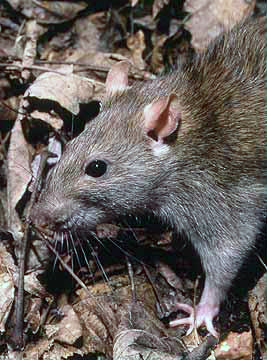 Brown RatRattus norvegicus
-
 Black RatRattus rattus
-
 Polynesian RatRattus exulans
-
 RakaliHydromys chrysogaster
-
 Wood MouseApodemus sylvaticus
-
 Eurasian Harvest MouseMicromys minutus
-
 Bramble Cay MelomysMelomys rubicola
Compare
Questions and answers
What is the scientific name of the Fat Sand Rat?
The scientific name of the Fat Sand Rat is Psammomys obesus. Written with its author, the full name is Psammomys obesus Cretzschmar, 1828.
Which family does the Fat Sand Rat belong to?
Psammomys obesus belongs to the family Muridae, in the order Rodentia and the class Mammalia.
Where is the Fat Sand Rat found?
Checklists and occurrence records place Psammomys obesus in 9 countries, including Israel, Morocco, Egypt, Algeria, Tunisia and Libya.
What is the conservation status of the Fat Sand Rat?
The IUCN Red List category recorded for Psammomys obesus is Least Concern (LC).
What do fat sand rats eat?
Fat Sand Rats feed selectively on stems and leaves of plants belonging to the Amaranthaceae family. They also eat succulent leaves, particularly salt bushes belonging to the Chenopodiaceae family, and have been recorded eating barley grains. They obtain much of their water from water-rich plants such as Atriplex halimus.[17][18][19][20]
Sources
Passages the profile rests on
- The fat sand rat has large black eyes, robust limbs, and heavy feet. Source passage: “They have large, black eyes, robust limbs, and heavy feet with black 4 to 5mm claws.” — animaldiversity.org
- Its dorsal fur ranges from light brown through red to yellow and has black speckling. Source passage: “Dorsal fur varies from light-brown to red to yellow and is speckled with black.” — animaldiversity.org
- Its underbelly is grayish-white, with a lighter area beneath the chin. Source passage: “The underbelly is a grayish/white, with the area under the chin slightly whiter than the rest of the ventral surface.” — animaldiversity.org
- The terminal tuft of the fat sand rat's tail measures approximately 14 mm. Source passage: “The tuft of hair on the end of the tail measures about 14mm.” — animaldiversity.org
- The final third of its tail is black, including the tuft, while the underside is whitish. Source passage: “The last third of the tail is black, including the tuft, while the underside is whitish.” — animaldiversity.org
- The fat sand rat has black skin, which is suggested to protect it from ultraviolet radiation. Source passage: “The skin is also black, most likely to protect them from the sun’s ultraviolet rays.” — animaldiversity.org
- Its black claws measure approximately 4 to 5 mm. Source passage: “heavy feet with black 4 to 5mm claws.” — animaldiversity.org
- The species can be distinguished by its nongrooved incisors and very short, rounded ears. Source passage: “The features used distinguish P. obesus are their nongrooved incisors and their very short, round ears.” — animaldiversity.org
- The head and body length of the fat sand rat ranges from 130 to 185 mm. Source passage: “The head and body length of P. obesus is 130 to 185mm” — animaldiversity.org
- Its tail measures between 110 and 150 mm in length. Source passage: “while the tail length is 110 to 150mm.” — animaldiversity.org
- Male fat sand rats weigh between 125 and 208 g. Source passage: “Males weigh between 125 and 208g” — animaldiversity.org
- Female fat sand rats weigh between 146 and 207 g. Source passage: “and females weigh between 146 and 207g.” — animaldiversity.org
- The fat sand rat primarily inhabits sandy deserts but also occurs in rocky terrain, saline marshes, and loess plains. Source passage: “Fat sand rats are terrestrial mammals that are most often found in sandy deserts, but can be found in rocky terrain, saline-marsh areas, and loess plains.” — animaldiversity.org
- During winter, fat sand rats prefer wadi habitats because of seasonal vegetation growth. Source passage: “During the winter, fat sand rats prefer the wadi habitat as a result of the vegetative growth during this time” — English Wikipedia
- The species constructs burrows near and beneath the bushes where it forages. Source passage: “They live in burrows composed of large mouthed holes which are located near and under the bushes where they forage.” — animaldiversity.org
- The species selects burrowing sites primarily according to the abundance of Amaranthaceae shrubs. Source passage: “primarily selecting burrowing sites based on the abundance of Amaranthaceae shrubs in the area” — English Wikipedia
- The fat sand rat feeds selectively on stems and leaves of plants belonging to the Amaranthaceae family. Source passage: “only eating stems and leaves of plants from the family Amaranthaceae” — English Wikipedia
- The species feeds on succulent plant leaves, particularly salt bushes belonging to the Chenopodiaceae family. Source passage: “Fat sand rats feed on the leaves of succulent plants, particularly salt bushes of the Chenopodiaceae family.” — animaldiversity.org
- Fat sand rats have also been recorded eating barley grains. Source passage: “Fat sand rats have also been known to eat grains such as barley.” — animaldiversity.org
- The species obtains much of its water by consuming water-rich plants such as Atriplex halimus. Source passage: “fat sand rats acquire water in the desert environment is by ingesting plants such as Atriplex halimus, which are high in water content” — English Wikipedia
- The species generally lives in separate burrows rather than forming social groups. Source passage: “Fat sand rats are not social animals. They live in separate burrows” — English Wikipedia
- The species has burrow systems containing three to five openings, tunnels, storage chambers, toilet chambers, and sleeping nests. Source passage: “Fat sand rats have extensive burrows systems with 3-5 openings consisting of complicated tunnels with storage chambers, toilet chambers, and nests for sleeping.” — animaldiversity.org
- Fat sand rats respond to potential predators by adopting an upright posture and surveying their surroundings. Source passage: “they employ anti-predator vigilance behaviour when above ground, and will stop what they are doing to take an upright posture and survey the area” — English Wikipedia
- When frightened, fat sand rats thump their feet, squeak, and retreat into their burrows. Source passage: “the rodents will thump their foot loudly and squeak before retreating into their burrow when frightened.” — English Wikipedia
- Fat sand rats communicate using high-pitched squeaks and foot drumming. Source passage: “Psammomys obesus communicate with each other using high-pitched squeaks and foot drumming.” — animaldiversity.org
- The average male home range measures 189.6 square metres. Source passage: “The average home range is 189.6m^2 for males” — animaldiversity.org
- The average female home range measures 75.8 square metres. Source passage: “and 75.8m^2 for females.” — animaldiversity.org
- The fat sand rat breeds from autumn to early spring. Source passage: “The fat sand rat breeds from autumn to early spring” — English Wikipedia
- Typical litters contain between one and eight pups. Source passage: “produces litters usually consisting of one to eight pups” — English Wikipedia
- Gestation lasts approximately 24 days. Source passage: “Gestation lasts 24 days.” — animaldiversity.org
- Females can become pregnant from approximately 3 to 3.5 months of age. Source passage: “Females can conceive after 3 to 3.5 months of age” — animaldiversity.org
- Males reach sexual maturity at approximately four months of age. Source passage: “sexual maturity for males is reached at 4 months.” — animaldiversity.org
- Young fat sand rats are born hairless and open their eyes after approximately one week. Source passage: “The young are born hairless, opening their eyes after one week” — animaldiversity.org
- Young are weaned at approximately three weeks of age. Source passage: “with weaning occurring after three weeks.” — animaldiversity.org
- Young disperse from their mother at approximately five weeks of age. Source passage: “The young disperse from their mother at about 5 weeks of age.” — English Wikipedia
- Females are the sole caregivers of their offspring. Source passage: “Only female fat sand rats take care of the young.” — animaldiversity.org
- The fat sand rat is used as an animal model for research into diabetes mellitus and its complications. Source passage: “For this reason, fat sand rats are used as a model species to study diabetic mellitus and its complications.” — animaldiversity.org
- The species is used as a model for studies of human seasonal affective disorder. Source passage: “Because they are diurnal, fat sand rats are also used as models for human seasonal affective disorder.” — English Wikipedia
- The fat sand rat has an average wild lifespan of approximately 14 months. Source passage: “P. obesus has an average lifespan of 14 months in the wild” — English Wikipedia
- Fat sand rats can live for three to four years in captivity. Source passage: “those in captivity can live between three and four years.” — animaldiversity.org
Data
- Catalogue of Life, 2026-10-16 XR cc by
- Global Biodiversity Information Facility CC BY 4.0
- Wikidata CC0
- GeoNames CC BY 4.0
- Wikimedia Commons per image; credit shown with each image
- Within the Catalogue of Life, this name comes from The Integrated Taxonomic Information System cc0
References
- In Rüppell, Atlas Reise Nordl. Afr., Zool. Säugeth. p.p. 58, pl. 22 where the name was published
- Ellerman, J. R., and T. C. S. Morrison-Scott. (1966). Checklist of Palaearctic and Indian Mammals 1758 to 1946, 2nd Edition.
- Osborn, Dale J., and Ibrahim Helmy. (1980). The Contemporary Land Mammals of Egypt (Including Sinai). Fieldiana Zoology, N.S., No. 5.
- Wilson, Don E., and DeeAnn M. Reeder, eds. (1993). Mammal Species of the World: A Taxonomic and Geographic Reference, 2nd Ed., 3rd Printing.
- Wilson, Don E., and F. Russell Cole. (2000). Common Names of Mammals of the World.
- Musser, Guy G., and Michael D. Carleton / Wilson, Don E., and DeeAnn M. Reeder, eds. (2005). Superfamily Muroidea. Mammal Species of the World: A Taxonomic and Geographic Reference, 3rd Ed., Vol. 2.
This species in other databases
Page built on 28 November 2026. See how the catalog is made and all sources and licences.
Cite this page
ScientificNames.org. (2026). Psammomys obesus (Fat Sand Rat). Retrieved November 28, 2026, from https://scientificnames.org/species/psammomys-obesus
“Psammomys obesus (Fat Sand Rat).” ScientificNames.org, 2026, scientificnames.org/species/psammomys-obesus. Accessed 28 Nov. 2026.
ScientificNames.org. “Psammomys obesus (Fat Sand Rat).” Accessed November 28, 2026. https://scientificnames.org/species/psammomys-obesus.
@misc{scientificnames_psammomys_obesus_fat_sand_rat,
  author = {{ScientificNames.org}},
  title = {Psammomys obesus (Fat Sand Rat)},
  year = {2026},
  url = {https://scientificnames.org/species/psammomys-obesus},
  note = {Accessed 2026-11-28}
}