Species · Mammals
Summit Rat Rattus baluensis
The scientific name of the Summit Rat is Rattus baluensis. It is a species of mammal in the family Muridae (mice), order Rodentia. The name dates from 1894.

Overview
Rattus baluensis occurs exclusively on Mount Kinabalu and Mount Tambuyukon in Malaysia and is known only from Sabah in northern Borneo. It feeds on sweet, fruity secretions from the lids of giant pitcher plants and has a mutualistic relationship with Nepenthes rajah.
Written 26 November 2026 from the sources listed below. Each statement was checked against the passage it cites; statements that could not be supported were removed.
Conservation
Climate warming is predicted to shift the species' suitable habitat approximately 500 m higher in elevation. The Mount Tambuyukon population is considered at risk from this upward shift.[1][2]
The Mount Kinabalu population is predicted to persist on the mountain's upper slopes.[3]
Habitat
On Mount Tambuyukon, it has been recorded between 2,040 and 2,477 m. On Mount Kinabalu, it has been recorded between 2,670 and 3,426 m.[4][5]
The populations on Mount Kinabalu and Mount Tambuyukon are currently genetically isolated despite the peaks being 18 km apart. The populations were connected during the Holocene.[6][7]
Diet
The Summit Rat feeds on sweet, fruity secretions produced by glands on the lids of giant pitcher plants. It obtains these secretions by licking the lid of a giant montane pitcher plant.[8][9]
Behaviour
The Summit Rat visits giant pitcher plants and defecates inside their traps while feeding. It has been observed balancing over a pitcher plant's opening while licking its lid.[10][11]
The Summit Rat has a mutualistic relationship with the giant pitcher plant Nepenthes rajah.[12]
Classification of the Summit Rat
| Kingdom | Animalia |
|---|---|
| Phylum | Chordata |
| Subphylum | Vertebrata |
| Infraphylum | Gnathostomata |
| Parvphylum | Osteichthyes |
| Megaclass | Tetrapoda |
| Class | Mammalia (Mammal) |
| Subclass | Theria |
| Infraclass | Eutheria |
| Order | Rodentia (Rodent) |
| Suborder | Myomorpha (Mice) |
| Superfamily | Muroidea |
| Family | Muridae (Mice) |
| Subfamily | Murinae (Old World Mice) |
| Genus | Rattus (Old World Rats) |
| Species | Rattus baluensis (Thomas, 1894) |
Where the Summit Rat is found
Checklists and occurrence records place Rattus baluensis in 1 country across Asia. GBIF holds 368 georeferenced records of it.
Countries
Regions and cities with the most records
Range as the checklists state it
Southern Asia
A number beside a place is its count of GBIF occurrence records. A place without a number comes from a checklist alone. Records show where a species has been observed or collected, which can include escapes and vagrants.
Common names
English
- Summit Rat
- Kinabalu Rat
Names in 6 other languages
- Arabic
- جرذ القمة, جرذ كينابالو
- Finnish
- kinabalunrotta
- Japanese
- タカネクマネズミ
- Polish
- szczur wierchowy
- Russian
- Кинабулийская крыса
- Spanish
- Rata del Monte Kinabalu
Synonyms
One other scientific name has been used for this species and is now treated as a synonym of Rattus baluensis.
- Mus baluensis Thomas, 1894
Related species
-
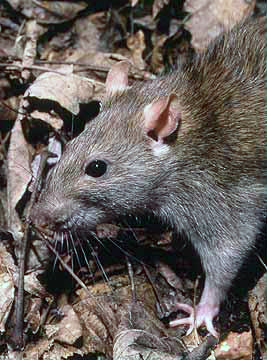 Brown RatRattus norvegicus
-
 Black RatRattus rattus
-
 Polynesian RatRattus exulans
-
 Bush RatRattus fuscipes
-
 Maclear's RatRattus macleari
-
 Bulldog RatRattus nativitatis
-
 Ricefield RatRattus argentiventer
-
 Australian Swamp RatRattus lutreolus
Compare
Questions and answers
What is the scientific name of the Summit Rat?
The scientific name of the Summit Rat is Rattus baluensis. Written with its author, the full name is Rattus baluensis (Thomas, 1894).
Which family does the Summit Rat belong to?
Rattus baluensis belongs to the family Muridae, in the order Rodentia and the class Mammalia.
Where is the Summit Rat found?
Checklists and occurrence records place Rattus baluensis in 1 country: Malaysia.
What is the conservation status of the Summit Rat?
The IUCN Red List category recorded for Rattus baluensis is Least Concern (LC).
What other names does the Summit Rat have?
Rattus baluensis is also known in English as Kinabalu Rat.
What is rats' diet?
The Summit Rat feeds on sweet, fruity secretions produced by glands on the lids of giant pitcher plants.[8]
Sources
Passages the profile rests on
- Climate warming is predicted to shift the species' suitable habitat approximately 500 m higher in elevation. Source passage: “the suitable habitat for Rattus baluensis is expected to shift around 500 m upwards.” — English Wikipedia
- The Mount Tambuyukon population is considered at risk from the predicted upward shift in suitable habitat. Source passage: “This will put the population in Mount Tambuyukon at risk.” — English Wikipedia
- The Mount Kinabalu population is predicted to persist on the mountain's upper slopes. Source passage: “the population in Mount Kinabalu will likely survive in its upper slopes.” — English Wikipedia
- The species has been recorded between 2,040 and 2,477 m on Mount Tambuyukon. Source passage: “2,040 to 2,477 m on Mt. Tambuyukon” — English Wikipedia
- The species has been recorded between 2,670 and 3,426 m on Mount Kinabalu. Source passage: “2,670 to 3,426 m on Mt. Kinabalu.” — English Wikipedia
- The populations on Mount Kinabalu and Mount Tambuyukon are currently genetically isolated despite the peaks being 18 km apart. Source passage: “nowadays they are genetically isolated despite being 18 km apart.” — English Wikipedia
- The populations on the two mountain peaks were connected during the Holocene. Source passage: “The rat populations from these two peaks were connected in the Holocene.” — English Wikipedia
- The species feeds on sweet, fruity secretions produced by glands on the lids of giant pitcher plants. Source passage: “it defecates into the plant's traps while visiting them to feed on sweet, fruity secretions from glands on the pitcher lids.” — English Wikipedia
- The species feeds by licking secretions from the lid of a giant montane pitcher plant. Source passage: “A summit rat, Rattus baluensis, feeding from the lid of a giant montane pitcher plant.” — nhm.ac.uk
- The species visits giant pitcher plants and defecates inside their traps while feeding. Source passage: “it defecates into the plant's traps while visiting them to feed” — English Wikipedia
- The species has been observed balancing over the opening of a pitcher plant while licking its lid. Source passage: “A rat balancing over a pitcher plant opening while licking its lid.” — nhm.ac.uk
- The species has a mutualistic relationship with the giant pitcher plant Nepenthes rajah. Source passage: “The summit rat has a mutualistic relationship with a species of giant pitcher plant, Nepenthes rajah.” — English Wikipedia
Data
- Catalogue of Life, 2026-10-16 XR cc by
- Global Biodiversity Information Facility CC BY 4.0
- Wikidata CC0
- GeoNames CC BY 4.0
- Wikimedia Commons per image; credit shown with each image
- Within the Catalogue of Life, this name comes from The Integrated Taxonomic Information System cc0
References
- Ann. Mag. Nat. Hist., ser. 6 vol.14 p.454 where the name was published
- Wilson, Don E., and DeeAnn M. Reeder, eds. (1993). Mammal Species of the World: A Taxonomic and Geographic Reference, 2nd Ed., 3rd Printing.
- Musser, Guy G., and Michael D. Carleton / Wilson, Don E., and DeeAnn M. Reeder, eds. (2005). Superfamily Muroidea. Mammal Species of the World: A Taxonomic and Geographic Reference, 3rd Ed., Vol. 2.
This species in other databases
Page built on 29 November 2026. See how the catalog is made and all sources and licences.
Cite this page
ScientificNames.org. (2026). Rattus baluensis (Summit Rat). Retrieved November 29, 2026, from https://scientificnames.org/species/rattus-baluensis
“Rattus baluensis (Summit Rat).” ScientificNames.org, 2026, scientificnames.org/species/rattus-baluensis. Accessed 29 Nov. 2026.
ScientificNames.org. “Rattus baluensis (Summit Rat).” Accessed November 29, 2026. https://scientificnames.org/species/rattus-baluensis.
@misc{scientificnames_rattus_baluensis_summit_rat,
  author = {{ScientificNames.org}},
  title = {Rattus baluensis (Summit Rat)},
  year = {2026},
  url = {https://scientificnames.org/species/rattus-baluensis},
  note = {Accessed 2026-11-29}
}