Species · Mammals
Sahyadris Forest Rat Rattus satarae
The scientific name of the Sahyadris Forest Rat is Rattus satarae. It is a species of mammal in the family Muridae (mice), order Rodentia. The name dates from 1918.

Overview
The Sahyadris Forest Rat is a mammal classified within the genus Rattus. It is native to the northern Western Ghats of India and occurs in Satara in Maharashtra, the Nilgiri Mountains in Tamil Nadu, and Kodagu district in Karnataka. It has a long, soft golden-brown coat, a white underside, and a very long tail.
Written 26 November 2026 from the sources listed below. Each statement was checked against the passage it cites; statements that could not be supported were removed.
Similar species
The Sahyadris Forest Rat was originally described as a subspecies of the black rat (Rattus rattus) because of its similar appearance. DNA evidence distinguishes it from the black rat as a separate species, with no interbreeding reported between them despite shared habitat.[1][2]
The similarities between the Sahyadris Forest Rat and the black rat are attributed to convergence associated with sharing an ecological niche.[3]
Appearance
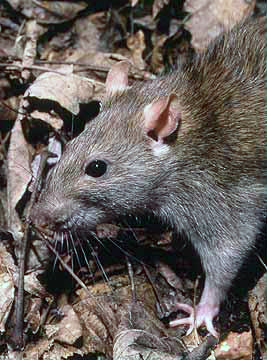
The Sahyadris Forest Rat has a long, soft coat with a golden-brown back and a white underside. It has a very long tail.[4][5]
Habitat
The Sahyadris Forest Rat has been recorded in moist deciduous and evergreen forests of the northern Western Ghats. It occurs at elevations between 700 and 2,150 metres.[6][7]
Diet
The Sahyadris Forest Rat feeds on fruits and insects.[8]
Behaviour
The Sahyadris Forest Rat lives almost exclusively in nests or burrows in the middle or upper canopy. It occasionally descends to the ground near the base of a tree or vine.[9][10]
Conservation
The Sahyadris Forest Rat is classified as vulnerable by the IUCN. It is restricted to less than 2,000 square kilometres of remaining forest habitat and occurs in highly fragmented locations.[11][12][13]
The quality of its habitat and the number of mature individuals in its population are declining. The species is highly sensitive to changes in its habitat.[14][15]
Threats to the Sahyadris Forest Rat include forest conversion to plantations, logging, pesticide use, and the planting of exotic species.[16]
The species was most recently assessed for the IUCN Red List in 2016.[17]
Classification of the Sahyadris Forest Rat
| Kingdom | Animalia |
|---|---|
| Phylum | Chordata |
| Subphylum | Vertebrata |
| Infraphylum | Gnathostomata |
| Parvphylum | Osteichthyes |
| Megaclass | Tetrapoda |
| Class | Mammalia (Mammal) |
| Subclass | Theria |
| Infraclass | Eutheria |
| Order | Rodentia (Rodent) |
| Suborder | Myomorpha (Mice) |
| Superfamily | Muroidea |
| Family | Muridae (Mice) |
| Subfamily | Murinae (Old World Mice) |
| Genus | Rattus (Old World Rats) |
| Species | Rattus satarae Hinton, 1918 |
Where the Sahyadris Forest Rat is found
Checklists and occurrence records place Rattus satarae in 1 country across Asia. GBIF holds 105 georeferenced records of it.
Countries
Regions and cities with the most records
- Tamil Nadu, India 27
- Valparai, India 22
- Kottur, India 8
- Coonoor, India 3
- Kērkandi, India 3
- Vettaikkaranpudur, India 3
- Wellington, India 3
Range as the checklists state it
Southern Asia
A number beside a place is its count of GBIF occurrence records. A place without a number comes from a checklist alone. Records show where a species has been observed or collected, which can include escapes and vagrants.
Common names
English
- Sahyadris Forest Rat
Names in 2 other languages
- Japanese
- ガーツクマネズミ
- Polish
- szczur dekański
Synonyms
One other scientific name has been used for this species and is now treated as a synonym of Rattus satarae.
- Rattus rattus satarae Hinton, 1918
Related species
-
 Brown RatRattus norvegicus
-
 Black RatRattus rattus
-
 Polynesian RatRattus exulans
-
 Bush RatRattus fuscipes
-
 Maclear's RatRattus macleari
-
 Bulldog RatRattus nativitatis
-
 Ricefield RatRattus argentiventer
-
 Australian Swamp RatRattus lutreolus
Compare
Questions and answers
What is the scientific name of the Sahyadris Forest Rat?
The scientific name of the Sahyadris Forest Rat is Rattus satarae. Written with its author, the full name is Rattus satarae Hinton, 1918.
Which family does the Sahyadris Forest Rat belong to?
Rattus satarae belongs to the family Muridae, in the order Rodentia and the class Mammalia.
Where is the Sahyadris Forest Rat found?
Checklists and occurrence records place Rattus satarae in 1 country: India.
What is the conservation status of the Sahyadris Forest Rat?
The IUCN Red List category recorded for Rattus satarae is Vulnerable (VU).
What is the common name for Rattus rattus?
Rattus rattus is referred to as the black rat.[1]
What do rats eat in the rainforest?
The Sahyadris Forest Rat feeds on fruits and insects.[8]
Sources
Passages the profile rests on
- The species was originally described as a subspecies of the black rat (Rattus rattus) because of its similar appearance. Source passage: “It was originally described as a subspecies of the black rat (Rattus rattus) due to its similar appearance.” — English Wikipedia
- DNA evidence distinguishes the Sahyadris Forest Rat from the black rat as a separate species, with no interbreeding reported between them despite shared habitat. Source passage: “DNA evidence has shown that they are two distinct species with no interbreeding despite them occupying the same habitat.” — English Wikipedia
- The similarities between the Sahyadris Forest Rat and the black rat are attributed to convergence associated with sharing an ecological niche. Source passage: “Their similarities are thought to be due to convergence as a result of sharing the same ecological niche.” — English Wikipedia
- The species has a long, soft coat with a golden-brown back and a white underside. Source passage: “R. satarae has a long, soft coat with a golden brown back and white underside.” — English Wikipedia
- The species has a very long tail. Source passage: “Its tail is very long.” — English Wikipedia
- The species has been recorded in moist deciduous and evergreen forests of the northern Western Ghats. Source passage: “The species has only been seen in the moist deciduous and evergreen forests of the northern Western Ghats are of India” — English Wikipedia
- The species occurs at elevations between 700 and 2,150 metres. Source passage: “between 700 and 2,150 m in altitude.” — English Wikipedia
- The Sahyadris Forest Rat feeds on fruits and insects. Source passage: “It eats fruits and insects.” — English Wikipedia
- The species lives almost exclusively in nests or burrows in the middle or upper canopy. Source passage: “It lives almost exclusively in nests or burrows in the middle or high canopy” — English Wikipedia
- The species occasionally descends to the ground near the base of a tree or vine. Source passage: “only occasionally going to the ground near the base of a tree or vine.” — English Wikipedia
- The Sahyadris Forest Rat is classified as vulnerable by the IUCN. Source passage: “R. satarae is listed as vulnerable by the IUCN” — English Wikipedia
- The species is restricted to less than 2,000 square kilometres of remaining forest habitat. Source passage: “due to it being restricted to less than 2,000 km2 of forest habitat that remains.” — English Wikipedia
- The species occurs in highly fragmented locations and is vulnerable to habitat changes. Source passage: “The locations it is found in are highly fragmented and it is vulnerable to changes in its habitat.” — English Wikipedia
- The quality of the species' habitat and the number of mature individuals in its population are declining. Source passage: “The species is facing a decline in the quality of its habitat and the number of mature individuals in the population.” — English Wikipedia
- The species is highly sensitive to changes in its habitat. Source passage: “It is highly sensitive to changes in its habitat.” — English Wikipedia
- Threats to the species include forest conversion to plantations, logging, pesticide use, and the planting of exotic species. Source passage: “The main threats faced by the species include loss of forests to plantations, logging, pesticide use, and planting of exotic species.” — English Wikipedia
- The species was most recently assessed for the IUCN Red List in 2016. Source passage: “has most recently been assessed for The IUCN Red List of Threatened Species in 2016.” — iucnredlist.org
- The Sahyadris Forest Rat is native to the northern Western Ghats of India. Source passage: “It is native to the northern Western Ghats in India” — English Wikipedia
Data
- Catalogue of Life, 2026-10-16 XR cc by
- Global Biodiversity Information Facility CC BY 4.0
- Wikidata CC0
- GeoNames CC BY 4.0
- Wikimedia Commons per image; credit shown with each image
- Within the Catalogue of Life, this name comes from The Integrated Taxonomic Information System cc0
References
- J. Bombay Nat. Hist. Soc. vol.26 p.87 where the name was published
- Ellerman, J. R., and T. C. S. Morrison-Scott. (1966). Checklist of Palaearctic and Indian Mammals 1758 to 1946, 2nd Edition.
- Musser, Guy G., and Michael D. Carleton / Wilson, Don E., and DeeAnn M. Reeder, eds. (2005). Superfamily Muroidea. Mammal Species of the World: A Taxonomic and Geographic Reference, 3rd Ed., Vol. 2.
This species in other databases
Page built on 27 November 2026. See how the catalog is made and all sources and licences.
Cite this page
ScientificNames.org. (2026). Rattus satarae (Sahyadris Forest Rat). Retrieved November 27, 2026, from https://scientificnames.org/species/rattus-satarae
“Rattus satarae (Sahyadris Forest Rat).” ScientificNames.org, 2026, scientificnames.org/species/rattus-satarae. Accessed 27 Nov. 2026.
ScientificNames.org. “Rattus satarae (Sahyadris Forest Rat).” Accessed November 27, 2026. https://scientificnames.org/species/rattus-satarae.
@misc{scientificnames_rattus_satarae_sahyadris_forest_rat,
  author = {{ScientificNames.org}},
  title = {Rattus satarae (Sahyadris Forest Rat)},
  year = {2026},
  url = {https://scientificnames.org/species/rattus-satarae},
  note = {Accessed 2026-11-27}
}