Species · Mammals
Malayan Field Rat Rattus tiomanicus
The scientific name of the Malayan Field Rat is Rattus tiomanicus. It is a species of mammal in the family Muridae (mice), order Rodentia. The name dates from 1900.
- Scientific name
- Rattus tiomanicus (Miller, 1900)
- Common name
- Malayan Field Rat
- Genus
- Rattus
- Family
- Muridae (Mice)
- Order
- Rodentia
- Class
- Mammalia
- Red List category
- LC Least Concern
- Recorded in
- 5 countries
- Name status
- accepted in the Catalogue of Life
Overview
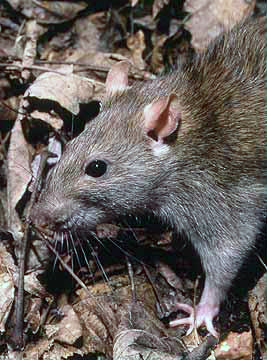
The Malayan Field Rat is a mammal in the family Muridae. It occurs in Malaysia, Thailand, Sumatra, Borneo, the Philippines and numerous smaller islands. It has smooth, flattened fur with short spines, grizzled olive-brown dorsal fur and whitish underparts.
Written 26 November 2026 from the sources listed below. Each statement was checked against the passage it cites; statements that could not be supported were removed.
Appearance
The Malayan Field Rat has large ears that are nearly naked. Its fur is smooth and flattened, with short spines interspersed throughout.[1][2]
Its dorsal fur is grizzled olive-brown with scattered medium-length black guard hairs, while its underparts are whitish. Its tail is uniformly dark brown and approximately as long as its body.[3][4][5]
Its feet are broad, with fine ridges on their soles that assist climbing.[6]
Its head-and-body length ranges from 140 to 190 mm, and its tail measures between 150 and 200 mm long. Its body weight ranges from 55 to 150 g.[7][8][9]
Habitat
The Malayan Field Rat inhabits primary and secondary forests, including coastal forests. It is seldom found in dipterocarp forests.[10][11]
It also inhabits plantations, shrubby areas, grasslands and gardens. It seldom enters buildings.[12][13][14]
Diet
The Malayan Field Rat eats both plant and animal matter. Oil palm fruits are among its food sources.[15][16]
Behaviour
The Malayan Field Rat is nocturnal and mainly arboreal. It climbs well and spends considerable time in trees while also foraging on the ground.[17][18][19]
It shelters in log piles and heaps of palm fronds. It also shelters beneath fallen logs and in palm-tree crowns.[20][21]
Similar species
The Malayan Field Rat differs from Annandale's rat by having sleek fur with spines and fewer mammary glands.[22]
It differs from the ricefield rat by having plain white underparts and lacking an orange spot in front of the ear.[23]
Conservation
The Malayan Field Rat is assessed as being of Least Concern by the International Union for Conservation of Nature. No particular threats to the species have been identified.[24][25]
It has a wide geographical range and a large total population. The species is abundant and adaptable.[26][27]
Uses
The Malayan Field Rat is regarded as a pest in some areas.[28]
Classification of the Malayan Field Rat
| Kingdom | Animalia |
|---|---|
| Phylum | Chordata |
| Subphylum | Vertebrata |
| Infraphylum | Gnathostomata |
| Parvphylum | Osteichthyes |
| Megaclass | Tetrapoda |
| Class | Mammalia (Mammal) |
| Subclass | Theria |
| Infraclass | Eutheria |
| Order | Rodentia (Rodent) |
| Suborder | Myomorpha (Mice) |
| Superfamily | Muroidea |
| Family | Muridae (Mice) |
| Subfamily | Murinae (Old World Mice) |
| Genus | Rattus (Old World Rats) |
| Species | Rattus tiomanicus (Miller, 1900) |
Where the Malayan Field Rat is found
Checklists and occurrence records place Rattus tiomanicus in 5 countries across Asia. GBIF holds 1,933 georeferenced records of it.
Countries
Regions and cities with the most records
- Selangor, Malaysia 48
- Batu Caves, Malaysia 47
- Selayang Baru Utara, Malaysia 47
- Taman Greenwood, Malaysia 47
- Taman Melati, Malaysia 47
- Sentul, Malaysia 46
- Setapak, Malaysia 46
- Titiwangsa, Malaysia 46
- Wangsa Maju, Malaysia 46
- Bukit Bintang, Malaysia 45
- Taman Melawati, Malaysia 44
- Ulu Kelang, Malaysia 44
- Ampang, Malaysia 40
- Boyolali, Indonesia 40
- Sabah, Malaysia 38
- Sarawak, Malaysia 37
- Ciampea, Indonesia 25
- Muntilan, Indonesia 25
- Aceh, Indonesia 23
- Baturaden, Indonesia 23
- Wonosobo, Indonesia 22
- Jakarta, Indonesia 21
- Randudongkal, Indonesia 21
- Utan, Indonesia 21
- Salatiga, Indonesia 20
- Ceper, Indonesia 17
- Colomadu, Indonesia 17
- Delanggu, Indonesia 17
- Gatak, Indonesia 17
- Jogonalan, Indonesia 17
- Karanganom, Indonesia 17
- Kartasura, Indonesia 17
- Kebonarun, Indonesia 17
- Kepong, Malaysia 17
- Klaten, Indonesia 17
- Ngemplak, Indonesia 17
Range as the checklists state it
Southern Asia
A number beside a place is its count of GBIF occurrence records. A place without a number comes from a checklist alone. Records show where a species has been observed or collected, which can include escapes and vagrants.
Common names
English
- Malayan Field Rat
- Malaysian Field Rat
- Malaysian Wood Rat
Names in 9 other languages
- Arabic
- جرذ الحقل الماليزي
- Finnish
- sundanrotta
- Indonesian
- Tikus pohon
- Japanese
- マレーシアクマネズミ
- Malay
- Tikus Belukar
- Polish
- szczur malajski
- Russian
- Малайская полевая крыса
- Spanish
- Rata de Sonda
- Thai
- หนูป่ามาเลย์
Synonyms
36 other scientific names have been used for this species and are now treated as synonyms of Rattus tiomanicus.
- Epimys maerens Miller, 1911
- Epimys mara Miller, 1913
- Epimys neglectus lamucotanus Lyon, 1911
- Epimys rattus pauper Miller, 1913
- Epimys rattus viclana Miller, 1913
- Epimys roa Miller, 1913
- Epimys tingius Miller, 1913
- Epimys tua Miller, 1913
- Mus jalorensis Bonhote, 1903
- Mus jarak Bonhote, 1905
- Mus julianus Miller, 1903
- Mus rattus rhionis Thomas & Wroughton, 1909
- Mus rattus rumpia Robinson & Kloss, 1911
- Mus siantanicus Miller, 1900
- Mus tambelanicus Miller, 1900
- Mus tiomanicus G. S. Miller, 1900
- Rattus rattus ambersoni Schwarz & Schwarz, 1967
- Rattus rattus banguei Chasen & Kloss, 1932
- Rattus rattus batin Robinson, 1916
- Rattus rattus delirius Sody, 1941
- Rattus rattus generatius Sody, 1941
- Rattus rattus jemuris Chasen & Kloss, 1931
- Rattus rattus kabanicus Hill, 1960
- Rattus rattus lasurius Sody, 1941
- Rattus rattus luxuriosus Chasen, 1935
- Rattus rattus mangalumis Kloss, 1931
- Rattus rattus payanus Chasen & Kloss, 1931
- Rattus rattus pemanggis Chasen, 1940
- Rattus rattus perhentianus Chasen, 1940
- Rattus rattus pharus Hill, 1960
- Rattus rattus piperis Schwarz & Schwarz, 1967
- Rattus rattus roquei Sody, 1929
- Rattus rattus sebasianus Sody, 1941
- Rattus rattus sribuatensis Hill, 1960
- Rattus rattus terutavensis Hill, 1960
- Rattus rattus vernalus Sody, 1940
Related species
-
 Brown RatRattus norvegicus
-
 Black RatRattus rattus
-
 Polynesian RatRattus exulans
-
 Bush RatRattus fuscipes
-
 Maclear's RatRattus macleari
-
 Bulldog RatRattus nativitatis
-
 Ricefield RatRattus argentiventer
-
 Australian Swamp RatRattus lutreolus
Compare
Questions and answers
What is the scientific name of the Malayan Field Rat?
The scientific name of the Malayan Field Rat is Rattus tiomanicus. Written with its author, the full name is Rattus tiomanicus (Miller, 1900).
Which family does the Malayan Field Rat belong to?
Rattus tiomanicus belongs to the family Muridae, in the order Rodentia and the class Mammalia.
Where is the Malayan Field Rat found?
Checklists and occurrence records place Rattus tiomanicus in 5 countries: Indonesia, Malaysia, Thailand, Philippines and Vietnam.
What is the conservation status of the Malayan Field Rat?
The IUCN Red List category recorded for Rattus tiomanicus is Least Concern (LC).
What other names does the Malayan Field Rat have?
Rattus tiomanicus is also known in English as Malaysian Field Rat and Malaysian Wood Rat.
Sources
Passages the profile rests on
- The species has large ears that are nearly naked. Source passage: “The ears are large and nearly naked.” — English Wikipedia
- Its fur is smooth and flattened, with short spines interspersed throughout. Source passage: “The fur is smooth and flattened, interspersed with short spines.” — English Wikipedia
- Its dorsal fur is grizzled olive-brown with scattered medium-length black guard hairs. Source passage: “The dorsal pelage is a grizzled olive-brown with scattered medium-length black guard hairs” — English Wikipedia
- Its underparts are whitish. Source passage: “the underparts are whitish.” — English Wikipedia
- Its tail is uniformly dark brown and approximately as long as its body. Source passage: “The tail, which is a similar length to the body, is a uniform dark brown.” — English Wikipedia
- Its feet are broad, with fine ridges on their soles that assist climbing. Source passage: “The feet are broad, and the soles have fine ridges for climbing.” — English Wikipedia
- Its head-and-body length ranges from 140 to 190 mm. Source passage: “The Malayan field rat has a head-and-body length of 140 to 190 mm (5.5 to 7.5 in)” — English Wikipedia
- Its tail measures between 150 and 200 mm long. Source passage: “and a tail 150 to 200 mm (6 to 8 in).” — English Wikipedia
- Its body weight ranges from 55 to 150 g. Source passage: “It has a weight of between 55 and 150 g (2 and 5 oz).” — English Wikipedia
- It inhabits primary and secondary forests, including coastal forests. Source passage: “Its typical habitat is primary and secondary forest, including coastal forest” — English Wikipedia
- It is seldom found in dipterocarp forests. Source passage: “but it is seldom found in dipterocarp forests.” — English Wikipedia
- It also inhabits plantations. Source passage: “It is also found in plantations, shrubby areas, grassland and gardens” — English Wikipedia
- It also occurs in shrubby areas, grasslands and gardens. Source passage: “It is also found in plantations, shrubby areas, grassland and gardens” — English Wikipedia
- It seldom enters buildings. Source passage: “but seldom invades buildings.” — English Wikipedia
- Its diet includes both plant and animal matter. Source passage: “It feeds on both vegetable and animal matter” — English Wikipedia
- Oil palm fruits are among its food sources. Source passage: “with oil palm fruits forming part of its diet.” — English Wikipedia
- The species is nocturnal. Source passage: “The Malayan field rat is nocturnal.” — English Wikipedia
- It is mainly arboreal. Source passage: “It is nocturnal and mainly arboreal” — English Wikipedia
- It climbs well and spends considerable time in trees while also foraging on the ground. Source passage: “It climbs well and spends much of its time in trees as well as foraging on the ground.” — English Wikipedia
- It shelters in log piles and heaps of palm fronds. Source passage: “It hides in log piles, heaps of palm fronds” — English Wikipedia
- It also shelters beneath fallen logs and in palm-tree crowns. Source passage: “under fallen logs and in the crowns of palm trees.” — English Wikipedia
- It differs from Annandale's rat by having sleek fur with spines and fewer mammary glands. Source passage: “It differs from Annandale's rat (Rattus annandalei) in having sleek fur with spines and fewer mammae” — English Wikipedia
- It differs from the ricefield rat by having plain white underparts and lacking an orange spot in front of the ear. Source passage: “from the ricefield rat (Rattus argentiventer) in having plain white underparts and lacking an orange spot in front of the ear.” — English Wikipedia
- The species is assessed as being of Least Concern by the International Union for Conservation of Nature. Source passage: “The International Union for Conservation of Nature has assessed its conservation status as being of "least concern".” — English Wikipedia
- No particular threats to the species have been identified. Source passage: “No particular threats have been identified” — English Wikipedia
- The species has a wide geographical range and a large total population. Source passage: “a very wide range, a large total population” — English Wikipedia
- The species is abundant and adaptable. Source passage: “The Malayan field rat is an abundant and adaptable species” — English Wikipedia
- The species is regarded as a pest in some areas. Source passage: “in some areas it is regarded as a pest.” — English Wikipedia
Data
- Catalogue of Life, 2026-10-16 XR cc by
- Global Biodiversity Information Facility CC BY 4.0
- Wikidata CC0
- GeoNames CC BY 4.0
- Within the Catalogue of Life, this name comes from The Integrated Taxonomic Information System cc0
References
- Proc. Wash. Acad. Sci. vol.2 p.212 where the name was published
- Wilson, Don E., and DeeAnn M. Reeder, eds. (1993). Mammal Species of the World: A Taxonomic and Geographic Reference, 2nd Ed., 3rd Printing.
- Musser, Guy G., and Michael D. Carleton / Wilson, Don E., and DeeAnn M. Reeder, eds. (2005). Superfamily Muroidea. Mammal Species of the World: A Taxonomic and Geographic Reference, 3rd Ed., Vol. 2.
This species in other databases
Page built on 27 November 2026. See how the catalog is made and all sources and licences.
Cite this page
ScientificNames.org. (2026). Rattus tiomanicus (Malayan Field Rat). Retrieved November 27, 2026, from https://scientificnames.org/species/rattus-tiomanicus
“Rattus tiomanicus (Malayan Field Rat).” ScientificNames.org, 2026, scientificnames.org/species/rattus-tiomanicus. Accessed 27 Nov. 2026.
ScientificNames.org. “Rattus tiomanicus (Malayan Field Rat).” Accessed November 27, 2026. https://scientificnames.org/species/rattus-tiomanicus.
@misc{scientificnames_rattus_tiomanicus_malayan_field_rat,
  author = {{ScientificNames.org}},
  title = {Rattus tiomanicus (Malayan Field Rat)},
  year = {2026},
  url = {https://scientificnames.org/species/rattus-tiomanicus},
  note = {Accessed 2026-11-27}
}