Species · Mammals
Pale Field Rat Rattus tunneyi
The scientific name of the Pale Field Rat is Rattus tunneyi. It is a species of mammal in the family Muridae (mice), order Rodentia. The name dates from 1904.

Overview
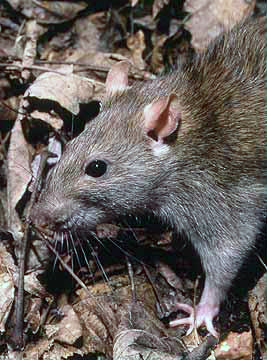
Rattus tunneyi is endemic to Australia and currently occurs in coastal and sub-coastal regions. It has toffee-brown upper fur grading into a cream or greyish-white underside and a tail shorter than its head-and-body length.
Written 26 November 2026 from the sources listed below. Each statement was checked against the passage it cites; statements that could not be supported were removed.
Appearance
The Pale Field Rat has toffee-brown upper fur grading into a cream or greyish-white underside. Its upper back hair is slate-grey beneath a sandy-buff outer colour.[1][2]
It has a rounded, relatively broad head, pale pinkish ears measuring 15–20 mm in length and large, bulging eyes. The upper surfaces of its feet are covered in white hair.[3][4][5][6]
Its head-and-body length is 120–195 mm, and its tail measures 80–150 mm and is shorter than its head-and-body length. Its recorded weight ranges from 50 to 210 grams.[7][8][9]
Its fine hair is approximately 10 mm long, while other hairs reach about twice that length. Females have ten nipples arranged as one pectoral pair and four inguinal pairs.[10][11]
Habitat
The Pale Field Rat inhabits tall grasslands in northern Australia. Its preferred habitats include woodlands, dense sedges, grassy understoreys in monsoon forests and wetter open grasslands.[12][13]
It is commonly associated with vegetation surrounding watercourses and friable soils. It has also been observed in sugar-cane fields on the eastern coast of Australia.[14][15]
In Kakadu National Park, it has been observed at campsites and on rocky slopes. It rests during the day in shallow burrows dug in loose, crumbly soil.[16][17]
Diet
The Pale Field Rat is herbivorous and feeds on grass stems, seeds, tubers and roots. It digs to uncover underground food resources such as tubers.[18][19]
Behaviour
The Pale Field Rat is nocturnal and terrestrial, foraging across the soil surface. It rests during the day in shallow burrows.[20][21][17]
Individuals generally have a docile temperament and live in loosely connected, scattered groups. Runways between nests indicate interactions between individuals, although the degree of sociality is unknown.[22][23]
The species is a poor coloniser that does not disperse easily.[24]
Reproduction and life cycle
Breeding in the species generally takes place during the austral autumn, occurring later in the year in north-western populations. Breeding in the eastern subspecies occurs primarily during the austral spring, from September to November.[25][26]
The northernmost populations reproduce during the dry season from March to August. Litters typically contain approximately four young, with reported sizes ranging from two to eleven.[27][28]
The oestrus cycle lasts approximately four to five days. The gestation period lasts 21–22 days.[29][30]
Conservation
The Pale Field Rat has undergone substantial contraction of its former distribution and is regionally extinct in some areas. Northern Territory populations have declined substantially since European colonisation.[31][32]
One study recorded a 15% reduction in extent of occurrence and a 35% reduction in the breadth of occupied environmental space in Northern Territory populations.[33]
Feral cats exert predation pressure on the species. Cattle introduction has degraded local habitat through soil compaction.[34][35]
Uses
The Pale Field Rat has been identified as a damaging pest in Queensland because it feeds on hoop pine roots and damages partially matured plantation trees.[36]
Classification of the Pale Field Rat
| Kingdom | Animalia |
|---|---|
| Phylum | Chordata |
| Subphylum | Vertebrata |
| Infraphylum | Gnathostomata |
| Parvphylum | Osteichthyes |
| Megaclass | Tetrapoda |
| Class | Mammalia (Mammal) |
| Subclass | Theria |
| Infraclass | Eutheria |
| Order | Rodentia (Rodent) |
| Suborder | Myomorpha (Mice) |
| Superfamily | Muroidea |
| Family | Muridae (Mice) |
| Subfamily | Murinae (Old World Mice) |
| Genus | Rattus (Old World Rats) |
| Species | Rattus tunneyi (Thomas, 1904) |
Where the Pale Field Rat is found
Checklists and occurrence records place Rattus tunneyi in 1 country across Oceania. GBIF holds 10,568 georeferenced records of it.
Countries
Regions and cities with the most records
- Western Australia, Australia 5,751
- Northern Territory, Australia 2,444
- Queensland, Australia 1,315
- New South Wales, Australia 497
- Palmerston, Australia 67
- Darwin, Australia 41
- Mackay, Australia 30
- Brisbane, Australia 29
- Alice Springs, Australia 21
- Caloundra, Australia 16
- Toowoomba, Australia 15
- Maryborough, Australia 13
- Bundaberg, Australia 11
- Sunshine Coast, Australia 7
- South Australia, Australia 5
- Gympie, Australia 4
- Grafton, Australia 3
- Hervey Bay, Australia 3
Range as the checklists state it
Australia
A number beside a place is its count of GBIF occurrence records. A place without a number comes from a checklist alone. Records show where a species has been observed or collected, which can include escapes and vagrants.
Common names
English
- Pale Field Rat
- Australian Pale Field Rat
Names in 7 other languages
- Arabic
- جرذ الحقل الشاحب
- Czech
- krysa Tunneyova
- Finnish
- australianrotta
- German
- Blasse Australische Feldratte, Blasse Feldratte
- Japanese
- タンネイクマネズミ
- Polish
- szczur blady
- Russian
- Бледная полевая крыса
Synonyms
8 other scientific names have been used for this species and are now treated as synonyms of Rattus tunneyi.
- Mus culmorum Thomas & Dollman, 1909
- Mus tunneyi Thomas, 1904
- Mus woodwardi Thomas, 1908
- Rattus culmorum apex Troughton, 1939
- Rattus culmorum austrinus Thomas, 1921
- Rattus culmorum vallesius Thomas, 1921
- Rattus melvilleus Thomas, 1921
- Rattus tunneyi dispar Brazenor, 1936
Related species
-
 Brown RatRattus norvegicus
-
 Black RatRattus rattus
-
 Polynesian RatRattus exulans
-
 Bush RatRattus fuscipes
-
 Maclear's RatRattus macleari
-
 Bulldog RatRattus nativitatis
-
 Ricefield RatRattus argentiventer
-
 Australian Swamp RatRattus lutreolus
Compare
Questions and answers
What is the scientific name of the Pale Field Rat?
The scientific name of the Pale Field Rat is Rattus tunneyi. Written with its author, the full name is Rattus tunneyi (Thomas, 1904).
Which family does the Pale Field Rat belong to?
Rattus tunneyi belongs to the family Muridae, in the order Rodentia and the class Mammalia.
Where is the Pale Field Rat found?
Checklists and occurrence records place Rattus tunneyi in 1 country: Australia.
What is the conservation status of the Pale Field Rat?
The IUCN Red List category recorded for Rattus tunneyi is Least Concern (LC).
What other names does the Pale Field Rat have?
Rattus tunneyi is also known in English as Australian Pale Field Rat.
What do field rats eat?
The Pale Field Rat is herbivorous and feeds on grass stems, seeds, tubers and roots. It digs to uncover underground food resources such as tubers.[18][19]
What type of habitat do rats live in?
The Pale Field Rat inhabits tall grasslands, woodlands, dense sedges, grassy understoreys in monsoon forests and wetter open grasslands. It is commonly associated with vegetation surrounding watercourses and friable soils.[12][13][14]
What is the main diet of a rat?
The Pale Field Rat is herbivorous and feeds on grass stems, seeds, tubers and roots.[18]
Sources
Passages the profile rests on
- The species has toffee-brown upper fur grading into a cream or greyish-white underside. Source passage: “The upper side of the pelage is a toffee-like shade of brown, said to be appealing in appearance, which grades into the lighter cream or greyish white at the underside.” — English Wikipedia
- The hair on the upper back is slate-grey beneath a sandy-buff outer colour. Source passage: “The hair across their upper back is slate-grey beneath with a sandy-buff colour overlaying this.” — English Wikipedia
- The species has a rounded, relatively broad head. Source passage: “The pale field rat is a medium-sized species of Rattus, with a rounded and comparatively broad head.” — English Wikipedia
- Its ears are pale pinkish and measure 15–20 mm in length. Source passage: “Rattus tunneyi has pale pinkish ears that are 15 to 20 mm long” — English Wikipedia
- Its eyes are large and bulging in appearance. Source passage: “and large eyes that have a bulging appearance.” — English Wikipedia
- The upper surfaces of its feet are covered in white hair. Source passage: “The feet of these rodents are covered in white hair at the upper side.” — English Wikipedia
- The species has a head-and-body length of 120–195 mm. Source passage: “head and body length (120 to 195 mm).” — English Wikipedia
- Its tail measures 80–150 mm and is shorter than its head-and-body length. Source passage: “Their tail length (80 to 150 mm) which is obviously shorter than the combined head and body length (120 to 195 mm).” — English Wikipedia
- Its recorded weight ranges from 50 to 210 grams. Source passage: “Their weight range is 50 to 210 grams.” — English Wikipedia
- Its fine hair is approximately 10 mm long, with other hairs reaching about twice that length. Source passage: “Their fine hair is around 10 mm and interspersed with hairs around twice this length.” — English Wikipedia
- Females have ten nipples arranged as one pectoral pair and four inguinal pairs. Source passage: “The female has a total of ten nipples, one pectoral and four inguinal pairs of teats.” — English Wikipedia
- The species inhabits tall grasslands in northern Australia. Source passage: “Rattus tunneyi once occupied almost all areas of mainland Australia, but is now found only in tall grasslands in northern Australia.” — English Wikipedia
- Its preferred habitats include woodlands, dense sedges, grassy understoreys in monsoon forests and wetter open grasslands. Source passage: “The preference of habitat includes woodlands, dense sedges or grassy under-storey within monsoon forest, and wetter open grasslands.” — English Wikipedia
- The species is commonly associated with vegetation surrounding watercourses and friable soils. Source passage: “The local environment is usually vegetation surrounding a watercourse, with friable soils seeming to be a requirement.” — English Wikipedia
- The species has been observed in sugar-cane fields on the eastern coast of Australia. Source passage: “The fields of sugar cane found at the eastern coast may host the species” — English Wikipedia
- The species has been observed at campsites and rocky slopes in Kakadu National Park. Source passage: “they are observed at camp-sites or rocky slopes in the Kakadu National Park.” — English Wikipedia
- It rests during the day in shallow burrows dug in loose, crumbly soil. Source passage: “Pale field rats are vegetarians that eat grass stems, seeds, tubers and roots, and rest in shallow burrows dug in loose, crumbly soil during the day.” — English Wikipedia
- The species is herbivorous and feeds on grass stems, seeds, tubers and roots. Source passage: “Pale field rats are vegetarians that eat grass stems, seeds, tubers and roots” — English Wikipedia
- It digs to uncover underground food resources such as tubers. Source passage: “they forage for a variety of plant material, and will dig to expose subsurface foods such as tubers.” — English Wikipedia
- The species is nocturnal. Source passage: “It is a nocturnal and herbivorous rodent” — English Wikipedia
- It is terrestrial and forages across the soil surface. Source passage: “This rat is terrestrial, foraging across the soil surface.” — English Wikipedia
- Individuals generally have a docile temperament and live in loosely connected, scattered groups. Source passage: “The behaviour of the species is generally docile, and they are found living with others in loosely connected and scattered groups.” — English Wikipedia
- Runways between nests indicate interactions between individuals, although the degree of sociality is unknown. Source passage: “The existence of runways between their nests indicate some interaction between individuals, but the degree of sociality amongst these communities is unknown.” — English Wikipedia
- The species is a poor coloniser that does not disperse easily. Source passage: “because it is a poor coloniser and does not disperse easily” — English Wikipedia
- Breeding in the species generally takes place during the austral autumn, occurring later in the year in north-western populations. Source passage: “Breeding takes place in the austral autumn, although this occurs a little later in the year with north-west subspecies.” — English Wikipedia
- Breeding in the eastern subspecies occurs primarily during the austral spring, from September to November. Source passage: “The breeding period of the eastern subspecies is primarily around the austral spring (September to November).” — English Wikipedia
- The northernmost populations reproduce during the dry season from March to August. Source passage: “The northernmost group reproduce during the drier period of the year from March to August.” — English Wikipedia
- Litters typically contain approximately four young, with reported sizes ranging from two to eleven. Source passage: “The litter size is around 4 young, but this may range from 2 to 11.” — English Wikipedia
- The oestrus cycle lasts approximately four to five days. Source passage: “the oestrus cycle is from 4 to 5 days.” — English Wikipedia
- The gestation period lasts 21–22 days. Source passage: “Their gestation period is 21 to 22 days” — English Wikipedia
- The species has undergone substantial contraction of its former distribution and is regionally extinct in some areas. Source passage: “This species has become regionally extinct in some areas of its former range, which contracted greatly during the twentieth century.” — English Wikipedia
- Northern Territory populations have declined substantially since European colonisation. Source passage: “Populations of pale field rats in the Northern Territory have declined substantially since European colonisation of Australia” — English Wikipedia
- One study recorded a 15% reduction in extent of occurrence and a 35% reduction in the breadth of occupied environmental space in Northern Territory populations. Source passage: “one study identifying a 15% reduction in the extent of occurrence and a 35% reduction in the breadth of occupied environmental space.” — English Wikipedia
- Feral cats exert predation pressure on the species. Source passage: “Feral cats are also known to have placed pressure on the population.” — English Wikipedia
- Cattle introduction has degraded local habitat through soil compaction. Source passage: “with the introduction of cattle, local ecology has been degraded by soil compaction.” — English Wikipedia
- The species has been identified as a damaging pest in Queensland because it feeds on hoop pine roots and damages partially matured plantation trees. Source passage: “Rattus tunneyi was identified as a damaging pest species in Queensland, where they feed at the roots of hoop pine, Araucaria cunninghamii, and destroy partially matured trees in plantation crops.” — English Wikipedia
Data
- Catalogue of Life, 2026-10-16 XR cc by
- Global Biodiversity Information Facility CC BY 4.0
- Wikidata CC0
- GeoNames CC BY 4.0
- Wikimedia Commons per image; credit shown with each image
- Within the Catalogue of Life, this name comes from The Integrated Taxonomic Information System cc0
References
- Novit. Zool. vol.11 p.223 where the name was published
- Watts, Christopher H. S., and H. J. Aslin. (1981). The Rodents of Australia.
- Wilson, Don E., and DeeAnn M. Reeder, eds. (1993). Mammal Species of the World: A Taxonomic and Geographic Reference, 2nd Ed., 3rd Printing.
- Musser, Guy G., and Michael D. Carleton / Wilson, Don E., and DeeAnn M. Reeder, eds. (2005). Superfamily Muroidea. Mammal Species of the World: A Taxonomic and Geographic Reference, 3rd Ed., Vol. 2.
This species in other databases
Page built on 27 November 2026. See how the catalog is made and all sources and licences.
Cite this page
ScientificNames.org. (2026). Rattus tunneyi (Pale Field Rat). Retrieved November 27, 2026, from https://scientificnames.org/species/rattus-tunneyi
“Rattus tunneyi (Pale Field Rat).” ScientificNames.org, 2026, scientificnames.org/species/rattus-tunneyi. Accessed 27 Nov. 2026.
ScientificNames.org. “Rattus tunneyi (Pale Field Rat).” Accessed November 27, 2026. https://scientificnames.org/species/rattus-tunneyi.
@misc{scientificnames_rattus_tunneyi_pale_field_rat,
  author = {{ScientificNames.org}},
  title = {Rattus tunneyi (Pale Field Rat)},
  year = {2026},
  url = {https://scientificnames.org/species/rattus-tunneyi},
  note = {Accessed 2026-11-27}
}