Species · Flowering plants
Weeping Willow Salix babylonica
The scientific name of the Weeping Willow is Salix babylonica. It is a species of flowering plant in the family Salicaceae (willow family), order Malpighiales.
- Scientific name
- Salix babylonica L.
- Common name
- Weeping Willow
- Genus
- Salix
- Family
- Salicaceae (Willow Family)
- Order
- Malpighiales
- Class
- Magnoliopsida
- Red List category
- DD Data Deficient
- Recorded in
- 63 countries
- Name status
- accepted in the Catalogue of Life

Overview
The species is native to dry areas of northern China, Korea, Mongolia, Japan, and Siberia. It is distinguished by its narrow, light green leaves, yellowish-brown shoots, and early-spring flowers arranged in catkins.
Written 26 November 2026 from the sources listed below. Each statement was checked against the passage it cites; statements that could not be supported were removed.
Habitat
The weeping willow is native to dry areas of northern China, Korea, Mongolia, Japan, and Siberia. Cultivated trees grow well along rivers and in parks.[1][2]
Appearance
The leaves measure 4–16 cm long and 0.5–2 cm wide, and turn golden yellow in autumn. The tree can grow to 20–25 m tall.[3][4][5]
Its flowers are arranged in catkins that appear in early spring. The species is dioecious, with male and female catkins occurring on separate trees.[6][7]
Reproduction and life cycle
The original weeping willow cultivar consists of female trees and can be propagated vegetatively. It does not reproduce true to type from seed and can hybridize with other kinds of willows.[8][9][10][11]
The species can be propagated easily through plant propagation.[12]
Conservation
The species has a relatively short lifespan of approximately 40–75 years.[13]
Similar species
Salix matsudana is treated as a synonym of Salix babylonica by many botanists. Salix matsudana has two nectaries in each female flower, whereas Salix babylonica has one.[14][15]
Salix babylonica has been used as a female parent in the hybrid Salix × pendulina. Salix × sepulcralis is a hybrid between Salix alba and Salix babylonica.[16][17]
Classification of the Weeping Willow
| Kingdom | Plantae |
|---|---|
| Subkingdom | Pteridobiotina |
| Phylum | Tracheophyta |
| Class | Magnoliopsida |
| Order | Malpighiales |
| Family | Salicaceae (Willow Family) |
| Tribe | Saliceae |
| Genus | Salix (Willow) |
| Species | Salix babylonica L. |
Where the Weeping Willow is found
Checklists and occurrence records place Salix babylonica in 63 countries across Africa, Asia, Europe, North America, Oceania and South America. GBIF holds 14,506 georeferenced records of it.
Countries where it is native or its origin is not stated
- Algeria 2
- Azerbaijan 5
- Belgium 966
- China 1,367
- Egypt 8
- France 1,590
- Hong Kong 4
- Indonesia 18
- Iran 11
- Iraq 11
- Israel 6
- Japan 724
- Kazakhstan 11
- Macao 7
- Madagascar 9
- Malaysia 5
- Morocco 9
- North Korea 45
- Saint Helena 8
- Singapore 3
- South Korea 817
- Spain 451
- Syria 9
- The Netherlands 619
- Turkey 26
- United Kingdom 1,073
- United States 2,113
- Vietnam 6
Countries where it has been introduced
- Afghanistan
- Argentina 50
- Australia 1,734
- Bhutan 15
- Bolivia 28
- Chile 156
- Colombia 35
- Costa Rica 6
- Croatia 5
- Cuba 2
- Dominican Republic
- Ecuador 11
- Fiji 5
- Germany 1,133
- Haiti 1
- Honduras 2
- India 31
- Kyrgyzstan 11
- Lesotho 16
- Mexico 115
- Nepal 12
- New Zealand 205
- Niue
- Pakistan 12
- Puerto Rico 3
- Slovakia 5
- Slovenia 3
- South Africa 948
- Taiwan 9
- Tajikistan 8
- Thailand 1
- Tonga 7
- Turkmenistan 1
- Uzbekistan 10
- Zimbabwe 3
Regions and cities with the most records
- England, United Kingdom 936
- New South Wales, Australia 771
- Victoria, Australia 567
- Western Cape, South Africa 417
- New York, United States 398
- Auvergne-Rhône-Alpes, France 338
- Baden-Wurttemberg, Germany 285
- Brooklyn, United States 266
- Queens, United States 262
- New York City, United States 255
- Île-de-France, France 255
- Manhattan, United States 254
- South Australia, Australia 235
- Hoboken, United States 230
- Occitanie, France 229
- Boom, Belgium 222
- Wilrijk, Belgium 222
- Rondebosch, South Africa 221
- Cape Town, South Africa 217
- Willebroek, Belgium 214
- Berchem, Belgium 213
- Borgerhout, Belgium 212
- Hoboken, Belgium 209
- Retreat, South Africa 206
- Edegem, Belgium 205
- Mortsel, Belgium 205
- Muizenberg, South Africa 205
- Temse, Belgium 204
- Kontich, Belgium 203
- The Bronx, United States 202
- Antwerp, Belgium 201
- Union City, United States 201
- Zwijndrecht, Belgium 201
- West New York, United States 200
- Deurne, Belgium 199
- Puurs, Belgium 198
26 more countries have a few records outside this range
These countries hold a few records of Salix babylonica but lie outside the range the checklists give for it. Such records are often zoo or garden specimens, museum material or vagrants, so the species is not counted as occurring there.
Range as the checklists state it
Germany [I]; Slovakia [I]; Slovenia [I]; Croatia [I]; European Turkey; European Russia [I]; Morocco [c]; Algeria [c]; Zimbabwe [I]; South Africa [I]; Lesotho [I]; St. Helena [I]; Turkmenistan [I]; Uzbekistan [I]; Kyrgyzstan [I]; Tajikistan [I]; Turkey (N-Anatolia, NE-Anatolia, NW-Anatolia: Bithynia, SSW-Anatolia, W-Anatolia); Iraq (NE-Iraq); Iran (EC-Iran, N-Iran); Afghanistan [I]; Israel (coastal W-Israel, Rift Valley, N-Israel); Jordania (W-Jordania); China (widespread); North Korea; South Korea; Japan (Honshu); Ryukyu Isl. [I]; Taiwan [I]; Pakistan [I]; Nepal [I]; Bhutan [I]; India [I] (widespread); Thailand [I]; peninsular Malaysia [I]; Jawa [I]; Australia [I] (South Australia [I], Queensland [I], New South Wales [I], Victoria [I], Tasmania [I]); New Zealand [I]; Tonga [I] (Tongatapu [I]); Niue [I]; Fiji [I]; Society Isl. [I] (Huahine [I], Raiatea [I], Tahaa [I]); Mexico [I]; Honduras [I]; Costa Rica [I]; Cuba [I]; Hispaniola [I] (Dominican Republic [I], Haiti [I]); Puerto Rico [I]; Colombia [I]; Ecuador [I]; Bolivia [I]; Argentina [I]; Chile [I] (Coquimbo [I], Metropolitana de Santiago [I], Ñuble [I], Biobío [I], Araucanía [I]); Juan Fdz. Isl. [I]
A number beside a place is its count of GBIF occurrence records. A place without a number comes from a checklist alone. Records show where a species has been observed or collected, which can include escapes and vagrants.
Common names
English
- Weeping Willow
- Babylon Weeping Willow
- Chinese Weeping Willow
- Chinese Willow
- Corkscrew Willow
- Globe Willow
- Peking Willow
- Tortured Willow
Names in 37 other languages
- Afrikaans
- Treurwilg, treurwilger
- Arabic
- صفصاف بابلي
- Basque
- Sahats negartia, Zume negarti
- Belarusian
- Вярба плакучая
- Catalan
- desmai
- Chinese
- 垂柳, 垂柳(柳), 旱柳, 杨柳枝, 柳, 柳屑, 柳枝, 柳根
- Croatian
- Žalosna vrba
- Czech
- vrba Matsudova, vrba babylónská
- Danish
- Tåre-pil
- Dutch
- Groene treurwilg, Kronkelwilg, Wilg#Krulwilg
- Estonian
- babüloni remmelgas
- Finnish
- Itkupaju, itkusalava
- French
- Saule pleureur à bois vert, Saule tortueux, saule de Babylone, saule pleureur, vrai saule pleureur
- Galician
- Salgueiro chorón
- German
- (Echte) Trauerweide, Babylonische Trauer-Weide, Chinesische Trauer-Weide, Echte Trauerweide, Trauer-Weide, Trauerweide
- Hebrew
- ערבה בוכיה, ערבת בבל
- Hungarian
- babiloni szomorúfűz
- Icelandic
- Grátvíðir
- Italian
- Salice piangente
- Japanese
- shidare-yanagi, ウンリュウヤナギ, カンリュウ, シダレヤナギ, シバヤナギ, タチヤナギ, ペキンヤナギ, ヤナギ
- Korean
- 수양버들
- Lithuanian
- Svyruoklinis gluosnis
- Norwegian Bokmål
- tårepil
- Polish
- Wierzba babilońska
- Portuguese
- Salgueiro-chorão
- Russian
- Ива вавилонская, Ива плакучая
- Slovak
- vŕba babylonská
- Slovenian
- vrba žalujka
- Spanish
- Sauce torturado, sauce de Babilonia, sauce llorón
- Swedish
- tårpil
- Thai
- หลิว
- Tongan
- hakoloaʻani
- Turkish
- Kıvrık Yapraklı Salkım Söğüt, Salkım Söğüt
- Ukrainian
- Верба плакуча
- chr
- ᏗᎦᎦᎸᏅᎯᏓ
- hsb
- Wisata wjerba
- mus
- Hoyvnecv
Synonyms
43 other scientific names have been used for this species and are now treated as synonyms of Salix babylonica.
- Salix annularis J.Forbes
- Salix babylonica f. annularis (J.Forbes) Asch.
- Salix babylonica f. crispa (Loudon) Rehder
- Salix babylonica f. pekinensis (A.Henry) Geerinck
- Salix babylonica f. pendula (C.K.Schneid.) Geerinck
- Salix babylonica f. rokkaku Kimura
- Salix babylonica f. seiko Kimura
- Salix babylonica f. umbraculifera (Rehder) Geerinck
- Salix babylonica f. villosa C.F.Fang
- Salix babylonica var. babylonica
- Salix babylonica var. crispa Loudon
- Salix babylonica var. glandulipilosa P.I Mao & W.Z.Li
- Salix babylonica var. lavallei Dode
- Salix babylonica var. pekinensis A.Henry
- Salix babylonica var. szechuanica Goerz
- Salix cantoniensis Hance
- Salix capitata Y.L.Chou & Skvortsov
- Salix chinensis Burm.fil.
- Salix cochleata Dumort.
- Salix comosa Tausch
- Salix dependens Nakai
- Salix jeholensis Nakai
- Salix jishiensis C.F.Fang & J.Q.Wang
- Salix lasiogyne Seemen
- Salix lasiogyne subsp. yuhkii (Kimura) H.Ohashi
- Salix lenta Fr.
- Salix napoleona G.Don
- Salix napoleonis F.W.Schultz
- Salix neolasiogyne Nakai
- Salix ohsidare Kimura
- Salix pendula Gaterau
- Salix pendula Moench
- Salix perpendens Ser. ex Dippel
- Salix pingliensis Y.L.Chou
- Salix propendens Ser.
- Salix pseudogilgiana H.Lév.
- Salix pseudolasiogyne H.Lév.
- Salix pseudolasiogyne var. bilofolia J.Q.Wang & Dian M.Li
- Salix pseudolasiogyne var. erythrantha C.F.Fang
- Salix × pseudomatsudana Y.L.Chou & A.K.Skvortsov
Showing 40 of 43.
Subspecies and varieties
- Salix babylonica f. babylonica (Willow Tea) form
Related species
-
 European WillowSalix alba
-
 Goat WillowSalix caprea
-
 Black WillowSalix nigra
-
 Arctic WillowSalix arctica
-
 Common OsierSalix viminalis
-
 Snowbed WillowSalix herbacea
-
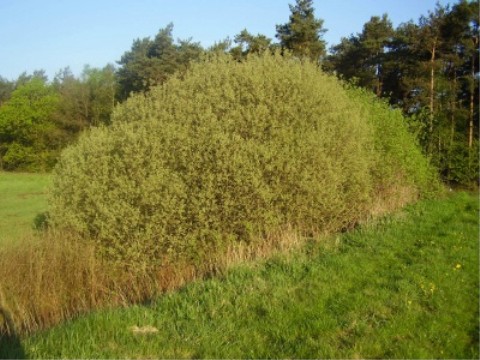 Common SallowSalix cinerea
-
 Purple WillowSalix purpurea
Compare
Questions and answers
What is the scientific name of the Weeping Willow?
The scientific name of the Weeping Willow is Salix babylonica. Written with its author, the full name is Salix babylonica L..
Which family does the Weeping Willow belong to?
Salix babylonica belongs to the family Salicaceae, in the order Malpighiales and the class Magnoliopsida.
Where is the Weeping Willow found?
Checklists and occurrence records place Salix babylonica in 63 countries, including United States, France, China, United Kingdom, Belgium and South Korea.
What is the conservation status of the Weeping Willow?
The IUCN Red List category recorded for Salix babylonica is Data Deficient (DD).
What other names does the Weeping Willow have?
Salix babylonica is also known in English as Babylon Weeping Willow, Chinese Weeping Willow, Chinese Willow, Corkscrew Willow, Globe Willow and Peking Willow.
What is another name for a weeping willow tree?
Other recorded English names include Babylon weeping willow, Chinese weeping willow, Chinese willow, Corkscrew willow, Globe willow, Peking willow, and Tortured willow.[18]
Where do weeping willow trees grow naturally?
The species is native to dry areas of northern China, Korea, Mongolia, Japan, and Siberia.[1]
What is the habitat of a willow tree?
Cultivated weeping willow trees grow well along rivers and in parks.[2]
Sources
Passages the profile rests on
- The species is native to dry areas of northern China, Korea, Mongolia, Japan, and Siberia. Source passage: “native to dry areas of northern China, Korea, Mongolia, Japan, and Siberia” — English Wikipedia
- Cultivated weeping willow trees grow well along rivers and in parks. Source passage: “growing well along rivers and in parks.” — English Wikipedia
- Its leaves turn golden yellow in autumn. Source passage: “they turn a gold-yellow in autumn.” — English Wikipedia
- Salix babylonica can grow to 20–25 m tall. Source passage: “growing up to 20–25 m (66–82 ft) tall.” — English Wikipedia
- Its leaves measure 4–16 cm long and 0.5–2 cm wide. Source passage: “4–16 cm (1.6–6.3 in) long and 0.5–2 cm (0.2–0.8 in) broad” — English Wikipedia
- Its flowers are arranged in catkins that appear in early spring. Source passage: “The flowers are arranged in catkins produced early in the spring” — English Wikipedia
- The species is dioecious, with male and female catkins occurring on separate trees. Source passage: “it is dioecious, with the male and female catkins on separate trees.” — English Wikipedia
- The original weeping willow cultivar consists of female trees. Source passage: “These plants are all females” — English Wikipedia
- The original weeping willow cultivar can be propagated vegetatively. Source passage: “readily propagated vegetatively” — English Wikipedia
- The original weeping willow cultivar can hybridize with other kinds of willows. Source passage: “capable of hybridizing with various other kinds of willows” — English Wikipedia
- The original weeping willow cultivar does not reproduce true to type from seed. Source passage: “but not breeding true from seed.” — English Wikipedia
- The species can be propagated easily through plant propagation. Source passage: “This type of tree is grown very easily through plant propagation.” — English Wikipedia
- Salix babylonica has a relatively short lifespan of approximately 40–75 years. Source passage: “between 40 and 75 years.” — English Wikipedia
- Salix matsudana is treated as a synonym of Salix babylonica by many botanists. Source passage: “is now included in Salix babylonica as a synonym by many botanists” — English Wikipedia
- Salix matsudana differs in having two nectaries in each female flower, whereas Salix babylonica has one. Source passage: “S. matsudana has two nectaries in each female flower, whereas S. babylonica has only one” — English Wikipedia
- Salix babylonica has been used as a female parent in the hybrid Salix × pendulina. Source passage: “a hybrid with S. babylonica accepted as the female parent” — English Wikipedia
- Salix × sepulcralis is a hybrid between Salix alba and Salix babylonica. Source passage: “is a hybrid between S. alba and S. babylonica.” — English Wikipedia
- Peking willow is widely grown as an ornamental tree in northern China. Source passage: “Peking willow is a popular ornamental tree in northern China” — English Wikipedia
Data
- Catalogue of Life, 2026-10-16 XR cc by
- Global Biodiversity Information Facility CC BY 4.0
- Wikidata CC0
- GeoNames CC BY 4.0
- Wikimedia Commons per image; credit shown with each image
- Within the Catalogue of Life, this name comes from Synonymic Checklists of the Vascular Plants of the World cc by
References
- L. (1753). Sp. Pl. [Linnaeus] 2: 1017 (1753). where the name was published
This species in other databases
Page built on 27 November 2026. See how the catalog is made and all sources and licences.
Cite this page
ScientificNames.org. (2026). Salix babylonica (Weeping Willow). Retrieved November 27, 2026, from https://scientificnames.org/species/salix-babylonica
“Salix babylonica (Weeping Willow).” ScientificNames.org, 2026, scientificnames.org/species/salix-babylonica. Accessed 27 Nov. 2026.
ScientificNames.org. “Salix babylonica (Weeping Willow).” Accessed November 27, 2026. https://scientificnames.org/species/salix-babylonica.
@misc{scientificnames_salix_babylonica_weeping_willow,
  author = {{ScientificNames.org}},
  title = {Salix babylonica (Weeping Willow)},
  year = {2026},
  url = {https://scientificnames.org/species/salix-babylonica},
  note = {Accessed 2026-11-27}
}