Species · Flowering plants
Taiwan Sassafras Sassafras randaiense
The scientific name of the Taiwan Sassafras is Sassafras randaiense. It is a species of flowering plant in the family Lauraceae (laurel family), order Laurales.
- Scientific name
- Sassafras randaiense (Hayata) Rehder
- Common name
- Taiwan Sassafras
- Genus
- Sassafras
- Family
- Lauraceae (Laurel Family)
- Order
- Laurales
- Class
- Magnoliopsida
- Red List category
- NT Near Threatened
- Recorded in
- 2 countries
- Name status
- accepted in the Catalogue of Life

Overview
Sassafras randaiense is endemic to Taiwan and occurs throughout the island in broad-leaved forests. It has variable leaf shapes, hermaphroditic flowers arranged in panicles, and globose fruits attached to thickened pedicels.
Written 26 November 2026 from the sources listed below. Each statement was checked against the passage it cites; statements that could not be supported were removed.
Habitat
Taiwan sassafras occurs in broad-leaved forests. It is endemic to Taiwan and occurs throughout the island.[1][2][3]
Appearance
Taiwan sassafras is a medium-sized deciduous tree. Its leaves are arranged alternately on the branches, and most are simple and lack lobes, although some trees produce leaves with two or three lobes.[4][5][6][7]
Its leaves have an acute apex, and their bases may be acute or obtuse.[8][9]
Its hermaphroditic flowers are positioned subterminally and arranged in panicles measuring 3 cm long.[10][11][12][13]
Its fruits are globose and attached to thickened pedicels measuring 2.5–3 cm in length.[14][15][16]
Reproduction and life cycle
Taiwan sassafras usually flowers in February. Its fruits mature in October.[17][18]
Its flowers are hermaphroditic, and its trees may bear both male and female flowers.[19][20]
Its seeds have an estimated viability of approximately 35% and can remain viable for six years on the forest floor.[21][22]
Conservation
Taiwan sassafras is threatened by habitat loss. It is described as a relict species.[23][24]
Classification of the Taiwan Sassafras
| Kingdom | Plantae |
|---|---|
| Subkingdom | Pteridobiotina |
| Phylum | Tracheophyta |
| Class | Magnoliopsida |
| Order | Laurales |
| Family | Lauraceae (Laurel Family) |
| Tribe | Cinnamomeae |
| Genus | Sassafras |
| Species | Sassafras randaiense (Hayata) Rehder |
Where the Taiwan Sassafras is found
Checklists and occurrence records place Sassafras randaiense in 2 countries across Asia. GBIF holds 331 georeferenced records of it.
Countries
Regions and cities with the most records
- Taiwan, Taiwan 244
- Hubei, China 8
- Lugu, Taiwan 8
- Zhushan, Taiwan 8
- Linnei, Taiwan 7
- Chongqing, China 6
- Zhudong, Taiwan 6
- Douliu, Taiwan 5
- Conglin, China 4
- Daguan, China 4
- Miaoli, Taiwan 4
- Nanchuan, China 4
- Nanping, China 4
- Xinglong, China 4
- Yilan, Taiwan 4
- Toufen, Taiwan 3
Range as the checklists state it
Taiwan
A number beside a place is its count of GBIF occurrence records. A place without a number comes from a checklist alone. Records show where a species has been observed or collected, which can include escapes and vagrants.
Common names
English
- Taiwan Sassafras
- Taiwanese Sassafras
Names in 3 other languages
- Chinese
- tai wan cha mu, 台湾檫木, 台灣檫樹, 臺灣檫樹
- Japanese
- タイワンサッサフラス
- Polish
- sasafras tajwański
Synonyms
4 other scientific names have been used for this species and are now treated as synonyms of Sassafras randaiense.
- Lindera randaiensis Hayata
- Pseudosassafras laxiflora var. randaiensis (Hayata) Nakai
- Pseudosassafras laxiflorum var. randaiensis (Hayata) Nakai
- Yushunia randaiensis (Hayata) Kamik.
Related species
-
 SassafrasSassafras albidum
-
 Chinese SassafrasSassafras tzumu
-
 AvocadoPersea americana
-
 Bay LaurelLaurus nobilis
-
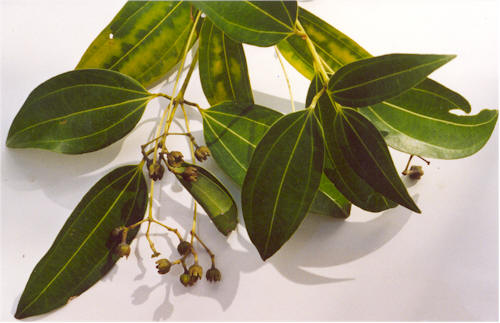 Ceylon CinnamonCinnamomum verum
-
 SpicebushLindera benzoin
-
 Indian Bay LeafCinnamomum tamala
-
 Phoebe zhennan
Compare
Questions and answers
What is the scientific name of the Taiwan Sassafras?
The scientific name of the Taiwan Sassafras is Sassafras randaiense. Written with its author, the full name is Sassafras randaiense (Hayata) Rehder.
Which family does the Taiwan Sassafras belong to?
Sassafras randaiense belongs to the family Lauraceae, in the order Laurales and the class Magnoliopsida.
Where is the Taiwan Sassafras found?
Checklists and occurrence records place Sassafras randaiense in 2 countries: Taiwan and China.
What is the conservation status of the Taiwan Sassafras?
The IUCN Red List category recorded for Sassafras randaiense is Near Threatened (NT).
What other names does the Taiwan Sassafras have?
Sassafras randaiense is also known in English as Taiwanese Sassafras.
Sources
Passages the profile rests on
- It occurs in broad-leaved forests. Source passage: “S. randaiense is found in broad-leaved forests” — English Wikipedia
- It is endemic to Taiwan. Source passage: “It is a relict species endemic to Taiwan.” — English Wikipedia
- It occurs throughout the island of Taiwan. Source passage: “throughout the island of Taiwan.” — English Wikipedia
- Sassafras randaiense is a medium-sized deciduous tree. Source passage: “Sassafras randaiense is a medium-sized deciduous tree.” — English Wikipedia
- Its leaves are arranged alternately on the branches. Source passage: “The leaves are alternate” — English Wikipedia
- Most of its leaves are simple and lack lobes. Source passage: “most leaves simple (entire) without lobes” — English Wikipedia
- Some trees produce leaves with two or three lobes. Source passage: “2 to 3-lobed leaves can be found on some trees” — English Wikipedia
- Its leaves have an acute apex. Source passage: “The leaves of S. randaiense have an acute apex” — English Wikipedia
- Its leaf bases may be acute or obtuse. Source passage: “the leaf base is acute or obtuse.” — English Wikipedia
- Its flowers are hermaphroditic. Source passage: “The flowers are hermaphroditic” — English Wikipedia
- Its flowers are positioned subterminally. Source passage: “The flowers are hermaphroditic and subterminal” — English Wikipedia
- Its flowers are arranged in panicles. Source passage: “in panicles that are 3 cm long.” — English Wikipedia
- Its flower panicles are 3 cm long. Source passage: “in panicles that are 3 cm long.” — English Wikipedia
- Its fruits are globose. Source passage: “The fruits are globose” — English Wikipedia
- Its fruits are attached to thickened pedicels. Source passage: “are attached on a thickened pedicel” — English Wikipedia
- Its fruit pedicels measure 2.5–3 cm in length. Source passage: “pedicel 2.5–3 cm long.” — English Wikipedia
- It usually flowers in February. Source passage: “Flowering occurs usually in February” — English Wikipedia
- Its fruits mature in October. Source passage: “fruit maturing in October.” — English Wikipedia
- Its flowers are hermaphroditic. Source passage: “The flowers are hermaphroditic” — English Wikipedia
- Its trees may bear both male and female flowers. Source passage: “they may have both male flowers and female flowers on the same tree” — English Wikipedia
- Its seeds have an estimated viability of approximately 35%. Source passage: “Seed viability is around 35%” — open.clemson.edu
- Its seeds can remain viable for six years on the forest floor. Source passage: “the seed can remain viable for six years on the forest floor.” — open.clemson.edu
- The species is threatened by habitat loss. Source passage: “It is threatened by habitat loss.” — English Wikipedia
- It is described as a relict species. Source passage: “It is a relict species endemic to Taiwan.” — inaturalist.org
Data
- Catalogue of Life, 2026-10-16 XR cc by
- Global Biodiversity Information Facility CC BY 4.0
- Wikidata CC0
- GeoNames CC BY 4.0
- Wikimedia Commons per image; credit shown with each image
- Within the Catalogue of Life, this name comes from Synonymic Checklists of the Vascular Plants of the World cc by
References
- Rehder. (1920). J. Arnold Arbor. 1: 244 (1920). where the name was published
This species in other databases
- Catalogue of Life 79QLF
- Wikidata Q663676
- iNaturalist 60731
- World Flora Online wfo-0001071816
- GRIN 447777
Page built on 27 November 2026. See how the catalog is made and all sources and licences.
Cite this page
ScientificNames.org. (2026). Sassafras randaiense (Taiwan Sassafras). Retrieved November 27, 2026, from https://scientificnames.org/species/sassafras-randaiense
“Sassafras randaiense (Taiwan Sassafras).” ScientificNames.org, 2026, scientificnames.org/species/sassafras-randaiense. Accessed 27 Nov. 2026.
ScientificNames.org. “Sassafras randaiense (Taiwan Sassafras).” Accessed November 27, 2026. https://scientificnames.org/species/sassafras-randaiense.
@misc{scientificnames_sassafras_randaiense_taiwan_sassafras,
  author = {{ScientificNames.org}},
  title = {Sassafras randaiense (Taiwan Sassafras)},
  year = {2026},
  url = {https://scientificnames.org/species/sassafras-randaiense},
  note = {Accessed 2026-11-27}
}