Species · Flowering plants
Chinese Sassafras Sassafras tzumu
The scientific name of the Chinese Sassafras is Sassafras tzumu. It is a species of flowering plant in the family Lauraceae (laurel family), order Laurales.
- Scientific name
- Sassafras tzumu (Hemsl.) Hemsl.
- Common name
- Chinese Sassafras
- Genus
- Sassafras
- Family
- Lauraceae (Laurel Family)
- Order
- Laurales
- Class
- Magnoliopsida
- Red List category
- LC Least Concern
- Recorded in
- 2 countries
- Name status
- accepted in the Catalogue of Life

Overview
Sassafras tzumu grows in sparse and dense forest habitats at elevations between 100 and 1,900 meters. It has alternate, gray-green leaves that may have two or three lobes, yellow flowers, and blue-black fruit covered with a white waxy coating.
Written 26 November 2026 from the sources listed below. Each statement was checked against the passage it cites; statements that could not be supported were removed.
Appearance
Its leaves are alternate, gray-green, and ovate or obovate, with either two or three lobes. They measure 9–18 centimeters long and 6–10 centimeters wide, with petioles measuring 2–7 centimeters in length.[1][2][3][4]
Its flowers are yellow and approximately 4 millimeters in size. Its fruit is blue-black and covered with a white waxy coating.[5][6]
Habitat
Chinese Sassafras grows in both sparse and dense forest habitats at elevations between 100 and 1,900 meters.[7][8]
Reproduction and life cycle
Individual trees may bear both male and female flowers. Male flowers have three staminodes and one rudimentary pistil, while female flowers have twelve staminodes.[9][10][11]
Uses
The wood is used in shipbuilding and furniture manufacturing because of its durability. The bark is yellow, durable, and fine-grained.[12][13][14]
The plant is used medicinally to treat rheumatism and trauma. Essential oils can be extracted from its bark, roots, and fruit.[15][16]
Its essential oil contains a reported 1% concentration of phenylpropene safrole.[17]
Similar species
Three-lobed leaves occur more frequently in Chinese Sassafras than in Sassafras albidum.[18]
Classification of the Chinese Sassafras
| Kingdom | Plantae |
|---|---|
| Subkingdom | Pteridobiotina |
| Phylum | Tracheophyta |
| Class | Magnoliopsida |
| Order | Laurales |
| Family | Lauraceae (Laurel Family) |
| Tribe | Cinnamomeae |
| Genus | Sassafras |
| Species | Sassafras tzumu (Hemsl.) Hemsl. |
Where the Chinese Sassafras is found
Checklists and occurrence records place Sassafras tzumu in 2 countries across Asia. GBIF holds 1,166 georeferenced records of it.
Countries
Regions and cities with the most records
- Zhejiang, China 170
- Jiangxi, China 148
- Hunan, China 97
- Guizhou, China 90
- Hubei, China 78
- Guangxi, China 69
- Guangdong, China 51
- Anhui, China 49
- Jiangsu, China 47
- Hangzhou, China 46
- Fujian, China 43
- Yunnan, China 39
- Xiaoshan, China 36
- Jiujiang, China 26
- Yixing, China 18
- Chongqing, China 17
- Zhouxi, China 15
- Sichuan, China 13
- Xiaolingwei, China 13
- Fuyang, China 12
- Leifeng, China 12
- Nanjing, China 12
- Xingqiao, China 12
- Changsha, China 11
- Lecheng, China 10
- Fenghua, China 9
- Lichuan, China 9
- Conglin, China 8
- Daguan, China 8
- Nanchuan, China 8
- Nanping, China 8
- Xinglong, China 8
- Yezhou, China 8
- Henan, China 7
- Huicheng, China 7
- Changleng, China 6
3 more countries have a few records outside this range
These countries hold a few records of Sassafras tzumu but lie outside the range the checklists give for it. Such records are often zoo or garden specimens, museum material or vagrants, so the species is not counted as occurring there.
Range as the checklists state it
China (Yunnan, Anhui, Fujian, Guangdong, Guangxi, Guizhou, Hubei, Hunan, Jiangxi, Sichuan, Zhejiang); N-Vietnam
A number beside a place is its count of GBIF occurrence records. A place without a number comes from a checklist alone. Records show where a species has been observed or collected, which can include escapes and vagrants.
Common names
English
- Chinese Sassafras
Names in 3 other languages
- Chinese
- cha mu, 冷水丹, 檫木, 檫树
- Japanese
- シナサッサフラス
- Korean
- 찰나무
Synonyms
5 other scientific names have been used for this species and are now treated as synonyms of Sassafras tzumu.
- Lindera camphorata H.Lév.
- Lindera tzumu Hemsl.
- Litsea laxiflora Hemsl.
- Pseudosassafras laxiflora (Hemsl.) Nakai
- Pseudosassafras tzumu (Hemsl.) Lecomte
Related species
-
 SassafrasSassafras albidum
-
 Taiwan SassafrasSassafras randaiense
-
 AvocadoPersea americana
-
 Bay LaurelLaurus nobilis
-
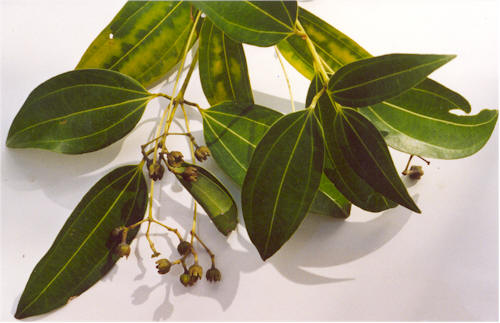 Ceylon CinnamonCinnamomum verum
-
 SpicebushLindera benzoin
-
 Indian Bay LeafCinnamomum tamala
-
 Phoebe zhennan
Compare
Questions and answers
What is the scientific name of the Chinese Sassafras?
The scientific name of the Chinese Sassafras is Sassafras tzumu. Written with its author, the full name is Sassafras tzumu (Hemsl.) Hemsl..
Which family does the Chinese Sassafras belong to?
Sassafras tzumu belongs to the family Lauraceae, in the order Laurales and the class Magnoliopsida.
Where is the Chinese Sassafras found?
Checklists and occurrence records place Sassafras tzumu in 2 countries: China and Vietnam.
What is the conservation status of the Chinese Sassafras?
The IUCN Red List category recorded for Sassafras tzumu is Least Concern (LC).
Where does sassafras grow naturally?
Chinese Sassafras is native to the Chinese provinces of Anhui, Fujian, Guangdong, Guangxi, Guizhou, Hubei, Hunan, Jiangsu, Sichuan, Yunnan, and Zhejiang, as well as Vietnam.[19]
Sources
Passages the profile rests on
- Its leaves are alternate, gray-green, and ovate or obovate in shape. Source passage: “The leaves are alternate, gray-green, ovate or obovate” — English Wikipedia
- Its leaves may have either two or three lobes. Source passage: “Leaves may be two-lobed or three-lobed.” — English Wikipedia
- Its leaves measure 9–18 centimeters long and 6–10 centimeters wide. Source passage: “9–18 cm long and 6–10 cm broad” — English Wikipedia
- Its leaf petioles measure 2–7 centimeters in length. Source passage: “with 2–7 centimeters, slender, reddish petioles.” — English Wikipedia
- Its flowers are yellow and approximately 4 millimeters in size. Source passage: “Flowers are yellow and about 4 millimeters” — English Wikipedia
- Its fruit is blue-black and covered with a white waxy coating. Source passage: “with blue-black and white waxy fruit.” — English Wikipedia
- The species grows in both sparse and dense forest habitats. Source passage: “It grows in either sparse or dense forests habitat types” — English Wikipedia
- It occurs at elevations between 100 and 1,900 meters. Source passage: “at elevations of 100–1,900 meters (330–6,230 ft).” — English Wikipedia
- Individual trees may bear both male and female flowers. Source passage: “they may have both male flowers with 3 staminodes and 1 rudimentary pistil, and female flowers with 12 staminodes on the same tree” — English Wikipedia
- Male flowers have three staminodes and one rudimentary pistil. Source passage: “male flowers with 3 staminodes and 1 rudimentary pistil” — English Wikipedia
- Female flowers have twelve staminodes. Source passage: “female flowers with 12 staminodes” — English Wikipedia
- The wood is used in shipbuilding because of its durability. Source passage: “The wood is used in shipbuilding and furniture making because of its durability.” — English Wikipedia
- The wood is used to manufacture furniture because of its durability. Source passage: “The wood is used in shipbuilding and furniture making because of its durability.” — English Wikipedia
- Its bark is described as durable, fine-grained, and yellow. Source passage: “The bark of Sassafras tzumu is durable fine-grained and yellow.” — English Wikipedia
- The plant is used medicinally to treat rheumatism and trauma. Source passage: “The plant is used for medicinal purposes, to treat rheumatism and trauma.” — English Wikipedia
- Essential oils can be extracted from its bark, roots, and fruit. Source passage: “Essential oils may be extracted from bark, roots, or fruit” — English Wikipedia
- Its essential oil contains a reported 1% concentration of phenylpropene safrole. Source passage: “contains a 1% concentration of phenylpropene safrole.” — English Wikipedia
- Three-lobed leaves occur more frequently in Sassafras tzumu than in Sassafras albidum. Source passage: “leaves with 3 lobes occur more frequently in S. tzumu while they are possible but rare in S. albidum.” — English Wikipedia
- Sassafras tzumu is native to the Chinese provinces of Anhui, Fujian, Guangdong, Guangxi, Guizhou, Hubei, Hunan, Jiangsu, Sichuan, Yunnan, and Zhejiang, as well as Vietnam. Source passage: “native to southern China, in Anhui, Fujian, Guangdong, Guangxi, Guizhou, Hubei, Hunan, Jiangsu, Sichuan, Yunnan and Zhejiang, and to Vietnam.” — English Wikipedia
Data
- Catalogue of Life, 2026-10-16 XR cc by
- Global Biodiversity Information Facility CC BY 4.0
- Wikidata CC0
- GeoNames CC BY 4.0
- Wikimedia Commons per image; credit shown with each image
- Within the Catalogue of Life, this name comes from Synonymic Checklists of the Vascular Plants of the World cc by
References
- Hemsl. (1907). Bull. Misc. Inform. Kew 1907(2): 55-56 (1907). where the name was published
This species in other databases
- Catalogue of Life 6Y2LL
- Wikidata Q15557328
- iNaturalist 60732
- World Flora Online wfo-0001071815
- GRIN 33172
Page built on 29 November 2026. See how the catalog is made and all sources and licences.
Cite this page
ScientificNames.org. (2026). Sassafras tzumu (Chinese Sassafras). Retrieved November 29, 2026, from https://scientificnames.org/species/sassafras-tzumu
“Sassafras tzumu (Chinese Sassafras).” ScientificNames.org, 2026, scientificnames.org/species/sassafras-tzumu. Accessed 29 Nov. 2026.
ScientificNames.org. “Sassafras tzumu (Chinese Sassafras).” Accessed November 29, 2026. https://scientificnames.org/species/sassafras-tzumu.
@misc{scientificnames_sassafras_tzumu_chinese_sassafras,
  author = {{ScientificNames.org}},
  title = {Sassafras tzumu (Chinese Sassafras)},
  year = {2026},
  url = {https://scientificnames.org/species/sassafras-tzumu},
  note = {Accessed 2026-11-29}
}