Species · Mammals
Bushy-tailed Jird Sekeetamys calurus
The scientific name of the Bushy-tailed Jird is Sekeetamys calurus. It is a species of mammal in the family Muridae (mice), order Rodentia. The name dates from 1892.
- Scientific name
- Sekeetamys calurus (Thomas, 1892)
- Common name
- Bushy-tailed Jird
- Genus
- Sekeetamys
- Family
- Muridae (Mice)
- Order
- Rodentia
- Class
- Mammalia
- Red List category
- LC Least Concern
- Recorded in
- 1 country
- Name status
- accepted in the Catalogue of Life

Overview
Sekeetamys calurus is the only species in the genus Sekeetamys. It is reported from Egypt, Israel, Jordan, Saudi Arabia, and Sudan.
Written 26 November 2026 from the sources listed below. Each statement was checked against the passage it cites; statements that could not be supported were removed.
Appearance
The Bushy-tailed Jird has a large, mouse-like body, large ears, and pale patches surrounding its eyes. Its dorsal hairs are yellowish-brown with black tips, while its flanks are paler than its back and sharply separated in colour from its whitish underparts.[1][2][3][4]
Its hind feet are long and have hairless soles. Its body length is between 229 and 292 millimetres, its tail measures between 131 and 164 millimetres, and its average weight ranges from 27 to 50 grams.[5][6][7][8]
Habitat
The Bushy-tailed Jird inhabits rocky areas in arid and semiarid localities receiving typically less than 100 millimetres of rainfall annually.[9][10]
It is reported from Egypt, Israel, Jordan, Saudi Arabia, and Sudan. Its documented range includes eastern Egypt, the Sinai Peninsula, southern Israel, and southern Jordan.[11][12]
Diet
The Bushy-tailed Jird requires a diet high in protein.[13]
In captivity, lime blocks are necessary for its nutrition.[14]
Conservation
The Bushy-tailed Jird is considered an uncommon species, and its population trend is stable. No particular threats to the species are identified.[15][16][17]
The species is classified as Least Concern by the International Union for Conservation of Nature.[18]
Similar species
The Asian garden dormouse is identified as another small rodent in Egypt with a bushy tail.[19]
Classification of the Bushy-tailed Jird
| Kingdom | Animalia |
|---|---|
| Phylum | Chordata |
| Subphylum | Vertebrata |
| Infraphylum | Gnathostomata |
| Parvphylum | Osteichthyes |
| Megaclass | Tetrapoda |
| Class | Mammalia (Mammal) |
| Subclass | Theria |
| Infraclass | Eutheria |
| Order | Rodentia (Rodent) |
| Suborder | Myomorpha (Mice) |
| Superfamily | Muroidea |
| Family | Muridae (Mice) |
| Subfamily | Gerbillinae |
| Genus | Sekeetamys |
| Species | Sekeetamys calurus (Thomas, 1892) |
Where the Bushy-tailed Jird is found
Checklists and occurrence records place Sekeetamys calurus in 1 country across Africa. GBIF holds 189 georeferenced records of it.
Countries
Regions and cities with the most records
- Abū an Numrus, Egypt 4
- Al Ḩawāmidīyah, Egypt 4
- Cairo, Egypt 4
- Giza, Egypt 4
- Suez, Egypt 4
- Ain Sukhna, Egypt 3
- Al ‘Ayn as Sukhnah, Egypt 3
- Aqaba, Jordan 3
4 more countries have a few records outside this range
These countries hold a few records of Sekeetamys calurus but lie outside the range the checklists give for it. Such records are often zoo or garden specimens, museum material or vagrants, so the species is not counted as occurring there.
Range as the checklists state it
Europe & Northern Asia (excluding China)
Africa
A number beside a place is its count of GBIF occurrence records. A place without a number comes from a checklist alone. Records show where a species has been observed or collected, which can include escapes and vagrants.
Common names
English
- Bushy-tailed Jird
Names in 10 other languages
- Czech
- pískomil veverkoocasý
- Finnish
- tuuheahäntäjirdi
- French
- Gerbille à queue touffue
- German
- Buschschwanz-Rennmaus
- Hebrew
- יפה זנב
- Japanese
- フサオスナネズミ
- Lithuanian
- Puriauodegės smiltpelės
- Norwegian Bokmål
- Buskhaleørkenrotte
- Polish
- szczotkogon skalny
- Russian
- Пушистохвостая песчанка
Synonyms
2 other scientific names have been used for this species and are now treated as synonyms of Sekeetamys calurus.
- Gerbillus calurus Thomas, 1892
- Sekeetamys makrami Setzer, 1961
Related species
-
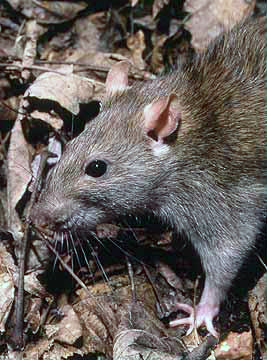 Brown RatRattus norvegicus
-
 Black RatRattus rattus
-
 Polynesian RatRattus exulans
-
 RakaliHydromys chrysogaster
-
 Wood MouseApodemus sylvaticus
-
 Eurasian Harvest MouseMicromys minutus
-
 Bramble Cay MelomysMelomys rubicola
-
 Greater Bandicoot RatBandicota indica
Compare
Questions and answers
What is the scientific name of the Bushy-tailed Jird?
The scientific name of the Bushy-tailed Jird is Sekeetamys calurus. Written with its author, the full name is Sekeetamys calurus (Thomas, 1892).
Which family does the Bushy-tailed Jird belong to?
Sekeetamys calurus belongs to the family Muridae, in the order Rodentia and the class Mammalia.
Where is the Bushy-tailed Jird found?
Checklists and occurrence records place Sekeetamys calurus in 1 country: Egypt.
What is the conservation status of the Bushy-tailed Jird?
The IUCN Red List category recorded for Sekeetamys calurus is Least Concern (LC).
Sources
Passages the profile rests on
- The bushy-tailed jird has a large, mouse-like body and a bushy tail. Source passage: “The bushy-tailed jird is a large mouse-like rodent with a bushy tail in the subfamily Gerbillinae.” — English Wikipedia
- The species has large ears and pale patches surrounding its eyes. Source passage: “The ears are large and there are pale patches around the eyes.” — English Wikipedia
- Its dorsal hairs are yellowish-brown with black tips, while its flanks are paler than its back. Source passage: “Dorsally, the hairs are yellowish-brown tipped with black, with the flanks being rather paler than the back.” — English Wikipedia
- Its flanks are sharply separated in colour from its whitish underparts. Source passage: “There is a sharp demarcation line between the flanks and the whitish underparts.” — English Wikipedia
- Its hind feet are long and have hairless soles. Source passage: “The legs are slender and the hind feet are long, with hairless soles.” — English Wikipedia
- Its body length is between 229 and 292 millimetres. Source passage: “It has a length of between 229 and 292 millimetres (9.0 and 11.5 in)” — English Wikipedia
- Its tail measures between 131 and 164 millimetres. Source passage: “and a tail of between 131 and 164 millimetres (5.2 and 6.5 in).” — English Wikipedia
- Its average weight ranges from 27 to 50 grams. Source passage: “Its average weight is between 27 and 50 grams (0.95 and 1.76 oz).” — English Wikipedia
- The species inhabits rocky areas. Source passage: “Its natural habitat is rocky areas.” — English Wikipedia
- It occurs in arid and semiarid localities receiving typically less than 100 millimetres of rainfall annually. Source passage: “Its natural habitat is arid and semiarid localities where the rainfall is typically less than 100 millimetres (4 in) per year.” — English Wikipedia
- The species is reported from Egypt, Israel, Jordan, Saudi Arabia, and Sudan. Source passage: “It is found in Egypt, Israel, Jordan, Saudi Arabia, and Sudan.” — English Wikipedia
- Its documented range includes eastern Egypt, the Sinai Peninsula, southern Israel, and southern Jordan. Source passage: “The bushy-tailed jird occurs in eastern Egypt, the Sinai Peninsula, southern Israel and southern Jordan.” — English Wikipedia
- The species requires a diet high in protein. Source passage: “Sekeetamys calurus need to have a high protein diet.” — animaldiversity.org
- In captivity, lime blocks are necessary for the species' nutrition. Source passage: “In captivity, lime blocks are necessary for nutrition as well as for play.” — animaldiversity.org
- The bushy-tailed jird is considered an uncommon species. Source passage: “The bushy-tailed jird is an uncommon species” — English Wikipedia
- Its population trend is stable. Source passage: “the population trend is stable” — English Wikipedia
- No particular threats to the species are identified in the document. Source passage: “there are no particular threats” — English Wikipedia
- The species is classified as Least Concern by the International Union for Conservation of Nature. Source passage: “the International Union for Conservation of Nature has rated its conservation status as "least concern".” — English Wikipedia
- The Asian garden dormouse is identified as another small rodent in Egypt with a bushy tail. Source passage: “This bushy tail is unique among small rodents in Egypt except for the Asian garden dormouse (Eliomys melanurus).” — English Wikipedia
Data
- Catalogue of Life, 2026-10-16 XR cc by
- Global Biodiversity Information Facility CC BY 4.0
- Wikidata CC0
- GeoNames CC BY 4.0
- Wikimedia Commons per image; credit shown with each image
- Within the Catalogue of Life, this name comes from The Integrated Taxonomic Information System cc0
References
- Ann. Mag. Nat. Hist., ser. 6 vol.9 p.76 where the name was published
- Osborn, Dale J., and Ibrahim Helmy. (1980). The Contemporary Land Mammals of Egypt (Including Sinai). Fieldiana Zoology, N.S., No. 5.
- Wilson, Don E., and DeeAnn M. Reeder, eds. (1993). Mammal Species of the World: A Taxonomic and Geographic Reference, 2nd Ed., 3rd Printing.
- Wilson, Don E., and F. Russell Cole. (2000). Common Names of Mammals of the World.
- Musser, Guy G., and Michael D. Carleton / Wilson, Don E., and DeeAnn M. Reeder, eds. (2005). Superfamily Muroidea. Mammal Species of the World: A Taxonomic and Geographic Reference, 3rd Ed., Vol. 2.
This species in other databases
Page built on 26 November 2026. See how the catalog is made and all sources and licences.
Cite this page
ScientificNames.org. (2026). Sekeetamys calurus (Bushy-tailed Jird). Retrieved November 26, 2026, from https://scientificnames.org/species/sekeetamys-calurus
“Sekeetamys calurus (Bushy-tailed Jird).” ScientificNames.org, 2026, scientificnames.org/species/sekeetamys-calurus. Accessed 26 Nov. 2026.
ScientificNames.org. “Sekeetamys calurus (Bushy-tailed Jird).” Accessed November 26, 2026. https://scientificnames.org/species/sekeetamys-calurus.
@misc{scientificnames_sekeetamys_calurus_bushy_tailed_jird,
  author = {{ScientificNames.org}},
  title = {Sekeetamys calurus (Bushy-tailed Jird)},
  year = {2026},
  url = {https://scientificnames.org/species/sekeetamys-calurus},
  note = {Accessed 2026-11-26}
}