Species · Fishes
Sobaity Seabream Sparidentex hasta
The scientific name of the Sobaity Seabream is Sparidentex hasta. It is a species of fish in the family Sparidae (porgies), order Perciformes. The name dates from 1830.
- Scientific name
- Sparidentex hasta (Valenciennes, 1830)
- Common name
- Sobaity Seabream
- Genus
- Sparidentex
- Family
- Sparidae (Porgies)
- Order
- Perciformes
- Class
- Teleostei
- Red List category
- LC Least Concern
- Environment
- brackish, marine
- Recorded in
- 6 countries
- Name status
- accepted in the Catalogue of Life

Overview
Sparidentex hasta inhabits marine and brackish waters in the Arabian Sea and Persian Gulf of the Indian Ocean. It commonly measures approximately 20 cm in length and has 47–48 pored scales along its lateral line.
Written 26 November 2026 from the sources listed below. Each statement was checked against the passage it cites; statements that could not be supported were removed.
Appearance
The dorsal fin has 11 to 12 rays, while the anal fin usually has 8 rays. There are 5.5 scale rows between the first dorsal ray and the lateral line, and 12.5 scale rows below the lateral line.[1][2][3]
The species commonly measures approximately 20 cm in length. Its maximum recorded length is 58 cm.[4][5]
Habitat
Sobaity Seabream inhabits both marine and brackish waters and is generally demersal. It occurs at depths of up to 20 m.[6][7][8]
Diet
Sobaity Seabream feeds on teleost fishes and crustaceans, including crabs, shrimps, stomatopods and spiny lobsters. Its diet also includes other arthropods such as barnacles, amphipods, isopods and hermit crabs.[9][10][11]
The species consumes gastropods, bivalves and nudibranchs. Its diet also includes echinoderms, cephalopods, polychaete worms and marine algae.[12][13]
Uses
Sobaity Seabream is commercially fished in the Arabian Sea and Persian Gulf, including off Bahrain, Saudi Arabia and the United Arab Emirates. Commercially caught individuals are usually sold fresh, and the species is considered to have minor commercial importance.[14][15][16][17]
Aquaculture of the species was undertaken in Bahrain, the United Arab Emirates and Kuwait around 2000. It is considered a delicacy in the Persian Gulf region, where dishes containing it are often associated with celebrations.[18][19][20]
Classification of the Sobaity Seabream
| Kingdom | Animalia |
|---|---|
| Phylum | Chordata |
| Subphylum | Vertebrata |
| Infraphylum | Gnathostomata |
| Parvphylum | Osteichthyes |
| Gigaclass | Actinopterygii |
| Superclass | Actinopteri |
| Class | Teleostei (Teleost) |
| Order | Perciformes |
| Suborder | Percoidei |
| Family | Sparidae (Porgies) |
| Genus | Sparidentex |
| Species | Sparidentex hasta (Valenciennes, 1830) |
Where the Sobaity Seabream is found
Checklists and occurrence records place Sparidentex hasta in 6 countries. GBIF holds 52 georeferenced records of it.
Countries
Regions and cities with the most records
- Al Qaţīf, Saudi Arabia 11
- Al ‘Awwāmīyah, Saudi Arabia 11
- Dammam, Saudi Arabia 11
- Dhahran, Saudi Arabia 11
- Sayhāt, Saudi Arabia 11
- Tārūt, Saudi Arabia 11
- ‘Inak, Saudi Arabia 11
- Karachi, Pakistan 4
- Sindh, Pakistan 4
A number beside a place is its count of GBIF occurrence records. A place without a number comes from a checklist alone. Records show where a species has been observed or collected, which can include escapes and vagrants.
Common names
English
- Sobaity Seabream
- Silver Black Porgy
- Sobaity Bream
Names in 6 other languages
- Arabic
- Subaiti
- Chinese
- 矛鯛
- Czech
- zubatec tmavoploutvý
- French
- Spare sobaity
- Russian
- Индостанский морской карась
- Spanish
- Sargo Sobaito
Synonyms
4 other scientific names have been used for this species and are now treated as synonyms of Sparidentex hasta.
- Acanthopagrus cuvieri (Day, 1875)
- Chrysophrys cuvieri Day, 1875
- Dentex hasta Valenciennes, 1830
- Sparus hasta (Valenciennes, 1830) ambiguous synonym
Related species
- Sparidentex jamalensis
- Sparidentex belayewi
-
 Gilt-head BreamSparus aurata
-
 BogueBoops boops
-
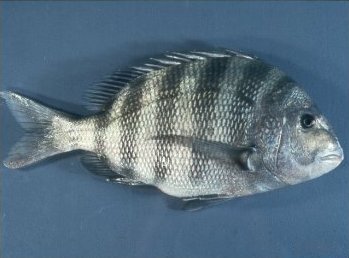 SheepsheadArchosargus probatocephalus
-
 Red Sea BreamPagrus major
-
 Salema PorgySarpa salpa
-
 White Sea BreamDiplodus sargus
Compare
Questions and answers
What is the scientific name of the Sobaity Seabream?
The scientific name of the Sobaity Seabream is Sparidentex hasta. Written with its author, the full name is Sparidentex hasta (Valenciennes, 1830).
Which family does the Sobaity Seabream belong to?
Sparidentex hasta belongs to the family Sparidae, in the order Perciformes and the class Teleostei.
Where is the Sobaity Seabream found?
Checklists and occurrence records place Sparidentex hasta in 6 countries: Saudi Arabia, Iran, India, Pakistan, Iraq and Oman.
What is the conservation status of the Sobaity Seabream?
The IUCN Red List category recorded for Sparidentex hasta is Least Concern (LC).
What other names does the Sobaity Seabream have?
Sparidentex hasta is also known in English as Silver Black Porgy and Sobaity Bream.
Sources
Passages the profile rests on
- The species has 11 to 12 rays in its dorsal fin and usually 8 rays in its anal fin. Source passage: “The dorsal fin of the sobaity seabream has 11 to 12 rays, while its anal fin usually has only 8.” — English Wikipedia
- There are 5.5 scale rows between the first dorsal ray and the lateral line. Source passage: “There are 5.5 rows of scales between the first dorsal ray and the lateral line” — English Wikipedia
- There are 12.5 scale rows below the lateral line. Source passage: “while there are 12.5 rows below the lateral line.” — English Wikipedia
- The species commonly measures approximately 20 cm in length. Source passage: “Commonly around 20 cm (7.9 in) in length” — English Wikipedia
- The maximum recorded length of the species is 58 cm. Source passage: “this species reaches a maximum length of 58 cm (1.90 ft).” — English Wikipedia
- The species inhabits both marine and brackish waters. Source passage: “The sobaity seabream can be found in both marine and brackish waters” — English Wikipedia
- The species is generally demersal. Source passage: “It is generally demersal” — English Wikipedia
- The species occurs at depths of up to 20 m. Source passage: “can be found at depths up to 20 m (66 ft).” — English Wikipedia
- The species feeds on teleost fishes. Source passage: “feed on teleost fishes” — English Wikipedia
- The species consumes crustaceans and other arthropods, including crabs, shrimps, stomatopods and spiny lobsters. Source passage: “arthropods such as crabs, shrimps, stomatopods, spiny lobsters” — English Wikipedia
- The species consumes barnacles, amphipods, isopods and hermit crabs. Source passage: “barnacles, amphipods, isopods and hermit crabs” — English Wikipedia
- The species feeds on gastropods, bivalves and nudibranchs. Source passage: “mollusks such gastropods, bivalves, and nudibranchs.” — English Wikipedia
- The diet of the species also includes echinoderms, cephalopods, polychaete worms and marine algae. Source passage: “Echinoderms, cephalopods, polychaete worms, and marine algae are also represented in the diet of these fishes.” — English Wikipedia
- The species is commercially fished in the Arabian Sea and Persian Gulf. Source passage: “where they are commercially fished and farmed.” — English Wikipedia
- The species is commercially fished off Bahrain, Saudi Arabia and the United Arab Emirates. Source passage: “S. hasta is fished commercially off the coasts of Bahrain, Saudi Arabia, and the United Arab Emirates” — English Wikipedia
- Commercially caught individuals are usually sold fresh. Source passage: “where these fish are usually sold fresh.” — English Wikipedia
- The species is considered to have minor commercial importance. Source passage: “It is considered to be of minor commercial importance” — English Wikipedia
- Aquaculture of the species was undertaken in Bahrain, the United Arab Emirates and Kuwait around 2000. Source passage: “Around this time, this species was also utilized in aquaculture in Bahrain, the UAE, and Kuwait.” — English Wikipedia
- The species is considered a delicacy in the Persian Gulf region. Source passage: “The fish is considered a delicacy in the Persian Gulf region” — English Wikipedia
- Dishes containing the species are often associated with celebrations. Source passage: “dishes containing it are often associated with celebrations.” — English Wikipedia
Data
- Catalogue of Life, 2026-10-16 XR cc by
- Global Biodiversity Information Facility CC BY 4.0
- Wikidata CC0
- GeoNames CC BY 4.0
- Wikimedia Commons per image; credit shown with each image
- Within the Catalogue of Life, this name comes from World Register of Marine Species cc by
References
- Cuvier and Valenciennes, 1830 where the name was published
This species in other databases
- Catalogue of Life 6YVD2
- Wikidata Q2705226
- iNaturalist 446490
- WoRMS urn:lsid:marinespecies.org:taxname:218626
- ITIS 647981
Page built on 28 November 2026. See how the catalog is made and all sources and licences.
Cite this page
ScientificNames.org. (2026). Sparidentex hasta (Sobaity Seabream). Retrieved November 28, 2026, from https://scientificnames.org/species/sparidentex-hasta
“Sparidentex hasta (Sobaity Seabream).” ScientificNames.org, 2026, scientificnames.org/species/sparidentex-hasta. Accessed 28 Nov. 2026.
ScientificNames.org. “Sparidentex hasta (Sobaity Seabream).” Accessed November 28, 2026. https://scientificnames.org/species/sparidentex-hasta.
@misc{scientificnames_sparidentex_hasta_sobaity_seabream,
  author = {{ScientificNames.org}},
  title = {Sparidentex hasta (Sobaity Seabream)},
  year = {2026},
  url = {https://scientificnames.org/species/sparidentex-hasta},
  note = {Accessed 2026-11-28}
}