Species · Amphibians
Yucatecan Casque-headed Treefrog Triprion petasatus
The scientific name of the Yucatecan Casque-headed Treefrog is Triprion petasatus. It is a species of amphibian in the family Hylidae (hylids), order Anura. The name dates from 1865.
- Scientific name
- Triprion petasatus (Cope, 1865)
- Common name
- Yucatecan Casque-headed Treefrog
- Genus
- Triprion
- Family
- Hylidae (Hylids)
- Order
- Anura
- Class
- Amphibia
- Red List category
- LC Least Concern
- Recorded in
- 4 countries
- Name status
- accepted in the Catalogue of Life

Overview
Yucatecan Casque-headed Treefrog is an amphibian in the family Hylidae, order Anura, and class Amphibia. It inhabits subtropical and tropical dry forests, intermittent freshwater marshes, and heavily degraded former forests. It is distinguished by a large, helmet-like bony head, thick front legs, relatively short hind legs, and very large disks on its front toes.
Written 26 November 2026 from the sources listed below. Each statement was checked against the passage it cites; statements that could not be supported were removed.
Appearance
The frog has a large, bony head resembling a hat or helmet, thick and strong front legs, relatively short hind legs, and very large disks on its front toes.[1][2][3]
Adult males are olive green, while adult females are light brown or green-brown. Dark brown or black markings occur on the back and legs, and some individuals have silver markings on their backs and heads.[4][5][6][7]
Some individuals have yellow coloration on their flanks or red-brown coloration on their hind legs. The belly is white and tan.[8][9]
Adult males measure 48.1–60.8 mm in snout-vent length. Adult females measure 65.0–75.2 mm in snout-vent length.[10][11]
Habitat
The species inhabits subtropical and tropical dry forests and intermittent freshwater marshes. It also occurs in heavily degraded former forests.[12][13][14]
Behaviour
During dry weather or intense sunshine, the frog shelters in holes in trees. It positions its body inside the hole and its head against the entrance.[15][16]
Reproduction and life cycle
The species lays eggs during the rainy season. Males climb to branches approximately 2.5 metres above the ground and sing to attract females.[17][18]
Females deposit eggs in temporary bodies of water, including solution pits, at approximately 40 cm deep. Mating takes place in trees and other elevated locations.[19][20][21]
Conservation
The species is described as not endangered but is sensitive to habitat loss. Forest clearing for lumber, agriculture, and grazing is identified as a threat.[22][23][24]
Uses
The species is captured and bred for the pet trade.[25]
Classification of the Yucatecan Casque-headed Treefrog
| Kingdom | Animalia |
|---|---|
| Phylum | Chordata |
| Subphylum | Vertebrata |
| Infraphylum | Gnathostomata |
| Parvphylum | Osteichthyes |
| Megaclass | Tetrapoda |
| Class | Amphibia (Amphibians) |
| Order | Anura (Frogs) |
| Family | Hylidae (Hylids) |
| Genus | Triprion (Shovel-headed Tree Frogs) |
| Species | Triprion petasatus (Cope, 1865) |
Where the Yucatecan Casque-headed Treefrog is found
Checklists and occurrence records place Triprion petasatus in 4 countries across North America. GBIF holds 1,403 georeferenced records of it.
Countries
Regions and cities with the most records
- Yucatán, Mexico 694
- Chichén-Itzá, Mexico 261
- Campeche, Mexico 188
- Quintana Roo, Mexico 157
- Mérida, Mexico 118
- Kanasín, Mexico 115
- Umán, Mexico 67
- Valladolid, Mexico 45
- Motul, Mexico 40
- Tizimín, Mexico 22
- Hunucmá, Mexico 18
- Petén, Guatemala 18
- Peto, Mexico 15
- Playa del Carmen, Mexico 13
- Cayo District, Belize 12
- Progreso, Mexico 11
- Ticul, Mexico 10
- Escárcega, Mexico 9
- Oxkutzkab, Mexico 8
- Izamal, Mexico 7
- Orange Walk District, Belize 7
- Belmopan, Belize 6
- Cofradía, Honduras 6
- Cortés Department, Honduras 6
- Felipe Carrillo Puerto, Mexico 6
- San Ignacio, Belize 6
- San Pedro Sula, Honduras 6
- Villanueva, Honduras 6
- Tulum, Mexico 5
- Tecax, Mexico 4
- Cancún, Mexico 3
- Chetumal, Mexico 3
Range as the checklists state it
Middle America
A number beside a place is its count of GBIF occurrence records. A place without a number comes from a checklist alone. Records show where a species has been observed or collected, which can include escapes and vagrants.
Common names
English
- Yucatecan Casque-headed Treefrog
- Yucatecan Shovel-headed Treefrog
- Yucatán Casque-headed Tree Frog
Names in 8 other languages
- Catalan
- granota cap de pala
- Czech
- víčkovnice yucatanská
- Dutch
- Eendenbekkikker
- German
- Yucatán-Helmkopflaubfrosch, Yucatán-Schaufelkopflaubfrosch
- Japanese
- カドバリカブトアマガエル
- Russian
- шлемоносная квакша
- Spanish
- Rana cabeza de pala, Rana-de árbol yucateca, rana yucateca de casco
- yua
- x-túuts´
Synonyms
2 other scientific names have been used for this species and are now treated as synonyms of Triprion petasatus.
- Hyla petasata (Cope, 1865)
- Pharyngodon petasatus Cope, 1865
Related species
-
 Shovel-headed TreefrogTriprion spatulatus
-
 Spiny-headed TreefrogTriprion spinosus
-
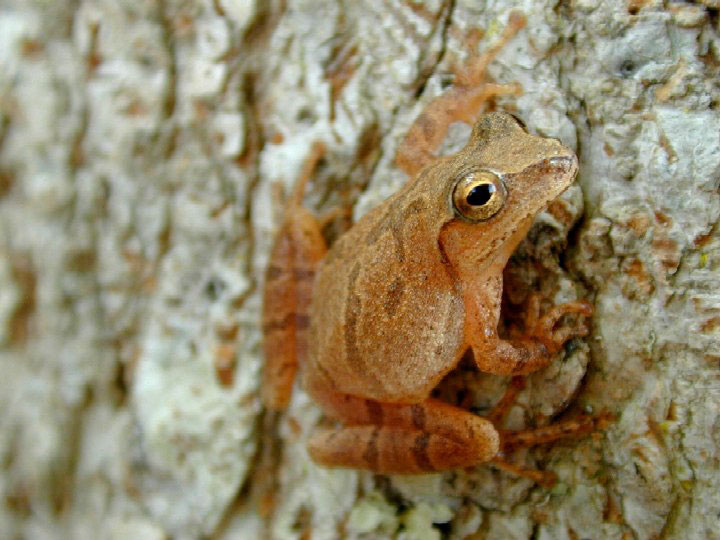 Spring PeeperPseudacris crucifer
-
 Cuban Tree FrogOsteopilus septentrionalis
-
 Pacific Tree FrogPseudacris regilla
-
 Rabbs' Fringe-limbed TreefrogEcnomiohyla rabborum
- European Tree FrogHyla arborea
-
 Mission Golden-eyed Tree FrogTrachycephalus resinifictrix
Compare
Questions and answers
What is the scientific name of the Yucatecan Casque-headed Treefrog?
The scientific name of the Yucatecan Casque-headed Treefrog is Triprion petasatus. Written with its author, the full name is Triprion petasatus (Cope, 1865).
Which family does the Yucatecan Casque-headed Treefrog belong to?
Triprion petasatus belongs to the family Hylidae, in the order Anura and the class Amphibia.
Where is the Yucatecan Casque-headed Treefrog found?
Checklists and occurrence records place Triprion petasatus in 4 countries: Mexico, Guatemala, Belize and Honduras.
What is the conservation status of the Yucatecan Casque-headed Treefrog?
The IUCN Red List category recorded for Triprion petasatus is Least Concern (LC).
What other names does the Yucatecan Casque-headed Treefrog have?
Triprion petasatus is also known in English as Yucatecan Shovel-headed Treefrog and Yucatán Casque-headed Tree Frog.
Sources
Passages the profile rests on
- The frog has a large, bony head resembling a hat or helmet. Source passage: “Its large, bony head, resembles a hat or helmet” — English Wikipedia
- The frog has thick, strong front legs and relatively short hind legs. Source passage: “This frog has thick, strong front legs and relatively short hind legs.” — English Wikipedia
- The frog has very large disks on its front toes. Source passage: “There are very large disks on the front toes.” — English Wikipedia
- Adult males are olive green. Source passage: “The adult male frog is olive green in color” — English Wikipedia
- Adult females are light brown or green-brown. Source passage: “the adult female frog is light brown or green-brown.” — English Wikipedia
- The frog has dark brown or black markings on its back and legs. Source passage: “There are dark brown or black marks on the back and legs.” — English Wikipedia
- Some individuals have silver markings on their backs and heads. Source passage: “Some frogs have silver marks on their backs and head.” — English Wikipedia
- The frog may have yellow coloration on its flanks or red-brown coloration on its hind legs. Source passage: “The frogs have some yellow coloration on their flanks or red-brown on their hind legs.” — English Wikipedia
- The frog has a white and tan belly. Source passage: “The belly is white and tan.” — English Wikipedia
- Adult males measure 48.1–60.8 mm in snout-vent length. Source passage: “The adult male frog measures 48.1 to 60.8 mm in snout-vent length” — English Wikipedia
- Adult females measure 65.0–75.2 mm in snout-vent length. Source passage: “the adult female frog 65.0 to 75.2 mm.” — English Wikipedia
- The species inhabits subtropical and tropical dry forests. Source passage: “Its natural habitats are subtropical or tropical dry forests” — English Wikipedia
- The species occurs in intermittent freshwater marshes. Source passage: “intermittent freshwater marshes” — English Wikipedia
- The species occurs in heavily degraded former forests. Source passage: “heavily degraded former forests” — English Wikipedia
- During dry weather or intense sunshine, the frog shelters in holes in trees. Source passage: “When the weather is dry or the sun is hot, this frog seeks out holes in a tree.” — English Wikipedia
- When sheltering in a tree hole, the frog positions its body inside and its head against the entrance. Source passage: “It puts its body inside and its head against the hole to block the entrance.” — English Wikipedia
- The species lays eggs during the rainy season. Source passage: “This frog lays eggs during the rainy season.” — English Wikipedia
- Males climb to branches approximately 2.5 metres above the ground and sing to attract females. Source passage: “The male frog climbs to a branch about 2.5 meters above the ground and sings for the females.” — English Wikipedia
- Females deposit eggs in temporary bodies of water, including solution pits. Source passage: “The female lays eggs in temporary bodies of water, such as solution pits.” — English Wikipedia
- The eggs are deposited approximately 40 cm deep. Source passage: “The eggs are deposited about 40 cm deep.” — English Wikipedia
- Mating takes place in trees and other elevated locations. Source passage: “The frogs mate in trees and other elevated places.” — English Wikipedia
- The species is described as not endangered. Source passage: “This frog is not endangered” — English Wikipedia
- The species is sensitive to habitat loss. Source passage: “it is sensitive to habitat loss.” — English Wikipedia
- Forest clearing for lumber, agriculture, and grazing is identified as a threat to the species. Source passage: “Human beings cut down the forests for lumber, agriculture, and grazing.” — English Wikipedia
- The species is captured and bred for the pet trade. Source passage: “This frog is also captured and bred for the pet trade.” — English Wikipedia
Data
- Catalogue of Life, 2026-10-16 XR cc by
- Global Biodiversity Information Facility CC BY 4.0
- Wikidata CC0
- GeoNames CC BY 4.0
- Wikimedia Commons per image; credit shown with each image
- Within the Catalogue of Life, this name comes from The Integrated Taxonomic Information System cc0
References
- Flores-Villela, Oscar / McCoy, C. J., ed. (1993). Herpetofauna Mexicana: Lista anotada de las especies de anfibios y reptiles de México, cambios taxonómicos recientes, y nuevas especies. Carnegie Museum of Natural History Special Publication, No. 17.
- Frost, Darrel R. (1997). Amphibian Species of the World, A Taxonomic and Geographic Reference. Second Edition.
This species in other databases
Page built on 28 November 2026. See how the catalog is made and all sources and licences.
Cite this page
ScientificNames.org. (2026). Triprion petasatus (Yucatecan Casque-headed Treefrog). Retrieved November 28, 2026, from https://scientificnames.org/species/triprion-petasatus
“Triprion petasatus (Yucatecan Casque-headed Treefrog).” ScientificNames.org, 2026, scientificnames.org/species/triprion-petasatus. Accessed 28 Nov. 2026.
ScientificNames.org. “Triprion petasatus (Yucatecan Casque-headed Treefrog).” Accessed November 28, 2026. https://scientificnames.org/species/triprion-petasatus.
@misc{scientificnames_triprion_petasatus_yucatecan_casque_headed_treefrog,
  author = {{ScientificNames.org}},
  title = {Triprion petasatus (Yucatecan Casque-headed Treefrog)},
  year = {2026},
  url = {https://scientificnames.org/species/triprion-petasatus},
  note = {Accessed 2026-11-28}
}