Species · Mammals
Rudd's Mouse Uranomys ruddi
The scientific name of the Rudd's Mouse is Uranomys ruddi. It is a species of mammal in the family Muridae (mice), order Rodentia. The name dates from 1909.
- Scientific name
- Uranomys ruddi Dollman, 1909
- Common name
- Rudd's Mouse
- Genus
- Uranomys
- Family
- Muridae (Mice)
- Order
- Rodentia
- Class
- Mammalia
- Red List category
- LC Least Concern
- Recorded in
- 15 countries
- Name status
- accepted in the Catalogue of Life

Overview
Rudd's Mouse is the only member of the genus Uranomys. It is usually found in savannah habitat. Its back hairs are stiff rather than spiny, and its feet are covered in white hairs.
Written 27 November 2026 from the sources listed below. Each statement was checked against the passage it cites; statements that could not be supported were removed.
Appearance
The head-and-body length ranges from 8.4 to 13.4 cm. The tail measures between 5.3 and 7.9 cm long.[1][2]
The hairs on the back are stiff rather than spiny. The feet are covered in white hairs, and the incisors project anteriorly.[3][4][5]
Habitat
Rudd's Mouse is usually found in savannah habitat. It occurs across a wide geographical range in Africa.[6][7]
Diet
Rudd's Mouse feeds predominantly on insects.[8]
Behaviour
Rudd's Mouse is thought to be nocturnal.[9]
Similar species
Rudd's Mouse is closely related to spiny mice, brush-furred mice, and the link rat.[10]
Classification of the Rudd's Mouse
| Kingdom | Animalia |
|---|---|
| Phylum | Chordata |
| Subphylum | Vertebrata |
| Infraphylum | Gnathostomata |
| Parvphylum | Osteichthyes |
| Megaclass | Tetrapoda |
| Class | Mammalia (Mammal) |
| Subclass | Theria |
| Infraclass | Eutheria |
| Order | Rodentia (Rodent) |
| Suborder | Myomorpha (Mice) |
| Superfamily | Muroidea |
| Family | Muridae (Mice) |
| Subfamily | Deomyinae |
| Genus | Uranomys |
| Species | Uranomys ruddi Dollman, 1909 |
Where the Rudd's Mouse is found
Checklists and occurrence records place Uranomys ruddi in 15 countries across Africa. GBIF holds 2,208 georeferenced records of it.
Countries
- Benin 61
- Chad 6
- Democratic Republic of the Congo 3
- Ghana 87
- Guinea 106
- Ivory Coast 1,689
- Kenya 4
- Malawi 10
- Mozambique 6
- Nigeria 52
- Senegal 9
- Sierra Leone 67
- Tanzania 53
- Togo 45
- Uganda 10
Regions and cities with the most records
- Lagunes District, Ivory Coast 545
- Dabou, Ivory Coast 405
- Morogoro, Tanzania 51
- Nzianouan, Ivory Coast 48
- Northern Province, Sierra Leone 42
- Nzérékoré Region, Guinea 42
- Plateaux, Togo 32
- Kindia, Guinea 31
- Eastern, Ghana 23
- Borgou, Benin 21
- Bono East, Ghana 19
- Vallée du Bandama District, Ivory Coast 19
- Wankyi, Ghana 16
- Ogun State, Nigeria 15
- Woroba, Ivory Coast 14
- Zou, Benin 14
- Faranah, Guinea 13
- Nikki, Benin 13
- Collines, Benin 12
- Akim Oda, Ghana 11
- Mankono, Ivory Coast 11
- Upper West, Ghana 10
- Bouaflé, Ivory Coast 8
- Sassandra-Marahoue, Ivory Coast 8
- Bafilo, Togo 7
- Kara, Togo 7
- Kindia, Guinea 7
- Savanes District, Ivory Coast 7
- Wa, Ghana 7
- Aburi, Ghana 6
- Akwatia, Ghana 6
- Denguélé District, Ivory Coast 6
- Donga, Benin 6
- Gueckedou, Guinea 6
- Kade, Ghana 6
- Kankan Region, Guinea 6
Range as the checklists state it
Africa
A number beside a place is its count of GBIF occurrence records. A place without a number comes from a checklist alone. Records show where a species has been observed or collected, which can include escapes and vagrants.
Common names
English
- Rudd's Mouse
- Rudd S Bristle-furred Rat
- Rudd's Bristle-furred Rat
- Rudd's Mouse.
- Rudd’s Bristle-furred Rat
Names in 6 other languages
- Czech
- krysa hmyzožravá
- Finnish
- savannirotta
- French
- Souris de rudd
- Japanese
- オオバネズミ
- Polish
- szorstek sawannowy
- Russian
- Крупнозубая мышь
Synonyms
4 other scientific names have been used for this species and are now treated as synonyms of Uranomys ruddi.
- Uranomys acomyoides Ingoldby, 1929
- Uranomys foxi Thomas, 1912
- Uranomys oweni Thomas, 1910
- Uranomys ugandae Heller, 1911
Related species
-
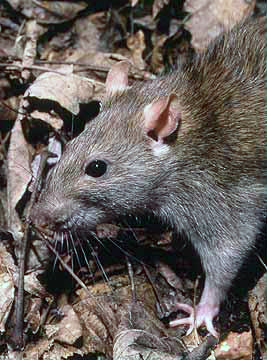 Brown RatRattus norvegicus
-
 Black RatRattus rattus
-
 Polynesian RatRattus exulans
-
 RakaliHydromys chrysogaster
-
 Wood MouseApodemus sylvaticus
-
 Eurasian Harvest MouseMicromys minutus
-
 Bramble Cay MelomysMelomys rubicola
-
 Greater Bandicoot RatBandicota indica
Compare
Questions and answers
What is the scientific name of the Rudd's Mouse?
The scientific name of the Rudd's Mouse is Uranomys ruddi. Written with its author, the full name is Uranomys ruddi Dollman, 1909.
Which family does the Rudd's Mouse belong to?
Uranomys ruddi belongs to the family Muridae, in the order Rodentia and the class Mammalia.
Where is the Rudd's Mouse found?
Checklists and occurrence records place Uranomys ruddi in 15 countries, including Ivory Coast, Guinea, Ghana, Sierra Leone, Benin and Tanzania.
What is the conservation status of the Rudd's Mouse?
The IUCN Red List category recorded for Uranomys ruddi is Least Concern (LC).
What other names does the Rudd's Mouse have?
Uranomys ruddi is also known in English as Rudd S Bristle-furred Rat, Rudd's Bristle-furred Rat, Rudd's Mouse. and Rudd’s Bristle-furred Rat.
What is a mouse's natural habitat?
Rudd's Mouse is usually found in savannah habitat.[6]
Sources
Passages the profile rests on
- The head-and-body length ranges from 8.4 to 13.4 cm. Source passage: “Head and body sizes range from 8.4 to 13.4 cm long.” — English Wikipedia
- The tail measures between 5.3 and 7.9 cm long. Source passage: “Tail length is 5.3-7.9 cm.” — English Wikipedia
- The hairs on the back are stiff rather than spiny. Source passage: “The hairs on the back of this species are stiff like the brush-furred mice, but not spiny as in Acomys.” — English Wikipedia
- The feet are covered in white hairs. Source passage: “feet are covered in white hairs.” — English Wikipedia
- The incisors project anteriorly. Source passage: “Incisors project anteriorly.” — English Wikipedia
- The species is usually found in savannah habitat. Source passage: “They are usually taken in savannah habitat.” — English Wikipedia
- The species occurs across a wide geographical range in Africa. Source passage: “The animal is known across a wide range in Africa” — English Wikipedia
- The species feeds predominantly on insects. Source passage: “It feeds predominantly on insects.” — English Wikipedia
- The species is thought to be nocturnal. Source passage: “Rudd's mouse is thought to be nocturnal.” — English Wikipedia
- The species is closely related to spiny mice, brush-furred mice, and the link rat. Source passage: “This animal is closely related to the spiny mice, brush-furred mice, and the link rat.” — English Wikipedia
Data
- Catalogue of Life, 2026-10-16 XR cc by
- Global Biodiversity Information Facility CC BY 4.0
- Wikidata CC0
- GeoNames CC BY 4.0
- Wikimedia Commons per image; credit shown with each image
- Within the Catalogue of Life, this name comes from The Integrated Taxonomic Information System cc0
References
- Ann. Mag. Nat. Hist., ser. 8 vol.4 p.552 where the name was published
- Rosevear, D. R. (1969). The Rodents of West Africa.
- Wilson, Don E., and DeeAnn M. Reeder, eds. (1993). Mammal Species of the World: A Taxonomic and Geographic Reference, 2nd Ed., 3rd Printing.
- Musser, Guy G., and Michael D. Carleton / Wilson, Don E., and DeeAnn M. Reeder, eds. (2005). Superfamily Muroidea. Mammal Species of the World: A Taxonomic and Geographic Reference, 3rd Ed., Vol. 2.
This species in other databases
Page built on 29 November 2026. See how the catalog is made and all sources and licences.
Cite this page
ScientificNames.org. (2026). Uranomys ruddi (Rudd's Mouse). Retrieved November 29, 2026, from https://scientificnames.org/species/uranomys-ruddi
“Uranomys ruddi (Rudd's Mouse).” ScientificNames.org, 2026, scientificnames.org/species/uranomys-ruddi. Accessed 29 Nov. 2026.
ScientificNames.org. “Uranomys ruddi (Rudd's Mouse).” Accessed November 29, 2026. https://scientificnames.org/species/uranomys-ruddi.
@misc{scientificnames_uranomys_ruddi_rudds_mouse,
  author = {{ScientificNames.org}},
  title = {Uranomys ruddi (Rudd's Mouse)},
  year = {2026},
  url = {https://scientificnames.org/species/uranomys-ruddi},
  note = {Accessed 2026-11-29}
}