Species · Flowering plants
Yellow Vine Coscinium fenestratum
The scientific name of the Yellow Vine is Coscinium fenestratum. It is a species of flowering plant in the family Menispermaceae (moonseed family), order Ranunculales.
- Scientific name
- Coscinium fenestratum (Gaertn.) Colebr.
- Common name
- Yellow Vine
- Genus
- Coscinium
- Family
- Menispermaceae (Moonseed Family)
- Order
- Ranunculales
- Class
- Magnoliopsida
- Red List category
- DD Data Deficient
- Recorded in
- 9 countries
- Name status
- accepted in the Catalogue of Life

Overview
The habitat extends across South Asia and parts of Southeast Asia, from India to Indonesia. It is a sturdy woody climbing plant with leathery, shiny leaves and bright yellow sap.
Written 26 November 2026 from the sources listed below. Each statement was checked against the passage it cites; statements that could not be supported were removed.
Appearance
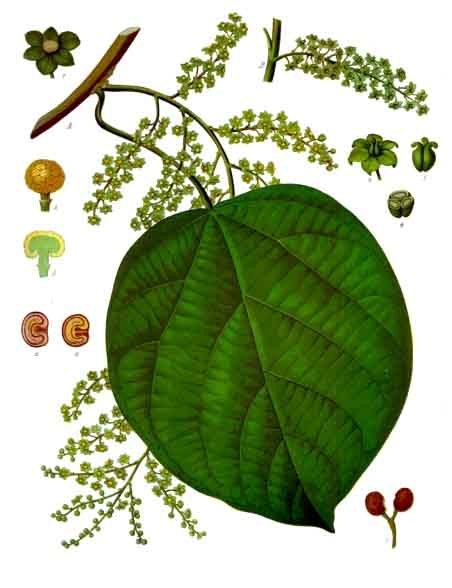
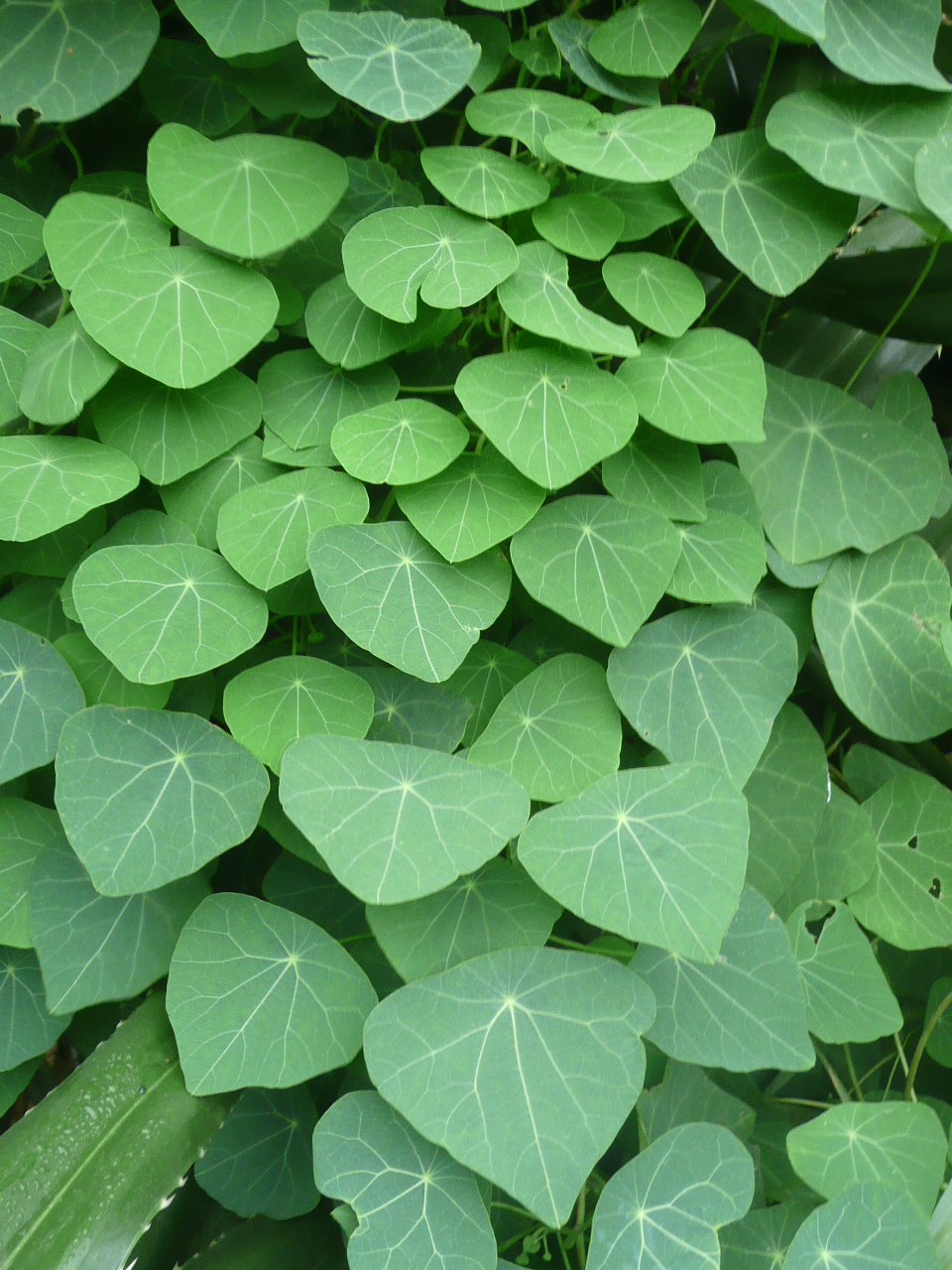
Yellow Vine is a sturdy woody climbing plant with leathery, shiny leaves and bright yellow sap.[1]
Its fruits consist of one or two drupes measuring up to 2 cm across.[2]
Habitat
Yellow Vine prefers mixed and dense evergreen forests with fertile soil and high moisture. It can thrive only in tropical climates.[3][4]
Its habitat extends across South Asia and parts of Southeast Asia, from India to Indonesia. It is considered native to Sri Lanka and India's Western Ghats.[5][6]
The wild status of populations in Cambodia, Vietnam and western Malaysia is uncertain because they may originate from cultivation.[7]
Reproduction and life cycle
Yellow Vine is dioecious, with flowering and fruiting occurring from August through October.[8]
Its generation span is 25 years.[9]
Uses
Yellow Vine has a long history of use in traditional medicinal systems across its native region. It is used in Ayurveda, Unani and Siddha medicine in India, Sinhala traditional medicine in Sri Lanka, the Kru Khmer healing traditions of Cambodia, and traditional Vietnamese medicine known as Thuốc Nam.[10][11][12][13][14]
Traditional medicinal applications include treatments for fevers, diabetes, celiac disease and snake bites.[15]
Berberine is the primary bioactive ingredient identified in Yellow Vine. Palmatine and jatrorrhizine are also identified as bioactive compounds.[16][17]
India traded an estimated 140 metric tons of raw Yellow Vine material annually as of 2008.[18]
Conservation
Yellow Vine is classified as rare and critically endangered in many of its habitats. India's populations were categorized as critically endangered in 1997, 2010 and 2016, while Vietnam's populations were categorized as vulnerable beginning in 1997.[19][20][21]
The global conservation status of Yellow Vine could not be reliably assessed because sufficient field data were unavailable as of 2015.[22]
Indian and Sri Lankan populations declined by 80% over 75 years because of indiscriminate gathering. Few mature individuals remain in the wild in these populations.[23][24]
Cultivation experiments are being conducted as an alternative to harvesting Yellow Vine from natural habitats.[25]
Exporting Yellow Vine from India is illegal. Exporting yellow vine and yellow vine powder from Cambodia has been illegal since 2006.[26][27]
Classification of the Yellow Vine
| Kingdom | Plantae |
|---|---|
| Subkingdom | Pteridobiotina |
| Phylum | Tracheophyta |
| Class | Magnoliopsida |
| Order | Ranunculales |
| Family | Menispermaceae (Moonseed Family) |
| Subfamily | Chasmantheroideae |
| Tribe | Coscinieae |
| Genus | Coscinium |
| Species | Coscinium fenestratum (Gaertn.) Colebr. |
Where the Yellow Vine is found
Checklists and occurrence records place Coscinium fenestratum in 9 countries across Asia. GBIF holds 336 georeferenced records of it.
Countries
- Cambodia 9
- India 33
- Indonesia 100
- Laos 3
- Malaysia 102
- Singapore 6
- Sri Lanka 69
- Thailand 1
- Vietnam 13
Regions and cities with the most records
- Sabah, Malaysia 14
- Aceh, Indonesia 8
- Karnataka, India 5
- Bogor, Indonesia 4
- Caringin, Indonesia 4
- Ciampea, Indonesia 4
- Cibinong, Indonesia 4
- Citeureup, Indonesia 4
- Madikeri, India 4
- Sarawak, Malaysia 4
- Kerala, India 3
- Lampung, Indonesia 3
- Lumut, Malaysia 3
- Perak, Malaysia 3
- Perling, Malaysia 3
- Seri Manjung, Malaysia 3
- Sitiawan, Malaysia 3
- Tawau, Malaysia 3
- Tamil Nadu, India
Range as the checklists state it
India (Karnataka, Tamil Nadu); Sri Lanka; NE-Thailand; Laos; Cambodia; Vietnam; peninsular Malaysia; Singapore; Sumatera; Borneo; W-Jawa
A number beside a place is its count of GBIF occurrence records. A place without a number comes from a checklist alone. Records show where a species has been observed or collected, which can include escapes and vagrants.
Common names
English
- Yellow Vine
- False Calumba
Names in 3 other languages
- Chinese
- 假可坡根
- Sinhala
- වෙනිවැල්
- Slovak
- kalumbovec okienkovitý
Synonyms
12 other scientific names have been used for this species and are now treated as synonyms of Coscinium fenestratum.
- Cissampelos aurea Koenig ex Diels
- Coscinium fenestratum var. macrophyllum Yamam.
- Coscinium fenestratum var. ovalifolium Yamam.
- Coscinium maingayi Pierre
- Coscinium miosepalum Diels
- Coscinium peltatum Merr.
- Coscinium usitatum Pierre
- Coscinium wallichianum Miers
- Coscinium wightianum Miers
- Coscinium wightianum Miers ex Diels
- Menispermum fenestratum Gaertn.
- Pereiria medica Lindl.
Related species
- Coscinium blumeanum
-
 Canada MoonseedMenispermum canadense
- Carolina SnailseedNephroia carolina
-
 Chondrodendron tomentosum
-
 FishberryAnamirta cocculus
-
 Cocculus hirsutus
-
 Tiliacora triandra
-
 Stephania cephalantha
Compare
Questions and answers
What is the scientific name of the Yellow Vine?
The scientific name of the Yellow Vine is Coscinium fenestratum. Written with its author, the full name is Coscinium fenestratum (Gaertn.) Colebr..
Which family does the Yellow Vine belong to?
Coscinium fenestratum belongs to the family Menispermaceae, in the order Ranunculales and the class Magnoliopsida.
Where is the Yellow Vine found?
Checklists and occurrence records place Coscinium fenestratum in 9 countries, including Malaysia, Indonesia, Sri Lanka, India, Vietnam and Cambodia.
What is the conservation status of the Yellow Vine?
The IUCN Red List category recorded for Coscinium fenestratum is Data Deficient (DD).
What other names does the Yellow Vine have?
Coscinium fenestratum is also known in English as False Calumba.
What is venivelgeta good for?
Traditional medicinal applications of Yellow Vine include treatments for fevers, diabetes, celiac disease and snake bites.[15]
Sources
Passages the profile rests on
- Coscinium fenestratum is a sturdy woody climbing plant with leathery, shiny leaves and bright yellow sap. Source passage: “Coscinium fenestratum is a sturdy woody climber with leathery, shiny leaves and bright yellow sap.” — English Wikipedia
- Its fruits consist of one or two drupes measuring up to 2 cm across. Source passage: “The fruits consists of one or two drupes up to 2 cm (0.8 in) across.” — English Wikipedia
- The species prefers mixed and dense evergreen forests with fertile soil and high moisture. Source passage: “prefers mixed and dense evergreen forest, with fertile soil and high moisture.” — English Wikipedia
- The species can thrive only in tropical climates. Source passage: “It can only thrive in a tropical climate” — English Wikipedia
- The species' habitat extends across South Asia and parts of Southeast Asia, from India to Indonesia. Source passage: “The habitat for Coscinium fenestratum spans South Asia and parts of Southeast Asia, from India to Indonesia.” — English Wikipedia
- The species is considered native to Sri Lanka and India's Western Ghats. Source passage: “The plant has been determined to be native to Sri Lanka and the Western Ghats in India.” — English Wikipedia
- The wild status of populations in Cambodia, Vietnam and western Malaysia is uncertain because they may originate from cultivation. Source passage: “It is unclear if the populations in Cambodia, Vietnam and west Malaysia are truly wild or the result of cultivation.” — English Wikipedia
- Coscinium fenestratum is dioecious, with flowering and fruiting occurring from August through October. Source passage: “It is dioecious, flowering and fruiting in August to October.” — English Wikipedia
- The species has a generation span of 25 years. Source passage: “The plant has a generation span of 25 years.” — English Wikipedia
- Coscinium fenestratum has a long history of use in traditional medicinal systems across its native region. Source passage: “Coscinium fenestratum has a long history as a medicinal plant in the various traditional medicines of the region where it grows.” — English Wikipedia
- The species is used in Ayurveda, Unani and Siddha medicine in India. Source passage: “This includes Ayurveda, Unani and Siddha medicine in India,” — English Wikipedia
- The species is used in Sinhala traditional medicine in Sri Lanka. Source passage: “Sinhala medicine in Sri Lanka,” — English Wikipedia
- The species is used in the Kru Khmer healing traditions of Cambodia. Source passage: “the Kru Khmer healing traditions in Cambodia,” — English Wikipedia
- The species is used in traditional Vietnamese medicine known as Thuốc Nam. Source passage: “traditional Vietnamese medicine of Thuốc Nam” — English Wikipedia
- Traditional medicinal applications of the species include treatments for fevers, diabetes, celiac disease and snake bites. Source passage: “The plant is used for a large variety of diseases and conditions, from fevers and diabetes to celiac disease and snake bites.” — English Wikipedia
- Berberine is the primary bioactive ingredient identified in Coscinium fenestratum. Source passage: “The primary bioactive ingredient in Coscinium fenestratum is berberine,” — English Wikipedia
- Palmatine and jatrorrhizine are also identified as bioactive compounds in the species. Source passage: “but also palmatine and jatrorrhizine.” — English Wikipedia
- India traded an estimated 140 metric tons of raw Coscinium fenestratum material annually as of 2008. Source passage: “As of 2008, an estimated 140 metric tons (150 short tons) of raw material from C. fenestratum is traded each year in India” — English Wikipedia
- Coscinium fenestratum is classified as rare and critically endangered in many of its habitats. Source passage: “It is therefore now listed as rare and critically endangered in many of its habitats.” — English Wikipedia
- India's populations of Coscinium fenestratum were categorized as critically endangered in 1997, 2010 and 2016. Source passage: “India: Critically endangered (1997, 2010, 2016)” — English Wikipedia
- Vietnam's populations were categorized as vulnerable beginning in 1997. Source passage: “Vietnam: Vulnerable (since 1997)” — English Wikipedia
- The global conservation status of the species could not be reliably assessed because sufficient field data were unavailable as of 2015. Source passage: “not enough field data is available as of 2015 for any reliable assessment of its global status in the IUCN Red List.” — English Wikipedia
- Indian and Sri Lankan populations declined by 80% over 75 years because of indiscriminate gathering. Source passage: “Over a 75 year period (three generations for this species), the plant population has been reduced by 80% due to indiscriminate gathering by local people.” — English Wikipedia
- Few mature individuals remain in the wild in the Indian and Sri Lankan populations. Source passage: “Hardly any mature plants are left in the wild.” — English Wikipedia
- Cultivation experiments are being conducted as an alternative to harvesting the species from natural habitats. Source passage: “Experiments with cultivating Coscinium fenestratum, instead of harvesting the plant in its natural environment, is carried out at present.” — English Wikipedia
- Exporting Coscinium fenestratum from India is illegal. Source passage: “It is illegal to export C. fenestratum from India.” — English Wikipedia
- Exporting yellow vine and yellow vine powder from Cambodia has been illegal since 2006. Source passage: “since 2006 it has also been illegal to export both yellow vine and "yellow vine powder".” — English Wikipedia
Data
- Catalogue of Life, 2026-10-16 XR cc by
- Global Biodiversity Information Facility CC BY 4.0
- Wikidata CC0
- GeoNames CC BY 4.0
- Wikimedia Commons per image; credit shown with each image
- Within the Catalogue of Life, this name comes from Synonymic Checklists of the Vascular Plants of the World cc by
References
- Colebr. (1822). Trans. Linn. Soc. London 13: 65 (1822). where the name was published
This species in other databases
- Catalogue of Life 6B6J2
- Wikidata Q13113872
- iNaturalist 427389
- World Flora Online wfo-0000623526
- GRIN 406445
Page built on 29 November 2026. See how the catalog is made and all sources and licences.
Cite this page
ScientificNames.org. (2026). Coscinium fenestratum (Yellow Vine). Retrieved November 29, 2026, from https://scientificnames.org/species/coscinium-fenestratum
“Coscinium fenestratum (Yellow Vine).” ScientificNames.org, 2026, scientificnames.org/species/coscinium-fenestratum. Accessed 29 Nov. 2026.
ScientificNames.org. “Coscinium fenestratum (Yellow Vine).” Accessed November 29, 2026. https://scientificnames.org/species/coscinium-fenestratum.
@misc{scientificnames_coscinium_fenestratum_yellow_vine,
  author = {{ScientificNames.org}},
  title = {Coscinium fenestratum (Yellow Vine)},
  year = {2026},
  url = {https://scientificnames.org/species/coscinium-fenestratum},
  note = {Accessed 2026-11-29}
}