Species · Amphibians
Chiriqui Caecilian Dermophis gracilior
The scientific name of the Chiriqui Caecilian is Dermophis gracilior. It is a species of amphibian in the family Dermophiidae (neotropical and afrotropical caecilians), order Gymnophiona. The name dates from 1902.
- Scientific name
- Dermophis gracilior Günther, 1902
- Common name
- Chiriqui Caecilian
- Genus
- Dermophis
- Family
- Dermophiidae (Neotropical and Afrotropical Caecilians)
- Order
- Gymnophiona
- Class
- Amphibia
- Red List category
- DD Data Deficient
- Recorded in
- 1 country
- Name status
- accepted in the Catalogue of Life
Overview
Dermophis gracilior occurs on the Pacific slopes of the Cordillera de Talamanca in eastern Costa Rica and western Panama, and in central Pacific Costa Rica. Adults measure 255–387 mm in total length.
Written 27 November 2026 from the sources listed below. Each statement was checked against the passage it cites; statements that could not be supported were removed.
Appearance
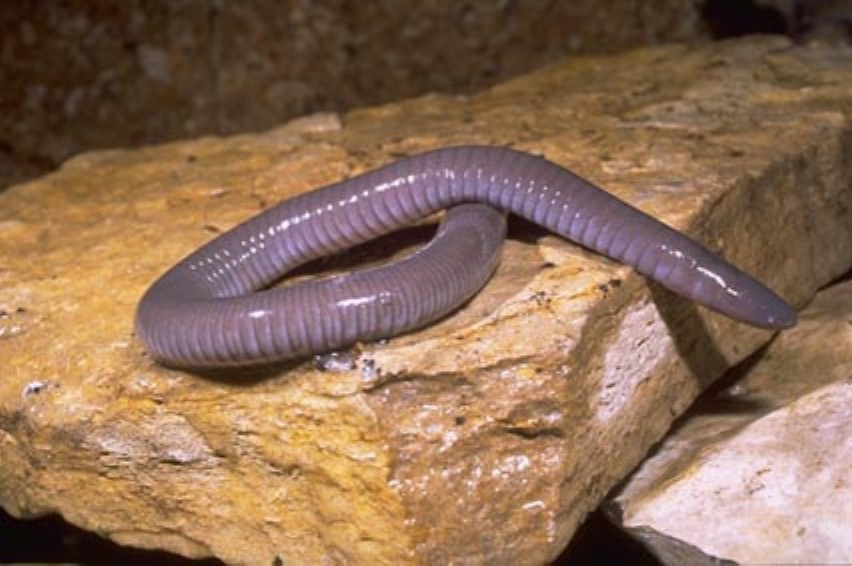
The body is somewhat robust, with its length measuring 23 to 34 times its width. The species has between 91 and 117 primary annuli and between 65 and 96 secondary annuli.[1][2]
The upper surface is lead-gray. The lower surface is cream-colored with dark mottling or is predominantly gray to dull black.[3][4]
The annular grooves have coloration similar to the adjacent body areas.[5]
Habitat
The species inhabits humid lowland, premontane, and montane forests. It occurs at elevations of 404–2,000 m above sea level.[6][7]
The species is subterranean and can be found beneath logs and surface debris.[8]
Reproduction and life cycle
The species is considered probably viviparous.[9]
Conservation
The species is poorly known and documented from few specimens. Deforestation is considered a possible threat to the species.[10][11]
The species is classified as Data Deficient (DD) in the AmphibiaWeb record.[12]
Classification of the Chiriqui Caecilian
| Kingdom | Animalia |
|---|---|
| Phylum | Chordata |
| Subphylum | Vertebrata |
| Infraphylum | Gnathostomata |
| Parvphylum | Osteichthyes |
| Megaclass | Tetrapoda |
| Class | Amphibia (Amphibians) |
| Order | Gymnophiona (Caecilian) |
| Family | Dermophiidae (Neotropical and Afrotropical Caecilians) |
| Genus | Dermophis (Mexican Caecilians) |
| Species | Dermophis gracilior Günther, 1902 |
Where the Chiriqui Caecilian is found
Checklists and occurrence records place Dermophis gracilior in 1 country. GBIF holds 10 georeferenced records of it.
Countries
Regions and cities with the most records
A number beside a place is its count of GBIF occurrence records. A place without a number comes from a checklist alone. Records show where a species has been observed or collected, which can include escapes and vagrants.
Common names
English
- Chiriqui Caecilian
- Southern Caecilian
- Talamanca Caecilian
Names in 2 other languages
- Italian
- Cecilia costaricana meridionale
- Spanish
- cecilido del sur
Synonyms
One other scientific name has been used for this species and is now treated as a synonym of Dermophis gracilior.
- Dermophis mexicanus gracilior Günther, 1902
Related species
-
 Mexican Burrowing CaecilianDermophis mexicanus
-
 Slender CaecilianDermophis parviceps
- Oaxacan CaecilianDermophis oaxacae
- Atlantic Montane CaecilianDermophis costaricense
- San Isidro CaecilianDermophis glandulosus
- Pacific Slender CaecilianDermophis occidentalis
- Gaboon CaecilianGeotrypetes seraphini
-
 São Tomé CaecilianSchistometopum thomense
Compare
Questions and answers
What is the scientific name of the Chiriqui Caecilian?
The scientific name of the Chiriqui Caecilian is Dermophis gracilior. Written with its author, the full name is Dermophis gracilior Günther, 1902.
Which family does the Chiriqui Caecilian belong to?
Dermophis gracilior belongs to the family Dermophiidae, in the order Gymnophiona and the class Amphibia.
Where is the Chiriqui Caecilian found?
Checklists and occurrence records place Dermophis gracilior in 1 country: Panama.
What is the conservation status of the Chiriqui Caecilian?
The IUCN Red List category recorded for Dermophis gracilior is Data Deficient (DD).
What other names does the Chiriqui Caecilian have?
Dermophis gracilior is also known in English as Southern Caecilian and Talamanca Caecilian.
Sources
Passages the profile rests on
- The species has between 91 and 117 primary annuli and between 65 and 96 secondary annuli. Source passage: “It has 91–117 primary and 65–96 secondary annuli.” — English Wikipedia
- The body is somewhat robust, with its length measuring 23 to 34 times its width. Source passage: “The body is somewhat robust (length 23 to 34 times the body width).” — English Wikipedia
- The upper surface is lead-gray. Source passage: “The upper surface is lead-gray in color,” — English Wikipedia
- The lower surface is cream-colored with dark mottling or is predominantly gray to dull black. Source passage: “whereas the lower one is cream with dark mottling, or largely gray to dull black.” — English Wikipedia
- The annular grooves have coloration similar to the adjacent body areas. Source passage: “The annular grooves are similarly colored as the adjacent areas.” — English Wikipedia
- The species inhabits humid lowland, premontane, and montane forests. Source passage: “Dermophis gracilior occurs in humid lowland, premontane, and montane forests” — English Wikipedia
- The species occurs at elevations of 404–2,000 m above sea level. Source passage: “at elevations 404–2,000 m (1,325–6,562 ft) above sea level.” — English Wikipedia
- The species is subterranean and can be found beneath logs and surface debris. Source passage: “It is a subterranean species that can be found under logs and surface debris.” — English Wikipedia
- The species is considered probably viviparous. Source passage: “It is probably viviparous.” — English Wikipedia
- The species is poorly known and documented from few specimens. Source passage: “D. gracilior is a poorly known species known from few specimens.” — English Wikipedia
- Deforestation is considered a possible threat to the species. Source passage: “Deforestation might be a threat to it.” — English Wikipedia
- The species is classified as Data Deficient (DD) in the AmphibiaWeb record. Source passage: “Dermophis gracilior, no photos, Data Deficient (DD), Dermophiidae, Gymnophiona.” — amphibiaweb.org
Data
- Catalogue of Life, 2026-10-16 XR cc by
- Global Biodiversity Information Facility CC BY 4.0
- Wikidata CC0
- GeoNames CC BY 4.0
- Within the Catalogue of Life, this name comes from The Integrated Taxonomic Information System cc0
This species in other databases
Page built on 28 November 2026. See how the catalog is made and all sources and licences.
Cite this page
ScientificNames.org. (2026). Dermophis gracilior (Chiriqui Caecilian). Retrieved November 28, 2026, from https://scientificnames.org/species/dermophis-gracilior
“Dermophis gracilior (Chiriqui Caecilian).” ScientificNames.org, 2026, scientificnames.org/species/dermophis-gracilior. Accessed 28 Nov. 2026.
ScientificNames.org. “Dermophis gracilior (Chiriqui Caecilian).” Accessed November 28, 2026. https://scientificnames.org/species/dermophis-gracilior.
@misc{scientificnames_dermophis_gracilior_chiriqui_caecilian,
  author = {{ScientificNames.org}},
  title = {Dermophis gracilior (Chiriqui Caecilian)},
  year = {2026},
  url = {https://scientificnames.org/species/dermophis-gracilior},
  note = {Accessed 2026-11-28}
}