Species · Birds
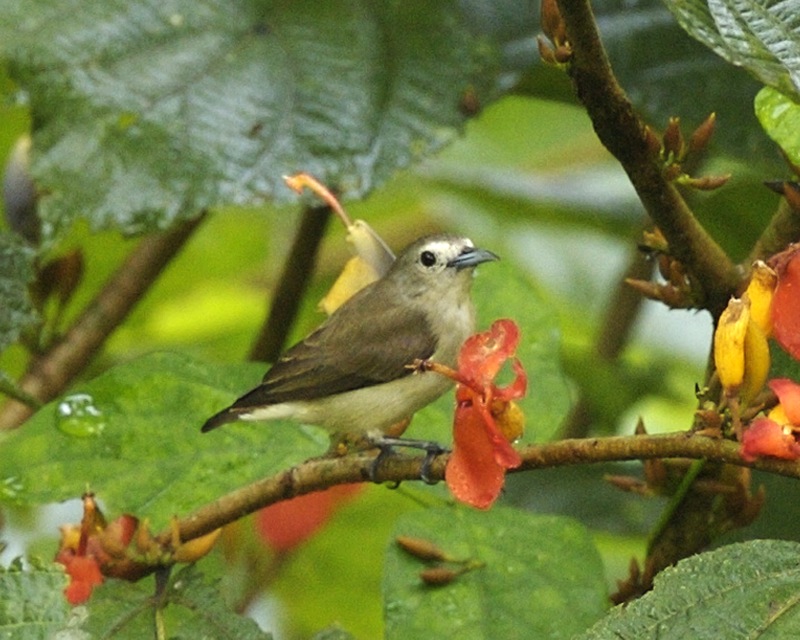
Pale-billed Flowerpecker Dicaeum erythrorhynchos
The scientific name of the Pale-billed Flowerpecker is Dicaeum erythrorhynchos. It is a species of bird in the family Dicaeidae (flowerpecker), order Passeriformes. The name dates from 1790.
- Scientific name
- Dicaeum erythrorhynchos (Latham, 1790)
- Common name
- Pale-billed Flowerpecker
- Genus
- Dicaeum
- Family
- Dicaeidae (Flowerpecker)
- Order
- Passeriformes
- Class
- Aves
- Recorded in
- 5 countries
- Name status
- accepted in the Catalogue of Life
Overview
The Pale-billed Flowerpecker is a bird measuring approximately 8 cm in length. It occurs in India, Sri Lanka, Bangladesh and western Myanmar. It has plain brownish to olive-green plumage, a buff olive underside and a pinkish, curved beak.
Written 27 November 2026 from the sources listed below. Each statement was checked against the passage it cites; statements that could not be supported were removed.
Appearance
The species has plain brownish to olive-green plumage. Its underside is buff olive, with little contrast against its upperparts, and its head has no distinctive markings.[1][2][3]
Its beak is pinkish and curved. The species measures approximately 8 cm in length and is among the smallest birds occurring in much of southern India and Sri Lanka.[4][5][6]
Habitat
The species commonly occurs in urban gardens containing berry-bearing trees. It is also attracted to introduced fruit trees in urban areas.[7][8]
It visits flowering plants in forested areas.[9]
Diet
The species feeds on nectar and berries. It consumes berries produced by Loranthus and Viscum plants and fruits of the introduced tree Muntingia calabura.[10][11][12]
It obtains nectar from flowers of Sterculia colorata and Woodfordia floribunda.[13][14]
Behaviour
The species produces a rapid chipping call. It generally swallows the berries of epiphytic parasites whole, and seeds pass through its digestive tract in approximately three to four minutes.[15][16][17]
The species pollinates flowers of Dendrophthoe falcata. It also pollinates Sterculia colorata and Woodfordia floribunda while feeding on their nectar.[18][19]
Reproduction and life cycle
The main breeding season extends from February through June. The species may produce a second brood in September.[20][21]
The species builds a small pendant purse-shaped nest from cobwebs, fibre, moss and down. The nest is suspended from the tip of a twig high in a tree.[22][23][24]
The nest entrance is shaped like a slit. Clutches contain two or three eggs.[25][26]
Classification of the Pale-billed Flowerpecker
| Kingdom | Animalia |
|---|---|
| Phylum | Chordata |
| Subphylum | Vertebrata |
| Infraphylum | Gnathostomata |
| Parvphylum | Osteichthyes |
| Megaclass | Tetrapoda |
| Class | Aves (Bird) |
| Order | Passeriformes (Passerine) |
| Family | Dicaeidae (Flowerpecker) |
| Genus | Dicaeum (Flowerpeckers) |
| Species | Dicaeum erythrorhynchos (Latham, 1790) |
Where the Pale-billed Flowerpecker is found
Checklists and occurrence records place Dicaeum erythrorhynchos in 5 countries. GBIF holds 325,769 georeferenced records of it.
Countries
Regions and cities with the most records
- Karnataka, India 110,551
- Kerala, India 80,120
- Bengaluru, India 65,965
- Yelahanka, India 47,186
- Electronic City Phase I, India 38,043
- koppana Agrahara, India 37,889
- Hebbagodi, India 35,220
- Bommasandra Industrial Area, India 34,211
- Tamil Nadu, India 33,256
- Jigani, India 28,451
- Maharashtra, India 19,769
- Nelamangala, India 15,122
- Thiruvankulam, India 14,613
- Tripunittura, India 14,602
- Maradu, India 14,589
- Kumbalam, India 14,100
- Manakunnam, India 14,059
- Mulamthuruthy, India 13,967
- Kochi, India 13,861
- Hoskote, India 13,689
- Arukutti, India 13,096
- Aroor, India 12,685
- Attibele, India 12,638
- Mulleriyawa, Sri Lanka 12,296
- Battaramulla South, Sri Lanka 12,256
- Kolonnawa, Sri Lanka 12,238
- Kotikawatta, Sri Lanka 12,234
- Pita Kotte, Sri Lanka 12,232
- Sri Jayewardenepura Kotte, Sri Lanka 12,125
- Kelaniya, Sri Lanka 11,900
- Maharagama, Sri Lanka 11,826
- Mysuru, India 11,811
- Peliyagoda, Sri Lanka 11,805
- Colombo, Sri Lanka 11,683
- Wattala, Sri Lanka 11,547
- Hendala, Sri Lanka 11,443
A number beside a place is its count of GBIF occurrence records. A place without a number comes from a checklist alone. Records show where a species has been observed or collected, which can include escapes and vagrants.
Common names
English
- Pale-billed Flowerpecker
Names in 33 other languages
- Bengali
- মেটেঠোঁট ফুলঝুরি
- Catalan
- picaflors de bec pàl·lid
- Chinese
- 淡嘴啄花鳥, 淡嘴啄花鸟, 特克氏淡嘴啄花
- Croatian
- indijska imelašica
- Czech
- květozob křivozobý
- Danish
- Blegnæbbet Blomsterpikker
- Dutch
- Geelsnavelhoningvogel
- Esperanto
- palbeka dikeo
- Finnish
- intiankukastaja
- French
- Dicée à bec rouge
- German
- Blassschnabel-Mistelfresser, Lachsschnabel-Mistelfresser, Lachsschnabelmistelfresser
- Italian
- Beccafiore beccochiaro, Beccafiori di Tickell
- Japanese
- アカハシハナドリ
- Kannada
- ಬದನಿಕೆ ಹಕ್ಕಿ
- Lithuanian
- blyškiasnapis žiedsiurbys
- Malayalam
- ചെങ്കൊക്കൻ ഇത്തിക്കണ്ണിക്കുരുവി
- Marathi
- फुलटोचा
- Nepali
- रातोठुँडे पुष्पकोकिल
- Norwegian
- bleknebblomsterfugl
- Norwegian Bokmål
- Bleknebbblomsterfugl
- Polish
- kwiatówka jasnodzioba
- Portuguese
- pica-flor-de-bico-pálido, pica-flor-de-bico-rosado
- Russian
- Индийский цветоед, Красноклювый цветоед
- Serbian
- Bledokljuna cvetarka
- Slovak
- bobuliar hájový
- Spanish
- Picaflores piquirrojo
- Swedish
- bleknäbbad blomsterpickare
- Tamil
- திக்கெல்லின் பூங்கொத்தி
- Turkish
- Açık Gagalı Öksekuşu
- Ukrainian
- квіткоїд індійський
- Vietnamese
- Chim sâu mỏ nhạt
- Welsh
- pigwr blodau Tickell
- pnb
- ٹکل پھل ٹھونگا
Synonyms
2 other scientific names have been used for this species and are now treated as synonyms of Dicaeum erythrorhynchos.
- Certhia erythrorhynchos Latham, J, 1790
- Certhia rubrirostris Forster, JR, 1795
Subspecies and varieties
- Dicaeum erythrorhynchos ceylonense subspecies
- Dicaeum erythrorhynchos erythrorhynchos (Pale-billed Flowerpecker) subspecies
Related species
-
 MistletoebirdDicaeum hirundinaceum
-
 Cebu FlowerpeckerDicaeum quadricolor
-
 Scarlet-backed FlowerpeckerDicaeum cruentatum
-
 Red-keeled FlowerpeckerDicaeum australe
-
 Fire-breasted FlowerpeckerDicaeum ignipectus
-
 Orange-bellied FlowerpeckerDicaeum trigonostigma
-
 Nilgiri FlowerpeckerDicaeum concolor
-
 Thick-billed FlowerpeckerDicaeum agile
Compare
Questions and answers
What is the scientific name of the Pale-billed Flowerpecker?
The scientific name of the Pale-billed Flowerpecker is Dicaeum erythrorhynchos. Written with its author, the full name is Dicaeum erythrorhynchos (Latham, 1790).
Which family does the Pale-billed Flowerpecker belong to?
Dicaeum erythrorhynchos belongs to the family Dicaeidae, in the order Passeriformes and the class Aves.
Where is the Pale-billed Flowerpecker found?
Checklists and occurrence records place Dicaeum erythrorhynchos in 5 countries: India, Sri Lanka, Bangladesh, Nepal and Bhutan.
Sources
Passages the profile rests on
- The species has a plain brownish to olive-green plumage. Source passage: “The bird is plain brownish to olive green.” — English Wikipedia
- Its underside is buff olive and has little contrast with its upperparts. Source passage: “The underside is buff olive and does not contrast greatly with the upperparts” — English Wikipedia
- The species has no distinctive markings on its head. Source passage: “this species which has no marking on the head.” — English Wikipedia
- Its beak is pinkish and curved. Source passage: “the pinkish curved beak separates it from other species in the region.” — English Wikipedia
- The species measures approximately 8 cm in length. Source passage: “This is a tiny bird, 8 cm long” — English Wikipedia
- The species is among the smallest birds occurring in much of southern India and Sri Lanka. Source passage: “is one of the smallest birds occurring in most parts of southern India and Sri Lanka.” — English Wikipedia
- The species commonly occurs in urban gardens containing berry-bearing trees. Source passage: “The bird is common especially in urban gardens with berry bearing trees.” — English Wikipedia
- The species is attracted to introduced fruit trees in urban areas. Source passage: “In urban areas, they are particularly attracted to introduced fruit trees such as Muntingia calabura” — English Wikipedia
- The species visits flowering plants in forested areas. Source passage: “In forested areas, they often visit the flowers of Loranthus (=Dendrophthoe) and Viscum species” — English Wikipedia
- The species feeds on nectar and berries. Source passage: “feeds on nectar and berries” — English Wikipedia
- The species consumes berries produced by Loranthus and Viscum plants. Source passage: “The berries of these epiphytic parasites are usually swallowed whole” — English Wikipedia
- The species consumes fruits of the introduced tree Muntingia calabura. Source passage: “the fruits of which may be swallowed whole or, in the case of ripe berries, crushed and the pulp accessed using their tongue.” — English Wikipedia
- The species obtains nectar from flowers of Sterculia colorata. Source passage: “They also sip nectar from flowers such as those of Sterculia colorata” — English Wikipedia
- The species obtains nectar from flowers of Woodfordia floribunda. Source passage: “Woodfordia floribunda, pollinating them in the process.” — English Wikipedia
- The species produces a rapid chipping call. Source passage: “They have a rapid chipping call” — English Wikipedia
- The species generally swallows the berries of epiphytic parasites whole. Source passage: “The berries of these epiphytic parasites are usually swallowed whole” — English Wikipedia
- Seeds pass through the species' digestive tract in approximately three to four minutes. Source passage: “the seeds are voided after a rapid passage through their gut in about three to four minutes.” — English Wikipedia
- The species pollinates flowers of Dendrophthoe falcata. Source passage: “The flowers of Dendrophthoe falcata are pollinated by this species.” — English Wikipedia
- The species also pollinates Sterculia colorata and Woodfordia floribunda while feeding on their nectar. Source passage: “They also sip nectar from flowers such as those of Sterculia colorata and Woodfordia floribunda, pollinating them in the process.” — English Wikipedia
- The species' main breeding season extends from February through June. Source passage: “Tickell's flowerpeckers breed from February to June.” — English Wikipedia
- The species may produce a second brood in September. Source passage: “A second brood may be raised in September.” — English Wikipedia
- The species builds a small pendant purse-shaped nest. Source passage: “The nest is a small pendant purse-like structure” — English Wikipedia
- The nest is constructed from cobwebs, fibre, moss and down. Source passage: “made of cobwebs, fibre, moss and down” — English Wikipedia
- The nest is suspended from the tip of a twig high in a tree. Source passage: “suspended from the tip of a twig high up in a tree.” — English Wikipedia
- The nest entrance is shaped like a slit. Source passage: “The opening is a slit” — English Wikipedia
- The species lays clutches containing two or three eggs. Source passage: “a clutch of two or three eggs is laid.” — English Wikipedia
Data
- Catalogue of Life, 2026-10-16 XR cc by
- Global Biodiversity Information Facility CC BY 4.0
- Wikidata CC0
- GeoNames CC BY 4.0
- Within the Catalogue of Life, this name comes from The Integrated Taxonomic Information System cc0
References
- Gill, Frank, & and Minturn Wright. (2006). Birds of the World: Recommended English Names.
This species in other databases
Page built on 28 November 2026. See how the catalog is made and all sources and licences.
Cite this page
ScientificNames.org. (2026). Dicaeum erythrorhynchos (Pale-billed Flowerpecker). Retrieved November 28, 2026, from https://scientificnames.org/species/dicaeum-erythrorhynchos
“Dicaeum erythrorhynchos (Pale-billed Flowerpecker).” ScientificNames.org, 2026, scientificnames.org/species/dicaeum-erythrorhynchos. Accessed 28 Nov. 2026.
ScientificNames.org. “Dicaeum erythrorhynchos (Pale-billed Flowerpecker).” Accessed November 28, 2026. https://scientificnames.org/species/dicaeum-erythrorhynchos.
@misc{scientificnames_dicaeum_erythrorhynchos_pale_billed_flowerpecker,
  author = {{ScientificNames.org}},
  title = {Dicaeum erythrorhynchos (Pale-billed Flowerpecker)},
  year = {2026},
  url = {https://scientificnames.org/species/dicaeum-erythrorhynchos},
  note = {Accessed 2026-11-28}
}