Species · Mammals · Extinct
Falkland Islands Wolf Dusicyon australis
The scientific name of the Falkland Islands Wolf is Dusicyon australis. It is an extinct species of mammal in the family Canidae (dogs), order Carnivora. The name dates from 1792.

Overview
Dusicyon australis was native exclusively to the Falkland Islands and historically occurred on both West Falkland and East Falkland. It was a medium-sized, bulky, fox-like animal with relatively short legs, a tawny coat, and a bushy tail with a white tip.
Written 26 November 2026 from the sources listed below. Each statement was checked against the passage it cites; statements that could not be supported were removed.
Conservation
The Falkland Islands Wolf became extinct in 1876. Its final individual was most likely killed that year.[1][2]
Human settlers contributed to its decline by killing wolves for their fur and to protect livestock. Its bones are scarce in the Falkland Islands partly because acidic peat soil rapidly degrades them.[3][4]
Uses
Falkland Islands wolves were hunted for their fur, which entered the commercial fur trade. Some were reportedly domesticated by island inhabitants during the 1800s.[5][6]
Similar species
The maned wolf is identified as the closest living relative of the Falkland Islands Wolf. Dusicyon avus was its closest known extinct relative.[7][8]
Appearance
The Falkland Islands Wolf was medium-sized, bulky, and fox-like, with relatively short legs and tails. Its average head-and-body length was 97 cm, its shoulder height was approximately 38.1 cm, and its tail measured between 28.5 and 33 cm long.[9][10][11][12]
Its coat combined tawny, tan, and black hairs on the upper body and became paler underneath. The neck and inner legs were white.[13][14]
It had relatively small external ears and a bushy tail that was brown in the middle with a distinctive white tip.[15][16]
Its dentition included particularly large carnassial teeth, with a protocone pointing nearly backwards. Its skull featured a high, expanded frontal bone and lacked an interparietal crest.[17][18][19]
Habitat
The Falkland Islands Wolf occupied rocky mountainous terrain, boggy plains, and beaches.[20]
The species apparently occupied burrows in sand hills. Researchers suggested that it used burrows constructed by penguins or other animals rather than digging its own.[21][22]
In 2010, researchers found teeth and skulls of the species in a collapsed burrow in the Falkland Islands. The burrow contained four skulls, including one belonging to a juvenile.[23][24]
Diet
The Falkland Islands Wolf consumed birds, particularly geese and penguins. It also fed on small invertebrates and pinnipeds caught along the shores.[25][26]
Reported food items included fish, crabs, limpets, lizards, toads, serpents, and insects.[27]
Behaviour
The species reportedly hunted individually rather than in packs, although historical observations described it as social. It occupied the top-predator position in its habitat.[28][29][30]
Historical observations described the Falkland Islands Wolf as particularly gentle and apparently unafraid of humans. It displayed tameness and curiosity toward human visitors.[31][32]
The species reportedly had a weak bark and was active during daylight. It did not vocalize frequently, although its cries were sometimes heard at night.[33][34]
After human settlers arrived, the wolves reportedly learned a form of barking. They were also reportedly observed swimming while searching for food along beaches.[35][36]
Classification of the Falkland Islands Wolf
| Kingdom | Animalia |
|---|---|
| Phylum | Chordata |
| Subphylum | Vertebrata |
| Infraphylum | Gnathostomata |
| Parvphylum | Osteichthyes |
| Megaclass | Tetrapoda |
| Class | Mammalia (Mammal) |
| Subclass | Theria |
| Infraclass | Eutheria |
| Order | Carnivora (Carnivores) |
| Suborder | Caniformia (Dog-like Carnivores) |
| Family | Canidae (Dogs) |
| Genus | Dusicyon (Warrahs) |
| Species | Dusicyon australis (Kerr, 1792) |
Where the Falkland Islands Wolf is found
Checklists place Dusicyon australis in South America.
Range as the checklists state it
South America
A number beside a place is its count of GBIF occurrence records. A place without a number comes from a checklist alone. Records show where a species has been observed or collected, which can include escapes and vagrants.
Common names
English
- Falkland Islands Wolf
- Antarctic Wolf
- Falkland Island Wolf
- Falkland Warrah
- Falklands Wolf
- Warrah
Names in 12 other languages
- Arabic
- ذئب جزر فوكلاند
- Czech
- pes bojovný
- Dutch
- Falklandvos
- Finnish
- falklandinkoira
- French
- Loup des Falkland
- German
- Falklandfuchs
- Japanese
- フォークランドオオカミ
- Korean
- 포클랜드늑대
- Polish
- Wilk falklandzki, wilczak falklandzki
- Russian
- Фолклендская лисица
- Spanish
- Guará, Lobo de las Islas Malvinas, Zorro Antártico, Zorro Malvinense, Zorro-Lobo de las Malvinas, Zorro-lobo de Malvinas
- Turkish
- Falkland tilkisi
Synonyms
One other scientific name has been used for this species and is now treated as a synonym of Dusicyon australis.
- Canis australis Kerr, 1792
Related species
-
 Argentinean WarrahDusicyon avus
- DogCanis familiaris
-
 WolfCanis lupus
-
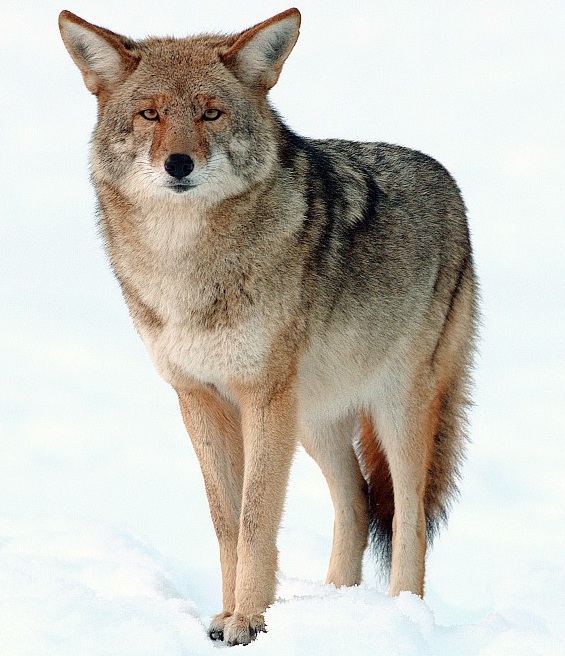 CoyoteCanis latrans
-
 Red FoxVulpes vulpes
-
 Japanese Raccoon DogNyctereutes viverrinus
-
 African Wild DogLycaon pictus
-
 Maned WolfChrysocyon brachyurus
Compare
Questions and answers
What is the scientific name of the Falkland Islands Wolf?
The scientific name of the Falkland Islands Wolf is Dusicyon australis. Written with its author, the full name is Dusicyon australis (Kerr, 1792).
Which family does the Falkland Islands Wolf belong to?
Dusicyon australis belongs to the family Canidae, in the order Carnivora and the class Mammalia.
What is the conservation status of the Falkland Islands Wolf?
The IUCN Red List category recorded for Dusicyon australis is Extinct (EX).
What other names does the Falkland Islands Wolf have?
Dusicyon australis is also known in English as Antarctic Wolf, Falkland Island Wolf, Falkland Warrah, Falklands Wolf and Warrah.
What happened to the Falkland Islands wolf?
The Falkland Islands Wolf became extinct in 1876. Human settlers contributed to its decline by killing wolves for their fur and to protect livestock.[1][3][2]
How big were Falkland Island wolves?
The average head-and-body length was 97 cm. They stood approximately 38.1 cm tall at the shoulder, and their tails measured between 28.5 and 33 cm long.[10][11][12]
What does the Falkland Island wolf eat?
It consumed birds, particularly geese and penguins, as well as small invertebrates and pinnipeds caught along the shores. Reported food items also included fish, crabs, limpets, lizards, toads, serpents, and insects.[25][26][27]
What does the wolves' diet consist of?
Their reported diet included geese, penguins, small invertebrates, pinnipeds, fish, crabs, limpets, lizards, toads, serpents, and insects.[25][26][27]
Sources
Passages the profile rests on
- The species became extinct in 1876. Source passage: “This endemic canid became extinct in 1876.” — English Wikipedia
- The species' final individual was most likely killed in 1876. Source passage: “with the final member of the species killed most likely in 1876.” — animaldiversity.org
- Human settlers contributed to the species' decline by killing wolves for their fur and to protect livestock. Source passage: “the species was already in decline due to human settlers, who killed these wolves for their fur and to protect livestock.” — animaldiversity.org
- The species' bones are scarce in the Falkland Islands partly because acidic peat soil rapidly degrades them. Source passage: “The scarcity of remains is likely due to the acidic peaty soil of most of the Falklands, which rapidly degrades bones.” — English Wikipedia
- Some Falkland Islands wolves were reportedly domesticated by island inhabitants during the 1800s. Source passage: “Some wolves were reportedly domesticated by inhabitants of the islands in the 1800s” — animaldiversity.org
- Falkland Islands wolves were hunted for their fur, which entered the commercial fur trade. Source passage: “hunters killed these wolves for their fur, which was sold in the fur trade.” — animaldiversity.org
- The maned wolf is identified as the closest living relative of the Falkland Islands wolf. Source passage: “A 2009 cladistic analysis of DNA identified the Falkland Islands wolf's closest living relative as the maned wolf (Chrysocyon brachyurus)” — English Wikipedia
- Dusicyon avus was the closest known extinct relative of the Falkland Islands wolf. Source passage: “Dusicyon avus, known from fossils from southern South America as recent as 400 years ago, was the closest known relative of the Falkland Islands wolf.” — English Wikipedia
- The species was medium-sized, bulky, and fox-like, with relatively short legs and tails. Source passage: “Falkland Islands wolves were medium-sized, bulky, and fox-like. The legs were short, as was their tails.” — animaldiversity.org
- The average head-and-body length was 97 cm. Source passage: “with an average head-body length of 97 cm.” — animaldiversity.org
- The species stood approximately 38.1 cm tall at the shoulder. Source passage: “Height at the shoulder was 38.1 cm.” — animaldiversity.org
- Its tail measured between 28.5 and 33 cm long. Source passage: “The tail was between 28.5 and 33 cm long.” — animaldiversity.org
- Its coat combined tawny, tan, and black hairs on the upper body and became paler underneath. Source passage: “The coat was thick, with mixtures of tawny, tan, and black hairs dorsally; the coat became paler ventrally.” — animaldiversity.org
- The neck and inner legs were white. Source passage: “The neck and inner legs were white.” — animaldiversity.org
- The species had relatively small external ears. Source passage: “They had relatively small pinnae.” — animaldiversity.org
- Its bushy tail was brown in the middle and had a distinctive white tip. Source passage: “The bushy tail was brown in the middle and had a distinctively white tip.” — animaldiversity.org
- Its dentition included particularly large carnassial teeth. Source passage: “The dentition included very large carnassials” — animaldiversity.org
- Its carnassials had a protocone pointing nearly backwards. Source passage: “The carnassials had a protocone that pointed nearly backwards” — animaldiversity.org
- Its skull featured a high, expanded frontal bone and lacked an interparietal crest. Source passage: “The skull contained a high arching, expanded frontal bone and no interparietal crest” — animaldiversity.org
- The species occupied rocky mountainous terrain, boggy plains, and beaches. Source passage: “They inhabit rocky mountainous terrain or boggy plains and beaches.” — animaldiversity.org
- The species apparently occupied burrows in sand hills. Source passage: “These wolves apparently occupied burrows in the sand-hills.” — animaldiversity.org
- Researchers suggested that the species used burrows constructed by penguins or other animals rather than digging its own. Source passage: “Researchers speculate that D. australis did not dig the burrows but rather lived in burrows made by penguins or other animals.” — animaldiversity.org
- Researchers found teeth and skulls of the species in a collapsed burrow in the Falkland Islands in 2010. Source passage: “teeth and skulls of D. australis were found in a collapsed burrow in the Falkland Islands.” — animaldiversity.org
- A burrow containing four skulls, including one belonging to a juvenile, was discovered in 2010. Source passage: “a burrow with four Falkland Islands wolf skulls, including a juvenile, was discovered.” — animaldiversity.org
- The species consumed birds, particularly geese and penguins. Source passage: “Dusicyon australis preyed upon birds (especially geese and penguins )” — animaldiversity.org
- The species fed on small invertebrates and pinnipeds caught along the shores. Source passage: “small invertebrates, and pinnipeds that they would catch on the shores.” — animaldiversity.org
- Reported food items included fish, crabs, limpets, lizards, toads, serpents, and insects. Source passage: “these wolves would eat "fish, crabs, limpets, lizards, toads, serpents, and insects."” — animaldiversity.org
- The species reportedly hunted individually rather than in packs. Source passage: “They hunted alone, not in packs” — animaldiversity.org
- Historical observations described the species as social despite its solitary hunting habits. Source passage: “Hamilton Smith noted that the wolves were "social" despite their hunting habits.” — animaldiversity.org
- The species occupied the top-predator position in its habitat. Source passage: “Dusicyon australis was the top predator in its habitat” — animaldiversity.org
- Historical observations described the species as particularly gentle and apparently unafraid of humans. Source passage: “Darwin noted their particularly gentle nature, they did not seem to fear humans.” — animaldiversity.org
- The species displayed tameness and curiosity toward human visitors. Source passage: “these wolves showed traits of "tameness and curiosity" (Darwin) toward human visitors to the islands.” — animaldiversity.org
- The species was reported to have a weak bark and to be active during daylight. Source passage: “D. australis had a "feeble bark" and was active during the day.” — animaldiversity.org
- The species did not vocalize frequently, although its cries were sometimes heard at night. Source passage: “tended not to vocalize often but sometimes its cries could be heard at night.” — animaldiversity.org
- Falkland Islands wolves were reportedly observed swimming while searching for food along beaches. Source passage: “They were reportedly seen swimming while foraging along the beaches.” — animaldiversity.org
- After human settlers arrived, the wolves reportedly learned a form of barking. Source passage: “learn a kind of barking.” — animaldiversity.org
- The Falkland Islands wolf was native exclusively to the Falkland Islands. Source passage: “was the only native land mammal of the Falkland Islands.” — English Wikipedia
- The species historically occurred on both West Falkland and East Falkland. Source passage: “The Falkland Islands wolf existed on both West and East Falkland.” — English Wikipedia
Data
- Catalogue of Life, 2026-10-16 XR cc by
- Wikidata CC0
- Wikimedia Commons per image; credit shown with each image
- Within the Catalogue of Life, this name comes from The Integrated Taxonomic Information System cc0
References
- InLinnaeus, Anim. Kingdom p.144 where the name was published
- Wilson, Don E., and DeeAnn M. Reeder, eds. (1993). Mammal Species of the World: A Taxonomic and Geographic Reference, 2nd Ed., 3rd Printing.
- Wilson, Don E., and F. Russell Cole. (2000). Common Names of Mammals of the World.
- Wilson, Don E., and DeeAnn M. Reeder, eds. (2005). Mammal Species of the World: A Taxonomic and Geographic Reference, 3rd Ed., Vols. 1 & 2.
- Burgin, Connor J., Don E. Wilson, Russell A. Mittermeier, Anthony B. Rylands, et al. (2020). Illustrated Checklist of the Mammals of the World. Vol. 1. Monotremata to Rodentia.
This species in other databases
Page built on 27 November 2026. See how the catalog is made and all sources and licences.
Cite this page
ScientificNames.org. (2026). Dusicyon australis (Falkland Islands Wolf). Retrieved November 27, 2026, from https://scientificnames.org/species/dusicyon-australis
“Dusicyon australis (Falkland Islands Wolf).” ScientificNames.org, 2026, scientificnames.org/species/dusicyon-australis. Accessed 27 Nov. 2026.
ScientificNames.org. “Dusicyon australis (Falkland Islands Wolf).” Accessed November 27, 2026. https://scientificnames.org/species/dusicyon-australis.
@misc{scientificnames_dusicyon_australis_falkland_islands_wolf,
  author = {{ScientificNames.org}},
  title = {Dusicyon australis (Falkland Islands Wolf)},
  year = {2026},
  url = {https://scientificnames.org/species/dusicyon-australis},
  note = {Accessed 2026-11-27}
}