Species · Amphibians
Machalilla Poison Frog Epipedobates machalilla
The scientific name of the Machalilla Poison Frog is Epipedobates machalilla. It is a species of amphibian in the family Dendrobatidae (poison dart frog), order Anura. The name dates from 1995.
- Scientific name
- Epipedobates machalilla (Coloma, 1995)
- Common name
- Machalilla Poison Frog
- Genus
- Epipedobates
- Family
- Dendrobatidae (Poison Dart Frog)
- Order
- Anura
- Class
- Amphibia
- Red List category
- LC Least Concern
- Recorded in
- 1 country
- Name status
- accepted in the Catalogue of Life
Overview
The Machalilla Poison Frog belongs to the chemically defended genus Epipedobates. It is endemic to western Ecuador, where it inhabits dry and low forests and has also been recorded in the Choco rainforest. Its eggs are the smallest and least pigmented among those of the genus Epipedobates.
Written 27 November 2026 from the sources listed below. Each statement was checked against the passage it cites; statements that could not be supported were removed.
Appearance
The Machalilla Poison Frog has a slender body, a head longer than it is wide, and a small tympanum. Its dorsal skin is dark coffee-colored, with a cream-yellow or cream-white stripe that develops some pink coloration toward the rear.[1][2]
Its hind legs have light-brown upper surfaces, its forelegs are orange, its iris is gold, and its ventral surfaces are cream-colored. Its fingers lack webbing, its toes lack lateral fringes, and its terminal toe discs are expanded.[3][4]
Adult males have a snout-to-vent length of 14.4–16 mm, while adult females measure 15.0–17.6 mm.[5][6]
The species is one of six members of its clade that exhibit inconspicuous coloration. Inconspicuous coloration is described as the ancestral state in the genus Epipedobates.[7][8]
Habitat
The Machalilla Poison Frog inhabits dry and low forests in western Ecuador. It has also been recorded in the Choco rainforest.[9][10]
The species is endemic to western Ecuador and occurs at elevations between 10 and 515 metres. Its recorded distribution includes Azogues, Bolívar, El Oro, Guayas, Los Rios, and Manabí.[11][12][13]
Its range includes Parque Nacional Machalilla, Reserva Jouneche, and Reserva Ecológica Manglares Churute.[14]
Reproduction and life cycle
The species uses cephalic amplexus during mating. Females produce approximately 15 eggs per clutch and deposit them on the ground or beneath leaves.[15][16][17]
After laying eggs, the female leaves while the male guards the developing embryos and transports the larvae. Tadpoles hatch approximately 20 days after fertilization.[18][19]
After hatching, the male transports tadpoles to riverbanks or pools of water for metamorphosis and growth. The male displays aggressive behaviour while protecting the tadpoles.[20][21]
The eggs measure approximately 1.6 mm in diameter. They are the smallest and least pigmented among those of the genus Epipedobates.[22][23]
Behaviour
The male guards developing embryos and transports the larvae after the female leaves following egg deposition. He displays aggressive behaviour while protecting the tadpoles.[18][21]
Conservation
The IUCN classifies the Machalilla Poison Frog as Least Concern. Its population has been declining because of agriculture and logging.[24][25]
Classification of the Machalilla Poison Frog
| Kingdom | Animalia |
|---|---|
| Phylum | Chordata |
| Subphylum | Vertebrata |
| Infraphylum | Gnathostomata |
| Parvphylum | Osteichthyes |
| Megaclass | Tetrapoda |
| Class | Amphibia (Amphibians) |
| Order | Anura (Frogs) |
| Superfamily | Dendrobatoidea |
| Family | Dendrobatidae (Poison Dart Frog) |
| Subfamily | Colostethinae |
| Genus | Epipedobates (Phantasmal Poison Frogs) |
| Species | Epipedobates machalilla (Coloma, 1995) |
Where the Machalilla Poison Frog is found
Checklists and occurrence records place Epipedobates machalilla in 1 country. GBIF holds 4,287 georeferenced records of it.
Countries
Regions and cities with the most records
- Guayas, Ecuador 1,472
- Guayaquil, Ecuador 968
- Manabí, Ecuador 552
- Los Ríos, Ecuador 156
- Cotopaxi, Ecuador 115
- Naranjal, Ecuador 93
- Montalvo, Ecuador 76
- Bolívar, Ecuador 43
- Eloy Alfaro, Ecuador 41
- Quevedo, Ecuador 41
- Valencia, Ecuador 41
- Santa Elena, Ecuador 37
- El Empalme, Ecuador 34
- El Triunfo, Ecuador 23
- Daule, Ecuador 21
- La Troncal, Ecuador 21
- Canar, Ecuador 17
- Chimborazo Province, Ecuador 16
- Pedro Carbo, Ecuador 15
- Milagro, Ecuador 6
- Naranjito, Ecuador 6
- Guaranda, Ecuador 5
- Azuay, Ecuador 4
- Ventanas, Ecuador 4
- Manta, Ecuador 3
A number beside a place is its count of GBIF occurrence records. A place without a number comes from a checklist alone. Records show where a species has been observed or collected, which can include escapes and vagrants.
Common names
English
- Machalilla Poison Frog
- Ayampe Poison Frog
Names in 1 other language
- Spanish
- Rana Nodriza De Machalilla
Synonyms
One other scientific name has been used for this species and is now treated as a synonym of Epipedobates machalilla.
- Colostethus machalilla Coloma, 1995
Related species
-
 Anthony's Poison Arrow FrogEpipedobates anthonyi
-
 Phantasmal Poison FrogEpipedobates tricolor
- Darwin Wallace Poison FrogEpipedobates espinosai
-
 Marbled Poison FrogEpipedobates boulengeri
- Narino Poison FrogEpipedobates narinensis
- Currulao Nurse FrogEpipedobates currulao
- Confusing Poison FrogEpipedobates maculatus
-
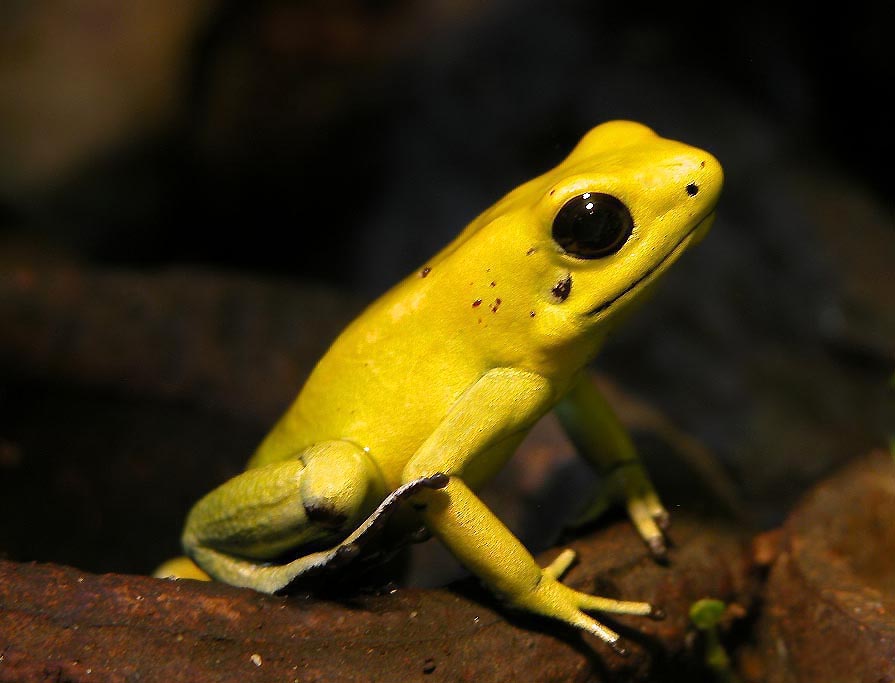 Golden Poison FrogPhyllobates terribilis
Compare
Questions and answers
What is the scientific name of the Machalilla Poison Frog?
The scientific name of the Machalilla Poison Frog is Epipedobates machalilla. Written with its author, the full name is Epipedobates machalilla (Coloma, 1995).
Which family does the Machalilla Poison Frog belong to?
Epipedobates machalilla belongs to the family Dendrobatidae, in the order Anura and the class Amphibia.
Where is the Machalilla Poison Frog found?
Checklists and occurrence records place Epipedobates machalilla in 1 country: Ecuador.
What is the conservation status of the Machalilla Poison Frog?
The IUCN Red List category recorded for Epipedobates machalilla is Least Concern (LC).
What other names does the Machalilla Poison Frog have?
Epipedobates machalilla is also known in English as Ayampe Poison Frog.
What is the name of a poisonous frog?
The Machalilla Poison Frog belongs to the chemically defended genus Epipedobates.[26]
Sources
Passages the profile rests on
- The species has a slender body, a head longer than it is wide, and a small tympanum. Source passage: “Epipedobates machalilla has a snout–vent length of 14.4 to 16 millimetres (0.57 to 0.63 in) for males and 15.0 to 17.6 millimetres (0.59 to 0.69 in) for females. Their heads are longer than they are wide, and the tympanum is small.” — English Wikipedia
- Its dorsal skin is dark coffee-colored with a cream-yellow or cream-white stripe that develops some pink coloration toward the rear. Source passage: “The skin of the dorsum is dark-coffee in colour with a cream-yellow or cream-white stripe that shows some pink coloration toward the posterior.” — English Wikipedia
- Its hind legs have light-brown upper surfaces, its forelegs are orange, its iris is gold, and its ventral surfaces are cream-colored. Source passage: “The upper surfaces of the hind legs are light brown in color; the forelegs are orange. The frog has a gold iris and cream ventral surfaces.” — English Wikipedia
- Its fingers lack webbing, its toes lack lateral fringes, and its terminal toe discs are expanded. Source passage: “The forelimbs have a moderate length and the fingers are unwebbed. The toes do not have lateral fringes and the terminal discs are expanded.” — English Wikipedia
- Adult males have a snout-to-vent length of 14.4–16 mm. Source passage: “14.4 to 16 millimetres (0.57 to 0.63 in) for males” — English Wikipedia
- Adult females have a snout-to-vent length of 15.0–17.6 mm. Source passage: “15.0 to 17.6 millimetres (0.59 to 0.69 in) for females.” — English Wikipedia
- The species is one of six members of its clade that exhibit inconspicuous coloration. Source passage: “is one of the six species within this clade that possesses inconspicuous coloration” — English Wikipedia
- Inconspicuous coloration is described as the ancestral state in the genus Epipedobates. Source passage: “(the ancestral state for Epipedobates).” — English Wikipedia
- The species inhabits dry and low forests in western Ecuador. Source passage: “Endemic to West Ecuador, it lives in dry and low forests” — English Wikipedia
- The species has also been recorded in the Choco rainforest. Source passage: “and has been seen in the Choco rainforest.” — English Wikipedia
- The species is endemic to western Ecuador. Source passage: “Epipedobates machalilla is endemic to West Ecuador” — English Wikipedia
- Its recorded distribution includes Azogues, Bolívar, El Oro, Guayas, Los Rios, and Manabí. Source passage: “It mainly occurs in Azogues, Bolívar, El Oro, Guayas, Los Rios and Manabí” — English Wikipedia
- The species occurs at elevations between 10 and 515 metres. Source passage: “The species occurs at altitudes between 10 and 515 metres (33 and 1,690 ft).” — English Wikipedia
- Its range includes Parque Nacional Machalilla, Reserva Jouneche, and Reserva Ecológica Manglares Churute. Source passage: “The frog's range includes at least three protected parks: Parque Nacional Machalilla, Reserva Jouneche, Reserva Ecológica Manglares Churute.” — English Wikipedia
- The species uses cephalic amplexus during mating. Source passage: “The mating system of the Epipedobates machalilla includes cephalic amplexus.” — English Wikipedia
- Females produce approximately 15 eggs per clutch. Source passage: “The female will produce around 15 eggs” — English Wikipedia
- Females deposit their eggs on the ground or beneath leaves. Source passage: “which are left on the ground or under leaves.” — English Wikipedia
- After laying eggs, the female leaves while the male guards the developing embryos and transports the larvae. Source passage: “The female will then leave, and the male will protect the development of the embryos and carry the larvae.” — English Wikipedia
- Tadpoles hatch approximately 20 days after fertilization. Source passage: “When the tadpoles hatch (around 20 days after fertilization occurs)” — English Wikipedia
- After hatching, the male transports tadpoles to riverbanks or pools of water for metamorphosis and growth. Source passage: “the male will take the tadpoles to riverbanks or pools of water so metamorphosis and growth can take place.” — English Wikipedia
- The male displays aggressive behaviour while protecting the tadpoles. Source passage: “He displays aggressive behaviour to protect the tadpoles.” — English Wikipedia
- The eggs measure approximately 1.6 mm in diameter. Source passage: “This frog's eggs, approximately 1.6 mm in diameter” — English Wikipedia
- The species' eggs are the smallest and least pigmented among those of the genus Epipedobates. Source passage: “are the smallest and least pigmented of any in the genus.” — English Wikipedia
- The IUCN classifies the species as Least Concern. Source passage: “The IUCN have classed it as "least concern".” — English Wikipedia
- The species' population has been declining because of agriculture and logging. Source passage: “Recently, the population has been declining due to agriculture and logging.” — English Wikipedia
- The species belongs to the chemically defended genus Epipedobates. Source passage: “Epipedobates machalilla is in the chemically defended genus Epipedobates” — English Wikipedia
Data
- Catalogue of Life, 2026-10-16 XR cc by
- Global Biodiversity Information Facility CC BY 4.0
- Wikidata CC0
- GeoNames CC BY 4.0
- Within the Catalogue of Life, this name comes from The Integrated Taxonomic Information System cc0
This species in other databases
Page built on 28 November 2026. See how the catalog is made and all sources and licences.
Cite this page
ScientificNames.org. (2026). Epipedobates machalilla (Machalilla Poison Frog). Retrieved November 28, 2026, from https://scientificnames.org/species/epipedobates-machalilla
“Epipedobates machalilla (Machalilla Poison Frog).” ScientificNames.org, 2026, scientificnames.org/species/epipedobates-machalilla. Accessed 28 Nov. 2026.
ScientificNames.org. “Epipedobates machalilla (Machalilla Poison Frog).” Accessed November 28, 2026. https://scientificnames.org/species/epipedobates-machalilla.
@misc{scientificnames_epipedobates_machalilla_machalilla_poison_frog,
  author = {{ScientificNames.org}},
  title = {Epipedobates machalilla (Machalilla Poison Frog)},
  year = {2026},
  url = {https://scientificnames.org/species/epipedobates-machalilla},
  note = {Accessed 2026-11-28}
}