Species · Flowering plants
Indian Elm Holoptelea integrifolia
The scientific name of the Indian Elm is Holoptelea integrifolia. It is a species of flowering plant in the family Ulmaceae (elm family), order Rosales.
- Scientific name
- Holoptelea integrifolia (Roxb.) Planch.
- Common name
- Indian Elm
- Genus
- Holoptelea
- Family
- Ulmaceae (Elm Family)
- Order
- Rosales
- Class
- Magnoliopsida
- Recorded in
- 8 countries
- Name status
- accepted in the Catalogue of Life

Overview
Indian elm (Holoptelea integrifolia) is a large deciduous flowering tree belonging to the family Ulmaceae, order Rosales, and class Magnoliopsida. It is native to most of the Indian subcontinent, Indo-China, and Myanmar, and grows mainly on plains as well as in mountainous areas. It is distinguished by its blistered, corky bark, unpleasant-smelling crushed leaves, and circular winged fruits.
Written 26 November 2026 from the sources listed below. Each statement was checked against the passage it cites; statements that could not be supported were removed.
Appearance
Indian elm is a large deciduous tree with a broad crown and several ascending branches. It typically reaches 20–25 m in height and rarely exceeds 30 m.[1][2]
The leaf margins are generally smooth and entire, although they are occasionally toothed. Crushed leaves produce an unpleasant odour.[3][4]
The flowers are small, pubescent, and greenish-yellow to brownish. They occur in short racemes or fascicles at the scars of fallen leaves and often have four velvety sepals.[5][6][7]
The fruit is a circular samara approximately 2.5 cm in diameter, with membranous, net-veined wings and a flat seed.[8]
Habitat
Indian elm occurs mainly on plains but also grows in mountainous areas. It has been recorded at elevations up to 1,100 m.[9][10]
The species is native to most of the Indian subcontinent, Indo-China, and Myanmar.[11]
Behaviour
Indian elm is described as a fast-growing tree. Its rapid growth contributes to its description as a good carbon sink.[12][13]
Reproduction and life cycle
Indian elm can be propagated by planting seeds in moist soil in nursery bags or directly at permanent planting locations. Seed germination takes approximately 10 days.[14][15]
Uses
The tree is used as a timber source for inexpensive furniture. Its wood is also used as firewood in rural areas.[16][17]
Indian elm is used in ecological forestry because of its heat tolerance, drought tolerance, and regenerative abilities. Its rapid growth also makes it a good carbon sink.[18][13]
Its flowers, leaves, and bark are used medicinally against several diseases. Traditional uses include treating or preventing leprosy, inflammation, rickets, leucoderma, scabies, rheumatism, ringworm, eczema, malaria, intestinal cancer, and chronic wounds.[19][20]
The species has also been traditionally used for boils, skin diseases, and scorpion stings. One traditional treatment involves boiling the leaves in water and using the resulting water for a bath.[21][22]
Young leaves are traditionally applied to the backbone and tied in place for one hour. Seeds are applied externally as a poultice to injured areas.[23][24]
Bark boiled in coconut oil and mixed with garlic is used as a traditional topical application. Leaf buds mixed with lime juice are traditionally applied externally to affected areas.[25][26]
Bark ground with lemon juice is traditionally prepared as a paste for medicinal application.[27]
Pharmacological investigations have reported antibacterial, antifungal, analgesic, antioxidant, and anti-inflammatory activities in extracts or isolated compounds from the species. Other reported activities include anthelmintic, antidiabetic, antidiarrhoeal, and adaptogenic effects.[28][29]
Reported pharmacological activities also include anticancer, wound-healing, hepatoprotective, larvicidal, antiemetic, central nervous system depressant, and hypolipidemic effects.[30][31]
Phytochemical analyses have identified terpenoids, sterols, saponins, tannins, proteins, carbohydrates, alkaloids, phenols, flavonoids, glycosides, and quinines in the species.[32]
Identified compounds include Holoptelin-A, Holoptelin-B, friedlin, epifriedlin, and β-amyrin. Other isolated compounds include stigmasterol, β-sitosterol, 1,4-naphthalenedione, betulin, betulinic acid, hexacosanol, and octacosanol.[33][34][35]
Classification of the Indian Elm
| Kingdom | Plantae |
|---|---|
| Subkingdom | Pteridobiotina |
| Phylum | Tracheophyta |
| Class | Magnoliopsida |
| Order | Rosales |
| Family | Ulmaceae (Elm Family) |
| Genus | Holoptelea |
| Species | Holoptelea integrifolia (Roxb.) Planch. |
Where the Indian Elm is found
Checklists and occurrence records place Holoptelea integrifolia in 8 countries across Asia. GBIF holds 3,118 georeferenced records of it.
Countries
Regions and cities with the most records
- Kerala, India 1,202
- Athiyannur, India 484
- Kalliyoor, India 484
- Kulathummal, India 484
- Malayinkeezhu, India 484
- Neyyāttinkara, India 484
- Pallichal, India 484
- Thiruvananthapuram, India 484
- Venganoor, India 484
- Vilavoorkkal, India 484
- Vilappil, India 482
- Kanjiramkulam, India 479
- Gujarat, India 406
- Karamuck, India 392
- Manalur, India 392
- Talikkulam, India 391
- Vadanappally, India 391
- Amballūr, India 375
- Chevvoor, India 375
- Marattakara, India 375
- Namminikara, India 375
- Edaicode, India 331
- Ezhudesam, India 331
- Keezhkulam, India 331
- Kollancode, India 331
- Kuzhithurai, India 331
- Marthandam, India 331
- Methukummal, India 331
- Nalloor, India 331
- Pacode, India 331
- Painkulam, India 331
- Palugal, India 331
- Pārassāla, India 331
- Padra, India 325
- Undera, India 325
- Vadodara, India 325
1 more country has a few records outside this range
These countries hold a few records of Holoptelea integrifolia but lie outside the range the checklists give for it. Such records are often zoo or garden specimens, museum material or vagrants, so the species is not counted as occurring there.
Range as the checklists state it
Nepal; India (Assam, Kerala); Bangladesh; Sri Lanka; Myanmar (widespread); Thailand; Laos; Vietnam
A number beside a place is its count of GBIF occurrence records. A place without a number comes from a checklist alone. Records show where a species has been observed or collected, which can include escapes and vagrants.
Common names
English
- Indian Elm
- Indian-elm
- Jungle Corktree
Names in 7 other languages
- Chinese
- 印度榆, 甘油樹
- Gujarati
- કણજો, ચરેલ
- Hindi
- chilbil
- Marathi
- वावळ
- Slovak
- holoptelea celistvolistá
- Tamil
- ஆயமரம்
- Thai
- กระเชา
Synonyms
One other scientific name has been used for this species and is now treated as a synonym of Holoptelea integrifolia.
- Ulmus integrifolia Roxb.
Related species
- Holoptelea grandis
-
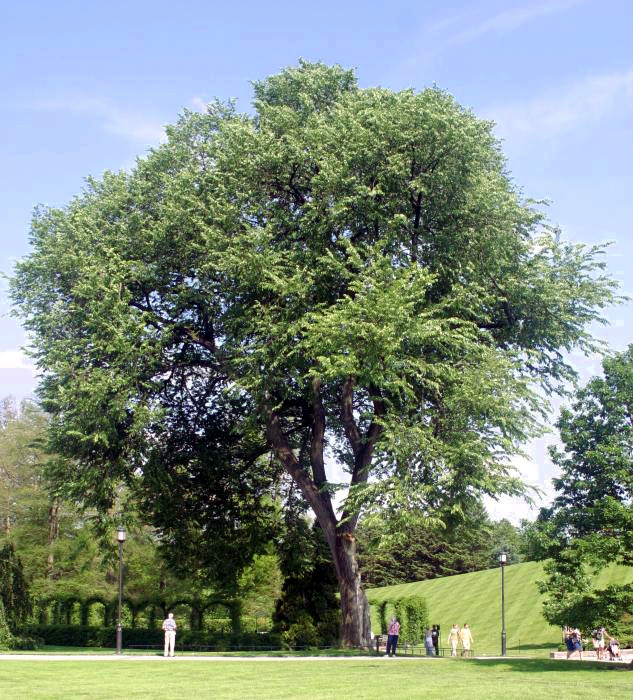 White ElmUlmus americana
-
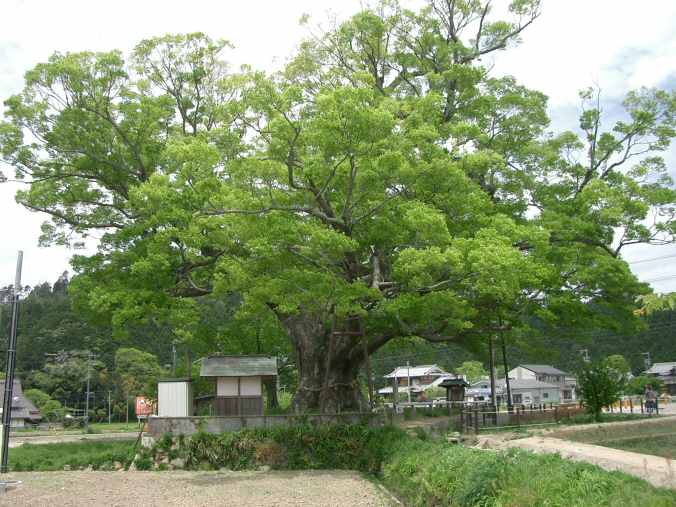 Japanese ZelkovaZelkova serrata
-
 Lacebark ElmUlmus parvifolia
- Red ElmUlmus rubra
-
 Wych ElmUlmus glabra
-
 Siberian ElmUlmus pumila
-
 Field ElmUlmus minor
Compare
Questions and answers
What is the scientific name of the Indian Elm?
The scientific name of the Indian Elm is Holoptelea integrifolia. Written with its author, the full name is Holoptelea integrifolia (Roxb.) Planch..
Which family does the Indian Elm belong to?
Holoptelea integrifolia belongs to the family Ulmaceae, in the order Rosales and the class Magnoliopsida.
Where is the Indian Elm found?
Checklists and occurrence records place Holoptelea integrifolia in 8 countries, including India, Sri Lanka, Thailand, Myanmar, Nepal and Vietnam.
What other names does the Indian Elm have?
Holoptelea integrifolia is also known in English as Indian-elm and Jungle Corktree.
What are some common Indian trees called in English?
Indian elm is one recorded English common name for Holoptelea integrifolia.[11]
Is the elm tree found in India?
Yes. Indian elm is native to most of the Indian subcontinent.[11]
Sources
Passages the profile rests on
- The species is a large deciduous tree with a broad crown and several ascending branches. Source passage: “The Indian elm is a large deciduous tree, about 20–25 m tall (rarely over 30 m), with a broad crown featuring several ascending branches.” — English Wikipedia
- The tree typically reaches 20–25 m in height and rarely exceeds 30 m. Source passage: “about 20–25 m tall (rarely over 30 m)” — English Wikipedia
- The leaves generally have smooth, entire margins, although they are occasionally toothed, and have pointed tips. Source passage: “smooth, with entire margins (occasionally toothed), and a pointed tip.” — English Wikipedia
- Crushed leaves produce an unpleasant odour. Source passage: “Crushed leaves emit an unpleasant odour.” — English Wikipedia
- Its flowers are small, pubescent, and greenish-yellow to brownish. Source passage: “Flowers are small, greenish-yellow to brownish, pubescent” — English Wikipedia
- Its flowers occur in short racemes or fascicles at the scars of fallen leaves. Source passage: “borne in short racemes or fascicles at the scars of fallen leaves.” — English Wikipedia
- The flowers often have four velvety sepals. Source passage: “Sepals are velvety, often 4.” — English Wikipedia
- Its fruit is a circular samara approximately 2.5 cm in diameter, with membranous, net-veined wings and a flat seed. Source passage: “Fruit is a circular samara, 2.5 cm in diameter, with membranous, net-veined wings, and flat seed.” — English Wikipedia
- The species occurs mainly on plains but also grows in mountainous areas. Source passage: “It is found mostly on plains but also in mountains” — English Wikipedia
- The species has been recorded at elevations up to 1,100 m. Source passage: “on elevations up to 1100 m.” — English Wikipedia
- The species is native to most of the Indian subcontinent, Indo-China, and Myanmar. Source passage: “It is native to most of Indian subcontinent, Indo-China and Myanmar.” — English Wikipedia
- The tree is described as fast-growing. Source passage: “The tree is quite fast growing.” — English Wikipedia
- The species is described as a good carbon sink because of its rapid growth. Source passage: “They act as good carbon sink due to fast growth.” — English Wikipedia
- The species can be propagated by planting its seeds in moist soil in nursery bags or directly at permanent planting locations. Source passage: “These seeds can be planted in moist soil in a nursery bag or directly at the permanent location using direct seed plantation method.” — English Wikipedia
- Seed germination takes approximately 10 days. Source passage: “Germination takes place after about 10 days.” — English Wikipedia
- The tree is used as a timber source for inexpensive furniture. Source passage: “used for timber which makes cheap furniture” — English Wikipedia
- The wood is used as firewood in rural areas. Source passage: “also used as firewood in rural parts.” — English Wikipedia
- The species is used in ecological forestry because of its heat tolerance, drought tolerance, and regenerative abilities. Source passage: “used in ecological forestry for its heat and drought tolerance and regenerative abilities.” — English Wikipedia
- Its flowers, leaves, and bark are used medicinally against several diseases. Source passage: “Its flowers, leaves and bark have medicinal uses against several diseases.” — English Wikipedia
- The species is traditionally used to treat or prevent leprosy, inflammation, rickets, leucoderma, scabies, rheumatism, ringworm, eczema, malaria, intestinal cancer, and chronic wounds. Source passage: “It is traditionally used in the treatment and prevention of several ailments like leprosy, inflammation, rickets, leucoderma, scabies, rheumatism, ringworm, eczema, malaria, intestinal cancer, and chronic wounds.” — pmc.ncbi.nlm.nih.gov
- The species has been traditionally used for boils, skin diseases, and scorpion stings. Source passage: “Leprosy, boils, inflammation, skin disease, and scorpion sting” — pmc.ncbi.nlm.nih.gov
- A traditional treatment involves boiling the leaves in water and using the resulting water for a bath. Source passage: “Leaf is boiled in water and water bath is given” — pmc.ncbi.nlm.nih.gov
- Young leaves are traditionally applied to the backbone and tied in place for one hour. Source passage: “Young leaf is applied on back bone and tied for 1 hr.” — pmc.ncbi.nlm.nih.gov
- Seeds are traditionally applied externally as a poultice to injured areas. Source passage: “Seeds are applied externally in the form of poultice on the injured part” — pmc.ncbi.nlm.nih.gov
- Bark boiled in coconut oil and mixed with garlic is used as a traditional topical application. Source passage: “Bark boiled in coconut oil and mixed with garlic is applied” — pmc.ncbi.nlm.nih.gov
- Leaf buds mixed with lime juice are traditionally applied externally to affected areas. Source passage: “Leaf bud mixed with lime juice is applied externally to affected area” — pmc.ncbi.nlm.nih.gov
- Bark ground with lemon juice is traditionally prepared as a paste for medicinal application. Source passage: “Bark grounded with lemon juice and made into paste is given” — pmc.ncbi.nlm.nih.gov
- Pharmacological investigations have reported antibacterial, antifungal, analgesic, antioxidant, and anti-inflammatory activities in extracts or isolated compounds from the species. Source passage: “showed antibacterial, antifungal, analgesic, antioxidant, anti-inflammatory, anthelmintic” — pmc.ncbi.nlm.nih.gov
- Reported pharmacological activities also include anthelmintic, antidiabetic, antidiarrhoeal, and adaptogenic effects. Source passage: “anthelmintic, antidiabetic, antidiarrhoeal, adaptogenic” — pmc.ncbi.nlm.nih.gov
- Reported pharmacological activities include anticancer, wound-healing, and hepatoprotective effects. Source passage: “anticancer, wound healing, hepatoprotective” — pmc.ncbi.nlm.nih.gov
- Larvicidal, antiemetic, central nervous system depressant, and hypolipidemic activities have also been reported. Source passage: “larvicidal, antiemetic, CNS depressant, and hypolipidemic activities.” — pmc.ncbi.nlm.nih.gov
- Phytochemical analyses have identified terpenoids, sterols, saponins, tannins, proteins, carbohydrates, alkaloids, phenols, flavonoids, glycosides, and quinines in the species. Source passage: “presence of terpenoids, sterols, saponins, tannins, proteins, carbohydrates, alkaloids, phenols, flavonoids, glycosides, and quinines.” — pmc.ncbi.nlm.nih.gov
- Identified compounds include Holoptelin-A, Holoptelin-B, friedlin, epifriedlin, and β-amyrin. Source passage: “Holoptelin-A, Holoptelin-B, friedlin, epifriedlin, β-amyrin” — pmc.ncbi.nlm.nih.gov
- Other compounds isolated from the species include stigmasterol, β-sitosterol, 1,4-naphthalenedione, betulin, and betulinic acid. Source passage: “stigmasterol, β-sitosterol, 1, 4-napthalenedione, betulin, betulinic acid” — pmc.ncbi.nlm.nih.gov
- Hexacosanol and octacosanol have also been identified in the species. Source passage: “hexacosanol, and octacosanol have been identified and isolated from the plant species.” — pmc.ncbi.nlm.nih.gov
Data
- Catalogue of Life, 2026-10-16 XR cc by
- Global Biodiversity Information Facility CC BY 4.0
- Wikidata CC0
- GeoNames CC BY 4.0
- Wikimedia Commons per image; credit shown with each image
- Within the Catalogue of Life, this name comes from Synonymic Checklists of the Vascular Plants of the World cc by
References
- Planch. (1848). Ann. Sci. Nat., Bot., Sér. 3, 10: 259 (1848). where the name was published
This species in other databases
- Catalogue of Life 3M9Q8
- Wikidata Q13110312
- iNaturalist 553635
- World Flora Online wfo-0000724298
- GRIN 19236
Page built on 28 November 2026. See how the catalog is made and all sources and licences.
Cite this page
ScientificNames.org. (2026). Holoptelea integrifolia (Indian Elm). Retrieved November 28, 2026, from https://scientificnames.org/species/holoptelea-integrifolia
“Holoptelea integrifolia (Indian Elm).” ScientificNames.org, 2026, scientificnames.org/species/holoptelea-integrifolia. Accessed 28 Nov. 2026.
ScientificNames.org. “Holoptelea integrifolia (Indian Elm).” Accessed November 28, 2026. https://scientificnames.org/species/holoptelea-integrifolia.
@misc{scientificnames_holoptelea_integrifolia_indian_elm,
  author = {{ScientificNames.org}},
  title = {Holoptelea integrifolia (Indian Elm)},
  year = {2026},
  url = {https://scientificnames.org/species/holoptelea-integrifolia},
  note = {Accessed 2026-11-28}
}