Species · Flowering plants
Field Elm Ulmus minor
The scientific name of the Field Elm is Ulmus minor. It is a species of flowering plant in the family Ulmaceae (elm family), order Rosales.
- Scientific name
- Ulmus minor Mill.
- Common name
- Field Elm
- Genus
- Ulmus
- Family
- Ulmaceae (Elm Family)
- Order
- Rosales
- Class
- Magnoliopsida
- Red List category
- DD Data Deficient
- Recorded in
- 75 countries
- Name status
- accepted in the Catalogue of Life

Overview
The natural range is predominantly in southern Europe and extends into Asia Minor and Iran.
Written 26 November 2026 from the sources listed below. Each statement was checked against the passage it cites; statements that could not be supported were removed.
Appearance
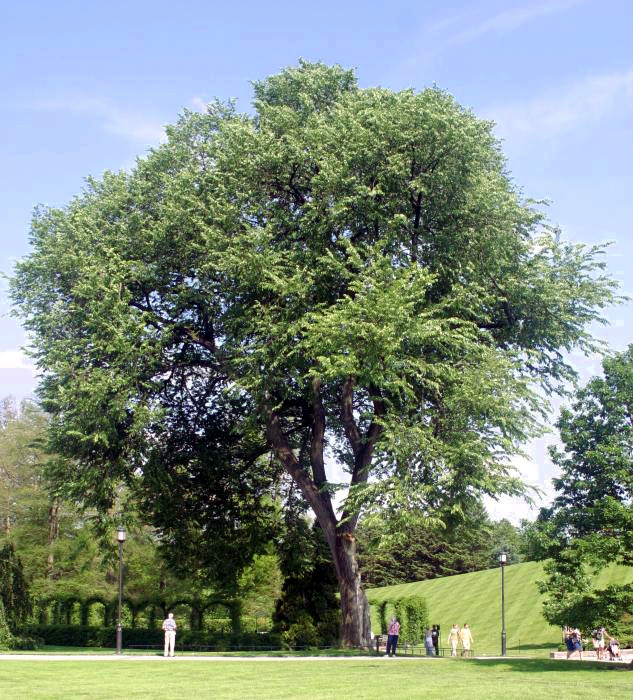
The Field Elm typically develops a rounded crown and grows to less than 30 metres tall. Its trunk bark is rough and develops a lightly furrowed block pattern in older trees.[1][2][3]
Young branchlets occasionally develop corky wings. Its shoots are relatively slender compared with those of wych elm.[4][5]
Its leaves are generally smaller than those of other European elm species and usually have fewer than 12 pairs of lateral veins. Leaves on juvenile growth are coarse and pubescent, whereas mature leaves are generally smooth.[6][7][8]
Habitat
The Field Elm typically grows in low-lying woodland along major rivers. It commonly grows alongside oak and ash trees.[9][10]
It tolerates both summer flooding and drought.[11]
Behaviour
The Field Elm displays considerable genetic variability and is described as the most polymorphic of the European elm species. Its response to Dutch elm disease varies considerably, while its tolerance of elm yellows is generally good.[12][13][14][15]
Reproduction and life cycle
In France, the Field Elm generally begins flowering and producing fruit at approximately ten years of age.[16]
The species readily produces suckers from its roots and stumps. It can produce suckers even after severe damage caused by Dutch elm disease.[17][18]
Conservation
The Field Elm is now uncommon in cultivation because of its susceptibility to Dutch elm disease. In Spanish testing reported in 2013, approximately 0.5% of surviving field elms tested showed comparatively high disease tolerance.[19][20]
Its genetic resources are not considered endangered because it readily produces root and stump suckers. The introduction and spread of Siberian elm in Spain has contributed to conservation concerns for the species.[21][22]
Uses
The timber's colour inspired the historical British foresters' name red elm.[23]
Similar species
The Field Elm naturally hybridizes with wych elm (Ulmus glabra), producing trees belonging to the Ulmus × hollandica group. It has also naturally hybridized with Siberian elm (Ulmus pumila) in Spain and Italy.[24][25][26]
Classification of the Field Elm
| Kingdom | Plantae |
|---|---|
| Subkingdom | Pteridobiotina |
| Phylum | Tracheophyta |
| Class | Magnoliopsida |
| Order | Rosales |
| Family | Ulmaceae (Elm Family) |
| Genus | Ulmus (Elm) |
| Species | Ulmus minor Mill. |
Where the Field Elm is found
Checklists and occurrence records place Ulmus minor in 75 countries across Africa, Asia, Europe, North America and South America. GBIF holds 329,465 georeferenced records of it.
Countries where it is native or its origin is not stated
- Albania 27
- Algeria 50
- Argentina 11
- Armenia 80
- Australia 392
- Austria 1,641
- Azerbaijan 39
- Belarus 70
- Belgium 12,286
- Bolivia 7
- Bosnia and Herzegovina 53
- Bulgaria 50
- China 25
- Croatia 175
- Cyprus 12
- Czechia 1,071
- Denmark 457
- Finland 5
- France 176,056
- Georgia 37
- Gibraltar
- Greece 192
- Guernsey 2
- India 9
- Iran 40
- Iraq 10
- Ireland 216
- Isle of Man 82
- Israel 124
- Italy 2,693
- Japan 4
- Jersey 2
- Kazakhstan 14
- Kosovo 1
- Kyrgyzstan 5
- Latvia 49
- Lebanon 2
- Liechtenstein 1
- Lithuania 72
- Luxembourg 170
- Moldova 30
- Monaco 16
- Montenegro 25
- Morocco 6
- North Macedonia 13
- Norway 53
- Poland 4,697
- Romania 52
- Russia 1,061
- San Marino 2
- Serbia 17
- Slovakia 2,048
- Slovenia 67
- Spain 18,480
- Sweden 6,841
- Switzerland 2,633
- Syria 6
- Tajikistan 2
- The Netherlands 9,101
- Tunisia 5
- Turkey 109
- Turkmenistan 23
- Ukraine 1,588
- Uzbekistan 66
Countries where it has been introduced
- Canada 80
- Chile 21
- Estonia 32
- Germany 9,685
- Hungary 155
- Libya
- Pakistan
- Portugal 1,359
- South Africa 60
- United Kingdom 74,122
- United States 778
Regions and cities with the most records
- England, United Kingdom 68,926
- Île-de-France, France 32,703
- Centre-Val de Loire, France 23,296
- Hauts-de-France, France 16,922
- Auvergne-Rhône-Alpes, France 16,232
- Grand Est, France 15,464
- Bourgogne-Franche-Comté, France 14,827
- Occitanie, France 13,824
- Provence-Alpes-Côte d'Azur, France 9,991
- Boissy-Saint-Léger, France 6,286
- Maisons-Alfort, France 6,260
- Charenton-le-Pont, France 6,150
- Alfortville, France 6,131
- Bonneuil-sur-Marne, France 6,110
- Saint-Mandé, France 6,070
- Joinville-le-Pont, France 6,058
- Créteil, France 6,051
- Thiais, France 6,048
- Champigny-sur-Marne, France 6,042
- Limeil-Brévannes, France 6,037
- Ivry-sur-Seine, France 6,023
- Vitry-sur-Seine, France 5,978
- Nogent-sur-Marne, France 5,966
- Gare, France 5,961
- Quinze-Vingts, France 5,942
- Salpêtrière, France 5,936
- Paris 12 Reuilly, France 5,932
- Paris 13 Gobelins, France 5,930
- Villeneuve-Saint-Georges, France 5,925
- Pays de la Loire, France 5,922
- Choisy-le-Roi, France 5,915
- Vincennes, France 5,912
- Le Perreux-sur-Marne, France 5,858
- Savigny-sur-Orge, France 5,843
- Montreuil, France 5,826
- Chilly-Mazarin, France 5,798
1 more country has a few records outside this range
These countries hold a few records of Ulmus minor but lie outside the range the checklists give for it. Such records are often zoo or garden specimens, museum material or vagrants, so the species is not counted as occurring there.
A number beside a place is its count of GBIF occurrence records. A place without a number comes from a checklist alone. Records show where a species has been observed or collected, which can include escapes and vagrants.
Common names
English
- Field Elm
- Common Elm
- English Cork Elm
- English Elm
- European Field Elm
- Lock Elm
- Plot's Elm
- Small Leaved Elm
- Smoothleaf Elm
- Small-leaved Elm
Names in 31 other languages
- Afrikaans
- skurwe-olm
- Arabic
- دردار أصغر, دردار الحقل
- Armenian
- Թեղի խցանային
- Basque
- Zumar hostotxikia
- Catalan
- Om, om de fulla petita
- Chinese
- 歐洲光葉榆, 歐洲小葉榆, 英國榆
- Czech
- jilm habrolistý, jilm vysoký
- Danish
- Park-elm, Småbladet elm
- Dutch
- Engelse veldiep, Gladde iep
- Estonian
- põldjalakas
- Finnish
- lehtojalava
- French
- Orme champêtre mineur, orme champêtre, orme à feuilles luisantes, ormeau, petit orme
- Galician
- Umeiro
- German
- Artengruppe Feld-Ulme, Feld-Ulme, Feldulme, Iper, englische Ulme, haar Ulme
- Greek
- Καμποφτελιά, Καραγάτσι
- Hebrew
- אולמוס שעיר, בוקיצה שעירה
- Hungarian
- Mezei szil
- Italian
- Olmo campestre
- Japanese
- オウシュウニレ, ヨーロッパニレ
- Lithuanian
- Paprastasis skirpstas
- Polish
- Wiąz pospolity
- Portuguese
- Negrilho, Ulmeiro, Ulmeiro-de-folhas-lisas
- Russian
- Вяз граболистный, Вяз малый
- Slovak
- brest hrabolistý
- Slovenian
- poljski brest
- Spanish
- olmo común
- Swedish
- engelsk alm, lundalm, rödalm
- Turkish
- Gürgen Yapraklı Karaağaç, Ova Karaağacı
- Ukrainian
- Берест
- Welsh
- Llwyfen Fanddail, Pren Llwyf
- kur
- بزوو, وزم
Synonyms
10 other scientific names have been used for this species and are now treated as synonyms of Ulmus minor.
- Ulmus angustifolia Moench
- Ulmus carpinifolia Borkh.
- Ulmus carpinifolia var. carpinifolia
- Ulmus foliacea var. foliacea
- Ulmus glabra f. minor (Mill.) C.K.Schneid.
- Ulmus minor
- Ulmus procera f. procera
- Ulmus procera var. procera
- Ulmus sarniensis Lodd.
- Ulmus vulgaris prol. minor (Mill.) Rouy
Subspecies and varieties
- Ulmus minor subsp. canescens subspecies
- Ulmus minor subsp. minor (Coritanian Elm) subspecies
- Ulmus minor subsp. procera subspecies
- Ulmus minor var. minor variety
Related species
-
 White ElmUlmus americana
-
 Lacebark ElmUlmus parvifolia
- Red ElmUlmus rubra
-
 Wych ElmUlmus glabra
-
 Siberian ElmUlmus pumila
-
 European White ElmUlmus laevis
-
 Red ElmUlmus crassifolia
-
 Small-leaf ElmUlmus alata
Compare
Questions and answers
What is the scientific name of the Field Elm?
The scientific name of the Field Elm is Ulmus minor. Written with its author, the full name is Ulmus minor Mill..
Which family does the Field Elm belong to?
Ulmus minor belongs to the family Ulmaceae, in the order Rosales and the class Magnoliopsida.
Where is the Field Elm found?
Checklists and occurrence records place Ulmus minor in 75 countries, including France, Spain, Belgium, The Netherlands, Sweden and Poland.
What is the conservation status of the Field Elm?
The IUCN Red List category recorded for Ulmus minor is Data Deficient (DD).
What other names does the Field Elm have?
Ulmus minor is also known in English as Common Elm, English Cork Elm, English Elm, European Field Elm, Lock Elm and Plot's Elm.
Do elm trees still exist?
The Field Elm still occurs in its natural range, which is predominantly in southern Europe and extends into Asia Minor and Iran.[27]
What trees are related to elms?
The Field Elm naturally hybridizes with wych elm (Ulmus glabra) and has also naturally hybridized with Siberian elm (Ulmus pumila) in Spain and Italy.[24][26]
Sources
Passages the profile rests on
- Ulmus minor typically develops a rounded crown. Source passage: “The tree typically grows to < 30 m (98 ft) and bears a rounded crown.” — English Wikipedia
- The trunk bark is rough and develops a lightly furrowed block pattern in older trees. Source passage: “The bark of the trunk is rough, furrowed lightly in older trees to form a block pattern.” — English Wikipedia
- Ulmus minor typically grows to less than 30 metres tall. Source passage: “The tree typically grows to < 30 m (98 ft)” — English Wikipedia
- Young branchlets occasionally develop corky wings. Source passage: “Young branchlets occasionally have corky wings.” — English Wikipedia
- Its shoots are relatively slender compared with those of wych elm. Source passage: “The shoots are slender compared with those of wych elm.” — English Wikipedia
- Its leaves are generally smaller than those of other European elm species. Source passage: “The leaves are smaller than those of the other European species” — English Wikipedia
- Leaves on juvenile growth are coarse and pubescent, whereas mature leaves are generally smooth. Source passage: “Leaves on juvenile growth (suckers, seedlings etc.) are coarse and pubescent, whereas those on mature growth are generally smooth” — English Wikipedia
- Its leaves generally have fewer than 12 pairs of lateral veins. Source passage: “there are generally fewer than 12 pairs of side veins.” — English Wikipedia
- Its typical habitat is low-lying woodland along major rivers. Source passage: “The tree's typical habitat is low-lying forest along the main rivers” — English Wikipedia
- It commonly grows alongside oak and ash trees. Source passage: “growing in association with oak and ash” — English Wikipedia
- It tolerates both summer flooding and drought. Source passage: “where it tolerates summer floods as well as droughts.” — English Wikipedia
- The species displays considerable genetic variability. Source passage: “However, field elm is genetically highly variable;” — English Wikipedia
- Its response to Dutch elm disease varies considerably. Source passage: “The species has a hugely variable reaction to Dutch elm disease (DED)” — English Wikipedia
- Its tolerance of elm yellows is generally good. Source passage: “Tolerance of elm yellows (phloem necrosis) is generally good” — English Wikipedia
- Ulmus minor is described as the most polymorphic of the European elm species. Source passage: “is by far the most polymorphic of the European species” — English Wikipedia
- In France, Ulmus minor generally begins flowering and producing fruit at approximately ten years of age. Source passage: “Ulmus minor in France generally begins to flower and fruit when aged 10 years.” — English Wikipedia
- The species readily produces suckers from its roots and stumps. Source passage: “The species readily produces suckers from roots and stumps” — English Wikipedia
- It can produce suckers even after severe damage caused by Dutch elm disease. Source passage: “even after devastation by Dutch elm disease” — English Wikipedia
- Ulmus minor is now uncommon in cultivation because of its susceptibility to Dutch elm disease. Source passage: “owing to its susceptibility to Dutch elm disease, U. minor is now uncommon in cultivation.” — English Wikipedia
- In Spanish testing reported in 2013, approximately 0.5% of surviving field elms tested showed comparatively high disease tolerance. Source passage: “a very small number of surviving field elms (about 0.5% of those tested) appear to have comparatively high levels of tolerance of the disease” — English Wikipedia
- Its genetic resources are not considered endangered because it readily produces root and stump suckers. Source passage: “consequently genetic resources are not considered endangered.” — English Wikipedia
- The introduction and spread of Siberian elm in Spain has contributed to conservation concerns for Ulmus minor. Source passage: “In Spain U. pumila was introduced in the 16th century and has since spread widely, contributing to conservation concerns for U. minor.” — English Wikipedia
- The timber's colour inspired the historical British foresters' name red elm. Source passage: “The epithet 'red' elm was commonly used by British foresters, an allusion to the colour of the timber.” — English Wikipedia
- Ulmus minor naturally hybridizes with wych elm (Ulmus glabra). Source passage: “The tree's natural range generously overlaps that of wych elm Ulmus glabra to the north, and readily hybridizes with it” — English Wikipedia
- Hybridization with wych elm produces trees belonging to the Ulmus × hollandica group. Source passage: “readily hybridizes with it to produce the so-called 'Dutch elm' Ulmus × hollandica.” — English Wikipedia
- Ulmus minor has naturally hybridized with Siberian elm (Ulmus pumila) in Spain and Italy. Source passage: “In Spain and Italy Ulmus minor has naturally hybridized with Siberian elm U. pumila.” — English Wikipedia
- Its natural range is predominantly in southern Europe and extends into Asia Minor and Iran. Source passage: “Its natural range is predominantly south European, extending to Asia Minor and Iran” — English Wikipedia
- Its samaras measure 12–15 mm in length. Source passage: “glabrous, 12–15 mm (15⁄32–19⁄32 in) long” — English Wikipedia
Data
- Catalogue of Life, 2026-10-16 XR cc by
- Global Biodiversity Information Facility CC BY 4.0
- Wikidata CC0
- GeoNames CC BY 4.0
- Wikimedia Commons per image; credit shown with each image
- Within the Catalogue of Life, this name comes from Synonymic Checklists of the Vascular Plants of the World cc by
References
- Mill. where the name was published
This species in other databases
- Catalogue of Life 7DFNR
- Wikidata Q147487
- iNaturalist 79461
- World Flora Online wfo-0000416674
- GRIN 101699
Page built on 28 November 2026. See how the catalog is made and all sources and licences.
Cite this page
ScientificNames.org. (2026). Ulmus minor (Field Elm). Retrieved November 28, 2026, from https://scientificnames.org/species/ulmus-minor
“Ulmus minor (Field Elm).” ScientificNames.org, 2026, scientificnames.org/species/ulmus-minor. Accessed 28 Nov. 2026.
ScientificNames.org. “Ulmus minor (Field Elm).” Accessed November 28, 2026. https://scientificnames.org/species/ulmus-minor.
@misc{scientificnames_ulmus_minor_field_elm,
  author = {{ScientificNames.org}},
  title = {Ulmus minor (Field Elm)},
  year = {2026},
  url = {https://scientificnames.org/species/ulmus-minor},
  note = {Accessed 2026-11-28}
}