Species · Amphibians
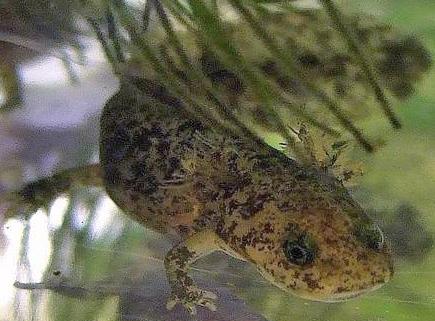
Tokyo Salamander Hynobius tokyoensis
The scientific name of the Tokyo Salamander is Hynobius tokyoensis. It is a species of amphibian in the family Hynobiidae (asiatic salamander), order Caudata. The name dates from 1931.
- Scientific name
- Hynobius tokyoensis Tago, 1931
- Common name
- Tokyo Salamander
- Genus
- Hynobius
- Family
- Hynobiidae (Asiatic Salamander)
- Order
- Caudata
- Class
- Amphibia
- Red List category
- VU Vulnerable
- Recorded in
- 1 country
- Name status
- accepted in the Catalogue of Life

Overview
The Tokyo Salamander is a small species of Hynobius in the family Hynobiidae, order Caudata, and class Amphibia. It inhabits temperate forests, freshwater springs, arable land, irrigated land, canals and ditches, and is usually found in paddy fields. The Tokyo Salamander is endemic to Japan.
Written 27 November 2026 from the sources listed below. Each statement was checked against the passage it cites; statements that could not be supported were removed.
Habitat
The Tokyo Salamander inhabits temperate forests and occurs in freshwater springs. It also inhabits arable land and irrigated land.[1][2][3][4]
The species occurs in canals and ditches and is usually found in paddy fields.[5][6]
Appearance
The Tokyo Salamander is described as a small species of Hynobius.[7]
Behaviour
The reported sex ratio is approximately 1.5 males per female.[8]
Reproduction and life cycle
Mid-summer drainage of paddy fields can disrupt the population before metamorphosis is complete.[9]
Conservation
Habitat loss and raccoon predation threaten the Tokyo Salamander.[10][11]
Habitat destruction contributes more to the species' decline than its unbalanced sex ratio.[8][12]
Classification of the Tokyo Salamander
| Kingdom | Animalia |
|---|---|
| Phylum | Chordata |
| Subphylum | Vertebrata |
| Infraphylum | Gnathostomata |
| Parvphylum | Osteichthyes |
| Megaclass | Tetrapoda |
| Class | Amphibia (Amphibians) |
| Order | Caudata (Salamanders) |
| Family | Hynobiidae (Asiatic Salamander) |
| Subfamily | Hynobiinae |
| Genus | Hynobius (Asian Salamanders) |
| Species | Hynobius tokyoensis Tago, 1931 |
Where the Tokyo Salamander is found
Checklists and occurrence records place Hynobius tokyoensis in 1 country. GBIF holds 294 georeferenced records of it.
Countries
Regions and cities with the most records
- Aihara, Japan 11
- Akiruno, Japan 11
- Akishima, Japan 11
- Chiba, Japan 11
- Fussa, Japan 11
- Hachiōji, Japan 11
- Hamura, Japan 11
- Hino, Japan 11
- Itsukaichi, Japan 11
- Iwai, Japan 11
- Tachikawa, Japan 11
- Tokyo, Japan 11
- Hakonegasaki, Japan 10
- Kunitachi, Japan 10
- Yokota, Japan 10
- Musashimurayama, Japan 9
- Ōme, Japan 9
- Higashiyamato, Japan 8
- Sagamihara, Japan 8
- Higashimurayama, Japan 7
- Iruma, Japan 7
- Kamogawa, Japan 6
- Uenohara, Japan 6
- Hannō, Japan 5
- Sayama, Japan 5
- Tokorozawa, Japan 5
- Mobara, Japan 4
- Narutō, Japan 4
- Sanmu, Japan 4
- Tōgane, Japan 4
- Ōami, Japan 4
- Ōamishirasato, Japan 4
- Aichi, Japan 3
- Hayama, Japan 3
- Katsuura, Japan 3
- Kisarazu, Japan 3
A number beside a place is its count of GBIF occurrence records. A place without a number comes from a checklist alone. Records show where a species has been observed or collected, which can include escapes and vagrants.
Common names
English
- Tokyo Salamander
Names in 7 other languages
- Arabic
- سمندل طوكيو
- Chinese
- 東京小鯢
- Czech
- pamlok tokijský
- French
- Hynobie de Tokyo
- Japanese
- Tokyo Sanshouo, トウキョウサンショウウオ
- Korean
- 도쿄도롱뇽
- Russian
- Токийский углозуб
Synonyms
2 other scientific names have been used for this species and are now treated as synonyms of Hynobius tokyoensis.
- Hynobius tokyoesis Tago, 1929
- Hynobius tokyoeusis Tago, 1931
Related species
-
 Ezo SalamanderHynobius retardatus
-
 Hida SalamanderHynobius kimurae
-
 Japanese Rift SalamanderHynobius fossigenus
- Korean SalamanderHynobius leechii
-
 Japanese Black SalamanderHynobius nigrescens
-
 Taiwan SalamanderHynobius formosanus
-
 Alishan SalamanderHynobius arisanensis
-
 Abe's SalamanderHynobius abei
Compare
Questions and answers
What is the scientific name of the Tokyo Salamander?
The scientific name of the Tokyo Salamander is Hynobius tokyoensis. Written with its author, the full name is Hynobius tokyoensis Tago, 1931.
Which family does the Tokyo Salamander belong to?
Hynobius tokyoensis belongs to the family Hynobiidae, in the order Caudata and the class Amphibia.
Where is the Tokyo Salamander found?
Checklists and occurrence records place Hynobius tokyoensis in 1 country: Japan.
What is the conservation status of the Tokyo Salamander?
The IUCN Red List category recorded for Hynobius tokyoensis is Vulnerable (VU).
What is the scientific name of a salamander?
The scientific name of the Tokyo Salamander is Hynobius tokyoensis Tago, 1931.[7]
Sources
Passages the profile rests on
- The Tokyo salamander inhabits temperate forests. Source passage: “Its natural habitats are temperate forests, freshwater springs, arable land, irrigated land, and canals and ditches.” — English Wikipedia
- The Tokyo salamander occurs in freshwater springs. Source passage: “Its natural habitats are temperate forests, freshwater springs, arable land, irrigated land, and canals and ditches.” — English Wikipedia
- The Tokyo salamander inhabits arable land. Source passage: “Its natural habitats are temperate forests, freshwater springs, arable land, irrigated land, and canals and ditches.” — English Wikipedia
- The Tokyo salamander occurs on irrigated land. Source passage: “Its natural habitats are temperate forests, freshwater springs, arable land, irrigated land, and canals and ditches.” — English Wikipedia
- The Tokyo salamander inhabits canals and ditches. Source passage: “Its natural habitats are temperate forests, freshwater springs, arable land, irrigated land, and canals and ditches.” — English Wikipedia
- The Tokyo salamander is usually found in paddy fields. Source passage: “Considering their environmental preferences, they are usually found in paddy fields.” — English Wikipedia
- The Tokyo salamander is described as a small species of Hynobius. Source passage: “A small species of Hynobius, hynobiid salamander species, Hynobius.” — amphibiaweb.org
- The reported sex ratio of the Tokyo salamander is approximately 1.5 males per female. Source passage: “the sex ratio between males and females is about 1.5:1.” — English Wikipedia
- Mid-summer drainage of paddy fields can disrupt the Tokyo salamander population before metamorphosis is complete. Source passage: “Mid-Summer drainage from these fields hinders the population's ability to thrive as this would occur before these populations could complete metamorphosis.” — English Wikipedia
- Habitat loss threatens the Tokyo salamander. Source passage: “It is threatened by habitat loss and raccoon (araiguma) predation.” — English Wikipedia
- Raccoon predation threatens the Tokyo salamander. Source passage: “It is threatened by habitat loss and raccoon (araiguma) predation.” — English Wikipedia
- Habitat destruction is identified as a greater contributor to the species' decline than its unbalanced sex ratio. Source passage: “Although this does not play as large of a role as habitat destruction when it comes to the decline of this species, it is still significant.” — English Wikipedia
Data
- Catalogue of Life, 2026-10-16 XR cc by
- Global Biodiversity Information Facility CC BY 4.0
- Wikidata CC0
- GeoNames CC BY 4.0
- Wikimedia Commons per image; credit shown with each image
- Within the Catalogue of Life, this name comes from The Integrated Taxonomic Information System cc0
This species in other databases
Page built on 28 November 2026. See how the catalog is made and all sources and licences.
Cite this page
ScientificNames.org. (2026). Hynobius tokyoensis (Tokyo Salamander). Retrieved November 28, 2026, from https://scientificnames.org/species/hynobius-tokyoensis
“Hynobius tokyoensis (Tokyo Salamander).” ScientificNames.org, 2026, scientificnames.org/species/hynobius-tokyoensis. Accessed 28 Nov. 2026.
ScientificNames.org. “Hynobius tokyoensis (Tokyo Salamander).” Accessed November 28, 2026. https://scientificnames.org/species/hynobius-tokyoensis.
@misc{scientificnames_hynobius_tokyoensis_tokyo_salamander,
  author = {{ScientificNames.org}},
  title = {Hynobius tokyoensis (Tokyo Salamander)},
  year = {2026},
  url = {https://scientificnames.org/species/hynobius-tokyoensis},
  note = {Accessed 2026-11-28}
}